Does Subaru Have an Oil Change Light on Your Dashboard
Yes, most Subaru models feature an oil change light on the dashboard that helps you track your oil maintenance schedule. This oil life monitoring system uses driving conditions to estimate when your engine oil needs replacing. Understanding this maintenance light can save you money and protect your engine from damage.
Key Takeaways
- Subaru vehicles include an oil change light: Most modern Subarus use a smart oil life monitoring system instead of a simple mileage reminder.
- The light uses algorithms: It tracks your driving habits, engine temperature, and road conditions to determine the right oil change interval.
- Resetting the light is simple: You can usually reset it yourself in just a few minutes using your steering wheel controls or dashboard buttons.
- Ignoring the light is risky: Driving with old oil can cause engine wear, reduced fuel economy, and costly repairs.
- Manual override exists: You can also follow a fixed mileage schedule like every 5,000 to 7,500 miles regardless of what the light says.
- Lease owners should pay extra attention: lease agreements often require documented oil changes to avoid extra charges at return.
- Other maintenance lights exist too: Subaru dashboards include multiple warning lights for different systems, so knowing each one helps you stay on top of repairs.
📑 Table of Contents
- Does Subaru Have an Oil Change Light on Your Dashboard?
- How the Subaru Oil Change Light Works
- When Does the Subaru Oil Change Light Come On?
- How to Reset the Subaru Oil Change Light
- Why You Should Never Ignore the Oil Change Light
- Subaru Oil Change Light vs. Other Dashboard Warning Lights
- Tips for Staying on Top of Your Subaru Oil Changes
- Frequently Asked Questions
Does Subaru Have an Oil Change Light on Your Dashboard?
If you drive a Subaru, you have probably glanced at your dashboard and spotted a little warning light that made you wonder what it meant. One of the most common questions Subaru owners ask is whether their vehicle even has an oil change light. The short answer is yes. Most Subaru models built in the last two decades come equipped with some form of an oil change reminder system built right into the dashboard.
But the way it works is more sophisticated than a simple mileage counter. Subaru uses what is called an oil life monitoring system. This smart system does not just count miles. It looks at how you drive, the temperature conditions you face, and how hard your engine works. Then it calculates the best time to change your oil. This is a big deal because it means you are not guessing. Your car is literally telling you when it needs fresh engine oil.
Knowing how this system works can save you time, money, and a lot of headaches. Whether you own a Subaru Outback, a Subaru Forester, or another model entirely, understanding your oil change light is one of the simplest things you can do to keep your car running strong for years.
How the Subaru Oil Change Light Works
The oil change light on a Subaru is part of a larger maintenance required system. It is not just a random indicator that pops up for no reason. There is a real algorithm behind it. Let us break down exactly how this system works so you can feel confident every time you see that little light on your dash.
The Oil Life Monitoring System Explained
Subaru vehicles use an oil life monitoring system (OLM) to track the health of your engine oil. This system is different from older cars that simply relied on a fixed mileage interval. Instead, the OLM looks at several real-time factors to decide when your oil is no longer doing its job effectively.
Here are the key factors the system monitors:
- Engine revolutions per minute (RPM): Higher RPMs put more stress on the oil.
- Engine temperature: Extreme heat breaks down oil faster.
- Driving conditions: Short trips, stop-and-go traffic, and towing all wear out oil more quickly.
- Time between starts: The system tracks how often you start and stop your engine.
- Driving style: Aggressive acceleration and hard braking can degrade oil quality faster.
Based on all of this data, the system estimates the remaining life of your oil. When it drops to a certain threshold, typically around 0%, the maintenance light on your dashboard will activate. This is your cue to head to a service center or do it yourself.
What the Oil Change Light Looks Like on a Subaru
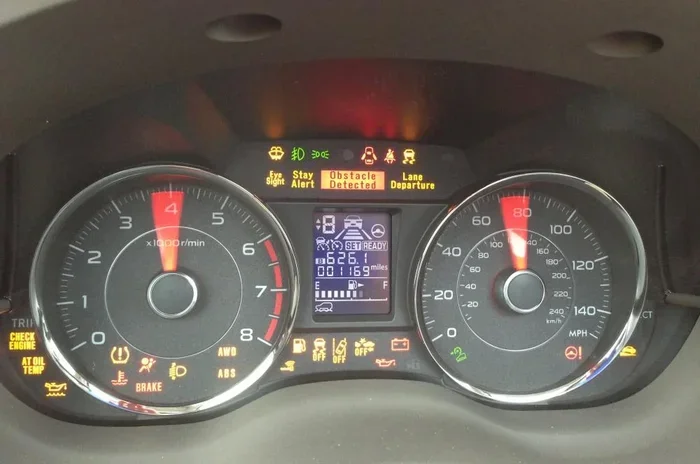
The oil change indicator on most Subaru models looks like a small wrench symbol. It is usually yellow or amber in color. Sometimes it appears as a text message on your digital dashboard that reads “Maintenance Required.” The wrench icon is universal across most Subaru models, which makes it easy to recognize.
It is important not to confuse this light with other dashboard warnings. For example, a red oil pressure light is different from the yellow maintenance light. The red light means your oil pressure is dangerously low right now and you should pull over immediately. The yellow light is a routine reminder. It means you need to schedule an oil change soon but it is not an emergency.
When Does the Subaru Oil Change Light Come On?
The timing of when your oil change light activates depends on your driving patterns. Subaru does not use a one-size-fits-all mileage number. Instead, the system adapts to your specific usage. Here is a closer look at when you can expect the light to come on.
Typical Mileage Intervals
For most Subaru drivers, the light will come on somewhere between 5,000 and 7,500 miles. However, this is just a general range. Some drivers may see the light at 4,000 miles if they frequently drive in harsh conditions. Others might push it to 8,000 miles if they mostly drive on highways in mild weather.
Here are some common scenarios that affect when the light triggers:
- City driving: Stop-and-go traffic causes the light to come on sooner, sometimes at 4,000 to 5,000 miles.
- Highway driving: Consistent speeds at moderate temperatures can push the interval closer to 7,500 miles.
- Towing or hauling: Heavy loads strain the engine and oil, triggering the light earlier.
- Extreme temperatures: Both very hot and very cold climates reduce oil life faster.
- Short trips: Frequent short drives under 10 miles do not allow the oil to fully warm up, which degrades it faster.
Oil Change Light vs. Fixed Mileage Schedule
Some Subaru owners prefer to follow a fixed schedule instead of relying on the dashboard light. The traditional recommendation used to be every 3,000 miles, but modern synthetic oils have extended that window. Many Subaru experts now recommend changing oil every 6,000 miles for normal driving or every 7,500 miles for synthetic oil.
The oil life monitoring system is generally more accurate than a fixed schedule because it accounts for your actual driving conditions. However, if you rarely drive or your driving patterns are very consistent, a fixed schedule works just as well. The key is to not ignore either the light or the mileage marker.
How to Reset the Subaru Oil Change Light
Once you have changed your oil, the next step is to reset the oil change light. This tells the system that you have installed fresh oil and the maintenance cycle has started over again. Resetting the light is a straightforward process, though the exact steps vary slightly depending on your Subaru model and year.
Reset Steps for Most Subaru Models
Here is a general guide for resetting the maintenance light on most Subaru vehicles:
- Turn the ignition to the “ON” position without starting the engine. You do this by pressing the start button without pressing the brake pedal or turning the key to the “ON” position.
- Press the trip meter reset button on your dashboard or steering wheel controls. Hold it down for several seconds.
- Navigate to the maintenance menu using the steering wheel arrows or dashboard buttons.
- Select “Reset Maintenance” or “Reset Oil Life.”
- Confirm the reset by holding the button again until the light turns off.
- Turn the ignition off and then back on to verify the light has been cleared.
If these steps do not work for your specific model, check your owner’s manual. Subaru provides detailed reset instructions for every model year. You can also visit your local Subaru dealer and they will reset it for you quickly, often at no charge.
Common Mistakes When Resetting the Light
Many Subaru owners make small mistakes when trying to reset the oil change indicator. Here are a few to avoid:
- Starting the engine during the reset process: This can cancel the reset and you will have to start over.
- Not holding the button long enough: The system requires a sustained press for several seconds to confirm the reset.
- Confusing the trip meter reset with the maintenance reset: These are two different functions. Make sure you are in the maintenance menu.
- Resetting without actually changing the oil: This defeats the purpose and your engine will run on old oil longer than it should.
Why You Should Never Ignore the Oil Change Light
It is tempting to ignore a yellow dashboard light, especially if your car seems to be running fine. But ignoring your oil change light is one of the most common mistakes Subaru owners make. Over time, this small oversight can lead to serious and expensive engine problems.
What Happens When You Skip Oil Changes
Engine oil does more than just lubricate moving parts. It also cleans, cools, and protects your engine from wear. When oil gets old, it loses its ability to do all of these things effectively. Here is what can happen if you keep driving past the maintenance light:
- Increased engine friction: Old oil becomes thinner and less effective at reducing friction between engine parts.
- Sludge buildup: Contaminated oil forms sludge that clogs oil passages and reduces engine performance.
- Overheating: Fresh oil helps regulate engine temperature. Old oil loses this ability.
- Reduced fuel economy: A poorly lubricated engine has to work harder, which burns more fuel.
- Engine damage: In extreme cases, running on old oil can cause permanent engine damage that costs thousands of dollars to repair.
These are not hypothetical risks. They are real consequences that many Subaru owners face when they ignore their dashboard warnings. Taking care of an oil change when the light comes on is one of the cheapest and easiest forms of routine maintenance you can do.
How Oil Changes Protect Your Engine Long Term
Regular oil changes keep your Subaru engine running smoothly for hundreds of thousands of miles. Fresh oil reduces wear on critical components like pistons, camshafts, and bearings. It also helps maintain proper oil pressure throughout the engine, which is essential for consistent performance.
Think of it this way. Would you run a marathon without drinking water? Of course not. Your engine needs fresh oil the same way your body needs water during a long run. The oil change light is simply your engine asking for a drink.
Subaru Oil Change Light vs. Other Dashboard Warning Lights
Subaru dashboards include many different lights and indicators. It is easy to get confused about which one means what. Understanding the difference between your oil change light and other warning lights helps you respond appropriately and avoid unnecessary panic.
Quick Comparison of Common Subaru Warning Lights
- Oil Change Light (Wrench Icon): Yellow or amber. Indicates it is time for routine oil maintenance. Not an emergency.
- Oil Pressure Light (Red Oil Can): Red. Indicates dangerously low oil pressure. Stop driving immediately and check your oil level.
- Check Engine Light: Yellow or orange. Indicates a problem with the emissions system or engine performance. Get it checked soon but it is usually not urgent.
- Battery Light: Red battery icon. Indicates a charging system problem. Pull over and turn off the engine.
- Brake Warning Light: Red. Indicates low brake fluid or an issue with the braking system. Check immediately.
Knowing the difference between these lights is essential for every Subaru owner. The oil change light is one of the least urgent warnings on your dashboard, but it should still be addressed promptly. Other lights like the red oil pressure warning demand immediate action.
Tips for Staying on Top of Your Subaru Oil Changes
Staying consistent with your oil changes does not have to be complicated. A few simple habits can make a huge difference in how well your Subaru performs and how long it lasts. Here are some practical tips to keep your maintenance on track.
Set Reminders on Your Phone or Calendar
Even with an oil life monitoring system, it helps to set your own reminders. Use your phone calendar or a maintenance app to track your mileage and schedule oil changes before the light even comes on. This proactive approach keeps your engine in great shape and prevents you from accidentally running on old oil.
Keep a Maintenance Log
Writing down every oil change date, mileage, and oil type creates a valuable record. This log is useful for several reasons. First, it helps you track your personal oil change frequency and understand how your driving affects the system. Second, it provides proof of maintenance if you ever sell your car or need to dispute a warranty claim. Third, it gives you peace of mind knowing you are staying current.
Use the Right Oil for Your Subaru
Not all engine oils are the same. Subaru recommends specific oil weights and formulations for their engines. Check your owner’s manual to find the right oil specification. Using the correct oil ensures your oil life monitoring system works accurately and your engine gets the protection it needs.
Visit a Trusted Service Provider
Whether you do it yourself or visit a shop, make sure your service provider follows the Subaru maintenance schedule. Many quick-lube shops like Jiffy Lube offer oil change services, but it is always good to confirm they use the right oil grade for your specific model. Proper oil selection directly impacts how well your engine runs and how long the oil lasts.
Don’t Forget About the Oil Filter
Every oil change should include a new oil filter. The filter catches dirt, metal particles, and other contaminants before they can circulate through your engine. A clogged filter reduces oil flow and can cause premature engine wear. Always replace the filter when you change your oil, even if it looks fine on the outside.
Frequently Asked Questions
What does the Subaru oil change light look like?
The oil change light on most Subaru models appears as a small yellow or amber wrench icon on your dashboard. Some newer models display a text message that says “Maintenance Required.” The wrench symbol is the most common indicator across the Subaru lineup, including the Outback, Forester, and Crosstrek models.
Can I drive with the oil change light on?
Yes, you can drive a short distance with the light on. It is a reminder, not an emergency. However, you should not delay the oil change for too long. Driving hundreds of miles past the recommended interval can degrade your oil and put your engine at risk. Aim to get the oil changed within a few hundred miles of the light appearing.
How often should I change my Subaru oil?
For most Subaru models with normal driving conditions, oil should be changed every 6,000 to 7,500 miles when using synthetic oil. If you drive in severe conditions like extreme heat, cold, stop-and-go traffic, or tow heavy loads, you may need to change your oil every 5,000 miles. Always refer to your owner’s manual for the specific recommendation for your model year.
What happens if I reset the oil change light without changing the oil?
Resetting the light without changing the oil simply clears the reminder and restarts the oil life monitoring cycle. Your engine will still be running on old oil, which means you are not getting the protection fresh oil provides. This is a bad practice and can lead to increased engine wear over time. Always change the oil before resetting the light.
Does the oil change light mean my oil is completely worn out?
Not necessarily. The oil life monitoring system estimates oil degradation based on driving conditions, not a direct measurement of oil quality. The light typically comes on when the system estimates the oil has reached the end of its useful life, but the oil may still have some protective properties left. The light is a prompt to take action soon, not an indication that your engine is already damaged.
Is the Subaru oil change light the same as the check engine light?
No, these are two completely different lights with different purposes. The oil change light (wrench icon) is a routine maintenance reminder for oil replacement. The check engine light indicates a problem with the emissions system, engine performance, or sensors. If your check engine light is on, you should have your vehicle diagnosed as soon as possible. If your oil change light is on, you simply need to schedule an oil change.