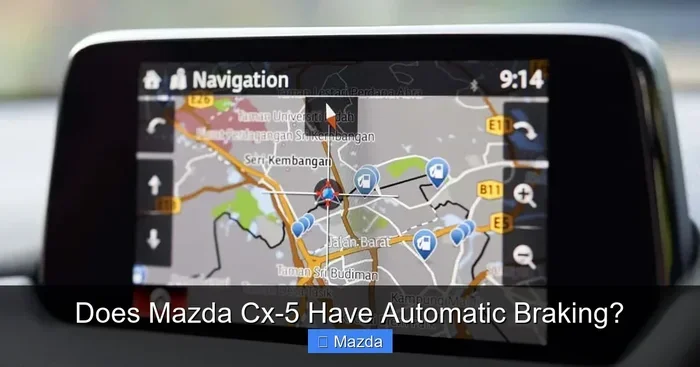
Does Mazda CX-5 Have Automatic Braking – Find Out Why
Yes, the Mazda CX-5 does come with automatic braking as part of its i-Activsense safety suite. This feature helps prevent collisions by detecting obstacles and applying the brakes when needed. Whether you buy the base model or a top-tier trim, automatic emergency braking is available, though the exact features vary by trim level and model year.
The Mazda CX-5 has been one of the most popular compact SUVs on the market for years. People love its sharp styling, comfortable interior, and strong safety ratings. But one question keeps coming up: does Mazda CX-5 have automatic braking? The short answer is yes. But like most things in the car world, the full story is a bit more detailed.
Automatic braking, also known as automatic emergency braking, is a safety feature that can detect an upcoming collision and apply the brakes without you touching the pedal. It is a game-changer for daily driving, especially in heavy traffic or bad weather. The CX-5 offers this feature across most of its trim levels, but the exact setup depends on the model year and trim you choose.
In this article, we will walk through everything you need to know about the Mazda CX-5’s automatic braking system. We will cover how it works, which trims include it, how it performs in real-world situations, and what you can do to keep the system running smoothly. By the end, you will have a clear picture of why the CX-5 remains a top pick for safety-conscious buyers.
Key Takeaways
- Standard Safety Feature: Most Mazda CX-5 trims include automatic emergency braking as part of the i-Activsense package.
- Multiple Trim Options: Higher trims offer more advanced braking and driver-assist features.
- Works With Other Systems: Automatic braking pairs with forward collision warning and pedestrian detection.
- Hybrid Version Available: The CX-5 hybrid also includes these safety features, and you can learn more about how the hybrid system works here.
- Regular Maintenance Matters: Keeping your brakes in top shape ensures the automatic system works properly.
- Real-World Performance: Users and safety testers report strong results with the CX-5’s braking technology.
📑 Table of Contents
- What Is Automatic Braking and How Does It Work?
- Does the Mazda CX-5 Come with Automatic Braking?
- i-Activsense: Mazda’s Safety Suite Explained
- How Automatic Braking Performs in Real-World Scenarios
- Which Mazda CX-5 Trims Include Automatic Braking?
- Maintaining Your CX-5 Braking System
- Expert Insights and Common Mistakes
- Final Thoughts
What Is Automatic Braking and How Does It Work?
Automatic braking is a driver-assist technology designed to reduce the severity of collisions or avoid them altogether. The system uses sensors, cameras, and radar to monitor the road ahead. When it detects a potential obstacle, it alerts the driver. If the driver does not react, the system steps in and applies the brakes automatically.
The Sensors Behind the System
The Mazda CX-5 uses a combination of front-facing cameras and radar sensors. These are usually mounted near the windshield and the front grille. They constantly scan the road for vehicles, pedestrians, cyclists, and other objects. The system processes this information in real time, making split-second decisions about whether braking is needed.
Here is how the process typically works:
- Detection: Sensors identify a potential obstacle ahead.
- Warning: The system alerts the driver with visual and audio signals.
- Preparation: The brakes are pre-charged for faster response.
- Activation: If the driver does not act, the brakes apply automatically.
This layered approach gives the driver time to react while also having a safety net. It is smart technology that works quietly in the background until you need it most.
How It Differs From Regular Braking
Regular braking depends entirely on the driver. You see a hazard, you decide to stop, and you press the brake pedal. Automatic braking removes the delay between seeing a danger and reacting. Studies show that human reaction time can be slow, especially when distracted or fatigued. The automatic system fills that gap, which is why it has become such an important safety feature in modern cars.
It is also worth noting that does traction control use more gas is a related question many drivers ask. Traction control and automatic braking are different systems, but they both work together to keep the CX-5 stable and safe on the road.
Does the Mazda CX-5 Come with Automatic Braking?
The answer is a resounding yes. The Mazda CX-5 comes equipped with automatic emergency braking as part of Mazda’s i-Activsense safety suite. However, the availability and extent of these features depend on the trim level you select and the model year.
Standard vs. Optional Features
On most CX-5 trims, automatic emergency braking comes as standard equipment. This means you do not need to pay extra for it on base models. However, more advanced versions of the system, such as pedestrian detection and intersection emergency braking, may only be available on higher trims or as part of a technology package.
Here is a quick look at what you can expect:
- Base Trims (Sport): Include standard automatic emergency braking with forward collision warning.
- Mid-Level Trims (Touring): Add more advanced features like pedestrian detection and lane departure warning.
- Top Trims (Grand Touring, Signature): Offer the full suite of i-Activsense safety features, including smart brake support and intersection assistance.
When shopping for a CX-5, always check the specific trim sheet. Mazda updates its feature lineup slightly from year to year, so the exact configuration can vary. You can also look up the model year on Mazda’s official website for the most accurate details.
Model Year Differences
Mazda has been steadily improving its safety technology over the years. Newer model years of the CX-5 tend to come with more refined versions of the automatic braking system. For example, the 2023 and 2024 CX-5 models feature upgraded sensors and faster processing speeds. If you are buying used, check the model year to understand what level of automatic braking you are getting.
For those considering the hybrid version of the CX-5, it is worth understanding how the powertrain interacts with the braking system. You can read more about how the hybrid system operates and when it switches modes here.
i-Activsense: Mazda’s Safety Suite Explained
i-Activsense is Mazda’s umbrella name for its suite of advanced driver-assist technologies. It is designed to give drivers more confidence and awareness on the road. Automatic braking is just one piece of this larger safety puzzle. Let us break down what i-Activsense includes and how it all works together.
Key Features of i-Activsense
- Smart Brake Support (SBS): This is the core automatic braking system. It detects vehicles ahead and prepares the brakes for a quick stop.
- Forward Collision Warning (FCW): Alerts the driver visually and audibly when a collision is imminent.
- Pedestrian Detection: Identifies pedestrians in the vehicle’s path and can apply the brakes automatically.
- Intersection Emergency Braking: Helps detect vehicles crossing your path at intersections.
- Adaptive Cruise Control: Maintains a safe following distance from the vehicle ahead.
- Lane Departure Warning and Lane Keep Assist: Alerts you if you drift out of your lane and can make corrective steering inputs.
These features work together to create a comprehensive safety net. No single system is perfect on its own, but together they cover a wide range of potential driving scenarios.
How i-Activsense Compares to Other Brands
Mazda’s i-Activsense system holds its own against competitors like Toyota Safety Sense and Honda Sensing. In many independent crash tests, the CX-5 earns top safety ratings. The Insurance Institute for Highway Safety (IIHS) has repeatedly awarded the CX-5 its Top Safety Pick designation. This is largely thanks to the effectiveness of its automatic braking and other active safety features.
One thing that sets Mazda apart is its focus on making these systems feel natural. Unlike some brands where driver-assist features feel intrusive or overly sensitive, i-Activsense tends to operate smoothly and only intervene when truly needed. This makes it a favorite among drivers who want safety without the hassle.
How Automatic Braking Performs in Real-World Scenarios
Theoretical specs are one thing, but real-world performance is what matters. So how does the Mazda CX-5’s automatic braking system actually perform when it counts?
City Driving and Stop-and-Go Traffic
In city driving, automatic braking shines. Stop-and-go traffic creates situations where rear-end collisions are common. The CX-5’s system monitors the vehicle ahead and can bring the car to a complete stop if needed. It works at low speeds, which is where most urban accidents happen.
For drivers who frequently navigate busy downtown streets or crowded parking lots, this feature provides peace of mind. It acts as an extra set of eyes, especially helpful when you are tired or distracted.
Highway Driving
On the highway, the automatic braking system works at higher speeds. It can detect slower-moving vehicles or sudden slowdowns in traffic. While the system cannot always prevent a collision at highway speeds, it can significantly reduce the impact severity. This can make the difference between a minor fender bender and a serious accident.
It is also worth mentioning that the CX-5’s does sport mode make a car faster feature does not disable safety systems. Even in sport mode, automatic braking remains active and ready to intervene. This is an important design choice that shows Mazda prioritizes safety over performance when the two could conflict.
Bad Weather Conditions
Rain, fog, and snow can all reduce visibility and increase stopping distances. The CX-5’s sensors are designed to work in a variety of conditions, but no system is perfect in extreme weather. Heavy rain or thick snow can occasionally interfere with sensor performance. This is why it is always important to stay alert and keep your eyes on the road, even with advanced safety features.
Regular maintenance of your braking system helps ensure the automatic features work at their best. If you are curious about brake maintenance, check out this guide on what Jiffy Lube does for your belts and brakes to understand the broader maintenance picture.
Pedestrian and Cyclist Detection
One of the most valuable aspects of the CX-5’s automatic braking is its ability to detect pedestrians and cyclists. These are vulnerable road users, and collisions with them can be devastating. The CX-5’s system can identify pedestrians crossing the road, even in low-light conditions, and apply the brakes if the driver does not respond.
This feature is especially useful in urban environments where foot traffic is heavy. Schools, crosswalks, and downtown shopping areas are all places where pedestrian detection can make a real difference.
Which Mazda CX-5 Trims Include Automatic Braking?
Not all CX-5 trims are created equal when it comes to safety features. Here is a breakdown of what you can expect across the lineup.
2024 Mazda CX-5 Trim Overview
| Trim Level | Automatic Emergency Braking | Pedestrian Detection | Intersection Support |
|---|---|---|---|
| Sport | Standard | Standard | Optional |
| Touring | Standard | Standard | Standard |
| Grand Touring | Standard | Standard | Standard |
| Signature | Standard | Standard | Standard |
As you can see, the base Sport trim already includes automatic emergency braking and pedestrian detection as standard. Higher trims add intersection emergency braking and other advanced features. If safety is a top priority for you, the Touring trim or above is a solid choice.
What to Look for When Buying
When shopping for a CX-5, ask the dealer about the specific safety features included. Do not assume that every trim has the same level of automatic braking support. Here are some quick tips:
- Ask for the window sticker: This lists all standard and optional features for that specific vehicle.
- Check the model year: Newer model years may have updated or upgraded safety systems.
- Test drive with safety features active: Feel how the system behaves in different driving conditions.
- Look for IIHS ratings: Independent crash test ratings give you an unbiased view of safety performance.
For those considering a pre-owned CX-5, the same principles apply. Always verify the trim level and model year to confirm which safety features are present. You can also explore whether vinyl wraps affect car value if you are thinking about protecting or customizing the exterior of your CX-5.
Maintaining Your CX-5 Braking System
Having automatic braking is great, but only if the system is properly maintained. A well-maintained braking system ensures that the automatic features work when you need them most. Here is what you need to know about keeping your CX-5’s brakes in top shape.
Regular Brake Inspections
Have your brakes inspected at least once a year or every 12,000 miles, whichever comes first. A mechanic will check the brake pads, rotors, brake fluid, and sensors. Since the automatic braking system relies on these components, any wear or damage can reduce its effectiveness.
Brake Fluid and Sensor Care
Brake fluid absorbs moisture over time, which can reduce braking performance. Mazda recommends changing the brake fluid every two years or 24,000 miles. The sensors that feed data to the automatic braking system also need to stay clean and unobstructed. Dirt, ice, or debris on the front sensors can cause the system to malfunction or provide false warnings.
Quick Tips for Brake Longevity
- Avoid riding the brake: Keeping your foot on the brake pedal while driving wears out pads faster.
- Drive smoothly: Gradual braking puts less stress on the system than sudden hard stops.
- Watch for warning signs: Squealing, grinding, or a pulling sensation when braking all signal potential problems.
- Keep sensors clean: A gentle wipe of the front sensors during car washes can prevent false alerts.
Taking care of your brakes also means taking care of the automatic system. When all components are in good condition, the CX-5’s safety features perform at their best. If you are ever unsure about the health of your braking system, a trusted mechanic can provide a thorough assessment.
Expert Insights and Common Mistakes
Expert Insights
Automotive safety experts consistently praise the Mazda CX-5 for its well-rounded safety package. According to IIHS evaluations, the CX-5’s forward collision warning and automatic emergency braking systems are among the best in the compact SUV class. The system’s response time is quick, and its detection range is impressive for the price point.
Safety analysts also point out that the CX-5’s braking system is intuitive. Unlike some vehicles where automatic braking feels abrupt or startling, the CX-5 eases into braking smoothly. This reduces the risk of rear-end collisions caused by sudden, unexpected braking by the safety system itself.
Common Mistakes Drivers Make
Even with excellent safety technology, drivers can undermine the system’s effectiveness. Here are some common mistakes to avoid:
- Ignoring warning lights: If the automatic braking warning light stays on, have it checked immediately.
- Over-reliance on the system: Automatic braking is a backup, not a replacement for attentive driving.
- Dirty sensors: Grease, mud, or ice on the front sensors can prevent the system from working properly.
- Skipping maintenance: Worn brake pads or low brake fluid can compromise the automatic braking system.
- Assuming all trims are the same: Always verify the specific features included with your trim level.
Avoiding these mistakes ensures that your CX-5’s automatic braking system is always ready to protect you and your passengers.
Final Thoughts
The Mazda CX-5 is a strong choice for anyone who values safety. Its automatic braking system is effective, well-integrated, and available across most trim levels. From city streets to highways, the system provides an extra layer of protection that can make a real difference in an emergency.
Whether you are buying new or used, the CX-5 delivers peace of mind. The i-Activsense suite gives you more than just automatic braking. It offers a complete safety ecosystem that works together to keep you aware and protected. Pair this with regular maintenance and attentive driving, and you have a vehicle that is built to keep you safe for years to come.
If you are still on the fence about the CX-5, take it for a test drive. Experience the automatic braking system firsthand and see how it fits into your daily driving routine. You will quickly understand why so many drivers trust the Mazda CX-5 as their go-to compact SUV.
Frequently Asked Questions
Does every Mazda CX-5 trim have automatic braking?
Yes, automatic emergency braking comes standard on most CX-5 trims, including the base Sport model. However, more advanced features like intersection emergency braking may only be available on higher trims or as an optional package. Always check the specific trim details before purchasing.
Can you turn off the automatic braking on a Mazda CX-5?
Yes, the automatic braking system can be temporarily turned off through the vehicle’s settings menu. However, it will automatically reactivate each time you start the engine. Mazda recommends keeping the system on for maximum safety.
How well does the CX-5’s automatic braking work in rain or snow?
The system is designed to work in various weather conditions, but heavy rain or snow can occasionally affect sensor performance. The CX-5’s automatic braking remains effective in light to moderate bad weather. For severe conditions, always drive cautiously and keep the sensors clean.
Does the Mazda CX-5 hybrid have the same automatic braking features?
Yes, the CX-5 hybrid includes the same i-Activsense safety suite, including automatic emergency braking. The hybrid powertrain works alongside the safety systems without interference. You can learn more about how the CX-5 hybrid system functions and when it switches to gas here.
How often should the braking sensors be cleaned?
It is a good practice to clean the front braking sensors during regular car washes. In areas with heavy snow, mud, or road salt, cleaning them more frequently helps prevent false warnings and ensures the automatic braking system works correctly.
Is the automatic braking system covered under Mazda’s warranty?
Yes, the i-Activsense safety features, including automatic braking, are covered under Mazda’s comprehensive warranty. The basic warranty covers most components for three years or 36,000 miles, whichever comes first. The powertrain warranty extends longer. Check your specific warranty details for full coverage information.
=== CONCLUSION ===
The Mazda CX-5 automatic braking system is a standout feature that sets this compact SUV apart from the competition. It comes standard on most trims, works seamlessly with other safety technologies, and delivers strong real-world performance. Whether you are navigating city traffic, cruising on the highway, or driving in challenging weather, the CX-5 has your back.
Remember that automatic braking is most effective when combined with regular maintenance and attentive driving. Keep your sensors clean, your brake fluid fresh, and your brake pads in good condition. The result is a vehicle that not only looks great and drives well but also keeps you safe on every journey.
So the next time someone asks, does Mazda CX-5 have automatic braking, you can confidently say yes. The CX-5 proves that safety and style can go hand in hand, making it one of the smartest choices in the compact SUV segment today.