Does Car Insurance Cover Scratches On Your Vehicle
Does car insurance cover scratches? The answer depends on your policy type and the cause of the damage. Comprehensive coverage typically handles scratches from vandalism, falling debris, or weather, while collision coverage applies to scratches from accidents. However, minor scratches may not be worth filing a claim for, especially after your insurance deductible. Understanding your auto insurance coverage helps you make smart decisions about repairs and claims.
Every car owner knows the sinking feeling of discovering a fresh scratch on their vehicle. Whether it happened in a parking lot, during a storm, or from an unknown source, the first question that pops into most people’s minds is the same. Does car insurance cover scratches? The short answer is: it depends. Your coverage type, the cause of the scratch, and your specific policy all play a role in determining whether you get help paying for repairs.
Navigating car insurance can feel confusing. There are so many policy types, deductibles, and fine print details to consider. Many drivers assume their insurance handles everything, only to find out later that their policy doesn’t cover certain types of damage. This guide breaks down exactly how scratch coverage works, when to file a claim, and what alternatives exist if your policy falls short.
By the end of this article, you will have a clear picture of what your auto insurance does and does not cover. You will also learn practical steps to protect your vehicle and make informed decisions when scratches happen. Let’s dive in.
Key Takeaways
- Comprehensive coverage: Usually covers scratches caused by non-collision events like vandalism, weather, or falling objects.
- Collision coverage: Applies when scratches result from a car accident or hitting an object.
- Liability-only policies: Do not cover damage to your own vehicle, including scratches.
- Deductibles matter: If repair costs are below your deductible, filing a claim may not make financial sense.
- Claim process: Documenting damage with photos and getting a professional assessment strengthens your claim.
- Premium impact: Filing a scratch claim can raise your rates, so weigh the cost carefully.
- Prevention tips: Parking in safe spots and using protective accessories reduces scratch risk.
📑 Table of Contents
How Car Insurance Works For Scratch Damage
Car insurance is not one single thing. It is a bundle of different coverage types, each designed to handle specific situations. Understanding these types is the first step in figuring out whether your scratches are covered. Most drivers carry a combination of liability, collision, and comprehensive coverage. Each one handles different kinds of damage in different ways.
Understanding Coverage Types
Liability coverage pays for damage you cause to other people or their property. It does not pay for damage to your own car. So if you are wondering whether liability insurance covers scratches on your vehicle, the answer is no. This is the most basic and legally required type of coverage in most states, but it offers the least protection for your own vehicle.
Collision coverage pays for damage to your car resulting from an accident. This includes scratches from fender benders, hitting a curb, or scraping against a guardrail. If you rear-ended someone and your paint got scraped, collision coverage would typically apply.
Comprehensive coverage is the big one when it comes to scratches. It covers damage from events that are not collisions. This includes vandalism, falling tree branches, hail, theft, and weather-related damage. If someone keyed your car in a parking lot, comprehensive coverage would usually foot the bill for repairs.
Some drivers also carry uninsured or underinsured motorist coverage. This kicks in when the other driver does not have enough insurance to cover your damages. It can sometimes apply to scratch damage if the other driver was at fault but lacked coverage.
What Your Policy Actually Says
Every insurance policy is different. The declarations page of your policy outlines exactly what is covered and what is not. Some policies have specific exclusions for certain types of damage. For example, a policy might exclude coverage for scratches caused by wear and tear or poor maintenance. Reading your policy carefully is always a good idea before you need to file a claim.
If you are unsure about your coverage, calling your insurance agent is the easiest step. They can walk you through your policy details and explain what is and is not included. Do not wait until after damage occurs to find out what you do and do not have.
When Insurance Covers Scratches
Not all scratches are created equal. Insurance companies evaluate scratch claims based on the cause, severity, and your specific policy terms. Here are the most common scenarios where your insurance is likely to cover scratch repairs.
Vandalism And Criminal Damage
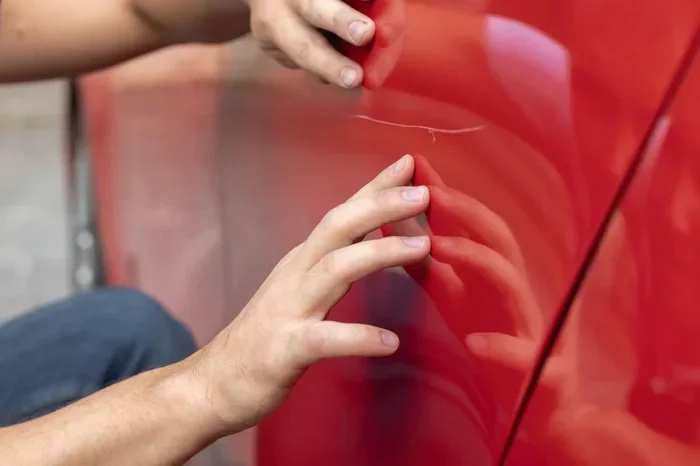
Scratches caused by vandalism are one of the most common reasons drivers file comprehensive claims. Keying a car, scratching paint with a key or sharp object, or slashing tires all fall under this category. Comprehensive car insurance is designed to handle these situations because they are outside of your control.
For example, if you return to your car in a parking lot and find deep scratches across the door, that is vandalism. As long as you have comprehensive coverage, your insurer should cover the repair cost minus your deductible. Filing a police report strengthens your claim significantly. Insurance companies want proof that the damage was not self-inflicted or caused by wear and tear.
Weather And Environmental Damage
Severe weather can cause surprising amounts of scratch damage to vehicles. Hail storms, falling tree branches, and flying debris during high winds can all leave marks on your car’s surface. Comprehensive coverage typically includes weather-related damage, including scratches from environmental factors.
Even something like a nearby construction site can cause scratches. If debris falls onto your parked car and creates paint damage, your comprehensive policy should cover it. The key is proving that the damage was sudden and accidental, not gradual wear over time.
Accident-Related Scratches
If you were in a car accident and your vehicle sustained scratches, collision coverage applies. This includes scratches from scraping against another vehicle, a wall, a pole, or any object during a collision. The scratches do not need to be the primary damage; even minor surface scratches that accompany a larger accident are covered.
In these cases, the at-fault driver’s insurance may also cover your repairs. If the other driver caused the accident, their liability coverage should pay for your vehicle’s damage, including scratches. This means you might not even need to touch your own policy.
When Insurance Won’t Cover Scratches
Understanding when insurance does not cover scratches is just as important as knowing when it does. Several common situations fall outside the scope of standard policies.
Wear And Tear
Insurance is designed to cover sudden and accidental damage. It does not cover gradual deterioration. Over time, your car’s paint naturally wears down from sun exposure, washing, and everyday use. Fine surface scratches from normal wear and tear are not covered by any standard policy. This is one of the most important exclusions to understand.
Scratches You Caused Yourself
If you scratched your own car while parking, driving, or performing maintenance, collision coverage might apply depending on the circumstances. However, if the scratch was purely your own fault and not part of a broader accident, the claim process can be tricky. Some insurers may deny such claims, especially if there is no third party or external object involved.
Liability-Only Policies
Drivers with only liability coverage have no protection for their own vehicle’s damage. If you have a basic policy that meets only the legal minimum requirements, scratches to your car will not be covered. This is a common gap that many drivers do not realize until it is too late.
Scratches Below The Deductible
Even if your policy covers the type of scratch, the cost of repair might be below your deductible. For instance, if your deductible is $500 and the scratch repair costs $300, you would pay out of pocket. Filing a claim in this situation is generally not worth it because it could raise your premiums without any financial benefit.
Intentional Damage
Insurance companies do not cover damage that is intentionally caused. If you or someone else deliberately scratched the vehicle, the claim will be denied. This also applies to situations where the cause of the scratch cannot be determined and the insurer suspects intentional harm.
The Claims Process For Scratch Damage
If you decide to file a claim for scratch damage, knowing the process helps you move forward confidently. The steps are straightforward but require attention to detail.
Step 1: Document The Damage
Before you do anything else, take clear photos of every scratch from multiple angles. Capture the surrounding area too. Photos serve as crucial evidence for your claim. Write down where and when you noticed the damage, and note any witnesses if available.
If the scratches resulted from a hit-and-run or vandalism, check for any surveillance cameras nearby. Business parking lots, shopping centers, and apartment complexes often have cameras that may have captured the incident.
Step 2: File A Police Report
For vandalism or unknown-cause scratches, filing a police report is highly recommended. The police report provides official documentation that supports your insurance claim. Without it, your insurer may question the legitimacy of the damage.
Contact your local police department as soon as possible after discovering the damage. Provide them with all the photos and details you have gathered.
Step 3: Contact Your Insurance Company
Call your insurance provider or use their online portal to start the claims process. Be ready to provide your policy number, photos, police report number (if applicable), and a description of what happened. The sooner you file, the better, as most policies have time limits for reporting claims.
Your insurer may assign an adjuster to assess the damage. The adjuster will determine the cost of repairs and whether the claim falls within your coverage. Be honest and thorough during this assessment.
Step 4: Get Repair Estimates
Most insurance companies require a professional repair estimate before approving a claim. Take your vehicle to an authorized repair shop or one recommended by your insurer. The estimate will outline the cost of fixing the scratches, which helps the insurer determine their payout.
Some modern repair techniques like paintless dent repair can fix minor scratches quickly and affordably. Ask your repair shop about all available options before committing to a repair method.
Step 5: Pay Your Deductible And Get Repairs
Once the claim is approved, you pay your deductible amount. Your insurer covers the rest up to your policy limits. After paying the deductible, the repair shop handles the rest. Keep all receipts and documentation for your records.
Scratch Repair Costs And What To Expect
The cost of repairing scratches varies widely depending on several factors. Understanding these costs helps you decide whether filing a claim makes sense.
Surface-Level Scratches
Minor surface scratches that only affect the clear coat are the least expensive to repair. These typically cost between $50 and $150 per scratch. They can often be buffed out or treated with touch-up pens. Many drivers handle these repairs themselves without involving insurance at all.
Deep Scratches Exposing Primer Or Bare Metal
Deeper scratches that go through the paint layer into the primer or bare metal require more extensive repair. These can cost anywhere from $150 to $500 per scratch, depending on the location and severity. Professional repainting or touch-up is usually needed to prevent rust and further damage.
Multiple Scratches Or Full Panel Damage
If your vehicle has multiple scratches or an entire panel is damaged, costs can escalate quickly. A full panel repaint might run between $500 and $1,500 or more. In these cases, filing an insurance claim becomes more worthwhile because the repair costs are likely to exceed your deductible.
Factors That Affect Repair Costs
Several factors influence how much scratch repairs will cost. The size and depth of the scratch is the biggest factor. The location on the vehicle also matters, as some panels are more expensive to repair than others. The color and type of paint on your vehicle can add complexity and cost. Finally, labor rates vary significantly by region and repair shop.
Tips To Prevent Scratches On Your Vehicle
Prevention is always better than repair. While you cannot eliminate every scratch risk, you can take practical steps to reduce the chances of damage to your vehicle.
Park Smart
Choose parking spots away from high-traffic areas and shopping cart zones. Park near lights at night to deter vandals. Avoid parking under trees where branches could fall and scratch your paint. A little extra thought when parking can save you hundreds of dollars in repair costs.
Use Protective Accessories
Car covers, paint protection film, and ceramic coatings all provide an extra layer of defense against scratches. A quality car cover shields your vehicle from weather damage and debris. Paint protection film, commonly used on bumpers and hoods, absorbs impact and prevents surface scratches.
Regular waxing also helps. A good coat of wax creates a protective barrier that makes it harder for scratches to penetrate the paint. It is a simple and affordable way to maintain your car’s exterior.
Drive Defensively
Many scratches happen during daily driving. Keep a safe distance from other vehicles to avoid paint transfer and minor scrapes. Be cautious when driving through construction zones, narrow streets, and parking garages. Defensive driving protects both you and your vehicle.
Wash And Maintain Regularly
Regular car washing removes dirt, debris, and contaminants that can cause micro-scratches over time. Use a microfiber cloth and gentle soap. Avoid automatic car washes with harsh brushes that can leave fine swirl marks in the paint. Proper maintenance keeps your car looking its best and protects the paint long-term.
Taking care of your car also preserves its resale value. A well-maintained exterior signals to buyers that the vehicle has been cared for. If you are curious about how cosmetic changes affect vehicle value, you might want to read about does vinyl wrap increase car value for insights on exterior modifications and their impact on resale.
Should You File A Claim For Scratch Damage?
This is the question every driver faces after discovering scratches on their car. The answer depends on several factors, including the severity of the damage, your deductible, and your claims history.
Filing a claim makes sense when the repair cost significantly exceeds your deductible. If you have comprehensive coverage and the scratches resulted from vandalism or a storm, the claim process is straightforward. However, if the damage is minor and the repair cost is close to or below your deductible, paying out of pocket is usually the smarter choice.
Keep in mind that filing a claim can lead to a premium increase at your next renewal. Insurance companies track claim history and may view frequent claims as a risk factor. For minor scratches, the premium increase over a few years could end up costing more than the repair itself. Weigh the short-term fix against the long-term cost before deciding.
If you are unsure whether to file, get a repair estimate first. Many shops offer free assessments. Once you know the exact cost, you can make an informed decision about whether insurance is worth it for that particular incident.
Also, consider the timing. If you have other claims coming up or recently filed one, adding another scratch claim might trigger a rate hike. Spreading claims out over time can help minimize the impact on your premiums. And if the scratches are very minor, handling the repair yourself might be the most cost-effective option.
Understanding your rights and coverage gives you confidence when dealing with scratch damage. Knowledge is your best tool for navigating the claims process and making decisions that protect both your vehicle and your wallet.
For more information on related topics, you might find it helpful to learn about can you wash your car too much to understand how improper car care can lead to paint damage and scratches over time.
Conclusion
Does car insurance cover scratches? Yes, but only under the right conditions. Comprehensive coverage handles most non-collision scratches, while collision coverage applies to accident-related damage. Liability-only policies do not cover your own vehicle’s scratches at all. The key is understanding your specific policy, knowing your deductible, and making informed decisions about when to file a claim.
Scratches happen to every car owner at some point. Whether from a parking lot incident, a storm, or a fender bender, the damage can range from minor to significant. By knowing what your insurance covers and following the proper claims process, you can get your vehicle repaired without unnecessary stress or expense.
Take the time to review your policy today. Understand your coverage limits, deductibles, and exclusions. Being proactive about your insurance means you are prepared when the unexpected happens. Your vehicle is a significant investment, and protecting it starts with knowing exactly what your insurance does and does not cover.
Finally, remember that prevention plays a huge role. Simple habits like smart parking, regular washing, and using protective accessories can go a long way in keeping your car scratch-free. And for those who have experienced paint damage or exterior issues, learning about proper car glass cleaning techniques can also help maintain your vehicle’s overall appearance and paint health.
Stay informed, stay proactive, and keep your car looking its best. With the right coverage and the right approach, scratch damage does not have to be a financial burden.
For additional guidance on car care and insurance topics, consider exploring resources about jumping a car in the rain and how weather-related situations can affect your vehicle and insurance needs.
Frequently Asked Questions
Does full coverage car insurance cover scratches?
Full coverage typically includes both comprehensive and collision coverage. This means scratches from vandalism, weather, and accidents are generally covered. However, the specific cause of the scratch determines which coverage type applies. Always check your policy details to confirm what is included.
Will filing a scratch claim raise my insurance rates?
It depends on your claim history and the severity of the damage. Minor claims can sometimes lead to premium increases at renewal. If the repair cost is low and close to your deductible, paying out of pocket may be a better financial decision than filing a claim.
How long does a scratch insurance claim take to process?
Most scratch claims are processed within a few days to a couple of weeks. The timeline depends on your insurer, the complexity of the damage, and how quickly you provide documentation. Having photos and a police report ready can speed up the process significantly.
What is the deductible for scratch damage claims?
Your deductible is the amount you pay out of pocket before insurance kicks in. Deductibles vary by policy but commonly range from $250 to $1,000 for comprehensive and collision coverage. Check your policy declarations page for your specific deductible amount.
Can I repair scratches myself instead of filing a claim?
Yes, many minor scratches can be repaired at home using touch-up pens, scratch removal kits, or professional detailers. DIY repairs are a great option when the cost is below your deductible or when you want to avoid a potential premium increase.
Does car insurance cover scratches from a hit-and-run?
Yes, if you have comprehensive or collision coverage, hit-and-run scratches are typically covered. File a police report immediately, document the damage with photos, and contact your insurance company as soon as possible. The police report is essential evidence for your claim.