Why Is My Car Running Hot And How To Fix It Right Now
Your car running hot is a serious warning sign that should never be ignored. This guide covers the top reasons your engine is overheating and shows you exactly how to fix it right now. You will learn to spot early warning signs, diagnose common cooling system problems, and take simple steps to prevent costly engine damage.
There is nothing quite like the sinking feeling when you glance at your dashboard and see the temperature needle climbing into the red zone. Your car is running hot, and your mind immediately jumps to the worst-case scenario. But here is the good news. Most reasons a car overheats are fixable, especially when you catch them early. This article will walk you through every major cause, the warning signs you need to watch for, and the exact steps you can take to bring your engine temperature back to normal.
Whether you are stuck in traffic on a hot summer day or you noticed steam creeping out from under your hood this morning, you are in the right place. We will break down the cooling system basics in plain language. No jargon. No fluff. Just clear, actionable advice that helps you understand what is happening under the hood and how to handle it. Let us dive into the most common reasons your engine is overheating and how to fix them today.
Key Takeaways
- Low coolant is the #1 culprit: A simple drop in coolant level can cause your engine to overheat fast.
- Multiple parts can fail: The thermostat, water pump, radiator fan, and head gasket are all common causes of overheating.
- Act quickly when you notice warning signs: Pulling over early can save you thousands in engine repair costs.
- Prevention is easy and cheap: Regular coolant flushes and inspections keep your cooling system running strong.
- Some fixes are DIY-friendly: Topping off coolant or replacing a radiator cap are tasks you can handle at home.
- Never ignore steam or warning lights: These are clear signals that your engine temperature is dangerously high.
- Know when to call a pro: Complex issues like a blown head gasket need a certified mechanic.
📑 Table of Contents
Common Reasons Why Your Car Is Running Hot
Your vehicle relies on a cooling system to keep the engine temperature within a safe range. When something goes wrong in that system, heat builds up fast. Understanding the root causes is the first step toward a solution. Below are the most common reasons your car might be running hot.
Low Coolant Level
This is the number one reason cars overheat. Coolant, also called antifreeze, circulates through the engine and absorbs heat. When the coolant level drops too low, there is not enough fluid to carry heat away from the engine block. A coolant leak is often the cause of low levels. Leaks can develop in hoses, the radiator, the water pump, or even the heater core.
Check your coolant reservoir regularly. If the level is below the minimum line, top it off with the correct type of antifreeze for your vehicle. Keep an eye on it over the next few days. If the level drops again, you likely have a leak that needs professional attention.
Thermostat Failure
The thermostat controls the flow of coolant through the engine. It opens and closes based on engine temperature. When the thermostat gets stuck in the closed position, coolant cannot circulate. Heat builds up rapidly, and your car starts overheating.
Thermostat failure is one of the most common engine overheating causes. The good news is that replacing a thermostat is relatively inexpensive. Most mechanics can do it in under an hour. If your temperature gauge fluctuates wildly between hot and cold, a stuck thermostat is a likely suspect.
Water Pump Issues
The water pump is the heart of your cooling system. It pushes coolant through the engine block and hoses. When the water pump fails, coolant stops moving. Heat has nowhere to go, and your engine starts to overheat.
Water pump issues often show up as a whining noise near the front of the engine. You might also notice coolant pooling under your car. A failing water pump gasket or a broken impeller can both cause this problem. Replacing a water pump is more involved than a thermostat swap, but it is still a manageable car repair for most shops.
Radiator Problems
The radiator releases heat from the coolant into the air. When the radiator gets clogged or damaged, it cannot do its job properly. Radiator problems are a leading cause of persistent overheating, especially in older vehicles.
Debris, dirt, and old coolant can build up inside the radiator over time. External damage from road debris or accidents can also cause leaks. If your radiator fins are bent or clogged, airflow gets restricted. This is especially problematic when you are sitting in slow traffic or idling in hot weather.
Radiator Fan and Cooling Fan Failure
Your radiator fan kicks in when the car is moving slowly or sitting still. It pulls air through the radiator to cool the coolant. When the cooling fan fails, your car can overheat at a standstill but run fine at highway speeds.
Fan failure can happen for several reasons. The fan motor might burn out. The fan relay could be faulty. Or the temperature sensor that triggers the fan might be malfunctioning. If you notice your car overheating in traffic but cooling down on the highway, the radiator fan is a prime suspect.
Head Gasket Failure
A blown head gasket is one of the most serious engine overheating causes. The head gasket sits between the engine block and the cylinder head. It seals the combustion chambers and keeps coolant and oil separate. When it fails, coolant can leak into the cylinders or oil passages.
Signs of a head gasket problem include white smoke from the exhaust, a milky residue on the oil cap, and persistent overheating even after topping off coolant. This is a major car repair that requires professional attention. Ignoring a blown head gasket can lead to severe engine damage.
Clogged or Collapsed Hoses
The hoses in your cooling system carry coolant between the engine, radiator, and water pump. Over time, these hoses can become clogged with rust or sediment. They can also collapse internally, restricting flow.
A collapsed hose is a sneaky problem because it is not always visible from the outside. You might notice the engine overheating intermittently. A hose clamp that is loose or corroded can also cause coolant to leak out. Inspect your hoses regularly and replace any that feel hard, brittle, or spongy.
Heater Core Issues
The heater core is a small radiator inside your dashboard. It uses hot coolant to warm your cabin. When the heater core gets clogged or leaks, it can affect the overall flow of your cooling system. You might notice your car running hot while the heater blows cold air.
A leaking heater core can also cause a sweet smell inside the car or foggy windows. While not as common as other causes, a faulty heater core is worth considering if you are experiencing both heating and overheating problems at the same time.
Warning Signs Your Engine Is Overheating
Catching the signs of car overheating early can save you from a roadside breakdown and expensive repairs. Your vehicle gives you plenty of warning before things get critical. Here are the signs you should never ignore.
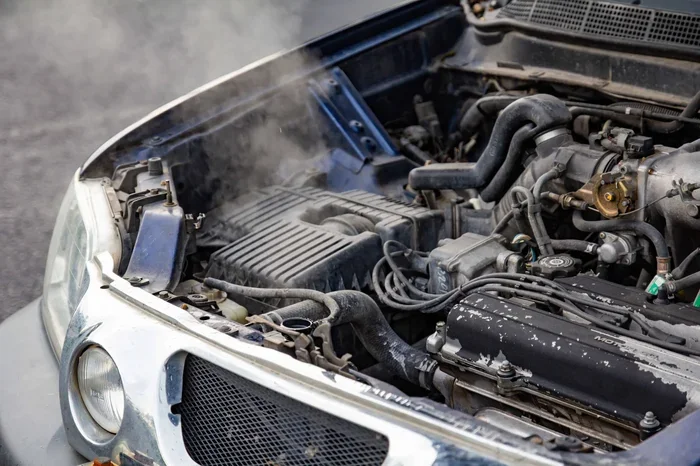
Steam or smoke from under the hood. This is the most obvious sign. If you see steam billowing from the engine bay, pull over safely as soon as possible. Steam from hood usually means coolant is leaking onto hot engine components.
Temperature gauge in the red zone. Your temperature gauge tells you exactly what is happening. If the needle climbs past the normal range and stays there, your engine is too hot. Do not ignore this, even if the steam has not appeared yet.
Unusual smells. A sweet, syrupy smell often means coolant is leaking. A burnt or acrid smell could indicate oil overheating. Both are serious signals that something is wrong.
Coolant puddles under your car. Bright green, orange, or pink fluid on your driveway or in your parking spot is a clear sign of a coolant leak. Check the level and top it off, but also investigate the source.
Engine power loss. An overheating engine often runs poorly. You might notice reduced power, rough idling, or hesitation when you press the accelerator.
How To Diagnose the Problem
Before you start replacing parts, it helps to narrow down the cause. A systematic approach saves time and money. Here is how to diagnose why your car is running hot.
Step 1: Check the coolant level. Make sure the engine is cool before you open the radiator cap. Look at the reservoir. If the level is low, top it off and monitor it. A rapid drop points to a leak.
Step 2: Inspect for visible leaks. Look under your car for puddles. Check the hoses, radiator, and water pump for wet spots or corrosion. A flashlight helps you see into tight spaces.
Step 3: Test the thermostat. Start the engine from cold. Watch the temperature gauge. The upper radiator hose should stay cool for the first few minutes, then get warm as the thermostat opens. If the hose stays cold, the thermostat is likely stuck.
Step 4: Listen for fan operation. Let the engine warm up while sitting idle. The cooling fan should kick on when the temperature reaches a certain point. If you do not hear it, the fan motor or relay may be faulty.
Step 5: Check for pressure loss. A cooling system pressure tester can reveal hidden leaks. Many auto parts stores lend these tools for free. This is a great way to find slow leaks that are hard to see.
Comparison Table: Common Overheating Causes
| Problem | Cost to Fix | Difficulty Level | Common Symptoms |
|---|---|---|---|
| Low Coolant | $10 – $50 | Easy | Gauge in red, coolant puddles |
| Thermostat Failure | $100 – $250 | Moderate | Gauge fluctuates, no heat |
| Water Pump Failure | $300 – $750 | Moderate | Whining noise, coolant leak |
| Radiator Fan Failure | $150 – $400 | Moderate | Overheats at idle, fine on highway |
| Head Gasket Failure | $1,000 – $2,000 | Hard | White smoke, milky oil, persistent heat |
| Clogged Hoses | $50 – $150 | Easy | Intermittent overheating, soft hoses |
This table gives you a quick reference for common engine overheating causes. Use it as a starting point, but remember that a proper diagnosis from a qualified mechanic is always the best course of action for complex issues.
Step-By-Step Fixes You Can Do Right Now
Some overheating problems are simple enough to handle at home. Here are the fixes you can try right now, ranked from easiest to most involved.
Fix 1: Top Off the Coolant
If your coolant level is low, this is the simplest fix. Buy the correct type of antifreeze for your vehicle. Mix it with distilled water at the recommended ratio, usually 50/50. Open the reservoir and pour in the mixture until it reaches the full line. Run the engine for a few minutes and check the level again. This fix alone might solve your problem if the drop was minor.
Fix 2: Replace the Radiator Cap
A faulty radiator cap can cause pressure loss in the cooling system. When pressure drops, coolant boils at a lower temperature and overflows. Replacing a radiator cap costs just a few dollars and takes about five minutes. Make sure the engine is cool before you remove the old cap. Twist it counterclockwise and install the new one clockwise until it clicks.
Fix 3: Flush the Cooling System
Old coolant loses its effectiveness over time. Rust and sediment build up inside the system, reducing efficiency. A coolant flush removes this buildup and refreshes the antifreeze. You can buy flush kits at most auto parts stores, or have a shop do it for you. Most manufacturers recommend a flush every 30,000 to 50,000 miles.
Fix 4: Replace the Thermostat
If your thermostat is stuck closed, replacing it is straightforward. The thermostat is usually located near the water pump at the front of the engine. Drain some coolant, remove the housing, swap out the old thermostat, and reinstall. Refill the coolant and test the engine. This is a great DIY project for beginners.
Fix 5: Repair or Replace the Water Pump
A failing water pump needs more involved work. You will likely need to remove the serpentine belt and several bolts. If you are comfortable with basic engine work, this is doable at home. Otherwise, a mechanic can handle it in a few hours. Always replace the thermostat and gasket when you replace the water pump to avoid future issues.
Prevention Tips To Keep Your Engine Cool
The best way to deal with an overheating engine is to prevent the problem before it starts. A little regular maintenance goes a long way toward keeping your cooling system in top shape.
- Check coolant levels monthly. A quick glance at the reservoir takes less than a minute. Make it part of your routine.
- Flush the coolant on schedule. Follow your vehicle manufacturer recommendations. Fresh coolant protects better and lasts longer.
- Inspect hoses and clamps regularly. Look for cracks, swelling, or loose clamps. Replace anything that looks worn.
- Keep the radiator clean. Hose down the front of the radiator to remove bugs and debris. Clogged fins reduce airflow.
- Listen for unusual sounds. A whining, grinding, or gurgling noise could signal a developing problem in the cooling system.
- Never ignore warning signs. If the temperature gauge creeps up, pull over and investigate. Early action prevents major damage.
Quick Tip: Keep a bottle of pre-mixed coolant and a rag in your trunk. These simple items can save you from a roadside emergency on a hot day.
When To See A Mechanic
Some overheating problems are beyond a DIY fix. Knowing when to call in a professional saves you time, money, and further engine damage. You should see a mechanic if you notice any of the following:
- Persistent overheating after topping off coolant. This suggests an internal leak or a component failure that needs professional diagnosis.
- White smoke from the exhaust. This is a strong indicator of a head gasket problem that requires immediate attention.
- Coolant mixed with oil. If your oil looks milky or frothy, coolant has entered the oil system. Stop driving and get towed to a shop.
- Major coolant loss with no visible external leak. A hidden internal leak is serious and needs professional investigation.
- Multiple cooling system parts failing at once. This could indicate a deeper systemic issue that needs expert assessment.
A qualified mechanic has the tools and experience to diagnose complex engine overheating causes accurately. They can also perform pressure tests, compression tests, and inspections that go beyond what you can do at home. When in doubt, it is always better to get a professional opinion.
Conclusion
Dealing with a car running hot can be stressful, but it does not have to be overwhelming. Most overheating problems come down to a few common causes. Low coolant, a stuck thermostat, a failing water pump, or a broken radiator fan account for the vast majority of cases. The key is to act quickly and not ignore the warning signs.
Start by checking the basics. Coolant level, visible leaks, fan operation, and the condition of your hoses. These simple checks often reveal the problem fast. When you do find the cause, the fixes range from easy DIY tasks to professional repairs. Either way, addressing the issue promptly protects your engine and your wallet.
Prevention is your best long-term strategy. Regular maintenance keeps your cooling system working efficiently and helps you avoid the stress and expense of a breakdown. Stay on top of coolant flushes, hose inspections, and temperature gauge readings. Your car will thank you with reliable performance and a longer life.
Remember, your engine temperature is one of the most important indicators of your vehicle’s health. Respect the warnings it gives you. When your car is running hot, do not wait it out. Take action, stay safe, and keep your engine cool for miles to come.
Frequently Asked Questions
Can I keep driving if my car is running hot?
No, you should not keep driving when your car is running hot. Continuing to drive can cause severe engine damage, including warped cylinder heads and blown head gaskets. Pull over safely, turn off the engine, and let it cool down before checking the coolant level or calling for help.
How much does it cost to fix an overheating engine?
The cost varies widely depending on the cause. A simple coolant top-off costs less than $50, while a thermostat replacement runs $100 to $250. More serious repairs like a water pump or head gasket can cost several hundred to over a thousand dollars. Getting an accurate diagnosis first helps you budget properly.
What should I do if I see steam coming from my hood?
Turn on the heater to full blast. This helps pull heat away from the engine. Pull over safely, turn off the engine, and wait at least 15 to 20 minutes before opening the hood. Never open the radiator cap while the engine is hot, as pressurized coolant can cause serious burns.
Can low oil cause a car to run hot?
Yes, low oil can contribute to overheating. Oil lubricates engine parts and helps carry away heat. When oil levels drop too low, friction increases and heat builds up faster than the cooling system can handle. Always check both your coolant and oil levels when investigating overheating issues.
How often should I flush my cooling system?
Most manufacturers recommend flushing the cooling system every 30,000 to 50,000 miles, or every two to five years. Check your owner’s manual for the specific schedule for your vehicle. Fresh coolant protects against corrosion and maintains proper heat transfer throughout the engine.
Is it safe to add coolant while the engine is hot?
No, it is not safe to add coolant while the engine is hot. The cooling system is under pressure, and opening it while hot can cause scalding coolant to spray out and cause burns. Always let the engine cool completely before removing the radiator cap or adding coolant.