What Does AMG Stand For And Why It Is So Important Today
AMG stands for Aufrecht Melcher Großaspach, the initials of the three founders who started this high-performance automotive legend. What Does AMG Stand For is a question that unlocks a fascinating story of passion, engineering excellence, and racing heritage that transformed the entire luxury car industry.
What Does AMG Stand For? If you have ever seen a sleek black Mercedes-Benz roaring down the highway with a menacing grille and aggressive stance, there is a good chance it came from AMG. This name carries serious weight in the automotive world. It represents power, precision, and a racing pedigree that few brands can match.
But AMG is more than just a badge on a car. It is a story of two engineers who turned a small tuning shop into one of the most respected performance brands on the planet. In this article, we will explore what Does AMG Stand For in full, how it all began, and why it continues to matter so much in today’s car market.
Whether you are a car enthusiast or just curious about luxury performance vehicles, this guide covers everything you need to know. We will look at the history, the engineering philosophy, the models, and the future of this iconic brand. By the end, you will understand why AMG has earned its legendary status.
Key Takeaways
- AMG stands for Aufrecht, Melcher, and Großaspach — the names of the founders and their hometown.
- AMG started as a tuning company before becoming a full Mercedes-Benz performance division.
- AMG engines are hand-built by a single technician, giving each engine a personal touch.
- AMG vehicles deliver extreme horsepower and track-ready performance in luxury packages.
- AMG has expanded into SUVs and sedans, making high performance accessible to more buyers.
- The AMG logo and heritage reflect decades of racing success and engineering innovation.
📑 Table of Contents
- The Full Meaning of AMG
- The History of AMG: From Garage to Global Brand
- What Makes AMG Engines So Special
- AMG Vehicle Lineup: More Than Just Sports Cars
- AMG vs. Standard Mercedes-Benz: What Is the Difference
- The AMG Logo and Brand Identity
- Why AMG Matters Today
- Common Mistakes People Make About AMG
- The Future of AMG
- Final Thoughts
The Full Meaning of AMG
Breaking Down the Name
So, what does AMG stand for exactly? The answer lies in the names of three people and a place. AMG stands for Aufrecht, Melcher, and Großaspach. Let us break that down.
Hans Werner Aufrecht and Erhard Melcher were two engineers who shared a deep passion for engines. They started working on engine development together in the 1960s. Großaspach is a small town in Germany where Hans Werner Aufrecht was born. It is also where the company was originally founded.
The company was born in 1967 as a racing engine workshop. At first, it focused on building high-performance engines for motorsport. The founders wanted to create power units that could dominate on the track. Over time, that passion for performance translated into road cars that ordinary drivers could enjoy.
Why the Initials Matter
Every great brand has a story behind its name. For AMG, the initials are not just a catchy acronym. They represent the roots of a company built on engineering excellence. When you see the three letters on a car, you are looking at a legacy that spans over five decades of innovation.
The name also sets AMG apart from other performance brands. It is not just a marketing label. It carries the identity of real people with real expertise. That authenticity is part of what makes AMG vehicles so special today.
The History of AMG: From Garage to Global Brand
The Early Days
The AMG story begins in a small garage. In 1967, Aufrecht and Melcher founded their company in Grossaspach, Germany. Their goal was simple but ambitious — to build the best racing engines in the world. They started with modified Mercedes-Benz engines and quickly gained a reputation for reliability and power.
By the early 1970s, AMG was competing in various motorsport events. The company’s engines proved their worth on the track. This racing success laid the foundation for everything that followed. People began to associate the AMG name with serious performance.
In 1976, Erhard Melcher decided to focus on his own engineering projects within the company. Meanwhile, Hans Werner Aufrecht moved AMG to a larger facility in Affalterbach, Germany. This new location became the home of AMG engine production and remains so to this day.
The Mercedes-Benz Partnership
The real turning point came in 1990 when AMG entered into a cooperation agreement with Mercedes-Benz. This partnership was a game changer. AMG could now access Mercedes-Benz platforms and infrastructure while maintaining its independent tuning identity.
In 1999, DaimlerChrysler (now Mercedes-Benz Group) acquired a controlling stake in AMG. This meant AMG became a fully integrated part of the Mercedes-Benz family. However, the company retained a remarkable level of independence. AMG still designs and builds its own engines. It still follows its own philosophy of high-performance engineering.
This partnership allowed AMG to expand rapidly. The company went from being a niche tuning specialist to a major player in the global luxury performance market. Today, Mercedes-AMG offers a wide range of vehicles that combine luxury with raw power.
What Makes AMG Engines So Special
Hand-Built by a Single Technician
One of the most remarkable things about AMG is its engine production process. Each AMG engine is hand-built by a single technician. That person signs their name on the engine. This tradition dates back to the early days of the company and continues to this day.
Why does this matter? Because it means every AMG engine receives personal attention. A single person is responsible for assembling the entire power unit. They test it, tune it, and take pride in their work. This level of craftsmanship is rare in modern car manufacturing.
When you buy an AMG vehicle, you are not just getting a car. You are getting an engine that was built by one person who cared about every bolt and every measurement. That personal touch is something you cannot find in mass-produced engines.
Performance Characteristics
AMG engines are known for several key characteristics that set them apart from standard Mercedes-Benz engines:
- High horsepower output — AMG engines regularly produce 400 to 800+ horsepower depending on the model.
- Twin-turbo V8 and V6 configurations — AMG favors forced induction for massive power delivery.
- Sport-tuned exhaust systems — The AMG sound is unmistakable and loved by enthusiasts worldwide.
- Enhanced cooling systems — Built to handle extreme performance without overheating.
- Custom engine management software — AMG tunes every aspect of engine behavior for maximum responsiveness.
The result is an engine that delivers thrilling acceleration, impressive top speeds, and a driving experience that feels alive. Whether you are in an AMG C-Class or a flagship AMG GT, the power delivery is immediate and intense.
AMG Vehicle Lineup: More Than Just Sports Cars
AMG Sedans
Many people think of AMG as a brand for sports cars. But AMG sedans are where the brand truly shines for daily driving. The AMG C-Class is one of the best-selling performance sedans in the world. It offers a perfect balance of luxury, comfort, and speed.
The AMG E-Class takes things up a notch. It provides more space, more refinement, and more power. The E-Class sedan is a great example of how AMG brings high performance into a practical package. You can drive it to work in the morning and take it to the track on the weekend.
At the top of the sedan range sits the AMG S-Class. This is a luxury limousine with supercar performance. It represents the pinnacle of what AMG can achieve in a four-door format. The S-Class combines comfort, technology, and breathtaking power in one vehicle.
AMG SUVs
AMG has expanded into the SUV segment with impressive results. The AMG GLE and AMG GLS offer powerful performance in large luxury SUVs. These vehicles prove that you do not have to sacrifice practicality for speed.
The AMG GLA and AMG GLB bring compact performance to the SUV market. They are smaller, more agile, and still pack a serious punch. AMG SUVs are perfect for families who want the thrill of high-performance driving without giving up space and comfort.
AMG Coupes and Convertibles
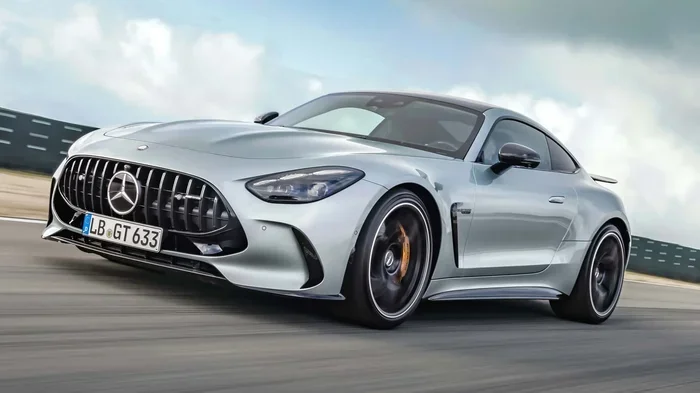
For those who want the pure AMG experience, the coupe and convertible lineup delivers. The AMG GT is the flagship sports car and it is a masterpiece of engineering. It features a handcrafted twin-turbo V8 that produces up to 720 horsepower in the GT Black Series.
The AMG GT Coupe and AMG GT Cabriolet offer open-air or closed-roof thrills. Both versions deliver an unforgettable driving experience. They are the cars that AMG was born to build — machines designed purely for driving pleasure.
AMG Special Editions
AMG also produces limited-edition models that celebrate racing heritage or special milestones. These vehicles often feature unique styling, upgraded performance parts, and exclusive interiors. Collectors and enthusiasts eagerly await these special editions because they represent the absolute best of what AMG has to offer.
AMG vs. Standard Mercedes-Benz: What Is the Difference
Performance Comparison
The difference between a standard Mercedes-Benz and an AMG version is significant. Here is a quick comparison:
- Engine tuning: Standard Mercedes uses more conservative tuning for reliability and comfort. AMG pushes the limits for maximum power and responsiveness.
- Suspension: AMG vehicles come with stiffer, sport-tuned suspension. This gives them sharper handling and better cornering.
- Exterior styling: AMG models feature aggressive body kits, larger wheels, and distinctive badging that sets them apart from standard models.
- Interior details: AMG interiors include sporty seats, unique dashboards, and premium materials with performance-focused design cues.
In simple terms, a standard Mercedes-Benz focuses on luxury and refinement. An AMG version takes that same luxury and adds a serious dose of performance. You get the best of both worlds — comfort and speed.
The AMG Logo and Brand Identity
The AMG logo is instantly recognizable. It features the three letters in a distinctive typeface, often paired with the Mercedes-Benz star on AMG vehicles. The logo represents more than just a brand name. It symbolizes decades of racing success, engineering innovation, and a commitment to performance excellence.
When you see an AMG badge on a car, you know that vehicle has been engineered and tested to a higher standard. The badge carries the weight of AMG’s racing heritage and its reputation for building some of the most powerful production cars in the world.
The brand identity also extends to the AMG community. AMG owners often form tight-knit groups and attend events together. The brand has created a lifestyle around high-performance driving that goes far beyond just owning a car.
Why AMG Matters Today
Setting the Standard for Performance
AMG continues to push the boundaries of what is possible in a production car. The company regularly introduces models that set new benchmarks for horsepower, speed, and handling. In an era where many automakers are shifting toward electric vehicles, AMG is finding ways to combine performance with sustainability.
The AMG EQE and AMG EQB are electric vehicles that carry the AMG performance DNA into the EV era. These models prove that AMG is not just about big gasoline engines. The brand is evolving while staying true to its core values of power, precision, and driving pleasure.
Cultural Impact
AMG has had a massive impact on car culture worldwide. The brand has appeared in countless movies, video games, and music videos. It has become a symbol of success, speed, and luxury. When people think of high-performance luxury cars, AMG is one of the first names that comes to mind.
The brand also inspires a new generation of car enthusiasts. Young drivers grow up seeing AMG vehicles and dreaming of owning one someday. That aspirational quality keeps the brand relevant and desirable across different age groups and demographics.
Common Mistakes People Make About AMG
There are several misconceptions about AMG that are worth addressing:
- Thinking AMG is only for racing: While AMG has deep racing roots, its vehicles are designed for everyday driving. You can comfortably use an AMG as your daily driver.
- Believing all AMG models are extremely expensive: AMG offers vehicles at different price points. The AMG A-Class, for example, is more affordable than the AMG GT.
- Assuming AMG engines are unreliable: AMG engines are hand-built with rigorous testing. They are designed to be both powerful and durable.
- Confusing AMG with Mercedes-AMG: These refer to the same thing. Mercedes-AMG is the full official name of the performance division.
Understanding these points helps you appreciate AMG for what it truly is — a performance brand that balances power, luxury, and practicality.
The Future of AMG
What does the future hold for AMG? The brand is investing heavily in electrification. New AMG models will feature electric powertrains that deliver instant torque and silent power. The AMG One hypercar is a prime example of this direction. It uses a Formula 1-derived hybrid powertrain that produces over 1,000 horsepower.
AMG is also expanding its model lineup. New vehicles are being introduced regularly to cover more segments of the market. From compact SUVs to full-size sedans, AMG is making high performance accessible to a wider audience.
The company’s commitment to hand-built engines and personalized craftsmanship will likely continue. Even as technology evolves, the human touch remains at the heart of AMG’s identity. Every engine will still be signed by the technician who builds it.
Sustainability is another key focus. AMG is working on reducing its environmental footprint while maintaining its performance standards. This includes developing more efficient engines, using recycled materials, and exploring alternative fuels.
Final Thoughts
So, what does AMG stand for? It stands for a rich history of engineering passion, racing success, and an unwavering commitment to performance. From a small garage in Grossaspach to a global brand that defines luxury performance, AMG has come a long way.
What Does AMG Stand For is a question that opens the door to a world of automotive excellence. Whether you are drawn to the hand-built engines, the aggressive styling, or the racing heritage, AMG offers something truly special. The brand continues to evolve and innovate while staying true to its roots.
If you have ever considered a high-performance luxury car, AMG should be at the top of your list. The combination of power, refinement, and engineering craftsmanship is unmatched. AMG is not just a car brand. It is a statement about what driving can and should be.
The next time you see an AMG vehicle on the road, you will know the story behind those three letters. You will understand the passion and expertise that goes into every single model. And you will appreciate why AMG remains one of the most exciting names in the automotive world today.
Frequently Asked Questions
What does the AMG logo mean?
The AMG logo features the three letters of the company name — Aufrecht, Melcher, and Großaspach. It represents the brand’s identity as a hand-built, high-performance division of Mercedes-Benz. The logo is a symbol of engineering excellence and racing heritage.
Are AMG cars worth the extra cost?
For enthusiasts who value performance, craftsmanship, and exclusivity, AMG cars are absolutely worth the investment. The hand-built engines, sport-tuned suspensions, and aggressive styling justify the premium price. However, if you prioritize fuel economy or low maintenance costs, a standard Mercedes-Benz may be a better fit.
Can I use an AMG car as a daily driver?
Yes, many AMG models are designed to be comfortable and practical for daily use. The AMG C-Class and AMG E-Class, for example, offer a great balance of performance and livability. You get thrilling power when you want it, but the ride remains refined enough for commuting and long trips.
How is AMG different from BMW M or Audi RS?
While all three brands offer high-performance versions of their parent company’s vehicles, AMG is known for its hand-built engines and aggressive tuning philosophy. BMW M focuses on balanced driving dynamics, and Audi RS emphasizes all-wheel-drive performance. AMG stands out for its raw power and unmistakable engine sound.
Does AMG make electric vehicles?
Yes, AMG has entered the electric vehicle market with models like the AMG EQE and AMG EQB. These vehicles combine the brand’s performance DNA with electric powertrains. The AMG One hypercar also uses a hybrid Formula 1-derived system, showing the brand’s commitment to the future of performance.
Where are AMG vehicles built?
AMG vehicles are primarily built at Mercedes-Benz manufacturing facilities around the world. The AMG engines are hand-built at the company’s headquarters in Affalterbach, Germany. Each engine is assembled and tested by a single technician who signs their name on it.