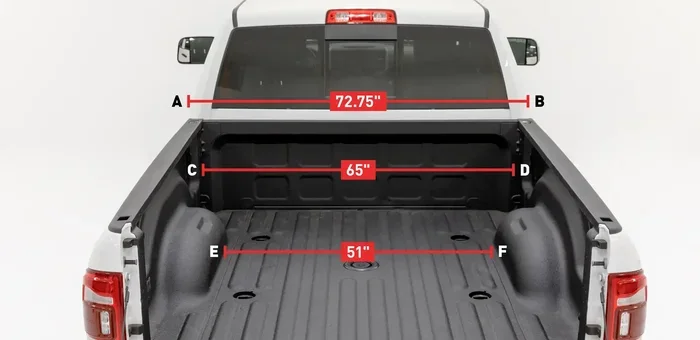
How Wide Is a Pickup Truck Bed Between Wheel Wells
The width of a pickup truck bed between the wheel wells typically ranges from about 48 to 65 inches, depending on the truck size and model. Knowing your bed width is essential for hauling wide loads, fitting bed accessories, and maximizing cargo capacity. This guide breaks down exact measurements for full-size and mid-size trucks so you can make the right choice.
Pickup trucks are some of the most versatile vehicles on the road. Whether you haul construction materials, furniture, or outdoor gear, your truck bed does the heavy lifting. But here is a question many truck owners overlook: how wide is a pickup truck bed between wheel wells?
The answer matters more than most people think. Bed width affects what you can haul, which accessories fit, and how safely you can transport wide items. Understanding your bed dimensions helps you get the most out of your truck. In this guide, we break down the exact measurements, compare brands, and share practical tips you can use right away.
We will also explore why the space between the wheel wells is the most important measurement of all. Many people measure the entire bed length or width but forget that the wheel wells eat into usable space. This guide fixes that. Let us dive in.
Key Takeaways
- Standard bed width between wheel wells: Most full-size trucks offer 48 to 65 inches of usable cargo space.
- Bed width varies by truck size: Full-size pickups are wider than mid-size and compact models.
- Measuring matters: Always measure from the inside of one wheel well to the other for the truest width.
- Accessories depend on width: Bed liners, toolboxes, and tie-down systems need specific width clearances.
- Brand differences exist: Ford, Chevy, RAM, and Toyota all have slightly different bed dimensions.
- Wider beds carry more: A wider bed between wheel wells directly impacts your payload and hauling versatility.
📑 Table of Contents
- Understanding Pickup Truck Bed Width Between Wheel Wells
- Standard Bed Width Measurements by Truck Size
- How to Measure Your Truck Bed Width Correctly
- Factors That Affect Bed Width Between Wheel Wells
- Comparing Bed Width Across Popular Truck Models
- How Bed Width Affects Your Hauling and Accessory Choices
- Common Mistakes People Make With Truck Bed Width
- Expert Insights on Maximizing Your Truck Bed Width
- Key Takeaways
- Conclusion
Understanding Pickup Truck Bed Width Between Wheel Wells
When we talk about bed width between wheel wells, we mean the usable horizontal space from the inside of one wheel well to the inside of the other. This is the narrowest part of your truck bed and the area where most wide items will sit.
The wheel wells curve inward, which reduces the flat floor space. A truck bed might be 71 inches wide at the top rails but only 50 inches wide between the wheel wells. That difference is huge when you are trying to fit a wide pallet, a sheet of plywood, or a large cooler.
Why This Measurement Matters Most
The width between wheel wells determines what fits flat on your bed floor. If you try to carry a 60-inch wide object in a bed that is only 50 inches wide between the wells, the item will overhang the wheel wells. That creates stability problems and safety risks.
Knowing this measurement helps you plan every haul. It also helps you choose the right bed accessories. Bed liners, toolboxes, and cargo management systems all need to fit within this space.
Standard Bed Width Measurements by Truck Size
Not all pickup trucks are the same. Bed width between wheel wells varies significantly based on the truck class. Let us look at the three main categories.
Full-Size Pickup Trucks
Full-size pickups like the Ford F-150, Chevy Silverado, RAM 1500, and Toyota Tundra offer the widest beds. The bed width between wheel wells for full-size trucks typically falls in the 50 to 65 inch range. Some models with wider wheel spacing push closer to 65 inches.
Here is a quick look at common full-size truck bed widths:
- Ford F-150: Approximately 50 to 60 inches between wheel wells depending on the model year and bed length.
- Chevy Silverado 1500: Roughly 51 to 61 inches between wheel wells.
- RAM 1500: About 50 to 60 inches between wheel wells.
- Toyota Tundra: Approximately 50 to 58 inches between wheel wells.
Keep in mind that these numbers change with bed length options. A short bed and a long bed on the same model often share the same width between wheel wells. The difference is in bed length, not width.
Mid-Size Pickup Trucks
Mid-size trucks like the Toyota Tacoma, Chevy Colorado, and Ford Ranger have smaller beds. The width between wheel wells on these models usually ranges from 48 to 55 inches.
These trucks are perfect for everyday use and light hauling. They offer better fuel economy and easier parking. But their narrower beds mean you need to be more selective about what you haul.
Compact Pickup Trucks
Compact pickups like the Chevy Colorado (smaller variants) and older models offer even less space. Bed width between wheel wells on compacts often falls between 45 and 52 inches. These beds work well for tools and small loads but struggle with wider cargo.
How to Measure Your Truck Bed Width Correctly
Measuring your truck bed width between wheel wells is simple but requires attention to detail. Many people make mistakes that throw off their entire planning.
Step-by-Step Measurement Guide
- Park on a flat surface. Level ground gives you the most accurate reading.
- Locate the wheel wells. Find the inner edge of each wheel well on the bed floor.
- Measure straight across. Use a tape measure from the inside edge of one wheel well to the inside edge of the other.
- Measure at multiple points. The floor may not be perfectly flat. Take readings at the front, middle, and back of the bed.
- Record the smallest measurement. That is your true usable width between wheel wells.
Pro tip: Always measure in inches for precision. Rounding to the nearest half inch is fine, but avoid rounding to whole numbers if you need exact fit for accessories.
Common Measurement Mistakes
- Measuring from the top rails instead of the floor. The top is wider than the floor because the bed walls taper inward.
- Forgetting the wheel well curve. The curve inside the wheel well reduces usable width by several inches.
- Measuring the outside of the wheel wells. You want the interior space, not the exterior dimensions.
Factors That Affect Bed Width Between Wheel Wells
Several factors influence how wide your pickup truck bed is between the wheel wells. Understanding these helps you compare trucks more effectively.
Wheelbase and Wheel Well Placement
The distance between the front and rear axles affects wheel well placement. A longer wheelbase often means the wheel wells sit farther apart, which can increase bed width between them. However, this is not always the case. Some manufacturers design tighter wheel wells even on longer wheelbases.
When shopping for a truck, check the wheelbase alongside the bed width. A longer wheelbase generally offers more cargo space overall, including width between the wheel wells.
Bed Configuration and Styles
Different bed styles affect usable width. Standard beds, fleet beds, and wide-body beds all have different dimensions. Wide-body beds, found on some Ford and RAM models, offer extra width at the top and sometimes between the wheel wells.
Some trucks also offer flared wheel wells that extend outward. This can add a few inches of usable width between the wells. Flared wells also allow for larger tires, which is a bonus for off-road users.
Suspension and Load Rating
Heavier-duty suspension systems can affect wheel well placement. Trucks with stronger suspension may have slightly wider wheel wells to accommodate larger components. This can impact the width between wheel wells by a small margin.
Also, the truck’s payload capacity plays a role. A truck rated to carry more weight often has a wider, sturdier bed frame. If you are curious about how truck weight relates to hauling ability, check out this resource on what it means when a vehicle is heavy for a car to understand weight classifications better.
Comparing Bed Width Across Popular Truck Models
Not sure which truck gives you the most width between wheel wells? Let us compare some popular models. Keep in mind that exact measurements vary by model year and trim level.
Width Comparison Table
Here is a general comparison of bed widths between wheel wells for popular full-size and mid-size trucks:
- Ford F-150 (Standard Bed): ~50 inches between wheel wells
- Ford F-150 (Long Bed): ~50 inches between wheel wells (same width, longer length)
- Chevy Silverado 1500 (Standard): ~51 inches between wheel wells
- RAM 1500 (Standard): ~50 inches between wheel wells
- Toyota Tundra (Standard): ~50 inches between wheel wells
- Toyota Tacoma (Mid-Size): ~48 to 52 inches between wheel wells
- Chevy Colorado (Mid-Size): ~49 to 53 inches between wheel wells
As you can see, the differences between brands are often just a few inches. But those few inches matter when you are hauling wide loads or installing tight-fit accessories.
Which Truck Has the Widest Bed Between Wheel Wells?
Currently, most full-size trucks hover around the 50 to 60 inch range. The Ford F-150 and Chevy Silverado often lead in usable bed width. Some newer models from RAM and Toyota are catching up with wider bed designs.
If maximum width between wheel wells is your priority, look for models with wider track widths. A wider track pushes the wheel wells outward, creating more flat floor space between them.
How Bed Width Affects Your Hauling and Accessory Choices
Bed width between wheel wells directly impacts what you can haul and which accessories work best. Let us break this down into practical categories.
Hauling Wide Loads
Need to carry a 60-inch wide piece of lumber? A bed with only 50 inches between wheel wells will not work flat. The lumber will overhang the wheel wells, which creates a safety hazard. Always match your load width to your bed width between the wells.
Quick tip: If you frequently haul wide materials, consider a full-size truck with the widest available bed. The extra width between wheel wells gives you more flat cargo space.
Bed Liners and Floor Liners
Bed liners need to conform to the shape of your bed, including the wheel well curves. Spray-in bed liners are the best choice for fitting the full width between wheel wells because they mold to the exact contours of your bed.
Drop-in liners and mats sometimes leave gaps near the wheel wells. These gaps can cause the liner to shift while driving. Always check liner dimensions against your bed width measurements before buying.
Toolboxes and Storage
Toolboxes sit in the bed between the wheel wells or behind them. If you want a toolbox that fits between the wells, you need a bed that is wide enough to accommodate it.
Narrow toolboxes work in most beds. But wide toolboxes that span the full bed width may not fit between the wheel wells on smaller trucks. Measure your toolbox width against your bed width between wheel wells before purchasing.
Cargo Management Systems
Modern trucks offer cargo management systems with dividers, rails, and compartments. These systems work best when the bed width between wheel wells is consistent and predictable. Wider beds give you more flexibility when configuring your cargo setup.
If you are adding a bed rack or crossbars, the width between wheel wells determines how far apart you can place the mounting points. Wider spacing gives you more stability for tall or wide loads.
Common Mistakes People Make With Truck Bed Width
Avoid these common pitfalls when planning your truck bed usage.
- Assuming all beds of the same length are the same width. Bed width varies independently of bed length. Always check width separately.
- Ignoring the wheel well curve. The curved walls of the wheel wells reduce flat floor space more than most people expect.
- Buying accessories without measuring. A toolbox or liner that looks the right size on paper may not fit between the wheel wells in practice.
- Overloading one side of the bed. Uneven loads can shift and become unstable. Distribute weight evenly between the wheel wells for best results.
- Forgetting about bed height. Wider beds often come with taller sidewalls. This affects how you load items and which tailgate attachments work.
Expert Insights on Maximizing Your Truck Bed Width
Experienced truck users know that every inch of bed space counts. Here are some expert-backed tips to help you get the most from your truck bed width between wheel wells.
First, invest in a good tape measure. A 25-foot tape measure with inch markings gives you the precision you need. Measure your bed yourself rather than relying on manufacturer specs alone. Factory numbers are a good starting point, but real-world measurements can differ slightly.
Second, think about your most common loads. If you haul mostly standard 4×8 sheets of material, you need a bed at least 48 inches wide between the wells. If you haul narrow items like lumber or pipes, width matters less and length becomes the priority.
Third, consider modular bed systems. Adjustable bed dividers and sliding rails let you reconfigure your bed for different loads. These systems work best on wider beds where you have more room to maneuver components.
Fourth, keep your bed clean and level. Debris in the bed can reduce usable width and damage your bed liner. A clean bed also gives you accurate measurements every time you need to plan a haul.
Fifth, check for aftermarket options. Some manufacturers offer bed extenders and wideners that add usable space. These accessories can increase your bed width between wheel wells by a few inches, giving you more hauling flexibility.
Key Takeaways
- Standard bed width between wheel wells: Most full-size pickup trucks offer 50 to 65 inches of usable cargo space between the wheel wells.
- Mid-size trucks are narrower: Expect 48 to 55 inches between wheel wells on models like the Tacoma and Colorado.
- Always measure at the bed floor: The top rails are wider than the floor due to bed wall taper.
- Wheel well curves reduce usable space: Plan for several inches of loss due to the curved wheel well walls.
- Brand differences are small but meaningful: A one-inch difference in width can make a real impact on what fits flat.
- Accessories must match your width: Bed liners, toolboxes, and cargo systems all depend on accurate width measurements.
- Wider beds offer more versatility: If you haul wide loads frequently, prioritize bed width over other features.
Conclusion
How wide is a pickup truck bed between wheel wells? The answer depends on your truck size, model, and bed configuration. Most full-size pickups give you 50 to 65 inches of usable width between the wheel wells, while mid-size trucks offer 48 to 55 inches. These measurements shape everything from what you can haul to which accessories fit your bed.
Taking the time to measure your bed correctly and understand the factors that affect width pays off every time you load up your truck. Whether you are a contractor, a weekend warrior, or someone who just needs to move big items, knowing your bed dimensions makes the job easier and safer.
Start by measuring your own truck bed today. Write down the width between wheel wells and keep that number handy when planning hauls or shopping for accessories. A few minutes of measurement now can save you from costly mistakes later. Your truck bed is a valuable tool. Make sure you are using it to its full potential.
Frequently Asked Questions
What is the average width of a pickup truck bed between wheel wells?
The average width between wheel wells for full-size pickup trucks is about 50 to 60 inches. Mid-size trucks typically offer 48 to 55 inches. The exact width depends on the make, model, and bed configuration of your specific truck.
Why is the width between wheel wells different from the total bed width?
The total bed width is measured at the top rails, which are wider than the floor. The width between wheel wells is measured at the bed floor, where the curved wheel well walls reduce usable space. This difference can be several inches, which matters when fitting wide loads.
Can I increase the width between my wheel wells?
You cannot easily widen the wheel wells without major modifications. However, you can maximize usable width by choosing the right bed accessories, keeping the bed floor clear, and using bed extenders that add cargo space without narrowing the existing area.
Does bed length affect the width between wheel wells?
No. Bed length and bed width are independent measurements. A short bed and a long bed on the same truck model usually have the same width between wheel wells. The difference is only in how long the bed is, not how wide it is between the wells.
Which truck brand offers the widest bed between wheel wells?
Most full-size trucks from Ford, Chevy, RAM, and Toyota offer similar widths between wheel wells, typically around 50 to 60 inches. Some models and configurations push toward the higher end of that range. Always check the specific measurements for the model year you are considering.
How do I choose the right bed liner for my truck bed width?
Measure the width between your wheel wells and compare it to the liner dimensions. Spray-in liners conform to the bed shape and work well in most cases. Drop-in liners should match your bed width closely to avoid shifting. Always leave a small margin for the wheel well curves.