Florida Window Tint Law What You Need to Know in 2025
Florida window tint law sets specific rules for how dark or reflective your car windows can be. Understanding these rules helps you stay legal, avoid fines, and keep your ride cool. This guide covers 2025 tint limits, exemptions, and practical tips for every vehicle owner.
Florida is known for its sunshine. And while that warm weather feels great, it also means your car gets hot. That is why so many people in Florida choose to tint their windows. But here is the catch: Florida window tint law has specific rules you must follow. Breaking those rules can lead to fines, points on your license, and even forced removal of your tint.
Whether you are a new car owner or thinking about tinting your windows for the first time, this guide has you covered. We will walk through every rule, every exception, and every tip you need to know. By the end, you will feel confident about staying legal and keeping your ride comfortable.
The rules around Florida tint regulations are not as complicated as they seem. Once you understand the basics, everything falls into place. Let us break it down together.
Key Takeaways
- Legal tint limits vary by window: Windshield has strict rules, while front side, rear side, and rear windows have different VLT requirements.
- VLT percentage is the key metric: It measures how much light passes through your tint film.
- Medical exemptions are available: Florida allows darker tints with a doctor’s prescription.
- Reflective and colored tints are restricted: Mirror-like finishes and certain colors are not legal.
- Fines for illegal tint can be costly: Violations may result in tickets and forced removal.
- Sticker requirements exist: Florida law requires a legal tint sticker on the driver’s side window.
- Tint quality matters: Choosing certified film helps you pass inspections and avoid issues.
📑 Table of Contents
- Understanding Florida Window Tint Law Basics
- Legal Tint Limits by Window in 2025
- Tint Film Type Restrictions
- Medical Exemption for Window Tint
- Penalties for Illegal Window Tint
- Tips for Choosing Legal Window Tint
- Common Mistakes People Make with Window Tint
- Expert Insights on Florida Tint Law
- Key Takeaways
- Conclusion
Understanding Florida Window Tint Law Basics
At its core, Florida window tint law controls how dark and how reflective your car windows can be. The state uses a measurement called Visible Light Transmission, or VLT. This number tells you how much light the tint allows through your glass. The lower the number, the darker the tint.
Florida Statute 316.295 sets the legal framework for window tinting in the Sunshine State. Law enforcement officers use these rules during traffic stops. If your tint is too dark, you could get pulled over and cited.
What Is VLT and Why Does It Matter?
Visible Light Transmission is the percentage of light that passes through your window. A film with 50% VLT lets half the light through. A film with 5% VLT is very dark and lets only a tiny bit of light pass.
Here is why this matters for legal tint limits:
- Florida law sets different VLT requirements for each window.
- Your tint must meet or exceed the minimum VLT for each window.
- Law enforcement uses specialized tools to measure your tint darkness.
- Going below the legal limit is a noncriminal traffic violation.
Understanding VLT helps you choose the right film. It also helps you avoid a tint ticket. Always ask your installer about the VLT percentage before you commit to a film.
Which Windows Are Regulated?
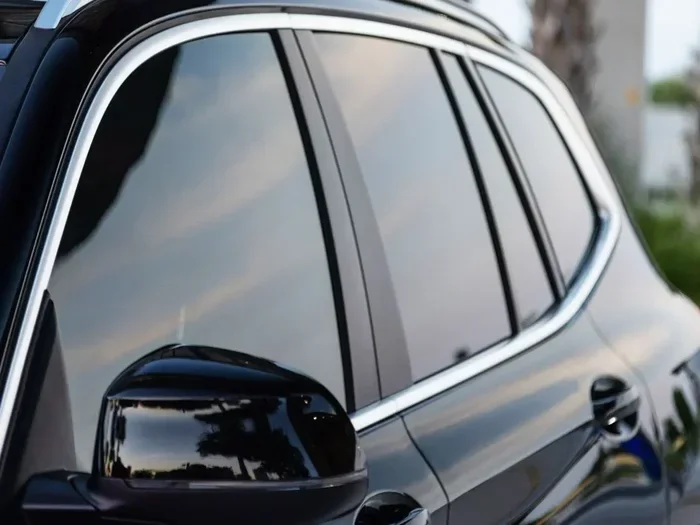
Florida law treats each window differently. The rules apply to the following windows on passenger vehicles:
- Windshield — the front glass
- Front side windows — the driver and passenger windows
- Rear side windows — the back passenger windows
- Rear windshield — the back glass
Each window has its own legal limit. Let us look at each one in detail.
Legal Tint Limits by Window in 2025
The Florida window tint law 2025 rules are clear and specific. Here is what the law allows for each window on a standard passenger vehicle.
Windshield Tint Rules
The windshield has the strictest rules. You cannot tint the top of the windshield below the AS-1 line. The AS-1 line is the manufacturer’s line printed on the windshield. Above this line, you may apply a non-reflective tint. Below this line, no tinting is allowed at all.
Key points about windshield tint:
- Only the top 4 to 6 inches may be tinted, depending on your vehicle.
- The tint must be non-reflective.
- No tint is allowed below the AS-1 line.
- This rule helps drivers maintain clear forward vision.
Front Side Window Tint Rules
The front side windows must allow more than 28% of light to pass through. This means your tint film must have a VLT of 28% or higher. This rule ensures drivers and law enforcement can see into the vehicle from the side.
Important facts about front side window tint:
- Minimum VLT is 28% for driver and passenger windows.
- Any tint darker than 28% is illegal.
- This applies to both the driver and front passenger windows.
- Tint color is also regulated — no red or yellow tints allowed.
Rear Side Window Tint Rules
The rear side windows have more relaxed rules. You can tint these windows as dark as you want, as long as the vehicle has side mirrors on both sides. This gives rear-seat passengers more privacy and comfort.
Key points for rear side windows:
- No VLT limit if the vehicle has dual side mirrors.
- If the rear side windows are tinted, both side mirrors must be present.
- This applies to sedans, SUVs, and trucks alike.
- Many people choose 5% VLT film for maximum privacy on rear windows.
Rear Windshield Tint Rules
The rear windshield follows the same rules as the rear side windows. You can use any darkness level as long as the vehicle has dual side mirrors. This is great news for people who want full rear privacy.
Things to know about rear windshield tint:
- No VLT restriction with dual side mirrors.
- Without dual mirrors, the rear windshield must allow over 28% VLT.
- This rule applies to all passenger vehicles.
- Many SUV and minivan owners take advantage of this flexibility.
Tint Film Type Restrictions
Florida law does not only regulate darkness. It also controls the type of tint film you can use. These restrictions protect safety and visibility on the road.
Reflective Tint Rules
Reflective tint creates a mirror-like finish on your windows. While it looks sleek, it can blind other drivers. Florida law limits how reflective your tint can be.
- Front side windows must not be more than 25% reflective.
- Rear side windows and rear windshield must not exceed 25% reflectivity.
- Mirror-like or metallic finishes are restricted.
- Standard dyed or ceramic films are generally acceptable.
Tint Color Restrictions
Not all tint colors are legal in Florida. The state bans certain colors because they can impair visibility or confuse law enforcement. Here are the rules:
- Red tint is not allowed on any window.
- Yellow tint is also prohibited.
- Standard colors like black, gray, charcoal, and bronze are legal.
- Always check with your installer about color options.
Metalized and Hybrid Films
Some tint films contain metal particles. These films offer great heat rejection but may interfere with electronic signals. Florida does not ban metalized films outright, but they must meet reflectivity limits. Hybrid films that combine metal and ceramic technology are popular choices among Florida drivers.
Medical Exemption for Window Tint
Florida understands that some people need darker tint for medical reasons. If you or a passenger has a condition that makes you sensitive to sunlight, you may qualify for a medical exemption.
Who Qualifies?
Certain medical conditions can make normal sunlight harmful. These include:
- Lupus and other autoimmune disorders
- Severe photosensitivity
- Skin cancer or history of skin cancer
- Certain eye conditions that worsen with UV exposure
- Other dermatologist-approved conditions
How to Get an Exemption
Getting a medical exemption is a straightforward process. Follow these steps:
- Visit your doctor or dermatologist.
- Ask them to complete the Florida medical exemption form.
- The form must specify the condition and the required tint darkness.
- Submit the form to your local county tax collector.
- Once approved, you will receive a special exemption sticker.
Keep the exemption sticker in your vehicle at all times. If you get pulled over, show this sticker to the officer. It proves your tint is legally permitted despite being darker than the standard limit.
Exemption Limitations
Even with a medical exemption, there are limits. The exemption only applies to the windows your doctor specifies. You cannot use it to tint the entire vehicle beyond what is medically necessary. Law enforcement can still verify your exemption status during a stop.
Penalties for Illegal Window Tint
Getting caught with illegal car window tint in Florida comes with real consequences. It is not worth the risk. Here is what can happen if your tint does not meet the law.
Fines and Fees
A tint ticket in Florida is a noncriminal moving violation. The fine can range from around $100 to several hundred dollars, depending on the county and how dark your tint is. Here is a rough breakdown:
- First offense: typically a warning or a fine around $100.
- Second offense: fines can increase and points may apply.
- Repeat violations: higher fines and potential court appearances.
Forced Removal of Tint
In some cases, law enforcement can order you to remove the illegal tint. This means you would need to pay for removal and reapplication of legal film. That can cost anywhere from $150 to $500 or more, depending on your vehicle and the quality of the film.
Impact on Vehicle Inspection
Florida requires vehicle inspections in certain counties. Illegal tint can cause you to fail the inspection. You will need to fix the tint before you can register your vehicle. This adds time and expense to an already routine process.
Tips for Choosing Legal Window Tint
Staying legal does not mean sacrificing comfort or style. With the right approach, you can enjoy sun protection and heat rejection while following Florida law. Here are some practical tips.
Work with a Reputable Installer
Choose a window tinting company that knows Florida law inside and out. A good installer will:
- Tell you the exact VLT of every film they offer.
- Recommend legal options for your specific vehicle.
- Provide a certificate of compliance.
- Apply the legal tint sticker required by law.
Ask About Certification
Always ask if the tint film is certified. Certified films meet Florida standards and come with documentation. This protects you if you ever get questioned by law enforcement. Look for films that carry a manufacturer’s certification label.
Consider Ceramic and Carbon Films
Ceramic and carbon films are excellent choices for Florida drivers. They offer strong heat rejection without being overly reflective. These films also do not interfere with GPS, phone signals, or toll transponders. They are a smart investment for any vehicle.
Get a Written Guarantee
A reputable installer will give you a written warranty. This should cover peeling, bubbling, and fading. Keep this document with your vehicle records. It also shows you take your tint seriously, which can help if you ever face questions from law enforcement.
Quick Tips to Stay Legal
- Always check the VLT percentage before installation.
- Keep your exemption sticker visible if you have one.
- Make sure both side mirrors are present if rear windows are tinted.
- Avoid red and yellow tint colors entirely.
- Choose non-reflective films for the front side windows.
- Ask your installer for a copy of the tint certificate.
- Re-check your tint if you replace a window.
Common Mistakes People Make with Window Tint
Even well-meaning car owners make mistakes when it comes to Florida tint regulations. Here are the most common ones to avoid.
Assuming All Tint Shops Know the Law
Not every tint shop stays updated on the latest regulations. Some shops may offer films that are too dark without telling you. Always ask specific questions about VLT and legal compliance before you commit.
Buying Tint Online Without Checking Legality
Online tint kits are tempting because they are cheap. But many of these films are too dark for Florida law. If you DIY your tint, make sure the VLT matches what Florida requires. Otherwise, you are setting yourself up for a fine.
Forgetting About the Windshield
Many people focus on side windows and forget about the windshield. Tinting below the AS-1 line on the windshield is illegal in Florida. Even a small strip of dark tint there can result in a citation.
Not Replacing the Exemption Sticker
If you move or your exemption expires, you need to renew it. Driving with an outdated or missing sticker can lead to questions from law enforcement. Keep your documentation current at all times.
Ignoring Side Mirror Requirements
Tinting rear windows without dual side mirrors is illegal in Florida. Some people remove their mirrors or use only one to hide dark tint. This is a violation and can result in a separate citation for mirror violations.
Expert Insights on Florida Tint Law
Florida window tint law has evolved over the years. Law enforcement agencies continue to update their approach to tint enforcement. Here are some expert insights to keep in mind.
Local law enforcement in Florida takes tint violations seriously during routine traffic stops. Officers carry tint meters and can measure your window darkness on the spot. If your tint fails the test, you will receive a citation on the spot. The good news is that most first-time offenders receive a warning or a manageable fine.
Automotive tint experts recommend staying 2 to 3% above the legal minimum. This gives you a buffer in case the film settles or fades over time. It also ensures you pass inspections without any stress.
Insurance companies generally do not penalize you for legal tint. However, if you get a tint-related citation, it could affect your driving record. Keeping your tint within legal limits protects both your wallet and your record.
Key Takeaways
- Florida window tint law sets clear VLT limits for each vehicle window. The windshield has the strictest rules, while rear windows offer more flexibility with dual mirrors.
- Front side windows must allow at least 28% VLT. Going darker than this will result in a tint ticket and potential fine.
- Medical exemptions are available for those with sunlight sensitivity. A doctor’s prescription and exemption sticker are required.
- Reflectivity must stay below 25% on all windows. Mirror-like or metallic tints are restricted.
- Red and yellow tint colors are illegal in Florida. Stick to standard colors like black, gray, or charcoal.
- Penalties include fines, forced removal, and failed inspections. Staying legal saves you time and money.
- Working with a certified, knowledgeable installer is your best defense. They will ensure your tint meets every Florida requirement.
Conclusion
Florida window tint law is designed to keep drivers safe while allowing you to enjoy the benefits of tinted windows. By understanding the VLT limits, tint restrictions, and exemption options, you can make informed decisions about your vehicle.
Stay on the right side of the law by choosing legal film, working with reputable installers, and keeping your documentation up to date. Whether you want sun protection, heat rejection, or extra privacy, Florida offers plenty of options that keep you compliant and comfortable.
Take the time to research your options. Ask questions. Get everything in writing. A little effort upfront saves you from headaches, fines, and forced tint removal later. Your car, your comfort, and your wallet will all thank you.
Enjoy the Florida sunshine — safely and legally tinted.
Frequently Asked Questions
Can I tint my windshield in Florida?
Yes, but only the top portion above the AS-1 line. The tint must be non-reflective and cannot extend below the manufacturer’s line. Tinting below the AS-1 line on the windshield is illegal in Florida.
What is the legal tint darkness for front windows in Florida?
The front side windows must allow more than 28% of visible light to pass through. This means your tint film must have a VLT of 28% or higher. Any tint darker than this will result in a violation.
How do I get a medical exemption for window tint in Florida?
Visit your doctor to get the Florida medical exemption form completed. Submit it to your county tax collector. Once approved, you will receive an exemption sticker to display in your vehicle.
Can I get a tint ticket for illegal window tint in Florida?
Yes, law enforcement officers can and do issue citations for illegal tint. The fine varies by county but typically ranges from $100 to several hundred dollars. Repeat offenses can lead to higher fines and additional penalties.
Are reflective tints legal in Florida?
Reflective tint is allowed but must not exceed 25% reflectivity on any window. Mirror-like or highly reflective finishes are not permitted. Standard ceramic and carbon films are generally compliant.
Do I need dual side mirrors if my rear windows are tinted?
Yes. Florida law requires dual side mirrors if the rear side windows and rear windshield are tinted. Without both mirrors, the rear windows must meet the 28% VLT minimum.