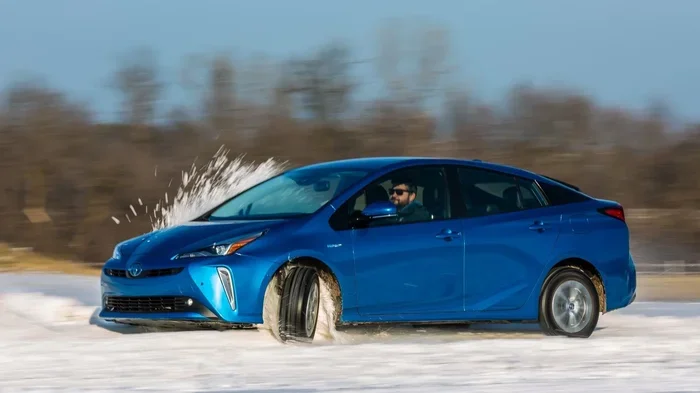
Can You Still Drive a Toyota Hybrid Without the Battery
Yes, you can drive a Toyota hybrid without the battery in certain situations, but it depends on the hybrid system type and the severity of the failure. Toyota hybrids like the Prius use both a gasoline engine and an electric motor, so the vehicle may still run on gas alone if the hybrid battery dies. However, driving without a functioning hybrid battery can cause serious damage, trigger warning lights, and reduce fuel efficiency significantly.
Have you ever turned the key in your Toyota hybrid and heard silence where there should be a smooth start? Or maybe your dashboard lit up like a Christmas tree with warning signs, and you wondered if your car was about to die completely. If you own a Toyota hybrid, you might have asked yourself one scary question: can you still drive a Toyota hybrid without the battery?
The short answer is yes, in most cases you can keep moving. But the longer answer is more complicated. Toyota hybrids are clever machines. They combine a gasoline engine with an electric motor to deliver power. When the hybrid battery starts to fail or dies completely, the car does not just shut off like a regular vehicle. Instead, it tries to keep running using the gas engine alone. But that comes with risks and limitations you need to understand.
In this guide, we will walk through everything you need to know about driving a Toyota hybrid without a working battery. We will cover what happens when the battery dies, whether you can still drive, what the risks are, and how to fix the problem. Whether you drive a Prius, a Camry Hybrid, or another Toyota hybrid model, this article has you covered.
Key Takeaways
- Toyota hybrids can sometimes run on gasoline alone if the hybrid battery fails, but performance will be severely limited.
- A dead hybrid battery triggers warning lights on the dashboard and puts the car into limp mode to protect the drivetrain.
- Driving long distances without a working hybrid battery can cause irreversible damage to the electric motor and powertrain.
- Hybrid battery replacement costs range from $1,000 to $8,000 depending on the Toyota model and battery type.
- You can recharge or jump-start the hybrid battery in some cases, but professional diagnosis is always recommended.
- Regular maintenance extends hybrid battery life and helps prevent unexpected failures on the road.
📑 Table of Contents
- How a Toyota Hybrid System Works
- Can You Drive a Toyota Hybrid Without the Battery?
- What Happens If You Keep Driving With a Dead Battery?
- Hybrid Battery Warning Signs to Watch For
- How to Fix a Dead Toyota Hybrid Battery
- Preventing Hybrid Battery Failure
- How Does This Compare to Other Hybrid Issues?
- Expert Insights on Toyota Hybrid Battery Longevity
- Final Thoughts
How a Toyota Hybrid System Works
Before we dive into what happens when the battery fails, let us quickly understand how a Toyota hybrid actually works. This makes the rest of the article much easier to follow.
The Dual-Power System
Toyota hybrids use two power sources: a gasoline engine and an electric motor. The electric motor gets its energy from the hybrid battery pack, which is a high-voltage battery. This battery is different from the small 12-volt battery in the trunk of your car. The hybrid battery is much larger and stores energy recovered through regenerative braking.
When you accelerate, the electric motor assists the gas engine. When you brake, the system recaptures energy and sends it back to the battery. This is why Toyota hybrids get such great fuel economy. The system balances power between the two sources automatically. You do not need to do anything special.
The Role of the Hybrid Battery
The hybrid battery plays a central role in the drivetrain. It powers the electric motor, which provides extra torque during acceleration. It also powers accessories when the gas engine is off, like at a red light. Without a functioning hybrid battery, the electric motor cannot work. The car must rely entirely on the gasoline engine for all propulsion.
Most Toyota hybrids also have a 12V auxiliary battery that powers the car’s computers, lights, and electronics. This is not the same as the hybrid battery pack. When people say “the battery is dead,” they usually mean the high-voltage hybrid battery, not the small 12V battery.
Can You Drive a Toyota Hybrid Without the Battery?
This is the big question, and the answer depends on a few factors. Let us break it down clearly.
Yes, You Can Drive on Gas Alone
In most Toyota hybrid models, if the hybrid battery dies completely, the car will switch to gasoline-only mode. The gas engine will still run and the car will still move. However, you will notice a big difference in performance. The electric motor normally assists the engine, so without it, acceleration feels sluggish. The car might also go into what mechanics call “limp mode,” which limits your top speed to protect the engine and transmission.
Think of it like riding a bicycle with a flat tire. You can still pedal and move forward, but it is much harder and slower. You can still get where you are going, but it is not ideal.
When You Cannot Drive at All
There are situations where driving is not possible. If the hybrid battery has a short circuit or a severe internal failure, the car may not start at all. The onboard computer will detect the fault and prevent the vehicle from running. This is a safety feature designed to protect you and the car from further damage.
Also, if the 12V auxiliary battery dies along with the hybrid battery, the car will not start. The 12V battery powers the computer systems that manage everything. Without it, the hybrid system cannot function in any mode.
What Happens When You Try to Start the Car?
If your hybrid battery is dead, you might notice these signs when trying to start the car:
- The dashboard lights come on, but the car does not start
- The “Check Hybrid System” warning light flashes on the dashboard
- The car makes a clicking sound but does not turn over
- The power button does not respond when you press it
- The car starts but immediately shuts off after a few seconds
If you experience any of these symptoms, stop trying to start the car repeatedly. Each attempt drains the 12V battery further and can make the problem worse. Instead, call for professional help or a tow.
What Happens If You Keep Driving With a Dead Battery?
You might be tempted to just keep driving on gas and deal with the battery later. This is understandable, especially if you are stranded somewhere. But there are real risks involved in driving a Toyota hybrid with a dead or failing battery.
Reduced Fuel Economy
This is the most obvious consequence. Toyota hybrids get excellent gas mileage because the electric motor shares the workload. Without the battery, the gas engine does all the work. You will notice a significant drop in fuel economy. A Prius that normally gets 50 miles per gallon might drop to 30 or even 25 mpg on gas alone. That means more trips to the gas station and more money spent.
Engine Strain and Overheating
The gasoline engine was never designed to do all the work by itself. In a hybrid system, the electric motor handles a lot of the heavy lifting during acceleration. Without it, the gas engine works harder, runs hotter, and experiences more wear over time. Over extended periods, this can lead to engine damage that costs thousands of dollars to repair.
Damage to the Electric Motor
When the hybrid battery is dead, the electric motor may still be connected to the drivetrain. Trying to drive with a failed battery can cause the electric motor to overheat or sustain internal damage. Replacing an electric motor is expensive, often costing more than replacing the battery itself.
Loss of Regenerative Braking
One of the smartest features of a Toyota hybrid is regenerative braking. When you take your foot off the accelerator, the electric motor acts as a brake and recharges the battery. Without a working battery, this system cannot function. Your braking distance may increase slightly, and you lose the energy recapture that makes hybrids so efficient.
Hybrid Battery Warning Signs to Watch For
The good news is that hybrid batteries usually give you warning signs before they completely die. Catching these early can save you from getting stranded.
Dashboard Warning Lights
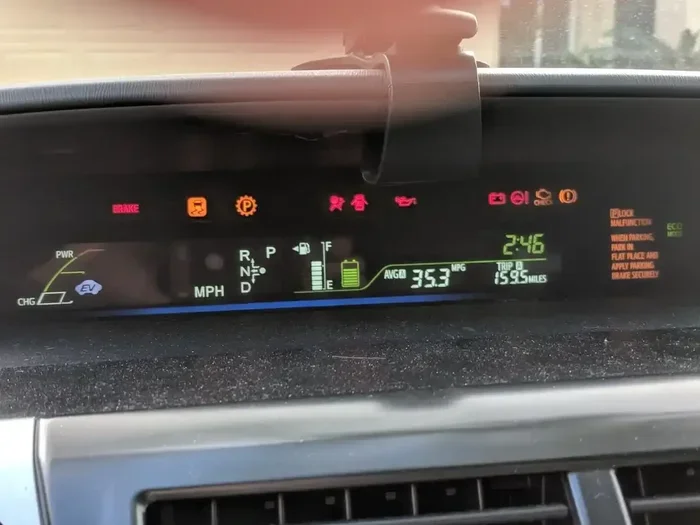
Toyota hybrids have specific warning lights for the hybrid system. If you see a red or yellow triangle with an exclamation point, or a light that says “Check Hybrid System,” pay attention. These are not suggestions. They are your car telling you something needs immediate attention.
Reduced Battery Charge
Watch the battery indicator on your dashboard. If you notice the charge level dropping faster than usual or staying lower than normal, the battery may be degrading. A healthy hybrid battery should maintain a consistent charge level during normal driving.
Unusual Noises
Listen to your car. If you hear strange clicking, buzzing, or humming sounds coming from the battery area or under the rear seat, do not ignore them. These can be signs of internal battery damage or a failing cooling fan.
Increased Fuel Consumption
If your fuel economy drops noticeably without any change in your driving habits, the hybrid battery might be losing its ability to hold a charge. This is one of the earliest and most common signs of battery degradation.
Rough Idling or Stalling
If your Toyota idles roughly or stalls at intersections, the hybrid system might be struggling to balance power between the gas engine and electric motor. This is often linked to a weak or failing battery.
How to Fix a Dead Toyota Hybrid Battery
If your hybrid battery has died or is failing, you have several options. Let us go through them from least expensive to most expensive.
Option 1: Reset the Hybrid System
Sometimes the hybrid system simply needs a reset. Turn the car off, disconnect the 12V auxiliary battery for about 15 minutes, and then reconnect it. This can clear temporary error codes and reset the hybrid control module. It does not fix a dead battery, but it can resolve software glitches that mimic battery failure.
Option 2: Jump-Start the Hybrid Battery
In some cases, you can jump-start a Toyota hybrid battery using another vehicle or a portable jump pack. However, this is not the same as jump-starting a regular car. You need to locate the hybrid battery jump terminals, which are usually under the hood or in the trunk. Always refer to your owner’s manual for the correct procedure.
Important: Never try to jump-start a hybrid battery without reading the manual first. The high-voltage system can be dangerous if handled incorrectly.
Option 3: Replace the Hybrid Battery
If the battery is truly dead, replacement is the most reliable fix. Toyota hybrid battery replacement costs typically range from $1,000 to $8,000 depending on the model. The Prius C and older Prius models tend to be on the lower end, while the Camry Hybrid and RAV4 Hybrid fall in the middle to higher range.
You have two choices for replacement: OEM (original Toyota) battery or an aftermarket battery. OEM batteries come with a warranty and are guaranteed to fit and function correctly. Aftermarket batteries are cheaper but may not last as long or carry the same warranty.
Option 4: Rebuild or Refurbish the Battery
Some shops specialize in rebuilding hybrid batteries. They replace the failed cells inside the battery pack rather than replacing the entire unit. This can save you 30 to 50 percent compared to a full replacement. However, the quality of the rebuild matters greatly. A poorly rebuilt battery can fail again within months.
Option 5: Sell the Car and Upgrade
If the replacement cost is too high and the car is older, you might consider selling it. Toyota hybrids hold their value reasonably well, even with a dead battery. Buyers who plan to replace the battery themselves can get a good deal on a hybrid with a failed battery pack.
Preventing Hybrid Battery Failure
The best way to deal with a dead hybrid battery is to prevent it from happening in the first place. Here are some practical tips to keep your Toyota hybrid battery healthy for years.
- Follow the maintenance schedule in your owner’s manual. Regular service catches small problems before they become big ones.
- Keep the battery cool. Toyota hybrids have cooling fans for the battery pack. Make sure these fans are working properly and the cooling vents are not blocked.
- Avoid deep discharging the battery. Do not let the battery sit completely dead for extended periods. If you will not drive the car for weeks, start it and let it run for at least 15 minutes every few days.
- Drive gently when the battery is low. Aggressive acceleration puts extra strain on a weak battery. Smooth driving helps preserve remaining battery life.
- Monitor your fuel economy. A sudden drop in miles per gallon is often the first sign of battery degradation. Track your mileage and watch for changes.
- Get regular hybrid system checks. Many Toyota dealerships offer diagnostic scans specifically for the hybrid system. These checks can identify weak cells before the entire battery fails.
Just as you would not ignore a check engine light, do not ignore hybrid warning signs. Early detection saves money and keeps you on the road safely.
How Does This Compare to Other Hybrid Issues?
To put things in perspective, let us compare driving a Toyota hybrid without a battery to a few other common hybrid concerns. If you are curious about how hybrid systems handle different situations, check out our article on can a hybrid run without gas to understand how fuel-free operation works in a hybrid. You might also want to read about can a hybrid car run on gas only for more details on gasoline-only driving. And if you are curious about the charging side of things, our piece on can you charge a hybrid car explains how hybrid batteries get their energy in the first place.
Each of these scenarios highlights an important truth about Toyota hybrids: they are designed to be resilient. Even when one system fails, the car tries to keep running using the other. But resilience is not the same as invincibility. Pushing a hybrid too far without proper maintenance will lead to bigger problems down the road.
Expert Insights on Toyota Hybrid Battery Longevity
According to Toyota, most hybrid batteries are designed to last the lifetime of the vehicle, typically 150,000 to 200,000 miles. However, real-world results vary based on driving habits, climate, and maintenance. Hot climates tend to degrade hybrid batteries faster because heat is the enemy of lithium-ion and nickel-metal hydride battery cells.
Mechanics who specialize in hybrids recommend replacing the battery as soon as it shows signs of failure rather than continuing to drive on gas alone. The cost of a new battery is significant, but it is far less expensive than replacing a damaged engine or transmission caused by extended driving with a dead battery.
Final Thoughts
So, can you drive a Toyota hybrid without the battery? Yes, in most cases you can limp along on gasoline alone. But it is not a long-term solution. Driving without a functioning hybrid battery reduces your fuel economy, strains the engine, and risks costly damage to the electric motor and powertrain.
If your hybrid battery is showing signs of failure, take action quickly. Get a professional diagnosis, explore your repair options, and make a plan. The sooner you address the problem, the less it will cost you in the long run. Your Toyota hybrid is a smart, efficient machine. Give it the care it deserves, and it will keep running smoothly for many miles to come.
Remember, a dead battery does not mean the end of your Toyota. It means it is time for a repair. And with the right approach, you can be back on the road with a fully functioning hybrid system in no time.
Frequently Asked Questions
How far can you drive a Toyota hybrid with a dead battery?
You can typically drive a few miles on gasoline alone if the hybrid battery dies while you are on the road. However, the distance is limited and the car will run poorly. The gas engine will struggle without the electric motor’s assistance, and you should head to a repair shop as soon as possible.
Will a dead hybrid battery affect my Toyota’s resale value?
Yes, a dead hybrid battery significantly reduces resale value. Buyers know that replacing a hybrid battery is expensive. However, a Toyota hybrid with a dead battery can still be sold, often at a discounted price to buyers who plan to replace the battery themselves.
Can I replace the hybrid battery myself?
It is not recommended. The hybrid battery is a high-voltage system that can deliver a dangerous electric shock if mishandled. Always have a qualified technician or Toyota dealer handle the replacement to ensure safety and proper installation.
How long does a Toyota hybrid battery last?
Most Toyota hybrid batteries last between 100,000 and 200,000 miles with proper care. Some owners report batteries lasting even longer. Driving habits, climate, and maintenance all play a role in determining actual battery lifespan.
Is it safe to drive a Toyota hybrid with the battery warning light on?
It is not safe for extended periods. The warning light indicates a problem with the hybrid system. Short drives to a repair shop are okay, but continuing to drive regularly with the light on can cause further damage to the powertrain and electric motor.
Can a dead hybrid battery damage other parts of my Toyota?
Yes, it can. Driving with a dead hybrid battery puts extra strain on the gasoline engine, transmission, and electric motor. Over time, this can lead to cascading failures in multiple components, turning a single battery repair into a much more expensive fix.