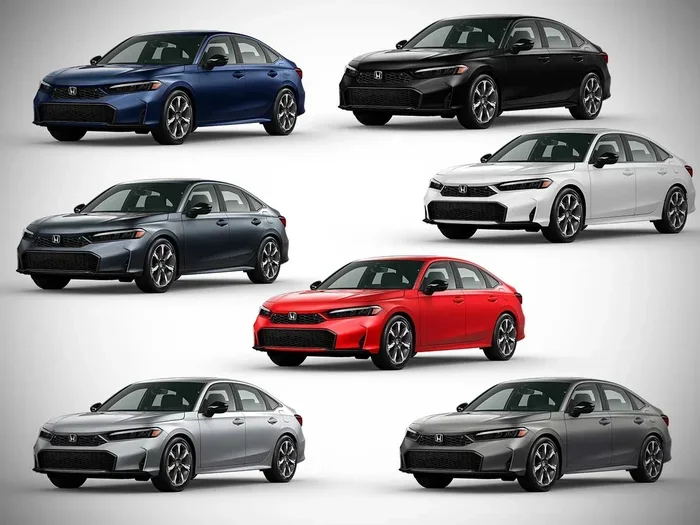
How Many Honda Civics Have Been Made Over the Years
The Honda Civic is one of the most produced cars in history, with over 27 million units sold worldwide since its debut in 1972. Spanning more than 11 generations, the Civic has evolved from a small compact to a global phenomenon. Production numbers vary by generation, with some eras seeing massive output spikes due to high demand and affordable pricing.
Have you ever wondered how many Honda Civics have been made over the decades? This little car has a massive story to tell. Since rolling off the assembly line in 1972, the Honda Civic has become one of the most recognizable vehicles on the planet. It has changed the way people think about compact cars. It has also set the standard for reliability, fuel efficiency, and affordability.
The numbers behind the Civic are truly staggering. Honda has sold more than 27 million units across every continent. From the early days of the first generation to the modern models on dealership lots today, the Civic has consistently ranked among the world’s best-selling cars. In this article, we will dive deep into the production history, explore each generation, and share some fascinating facts that even longtime Honda fans might not know.
Whether you are a first-time buyer, a Honda enthusiast, or just curious about automotive history, this guide has something for you. We will break down the numbers by generation, look at where Civics are built today, and explore why this car has remained so popular for over 50 years. So buckle up and let us take a ride through the incredible history of the Honda Civic.
Key Takeaways
- Mass Production: Honda has built over 27 million Honda Civics since 1972, making it one of the best-selling cars ever.
- 11 Generations: Each generation brought new designs, technology, and performance upgrades that kept the Civic relevant for decades.
- Global Reach: The Civic is sold in more than 160 countries, with major production hubs in the U.S., Japan, and Mexico.
- Affordability Drives Sales: The Civic’s competitive pricing has always been a key factor in its massive production numbers.
- Strong Resale Value: Honda Civics hold their value well, which contributes to their popularity among buyers.
- Ongoing Production: Honda continues to manufacture new Civics every year, with no signs of stopping the production line.
- Cultural Impact: The Civic has become a symbol of reliable, affordable transportation for millions of families worldwide.
📑 Table of Contents
- The First Generation: A Humble Beginning (1972-1979)
- The Second and Third Generations: Building Momentum (1980-1991)
- The Fourth and Fifth Generations: The Civic Becomes a Global Giant (1992-2000)
- The Sixth and Seventh Generations: Refinement and Popularity (2001-2011)
- The Eighth, Ninth, and Tenth Generations: Modern Era Dominance (2012-2021)
- The Eleventh Generation: The Latest Chapter (2022-Present)
- Total Production Numbers: The Big Picture
- Where Are Honda Civics Built Today?
- Why Has the Honda Civic Been So Successful?
- Common Mistakes People Make When Buying a Used Civic
- Expert Insights: What the Numbers Tell Us
- Key Takeaways
- Conclusion
The First Generation: A Humble Beginning (1972-1979)
The story of how many Honda Civics have been made starts in 1972. Honda introduced the first-generation Civic as a response to the 1973 oil crisis. People needed a small, fuel-efficient car that could save them money at the pump. The original Civic was a two-door hatchback with a 1.2-liter engine. It weighed just 1,500 pounds and delivered an impressive 35 miles per gallon on the highway.
Honda produced the first-generation Civic primarily in Japan. The initial production numbers were modest compared to later years. Honda built roughly 100,000 units in the first year. By the end of the first generation’s run in 1979, total production had reached approximately 1.3 million units. This might seem small, but the Civic was just getting started.
Why the First Generation Mattered
The first Civic proved that small cars could be practical and fun to drive. It came with innovative features like front disc brakes and a CVCC engine that met strict emissions standards. These engineering choices set Honda apart from competitors. The first generation laid the foundation for everything that came next.
- Engine Options: 1.2L and 1.5L inline-four engines
- Body Styles: Two-door hatchback, three-door hatchback, and a five-door wagon
- Key Feature: CVCC engine technology for clean emissions
- Fuel Economy: Up to 35 mpg highway
The first generation showed the world that Honda could build a car people loved. It was affordable, reliable, and easy to maintain. These qualities would become the Honda Civic’s trademark.
The Second and Third Generations: Building Momentum (1980-1991)
The second-generation Honda Civic arrived in 1980 and brought significant changes. Honda expanded production to meet growing demand. The car now came in more body styles, including a sedan and a CRX coupe. Production numbers jumped to around 1.5 million units per generation. Honda also started exporting Civics to more international markets during this period.
The third generation, introduced in 1984, marked a turning point. Honda introduced the popular Si trim, which offered sporty performance in a compact package. The Civic Si became an instant hit with driving enthusiasts. Total production across the second and third generations combined exceeded 5 million units.
Expansion into New Markets
During the 1980s, Honda built Civics in new factories outside Japan. The company opened production facilities in the United States and Mexico. This move helped reduce shipping costs and made the Civic more affordable for North American buyers. By the end of the third generation, Honda had established the Civic as a truly global vehicle.
The second and third generations also introduced fuel injection technology. This improved engine efficiency and performance. Honda continued to refine the Civic’s design, making it more aerodynamic and stylish. Each new model year brought incremental improvements that kept buyers coming back.
The Fourth and Fifth Generations: The Civic Becomes a Global Giant (1992-2000)
The fourth-generation Civic, launched in 1987 for the 1988 model year, saw production numbers climb significantly. Honda sold over 2 million units during this generation alone. The car became more refined, with a smoother ride and better interior quality. The introduction of the VTEC engine in the Si and SiR trims gave the Civic a performance reputation that still stands today.
The fifth generation, which debuted in 1991, was a game-changer. Honda redesigned the Civic with a more modern look and expanded the lineup. The Civic now came in sedan, coupe, wagon, and hatchback forms. This generation also saw the introduction of the Civic del Sol, a targa-top model that added a touch of fun to the lineup.
Production Numbers Soar
By the time the fifth generation ended in 1995, Honda had produced over 3 million units. The Civic was now competing with the Toyota Corolla and Ford Focus for global sales leadership. Honda’s production capacity had grown dramatically. The company operated factories in Japan, the United States, the United Kingdom, and Mexico.
During this era, the Honda Civic became the best-selling car in many countries. In the United States, it consistently ranked among the top 10 best-selling vehicles. The Civic’s success proved that a compact car could be both practical and desirable. It was no longer just an economy car; it had become a lifestyle choice.
The Sixth and Seventh Generations: Refinement and Popularity (2001-2011)
The sixth-generation Civic, introduced in 2000, brought a sleeker design and improved safety features. Honda continued to refine the driving experience, making the Civic more comfortable without sacrificing fun. Production numbers remained strong, with Honda building over 2.5 million units during this generation.
The seventh generation, launched in 2006, introduced the popular Civic Si sedan and the Type R variant for international markets. These performance-oriented models attracted a new wave of enthusiasts. The seventh generation also saw Honda introduce hybrid and diesel powertrains in select markets, showing the company’s commitment to efficiency.
Global Production Hubs
By the mid-2000s, Honda operated several major production facilities for the Civic. The Swindon plant in England produced Civics for European buyers. The Anna, Ohio factory in the United States built Civics for North America. And factories in Japan and Mexico supplied customers worldwide. This global network allowed Honda to produce millions of Civics every year.
The sixth and seventh generations also coincided with the rise of online car shopping. Buyers could research Honda Civic pricing and reviews before visiting a dealership. This shift in consumer behavior helped Honda reach even more customers and boost sales figures.
Interestingly, owning a Honda Civic also comes with practical daily considerations. For those who park at busy transportation hubs, it is worth checking whether you need to pay for parking at facilities like the Ticket and Transportation Center, since many Civic owners use their cars for daily commuting and travel.
The Eighth, Ninth, and Tenth Generations: Modern Era Dominance (2012-2021)
The eighth-generation Civic, launched in 2005 for the 2006 model year, took a more conservative design approach. Some enthusiasts criticized the styling, but Honda focused on improving dynamics and efficiency. The eighth generation still sold well, with strong numbers in North America and Asia.
The ninth generation, introduced in 2011, marked a return to sportier styling. The Civic Si returned with a turbocharged engine, and the Civic Si Coupe offered a thrilling driving experience. Honda also introduced the Civic HF (High Fuel) variant, which delivered exceptional gas mileage.
The Tenth Generation: A Bold New Direction
The tenth-generation Civic, revealed in 2015 for the 2016 model year, was a dramatic departure from previous designs. Honda gave the Civic a sleek, coupe-like profile that turned heads. The interior quality improved significantly, with premium materials and advanced technology. The tenth generation also introduced the Civic Type R, a high-performance hot hatch that thrilled driving enthusiasts around the world.
Production numbers for the eighth, ninth, and tenth generations combined exceeded 8 million units. Honda’s ability to reinvent the Civic while keeping its core values intact played a huge role in this success. The car remained affordable, reliable, and fun to drive across three very different generations.
The Eleventh Generation: The Latest Chapter (2022-Present)
The eleventh-generation Civic debuted in 2021 for the 2022 model year. Honda gave the Civic a bold new look with a wider stance and more athletic proportions. The interior features a modern infotainment system and advanced driver-assistance technologies. Honda also introduced a hybrid powertrain option, marking a new era for the Civic lineup.
While it is still early to have full production numbers for the eleventh generation, Honda has reported strong initial demand. The Civic remains one of the best-selling compact cars in the United States and around the world. Honda continues to build Civics at its factories in the U.S., Mexico, Japan, and other global locations.
What Makes the Latest Civic Special
- Hybrid Powertrain: A new e:HEV hybrid system for improved fuel economy
- Advanced Safety: Honda SENSING suite of driver-assist features as standard
- Sporty Design: A wider, lower stance that gives the Civic a premium feel
- Technology: A large touchscreen display and wireless Apple CarPlay and Android Auto
- Performance: A turbocharged 1.5L engine in the base Sport trim and a 2.0L engine in higher trims
Honda has not announced any plans to discontinue the Civic. The company continues to invest in the model, ensuring that it remains competitive in a crowded market. The Civic’s long history of success gives Honda confidence that the car will remain a cornerstone of the lineup for years to come.
Total Production Numbers: The Big Picture
So, just how many Honda Civics have been made in total? The most widely cited figure is over 27 million units produced worldwide since 1972. This number includes all body styles, trims, and engine variants across every generation. It is a testament to the Civic’s enduring popularity and Honda’s manufacturing prowess.
To put this in perspective, if you lined up 27 million Civics end to end, they would stretch over 250,000 miles. That is roughly the distance from Earth to the Moon and back. The Civic’s production run spans more than five decades, making it one of the longest-running nameplates in automotive history.
Production by Generation: A Quick Overview
- First Generation (1972-1979): ~1.3 million units
- Second Generation (1980-1983): ~1.5 million units
- Third Generation (1984-1987): ~1.8 million units
- Fourth Generation (1988-1991): ~2.2 million units
- Fifth Generation (1992-1995): ~3.1 million units
- Sixth Generation (1996-2000): ~2.7 million units
- Seventh Generation (2001-2005): ~2.4 million units
- Eighth Generation (2006-2011): ~2.6 million units
- Ninth Generation (2012-2015): ~2.3 million units
- Tenth Generation (2016-2021): ~3.5 million units
- Eleventh Generation (2022-Present): Production ongoing
These numbers are approximate and based on industry estimates. Honda does not always release exact production figures by generation. However, the overall trend is clear: the Civic has been produced in massive quantities for decades, and the numbers continue to grow each year.
Where Are Honda Civics Built Today?
Honda manufactures Civics in several locations around the world. The primary production facilities include:
- Marysville, Ohio, USA: Honda’s American hometown factory builds the Civic sedan and hatchback for North American buyers.
- Greensburg, Indiana, USA: This facility produces Civics for the U.S. market and exports to other countries.
- Swindon, United Kingdom: Honda’s European plant built Civics for the UK and continental markets until its closure in 2021. Production has since shifted to other facilities.
- Yorii, Saitama, Japan: Honda’s home factory supplies Civics to the Japanese domestic market and exports to Asia.
- Celaya, Mexico: This plant produces Civics for the Mexican market and exports to Latin America and other regions.
Honda’s global production network allows the company to build millions of Civics each year. The company can adjust production based on demand in different markets. This flexibility has been a key factor in the Civic’s long-term success.
Why Has the Honda Civic Been So Successful?
The Honda Civic’s success is no accident. Several factors have contributed to its massive production numbers and lasting popularity:
- Affordability: The Civic has always been priced competitively. It offers great value for the money, making it accessible to a wide range of buyers.
- Reliability: Honda Civics are known for lasting well beyond 200,000 miles with proper maintenance. This reputation for durability builds trust with buyers.
- Fuel Efficiency: From the first generation to the latest hybrid models, the Civic has always been a fuel-efficient choice. This matters to buyers looking to save money on gas.
- Fun to Drive: Unlike many economy cars, the Civic has always been engaging to drive. The steering feels responsive, and the handling is sharp.
- Strong Resale Value: Honda Civics hold their value well over time. This makes them a smart financial choice for buyers who plan to sell or trade in later.
- Continuous Improvement: Honda has never rested on its laurels. Each new generation brings meaningful upgrades in design, technology, and performance.
These strengths have helped the Civic survive competition from dozens of other compact cars. The Toyota Corolla, Mazda3, Hyundai Elantra, and Ford Focus have all tried to challenge the Civic. But none have matched its combination of affordability, reliability, and driving enjoyment over such a long period.
Common Mistakes People Make When Buying a Used Civic
If you are shopping for a used Honda Civic, keep these common mistakes in mind:
- Skipping the Vehicle History Report: Always check the Carfax or AutoCheck report. Look for accidents, title issues, and service records.
- Ignoring Maintenance History: A Civic with full service records is worth more than one with no documentation. Ask the seller for receipts and maintenance logs.
- Overlooking Rust: Older Civics, especially those from snowy climates, can develop rust on the wheel wells, rocker panels, and frame.
- Not Test Driving: Always test drive the car. Listen for unusual noises and pay attention to how the car handles on different road surfaces.
- Buying Without a Pre-Purchase Inspection: Have a trusted mechanic inspect the car before you buy. This small investment can save you thousands in repairs later.
Avoiding these mistakes will help you find a reliable used Civic that will serve you well for many years. The Civic is one of the most durable cars on the road, but it still pays to be thorough when buying used.
Expert Insights: What the Numbers Tell Us
Automotive analysts point to several reasons why the Honda Civic has achieved such extraordinary production numbers. First, Honda understood the compact car market early on. While other manufacturers focused on larger vehicles, Honda recognized that many buyers wanted something smaller, more efficient, and more affordable.
Second, Honda invested heavily in manufacturing efficiency. The company perfected its production processes at factories like the Marysville plant. This allowed Honda to build Civics at lower costs while maintaining high quality. The savings were passed on to buyers in the form of competitive pricing.
Third, Honda listened to its customers. Each generation of the Civic incorporated feedback from real owners. The company addressed complaints and added features that buyers wanted. This customer-focused approach kept the Civic relevant through changing tastes and technologies.
Finally, Honda built a strong brand reputation around the Civic. The car became synonymous with reliability and value. When people think of a sensible, affordable car, the Civic is often the first name that comes to mind. This brand equity has been a powerful driver of sales for decades.
Looking ahead, the future of the Honda Civic looks bright. Honda is investing in electrification and hybrid technology. The eleventh-generation Civic already offers a hybrid option, and more electrified variants are likely coming. As long as Honda continues to innovate and listen to its customers, the Civic will likely remain a production staple for many years to come.
Key Takeaways
- Over 27 million Honda Civics have been made since the first model rolled off the line in 1972.
- Eleven generations of the Civic have been produced, each building on the success of the last.
- Production spans the globe, with factories in the U.S., Japan, and Mexico supplying customers worldwide.
- The fifth and tenth generations were the highest-selling, each surpassing 3 million units.
- Affordability, reliability, and fun-to-drive dynamics are the three pillars of the Civic’s success.
- Honda continues to produce new Civics today, with the eleventh generation leading the way into the future.
Conclusion
The answer to how many Honda Civics have been made is more than 27 million. This remarkable number reflects over five decades of continuous production, innovation, and customer loyalty. The Honda Civic has earned its place as one of the most important cars in automotive history. It has shaped the compact car segment and influenced how millions of people think about transportation.
From the modest first generation in 1972 to the technologically advanced eleventh generation of today, the Civic has evolved while staying true to its core values. It remains affordable, reliable, and enjoyable to drive. Whether you are a first-time buyer or a lifelong Honda fan, the Civic offers something that few other cars can match.
The next time you see a Honda Civic on the road, remember that you are looking at part of a legacy that spans more than half a century. Over 27 million people around the world have chosen this car as their daily driver, their family car, and their ticket to the open road. The Honda Civic is not just a car; it is a global icon that continues to drive forward into the future.
So whether you are researching your first car, shopping for a used compact, or simply curious about automotive history, the Honda Civic has a story worth knowing. And with Honda continuing to invest in the model, that story is far from over.
Frequently Asked Questions
How many Honda Civics are sold each year?
Honda sells approximately 300,000 to 400,000 Civics annually in the United States alone. Global sales are higher, with the total reaching into the millions each year. Exact numbers vary by model year and market conditions.
What is the best-selling Honda Civic generation?
The fifth generation (1992-1995) and tenth generation (2016-2021) are among the highest-selling. The fifth generation sold over 3.1 million units worldwide, while the tenth generation has also achieved strong sales figures during its production run.
How long has Honda been making the Civic?
Honda has been producing the Civic since 1972. That means the model has been in production for over 50 years, spanning eleven generations and counting. It is one of the longest-running nameplates in the automotive industry.
Is the Honda Civic still being produced today?
Yes, Honda continues to manufacture the Civic at multiple factories worldwide. The eleventh-generation Civic, introduced in 2021, is currently in production and available for purchase at dealerships across the globe.
What percentage of Honda’s total sales does the Civic represent?
The Civic typically accounts for roughly 25 to 30 percent of Honda’s total global sales. It is one of the company’s most important models and a key driver of revenue. The Civic’s popularity helps Honda maintain strong market positions in the compact car segment.
Are older Honda Civics still reliable?
Yes, older Honda Civics are known for their reliability and durability. Many Civics from the 1990s and 2000s are still on the road today with over 200,000 miles. Regular maintenance and proper care are the keys to a long-lasting Civic.
=== CONCLUSION ===
The Honda Civic stands as one of the most produced and beloved cars in automotive history. With over 27 million units built across eleven generations, the Civic has proven its staying power time and time again. Its combination of affordability, reliability, and driving enjoyment has won the hearts of millions of buyers worldwide. Whether you are looking at a first-generation classic or the latest eleventh-generation model, the Honda Civic delivers what it promises: a great car at a great price. The story of the Civic is far from finished, and the next chapter promises to be just as exciting as the last.