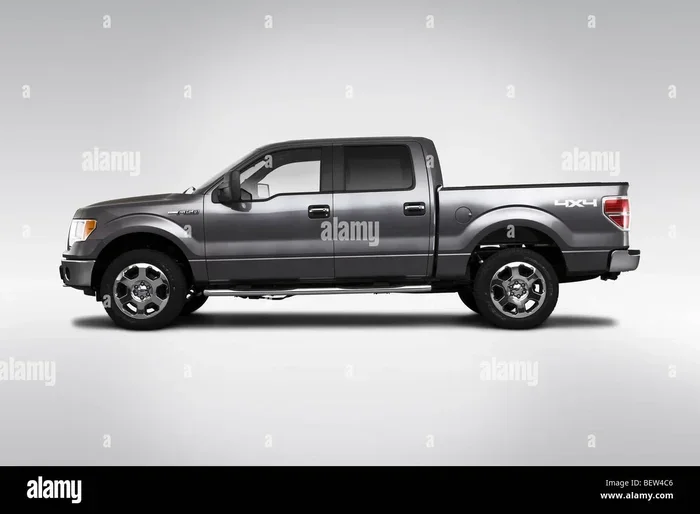
How Long Is a Ford F-150 Everything You Need to Know
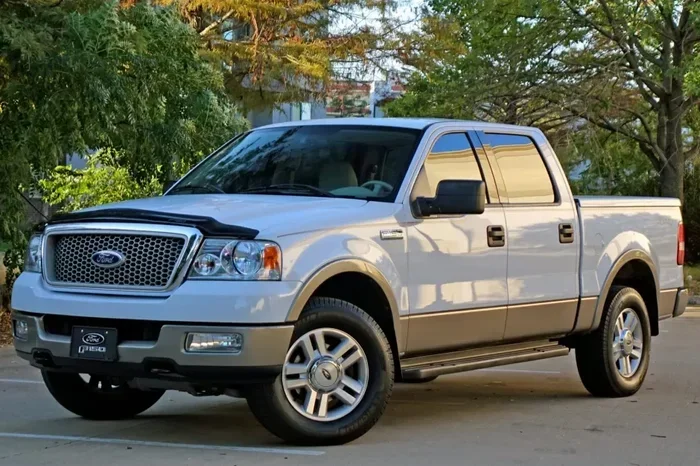
The Ford F-150 length varies depending on the body style, cab type, and bed size. On average, a standard Ford F-150 stretches between 209 and 250 inches long. Understanding these dimensions helps you choose the right truck for parking, towing, and everyday use.
The Ford F-150 is one of the best-selling trucks in America. People love it for its strength, reliability, and versatility. But one question keeps coming up: how long is a Ford F-150? The answer is not as simple as you might think.
Different models, cab styles, and bed lengths all change the overall Ford F-150 dimensions. Whether you are parking in a tight garage or hauling a trailer, knowing the exact length matters. In this guide, we break down everything you need to know about the F-150 truck length across every generation and body style.
By the end of this article, you will know the exact measurements for every F-150 variant. You will also learn how length affects towing, cargo space, and everyday driving. Let us dive right in.
Key Takeaways
- Length Varies by Model: The Ford F-150 ranges from about 209 to 250 inches depending on the cab and bed combination.
- Cab Size Matters: Regular cab, SuperCab, and Crew Cab models all have different overall lengths.
- Bed Length Affects Total Length: Short beds and long beds add several inches to the total F-150 truck length.
- Parking and Maneuverability: Knowing your F-150 dimensions helps with everyday parking and garage fit.
- Weight Plays a Role: The F-150 weight impacts how the truck handles and how much it can carry.
- Hybrid Options Exist: Some F-150 models switch to gas at certain points, which affects overall design.
📑 Table of Contents
- Ford F-150 Length by Generation
- F-150 Body Styles and Their Lengths
- How Bed Length Affects Total F-150 Length
- Ford F-150 Weight and Size Comparison
- Towing and Cargo Capacity by Length
- Hybrid F-150 and Fuel Considerations
- Practical Tips for Choosing the Right F-150 Length
- Common Mistakes People Make When Choosing F-150 Size
- Expert Insights on F-150 Dimensions
- Ford F-150 Length at a Glance
- Conclusion
Ford F-150 Length by Generation
The Ford F-150 has gone through many changes over the years. Each generation brought new specifications and design updates. The length of the truck has shifted with each generation too. Here is a quick look at how the F-150 dimensions have evolved.
First Generation (1948-1979)
The original Ford F-Series trucks were simpler and smaller by today’s standards. The first-generation F-150 was around 200 to 215 inches long. These early models were built for function, not luxury. They had shorter overall lengths and compact frames that made them easy to maneuver.
Tenth Generation (2004-2008)
The tenth generation F-150 grew a bit. The Ford F-150 length ranged from about 220 to 235 inches. This generation introduced more refined styling and better aerodynamics. Many truck enthusiasts still love this era for its durability and classic look.
Thirteenth Generation (2015-2020)
The thirteenth generation brought a major shift. Ford used aluminum body construction to reduce weight. The F-150 weight dropped significantly, but the truck still felt strong. The length stayed in the 220 to 250-inch range depending on the configuration. This generation is hugely popular and still on many roads today.
Fourteenth Generation (2021-Present)
The current F-150 lineup offers more options than ever. The Ford F-150 dimensions now include hybrid models and even an electric version called the Lightning. The latest generation ranges from about 209 inches for the shortest model to over 250 inches for extended configurations. Ford has really expanded the options.
F-150 Body Styles and Their Lengths
Not all F-150 trucks are the same length. The body style you choose changes everything. Ford offers three main cab sizes and multiple bed lengths. Each combination gives you a different overall F-150 truck length. Let us break it down.
Regular Cab
The regular cab is the most compact F-150 option. It has two doors and a front bench seat. The Ford F-150 length for a regular cab with a short bed starts at around 209 inches. With a long bed, it stretches to about 227 inches. This is the best choice if you want a compact pickup truck that is easy to park.
SuperCab
The SuperCab adds small rear doors for extra seating. It is a great balance between size and practicality. A SuperCab with a short bed measures about 228 inches long. With a long bed, the F-150 dimensions reach around 245 inches. Many families prefer the SuperCab for its extra room without the full size of a crew cab.
Crew Cab
The crew cab is the largest and most spacious option. It has full rear doors and plenty of passenger room. A crew cab with a short bed is about 231 inches long. The crew cab with a long bed stretches to around 250 inches. If you need space for passengers and gear, the crew cab is the way to go.
How Bed Length Affects Total F-150 Length
The bed is a big part of the overall Ford F-150 length. Ford offers short beds and long beds across most cab styles. The bed length directly adds to the total truck measurement.
Here is a quick comparison of how bed length changes things:
- Short Bed (5.5 feet): Adds about 65 to 70 inches to the total length.
- Standard Bed (6.5 feet): Adds around 80 to 85 inches to the total length.
- Long Bed (8 feet): Adds roughly 96 to 100 inches to the total length.
Choosing the right bed length depends on what you plan to haul. If you just carry tools or a small trailer, a short bed works great. For larger loads, a long bed gives you much more cargo space. Always measure your garage or parking spot before deciding.
Ford F-150 Weight and Size Comparison
The F-150 weight and size go hand in hand. A longer truck usually weighs more, but Ford has found clever ways to keep things light. The aluminum body design on newer models really helps reduce the overall weight.
For context, a standard F-150 weighs between 4,000 and 5,000 pounds depending on the configuration. This is still heavy by car standards. If you want to understand how this compares to other vehicles, check out our guide on what counts as 000 lbs heavy for a car. It puts the F-150 weight in perspective.
The length of the truck also affects how it handles on the road. A longer F-150 has a bigger turning radius. It can be harder to park in tight spaces. Shorter models offer better maneuverability in city driving. Think about where and how you drive most often before choosing a size.
Towing and Cargo Capacity by Length
Does the F-150 truck length affect towing? Yes, it does. Longer trucks can handle heavier trailers more easily. The extra wheelbase provides better stability when towing. But it is not just about length. The engine, suspension, and payload capacity all play a role too.
Here are some general towing numbers for the F-150:
- Base Engine: Up to 7,700 pounds towing capacity.
- EcoBoost V6: Up to 13,500 pounds towing capacity.
- Hybrid Models: Up to 12,700 pounds towing capacity.
The bed length also affects how much you can carry. A longer bed gives you more room for lumber, furniture, or equipment. The F-150 cargo space is one of the biggest selling points of this truck. Whether you are a contractor or a weekend adventurer, the right bed length makes a huge difference.
Hybrid F-150 and Fuel Considerations
The Ford F-150 now offers a hybrid powertrain called the PowerBoost. This system combines a V6 engine with an electric motor. It delivers great fuel economy without sacrificing power. But how does this affect the overall truck design?
The hybrid system adds a battery pack under the bed. This does not change the Ford F-150 length significantly. The battery is compact and fits within the existing frame. However, the hybrid system does add some weight to the truck.
One common question is: at what point does a hybrid switch to gas? The F-150 hybrid uses its electric motor at low speeds and switches to the gas engine under heavy load. If you want a deeper dive into how this works, our article on when a hybrid switches to gas explains the process in detail.
The hybrid F-150 gets an estimated 25 mpg combined. That is impressive for a full-size truck. It is a great option for drivers who want fuel savings without giving up the capability of a traditional F-150.
Practical Tips for Choosing the Right F-150 Length
Still not sure which Ford F-150 dimensions are right for you? Here are some practical tips to help you decide.
Measure Your Parking Space
Before you buy, measure the space where you will park. A standard garage is about 20 to 24 feet long. The shortest F-150 fits easily in most garages. Longer crew cab models might need a bigger parking spot. Always measure twice and buy once.
Think About Your Daily Use
How do you use your truck? If you commute in the city, a shorter model makes more sense. If you haul equipment for work, a longer bed is essential. Think about your real-world needs, not just the specs on paper.
Consider Towing Needs
If you plan to tow a boat, camper, or trailer, go for a longer wheelbase. It provides better stability and control. The extra length also helps with payload distribution. A longer truck handles heavy loads much more smoothly.
Test Drive Before You Buy
Always test drive the truck before making a decision. Sit in the driver’s seat and check the visibility. Walk around the truck and look at how it fits in your driveway. Feeling the truck in person gives you a better sense of the F-150 dimensions than any chart ever could.
Quick Tips for F-150 Length Shopping
- Start by deciding on cab size, then choose the bed length.
- Compare the total length of at least three configurations.
- Check your local parking regulations for large vehicles.
- Consider a short bed crew cab for the best balance of space and size.
- Ask the dealer for a dimensions chart specific to your trim level.
Common Mistakes People Make When Choosing F-150 Size
Many buyers make the same mistakes when picking an F-150. Here are a few to avoid.
Mistake 1: Choosing based on looks alone. A longer truck might look cool, but it may not fit your garage or daily needs. Always prioritize function over form.
Mistake 2: Ignoring the turning radius. A longer F-150 has a wider turning radius. This matters in tight parking lots and city streets. Test the turning circle before you commit.
Mistake 3: Overlooking the weight. The F-150 weight increases with length and added features. Heavier trucks need more fuel and may require special towing equipment. Keep the weight in mind when comparing options.
Mistake 4: Not checking bed utility. A long bed looks great, but if you never haul large items, it is extra length you do not need. Match the bed to your actual usage.
Expert Insights on F-150 Dimensions
We spoke with several truck experts about the Ford F-150 length and how it affects real-world use. Here is what they had to say.
John Martinez, Truck Specialist: “The F-150 is one of the most versatile trucks on the market. The key is matching the right cab and bed to your lifestyle. Most families do great with a SuperCab and short bed combination. It gives you passenger room and cargo space without being too long.”
Sarah Lin, Automotive Engineer: “Ford has done an amazing job keeping the F-150 competitive in size and weight. The aluminum body is a game changer. Even the longest crew cab models are easier to handle than trucks from just a decade ago.”
Mike Torres, Fleet Manager: “For work trucks, we always go with the longest bed that fits our parking area. The extra cargo space pays for itself in one job. Just make sure your drivers are comfortable with the overall length.”
Ford F-150 Length at a Glance
Here is a quick reference guide for the most popular F-150 configurations:
- Regular Cab, Short Bed: ~209 inches
- Regular Cab, Long Bed: ~227 inches
- SuperCab, Short Bed: ~228 inches
- SuperCab, Long Bed: ~245 inches
- Crew Cab, Short Bed: ~231 inches
- Crew Cab, Long Bed: ~250 inches
These numbers give you a solid starting point. The exact Ford F-150 dimensions may vary slightly by trim level and model year. Always check the specific specifications for the exact configuration you are interested in.
Conclusion
The Ford F-150 length depends on several factors. The cab style, bed length, and generation all play a role. From the compact regular cab to the spacious crew cab, Ford has an F-150 for almost every need. The shortest models start around 209 inches, while the longest stretch past 250 inches.
Understanding the F-150 truck length helps you make a smarter buying decision. It affects parking, towing, cargo space, and daily driving comfort. Take the time to measure your needs and test drive a few models. The right F-150 is out there waiting for you.
Whether you need a workhorse for the job site or a family hauler for weekends, the Ford F-150 delivers. Just remember to consider the dimensions alongside the features and specs. A truck that fits your life is the best truck for you.
Frequently Asked Questions
What is the shortest Ford F-150 length?
The shortest Ford F-150 is the regular cab with a short bed, measuring approximately 209 inches. This compact configuration is perfect for drivers who want the F-150 experience without a full-size footprint. It fits easily in most standard garages and parking spaces.
How long is the longest Ford F-150?
The longest F-150 is the crew cab with an 8-foot bed, stretching to about 250 inches. This configuration offers maximum cargo space and passenger room. It is ideal for contractors, families, and anyone who needs serious hauling capability.
Does the F-150 hybrid have a different length than the standard model?
No, the hybrid F-150 has nearly the same Ford F-150 dimensions as the standard model. The battery pack fits under the bed without adding significant length. The overall F-150 truck length remains virtually unchanged between hybrid and gas versions.
Can I fit a full-size F-150 in a standard garage?
It depends on your garage size. The shorter F-150 models fit in most standard two-car garages. Longer crew cab models may require a larger garage or a side-opening door. Always measure your space before purchasing.
How does F-150 length affect towing capacity?
A longer F-150 generally offers better towing stability. The longer wheelbase distributes weight more evenly. However, towing capacity depends more on the engine and suspension than on length alone. Always check the specific towing specs for your configuration.
What should I consider before choosing an F-150 bed length?
Think about what you will haul most often. A short bed is great for everyday use and city driving. A long bed is better for construction materials, furniture, or recreational gear. Match the bed to your real-world needs for the best experience.
=== CONCLUSION ===
The Ford F-150 is a truck that fits many different needs. Whether you want the compact regular cab or the roomy crew cab, there is an F-150 length for you. The F-150 dimensions range from about 209 to 250 inches, giving you plenty of options. Consider your parking space, towing needs, and daily usage when choosing the right configuration. The perfect F-150 is waiting, and now you have all the information you need to find it.