Does the RAV4 Display Tire Pressure You Need to Know
The RAV4 does display tire pressure information on certain trim levels and model years through its dashboard display. Understanding your tire pressure monitoring system helps you maintain safe driving conditions and improve fuel efficiency. Whether you drive a standard RAV4 or a RAV4 Hybrid, knowing how to read and reset your tire pressure readings is essential for every owner.
Owning a Toyota RAV4 means enjoying one of the most popular SUVs on the road. Whether you drive the standard gas model or the RAV4 Hybrid, you rely on your vehicle’s display screens for important information. One question many RAV4 owners ask is whether their dashboard actually shows tire pressure readings.
The answer is yes, but with some important details you need to know. Does the RAV4 display tire pressure? It depends on your model year and trim level. Newer RAV4 models from 2019 onward feature a multi-information display that can show individual tire pressure readings. Older models may only show a warning light when pressure drops too low. Understanding what your specific RAV4 can display helps you stay safe and maintain your vehicle properly.
In this guide, we will walk you through everything you need to know about the RAV4 tire pressure display. You will learn how the system works, which models have it, how to read the information, and what to do when the warning light comes on. By the end, you will feel confident about monitoring your RAV4’s tire pressure every time you drive.
Key Takeaways
- RAV4 Display Capability: Newer RAV4 models show tire pressure on the multi-information display screen located behind the steering wheel.
- TPMS Warning Light: The RAV4 uses a yellow tire pressure warning light on the dashboard to alert you of low pressure.
- Model Year Differences: Tire pressure display features vary between RAV4 generations, with newer models offering more detailed readings.
- Hybrid Models: The RAV4 Hybrid includes the same tire pressure display features as the gas-powered version.
- Manual Checks Still Matter: Even with a digital display, using a tire pressure gauge regularly ensures accuracy.
- Reset Process: You can reset the TPMS light and tire pressure readings through the vehicle settings menu.
- Safety Impact: Proper tire pressure improves handling, fuel economy, and tire lifespan on your RAV4.
📑 Table of Contents
Understanding the Tire Pressure Monitoring System in the RAV4
Every modern Toyota RAV4 comes equipped with a Tire Pressure Monitoring System, commonly known as TPMS. This system uses sensors inside each tire to measure the air pressure and send data to your vehicle’s computer. The RAV4 has used some form of TPMS since the second generation, but the way it displays information has evolved over the years.
How TPMS Works in the RAV4
The TPMS in your RAV4 relies on small sensors mounted inside each tire valve stem. These sensors measure the air pressure inside the tire and transmit the data wirelessly to the vehicle’s onboard computer. When the system detects that pressure is below the recommended level, it triggers a warning.
There are two types of TPMS systems you might find in a RAV4:
- Direct TPMS: Uses physical sensors inside each tire to measure pressure directly. This is what most modern RAV4 models use.
- Indirect TPMS: Uses wheel speed sensors to detect differences in tire rotation caused by low pressure. Older RAV4 models may use this approach.
Most RAV4 owners have the direct TPMS system, which provides more accurate readings and can show individual tire pressures on the display screen.
What the TPMS Warning Light Looks Like
The TPMS warning light on the RAV4 dashboard looks like a horseshoe shape with an exclamation point in the center. When this light illuminates, it means one or more tires are significantly underinflated. You should check your tire pressure as soon as it is safe to do so.
If the light flashes when you start the car and then stays solid, this typically indicates a malfunction in the TPMS system itself rather than a pressure issue. In this case, you may want to visit a service center or ask can a dealership program a key fob using the vin as part of a broader diagnostic check.
Does the RAV4 Display Tire Pressure Readings?
The core question many RAV4 owners have is whether their vehicle actually displays the specific tire pressure numbers. The answer depends largely on your model year and trim level. Let us break this down by generation.
RAV4 Models from 2019 and Newer
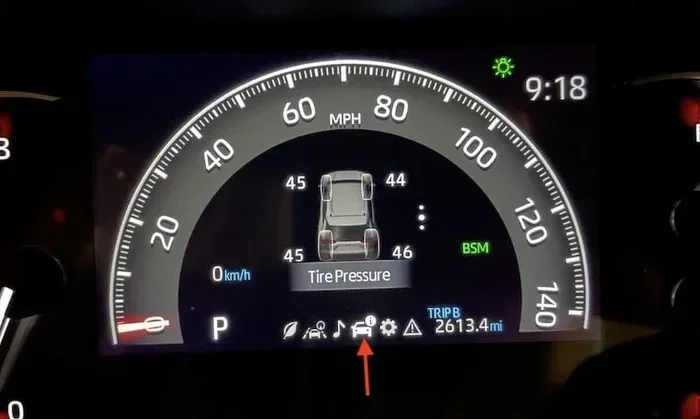
Starting with the fifth-generation RAV4 introduced in 2019, Toyota upgraded the multi-information display screen. This screen, located behind the steering wheel between the instrument cluster and the center stack, can display detailed tire pressure readings for each individual tire.
To access this information, you typically need to navigate through the display menu using the steering wheel controls. The exact path may vary slightly depending on your RAV4 trim level, but generally you will find tire pressure readings under the vehicle information or settings menu.
These newer RAV4 models display pressure in PSI (pounds per square inch) for each tire. You can see the front left, front right, rear left, and rear right tire pressures all at once. This makes it very easy to identify which specific tire is low without having to check each one manually.
RAV4 Models from 2013 to 2018
Earlier RAV4 models from the third and fourth generations may have a more limited display. Some trims only show the TPMS warning light without specific pressure readings. In these models, the system alerts you when pressure drops below a threshold, but you will not see the exact PSI numbers on the dashboard.
If you own an older RAV4, you should invest in a good quality tire pressure gauge and check your tires manually at least once a month. This is especially important during seasonal temperature changes, which can cause pressure fluctuations.
RAV4 Hybrid Tire Pressure Display
The RAV4 Hybrid comes with the same tire pressure monitoring capabilities as the gas-powered version. If you drive a RAV4 Hybrid, you can expect to see tire pressure readings on the multi-information display if you have a 2019 or newer model. The hybrid powertrain does not affect how the TPMS displays information.
Some RAV4 Hybrid owners also wonder about fuel-related topics. For example, How to Read and Navigate the Tire Pressure Display
Once you know your RAV4 has a tire pressure display, you need to know how to find and interpret the readings. The process is straightforward but can vary slightly between model years. Follow these steps to view your RAV4’s tire pressure on the display screen: The tire pressure readings on your RAV4 display are shown in PSI. The recommended tire pressure for most RAV4 models is between 32 and 35 PSI, but you should always check the sticker on the driver’s side door jamb for your specific vehicle’s recommendation. Here is what the readings typically mean: Tire pressure is one of the simplest yet most important aspects of vehicle maintenance. For your RAV4, maintaining the correct tire pressure affects safety, fuel economy, and tire longevity. The RAV4’s display system makes it easier than ever to keep track of this critical metric. Underinflated tires are a leading cause of tire blowouts and accidents. When a tire does not have enough air, the sidewall flexes more than it should, which can lead to overheating and eventual failure. The RAV4’s tire pressure display helps you catch low pressure before it becomes a dangerous situation. Overinflated tires are also problematic. They have a smaller contact patch with the road, which reduces traction and makes your RAV4 handle poorly, especially in wet or snowy conditions. The display helps you avoid both underinflation and overinflation. Did you know that properly inflated tires can improve your RAV4’s fuel economy by up to three percent? Underinflated tires create more rolling resistance, which forces your engine to work harder and use more fuel.Step-by-Step Guide to Finding Tire Pressure Readings
Understanding the Numbers You See
Quick Tips for Using the Tire Pressure Display
Why Tire Pressure Matters for Your RAV4
Safety Benefits of Proper Tire Pressure
Fuel Economy and Tire Pressure