Do You Check Toyota Transmission Fluid With the Car Running
Checking Toyota transmission fluid the right way matters for your car’s health. Most Toyota models require the engine to be running and warm when you check the fluid level. Always consult your owner manual for the exact procedure. Doing it wrong can give you a false reading and cause serious damage.
This is a comprehensive guide about Do You Check Toyota Transmission Fluid With the Car Running?.
Key Takeaways
- Most Toyotas need the engine running: The transmission fluid must be warm for an accurate reading.
- Location matters: The dipstick is usually near the engine bay, but some newer models don’t have one.
- Use the right fluid: Using the wrong type can harm your transmission over time.
- Check the color and smell: Healthy fluid is reddish and smooth. Dark or burnt fluid needs attention.
- Follow Toyota service intervals: Regular checks prevent costly repairs down the road.
- Don’t skip the warm-up step: Checking cold fluid gives inaccurate results.
[FEATURED_IMAGE_PLACEHOLDER]
When it comes to Toyota maintenance, checking your transmission fluid is one of those tasks that seems simple but trips up a lot of car owners. You might be standing in your garage wondering, “Do I check Toyota transmission fluid with the car running?” The answer is not as straightforward as you might think. Different Toyota models have different requirements, and getting it wrong can lead to inaccurate readings or even transmission damage.
In this guide, we will walk you through everything you need to know about checking Toyota transmission fluid. We will cover whether the car should be running, how to find the dipstick, what the fluid should look like, and common mistakes to avoid. Whether you drive a Camry, RAV4, or Tacoma, this article has you covered.
Proper transmission fluid maintenance keeps your Toyota running smoothly for years. It is one of those small habits that saves you from big headaches. So let us dive in and get you confident about this essential car care task.
Why Checking Toyota Transmission Fluid Matters
Your Toyota’s transmission is one of the most complex and expensive parts of the vehicle. Transmission fluid serves several critical jobs. It lubricates the internal gears, keeps things cool, and helps transfer power from the engine to the wheels. Without proper fluid levels, your transmission can overheat, grind, or fail entirely.
The Role of Transmission Fluid in Your Toyota
Think of transmission fluid as the lifeblood of your gearbox. Just like your engine needs oil, your transmission needs fluid to function. Here is what healthy transmission fluid does:
- Lubricates internal components: Gears and clutches inside the transmission move fast. Fluid reduces friction and wear.
- Cools the system: Transmission fluid absorbs heat and carries it away from sensitive parts.
- Transmits power: In automatic transmissions, fluid pressure helps shift gears smoothly.
- Protects against corrosion: Quality fluid contains additives that prevent rust and damage inside the transmission.
When fluid levels drop or the fluid degrades, none of these functions work properly. You might notice rough shifting, slipping gears, or strange noises. Checking your fluid regularly helps you catch problems early.
How Often Should You Check Toyota Transmission Fluid?
Toyota recommends checking your transmission fluid as part of regular maintenance. A good rule of thumb is to inspect it every 30,000 to 60,000 miles. However, if you drive in extreme conditions like heavy traffic, towing, or hot climates, you should check it more often. Your Toyota owner manual will have the specific schedule for your model.
Some newer Toyota vehicles use “lifetime” transmission fluid, which does not need regular checking. But even with lifetime fluid, it is smart to inspect it periodically. Fluid can still break down over time, especially under heavy use. If you are unsure, a free diagnostic for your car at a local shop can help you assess the condition.
Do You Check Toyota Transmission Fluid With the Car Running?
This is the big question, and the answer depends on your specific Toyota model. The general rule for most older Toyota vehicles is yes — you check the transmission fluid with the engine running and warm. But newer models may have different procedures, and some do not even have a dipstick anymore.
The General Rule: Engine Running and Warm
For most Toyota models, you need to follow these steps:
- Park the car on a level surface.
- Start the engine and let it idle for about 10 to 15 minutes.
- Shift through all gears (P, R, N, D) and then return to Park.
- Leave the engine running and pop the hood.
- Locate the transmission dipstick and pull it out.
- Wipe it clean, reinsert it, then pull it out again to read the level.
The key here is that the fluid needs to be at operating temperature for an accurate reading. Cold fluid will give you a false low reading, and you might overfill the transmission. Overfilling can cause foaming, leaks, and poor performance.
What About Newer Toyota Models?
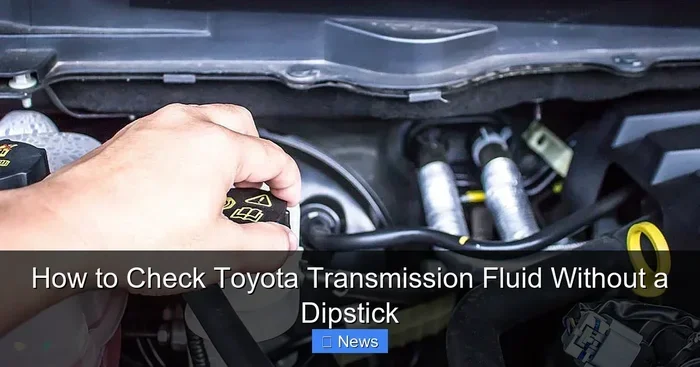
Some newer Toyota vehicles, especially those with sealed transmission units, do not have a traditional dipstick. These models require a different approach. You may need to visit a Toyota dealer or qualified mechanic who has the proper tools to check the fluid level. The procedure often involves connecting a scan tool to read transmission temperature and fluid level electronically.
If you are not sure whether your Toyota has a dipstick, check your owner manual. You can also look under the hood for a brightly colored handle near the back of the engine bay. If you do not see one, your transmission likely uses a fill plug or electronic sensor instead.
Checking Transmission Fluid on Hybrid Toyotas
Toyota hybrid vehicles like the Prius have unique transmission systems that combine an electric motor with a traditional gearbox. The procedure for checking fluid on hybrids can differ from standard Toyotas. In many cases, the engine may not need to run in the traditional sense because the hybrid system operates differently.
For hybrid models, always refer to the owner manual for the exact procedure. Some hybrids require the car to be in a specific mode or the hybrid battery to be at a certain charge level before checking fluid. If you are unsure, a quick visit to a Toyota service center can save you a lot of guesswork.
Step-by-Step Guide to Checking Toyota Transmission Fluid
Now that you know the basics, let us walk through the actual process step by step. This guide works for most Toyota models that have a transmission dipstick.
Step 1: Gather Your Tools
You do not need much to check your transmission fluid. Here is what you will need:
- A clean rag or paper towel
- The correct Toyota transmission fluid (check your owner manual for the type)
- A funnel (optional but helpful)
- Gloves to keep your hands clean
Using the wrong type of fluid is one of the most common mistakes. Toyota specifies different fluids for different transmissions. For example, Toyota Type T-IV fluid is common in older models, while newer Toyotas may require a specific synthetic fluid. Always double-check before adding anything.
Step 2: Warm Up the Vehicle
Start the engine and let it idle. You want the transmission fluid to reach operating temperature, which is typically around 120 to 180 degrees Fahrenheit. Drive the car around the block for a few minutes if it has been sitting for a while. This ensures the fluid is warm and flows properly for an accurate reading.
Do not rev the engine or shift aggressively. Just let it idle in Park for a few minutes. You want the fluid warm but not scorching hot, as that can cause burns.
Step 3: Locate the Dipstick
Open the hood and look for the transmission dipstick. It is usually located near the back of the engine bay, toward the passenger side on most Toyotas. The handle is often red or yellow, making it easy to spot. If you are having trouble finding it, consult your owner manual or look for a diagram under the hood.
Some Toyota models, particularly newer ones, may not have a visible dipstick. In that case, the transmission fill plug is usually on the side of the transmission housing. You would need to remove the plug and check the fluid level that way.
Step 4: Pull, Wipe, Reinsert, and Read
Once you find the dipstick, pull it out completely. Wipe it clean with your rag. Then reinsert it all the way back in and pull it out again. This double-pull method gives you the most accurate reading.
Look at the fluid level against the markings on the dipstick. There are usually two lines — a “full” line and a “low” or “add” line. The fluid should fall between these marks. If it is below the low line, you need to add more fluid.
Step 5: Add Fluid if Needed
If the fluid level is low, use a funnel to add the correct Toyota transmission fluid. Add small amounts and recheck the level frequently. Overfilling is just as bad as underfilling. Too much fluid can cause foaming, pressure buildup, and leaks.
While you are at it, take a moment to inspect the fluid. Healthy Toyota transmission fluid should be reddish and translucent. If it looks dark brown, black, or smells burnt, it is time for a fluid change. Dirty fluid does not lubricate as well and can accelerate wear inside the transmission.
Common Mistakes When Checking Transmission Fluid
Even experienced car owners make mistakes when checking transmission fluid. Here are the most common errors and how to avoid them.
Checking the Fluid When It Is Cold
This is the number one mistake. Cold transmission fluid sits lower in the transmission and does not flow properly. Checking it when the engine is cold will give you a falsely low reading. Always warm up the vehicle first by idling for 10 to 15 minutes.
Not Reading the Dipstick on a Level Surface
If your car is parked on a slope or uneven ground, the reading will be inaccurate. Always park on a flat, level surface before checking any fluids. This ensures the fluid settles evenly in the transmission pan.
Using the Wrong Fluid Type
Not all transmission fluids are the same. Using the wrong fluid can cause slipping, rough shifting, and internal damage. Toyota specifies certain fluids for each model and transmission type. When in doubt, check with your dealer or a trusted mechanic.
Ignoring the Color and Smell
The level is only half the battle. You should also pay attention to how the fluid looks and smells. Healthy fluid is pinkish-red and has a slightly sweet smell. If it is dark, gritty, or smells like burning toast, your transmission needs service. Ignoring these signs can lead to expensive repairs.
Forgetting to Check for Leaks
While you have the hood open, look under the car for any fresh fluid spots. Transmission fluid leaks often appear near the middle of the car, under the transmission area. A small leak can become a big problem quickly if left unaddressed.
Toyota Transmission Fluid Types and When to Change Them
Not all transmission fluid is created equal. Toyota uses several different types depending on the model and transmission. Here is a quick overview.
Toyota Type T-IV
This is one of the most common fluids used in older Toyota models. It is a high-quality automatic transmission fluid designed for smooth shifting and long life. Many Toyotas from the 1990s through the mid-2000s use this fluid.
Toyota WS (World Standard) Fluid
Introduced in the mid-2000s, Toyota WS fluid is a newer synthetic fluid used in many current Toyota models. It is designed for improved fuel efficiency and better performance in extreme temperatures. If your Toyota was made after 2005, it likely uses WS fluid.
CVT Fluid for Continuously Variable Transmissions
Some Toyota models use a CVT (continuously variable transmission), which requires its own specialized fluid. CVT fluid is different from traditional automatic transmission fluid. Using the wrong fluid in a CVT can cause serious damage, so always verify the correct type.
When to Change Transmission Fluid
Toyota does not always specify a strict change interval for transmission fluid. However, most experts recommend changing it every 60,000 to 100,000 miles. If you tow, drive in stop-and-go traffic, or live in a hot climate, consider changing it more frequently. Fresh fluid keeps the transmission running cool and smooth.
If you are ever unsure about your fluid condition, you can always get a free diagnostic for your car at many auto parts stores. They can check your fluid and give you a professional opinion on whether a change is needed.
Signs Your Toyota Transmission Fluid Needs Attention
You do not always need to check the dipstick to know something is wrong with your transmission fluid. Your car will often give you warning signs. Here is what to watch for:
- Slipping gears: The transmission shifts unexpectedly or feels like it is not holding gear.
- Rough or jerky shifting: Smooth transitions between gears should feel seamless.
- Delayed engagement: There is a pause when you shift from Park to Drive.
- Burning smell: A hot, acrid odor coming from under the hood is a red flag.
- Warning lights: The check engine light or transmission warning light may illuminate.
- Unusual noises: Grinding, whining, or clunking sounds during shifts are concerning.
If you notice any of these symptoms, check your fluid immediately. Low or dirty fluid is often the culprit. Addressing the problem early can save you from a costly transmission rebuild.
Can You Check Transmission Fluid on a Push-to-Start Toyota?
Many modern Toyota models use push-button start systems instead of traditional keys. If you drive one of these vehicles, you might wonder how the fluid check process works. The good news is that the procedure is essentially the same.
Simply press the start button without pressing the brake pedal to turn the electrical systems on, then press it again with your foot on the brake to start the engine. Let it idle, and follow the same steps we outlined earlier. The key requirement is that the engine is running and the transmission fluid is warm.
If you have a keyless entry system and are curious about how the key fob interacts with your vehicle, you might want to read about can you start a keyless car with a key. It is a related topic that many Toyota owners find helpful.
Key Takeaways
- Most Toyotas require the engine to be running: Always warm up the vehicle before checking fluid for an accurate reading.
- Locate the dipstick correctly: It is usually near the back of the engine bay with a colored handle.
- Use the correct fluid type: Refer to your Toyota owner manual for the exact specification.
- Check fluid condition, not just level: Color and smell tell you a lot about transmission health.
- Follow a regular maintenance schedule: Routine checks prevent major transmission problems.
- Newer models may not have a dipstick: Consult a dealer if you cannot find one on your Toyota.
Conclusion
So, do you check Toyota transmission fluid with the car running? For most Toyota models, the answer is yes — but with an important caveat. The engine needs to be running and warm for an accurate reading. Always follow the specific procedure outlined in your owner manual, as different models and years may have slightly different requirements.
Checking your transmission fluid is a simple task that takes just a few minutes but pays huge dividends. It helps you catch problems early, extend the life of your transmission, and keep your Toyota running at its best. Make it part of your regular maintenance routine, and your car will thank you for years to come.
If you ever feel unsure about the process, do not hesitate to visit a trusted mechanic or Toyota service center. They can walk you through the steps and ensure everything is done correctly. Your Toyota is a significant investment, and proper transmission fluid maintenance is one of the easiest ways to protect it.
Stay on top of your car care, and you will enjoy a smooth, reliable driving experience every time you get behind the wheel.
Frequently Asked Questions
Can I check my Toyota transmission fluid with the car off?
For most Toyota models, you should not check the fluid with the car off. The fluid needs to be warm and circulating for an accurate reading. Checking it cold will give you a falsely low level, which could lead to overfilling if you add fluid based on that reading.
What happens if I overfill my Toyota transmission fluid?
Overfilling causes the fluid to foam, which reduces its lubricating ability. It can also create excess pressure inside the transmission, leading to leaks and poor shifting performance. If you overfill, drain the excess fluid carefully and recheck the level.
How do I know what type of transmission fluid my Toyota needs?
Check your Toyota owner manual for the exact fluid specification. Different models and years require different fluids, such as Type T-IV, WS fluid, or CVT-specific fluid. Using the wrong fluid can cause serious transmission damage.
What color should Toyota transmission fluid be?
Healthy Toyota transmission fluid should be reddish and translucent. If it turns dark brown or black, or if it has a burnt smell, it is time for a fluid change. Dirty fluid loses its lubricating properties and can accelerate internal wear.
Can I check transmission fluid right after driving?
Yes, checking the fluid after driving is actually ideal because the fluid will be at operating temperature. Just make sure the engine is idling and the car is on a level surface. Wait a few minutes after driving to let the fluid settle before pulling the dipstick.
Do all Toyota models have a transmission dipstick?
No, many newer Toyota models do not have a traditional dipstick. Some use sealed transmission units that require electronic diagnostics or a fill plug method. If you cannot find a dipstick, consult your owner manual or visit a Toyota dealer for proper service.