The Ultimate Delaware Window Tint Law Guide for 2024
The Delaware window tint law sets clear rules for how dark or reflective your car windows can be. This guide covers VLT percentages, tint limits for sedans and SUVs, medical exemptions, and common violations. Stay compliant and avoid tint tickets with our simple, up-to-date 2024 rules.
Thinking about tinting your car windows in Delaware? You are not alone. Thousands of drivers across the state want that sleek, shaded look for their vehicles every year. But before you roll down the road with fresh tint, you need to know the rules.
The Delaware window tint law sets specific limits on how dark or reflective your windows can be. These rules exist for safety and legal reasons. Getting it wrong can mean a costly ticket, a failed inspection, or even having to remove your tint entirely. This guide breaks down everything you need to know for 2024 in plain, simple language.
Whether you drive a sedan, SUV, or van, this guide has you covered. We will walk through visible light transmission limits, tint darkness rules, exemptions, and common mistakes. By the end, you will feel confident about your choices. Let us dive right in.
Key Takeaways
- Windshield tint: Only a non-reflective strip on the top 5 inches is legal in Delaware.
- Sedan front side windows: Must allow more than 70% of light in (VLT above 70%).
- Sedan back side and rear windows: Can be any darkness below 70% VLT.
- SUV and van front windows: Must stay above 70% VLT, same as sedans.
- Medical exemption: Delaware allows darker tints with a physician’s certification.
- Reflective tint: Not allowed on front side windows for any vehicle type.
- Tint certificate: Installers must provide a certificate proving compliance.
📑 Table of Contents
- Understanding Delaware Window Tint Regulations
- Tint Rules for Sedans in Delaware
- Tint Rules for SUVs and Vans in Delaware
- Reflective Tint and Other Restrictions
- Medical Exemption for Darker Tint
- Tint Certificates, Stickers, and Documentation
- Penalties for Tint Violations in Delaware
- Quick Tips for Compliant Window Tinting
- Common Mistakes People Make With Car Tinting
- Frequently Asked Questions About Delaware Tint Law
- Final Thoughts on Delaware Window Tint Law
Understanding Delaware Window Tint Regulations
Delaware follows a clear set of rules when it comes to car window tinting laws. The state measures tint darkness using something called Visible Light Transmission, or VLT for short. This is the percentage of light that passes through your window film.
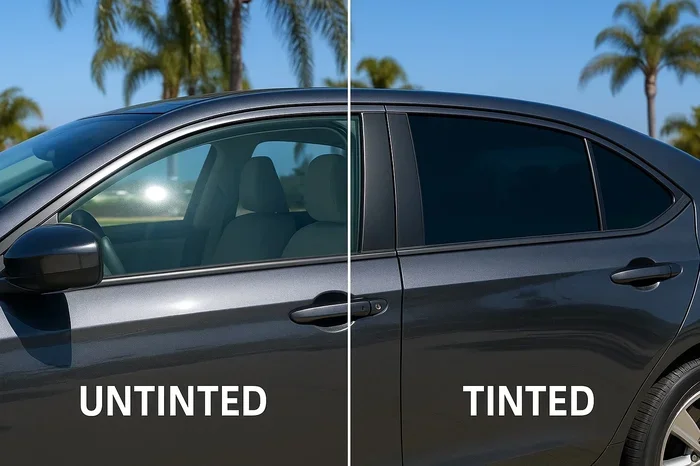
The higher the VLT number, the more light gets through. A 70% VLT means 70% of light passes through, and 30% gets blocked. A lower VLT means a darker tint. Delaware law sets different limits depending on which window you are tinting and what kind of vehicle you drive.
It is also worth noting that the state does not just care about darkness. Reflectivity matters too. And certain windows have stricter rules than others. Let us break it all down.
What Is VLT and Why Does It Matter?
VLT stands for Visible Light Transmission. It is a simple measurement that tells you how much light your window tint allows to pass through. Think of it like sunglasses for your car. The darker the shade, the less light gets in.
In Delaware, the law uses VLT percentages to set legal limits. If your tint falls below the allowed percentage, you are breaking the law. This matters because overly dark tints can reduce visibility, especially at night or in bad weather. That creates a safety risk for you and everyone else on the road.
When you get your windows tinted, ask your installer for the VLT rating of the film they use. A reputable tint installer Delaware will always provide this information. Keep the receipt and any documentation. You may need it if you ever get stopped.
Tint Rules for Sedans in Delaware
Sedans are the most common vehicle on Delaware roads. The tint rules for sedans are straightforward, but they differ from window to window. Here is the full breakdown.
Windshield Tint Rules
For sedans, the windshield tint rules are strict. You can only tint the top 5 inches of the windshield. This tint must be non-reflective. You cannot use a mirrored or reflective finish on the windshield at all.
The reason is simple. The windshield gives you the best forward view of the road. Blocking too much light there can seriously impair your driving. The 5-inch strip at the top helps reduce glare from the sun without blocking your view.
Front Side Windows
Front side windows on a sedan must allow more than 70% of light through. That means the legal tint darkness for these windows is a VLT of 70% or higher. In practical terms, this means very light tint or essentially no tint at all.
Some drivers choose a nearly clear film that blocks UV rays and heat without darkening the glass much. This is a smart choice if you want protection without running the risk of a tint ticket Delaware style violation.
Back Side Windows and Rear Window
Here is where sedan owners get more flexibility. The back side windows and the rear window can be tinted to any darkness below 70% VLT. You can go as dark as you want on these windows.
However, there is one important rule. If your rear window is tinted, you must have dual side mirrors. This ensures you can still see behind you clearly. Delaware law takes rear visibility very seriously.
Tint Rules for SUVs and Vans in Delaware
SUVs and vans follow similar rules to sedans, but with one key difference on the back side windows. Let us look at each window category.
Windshield Tint
Just like sedans, SUVs and vans can only have a non-reflective tint strip on the top 5 inches of the windshield. No exceptions. This rule applies to all passenger vehicles in Delaware.
Front Side Windows
The front side windows on SUVs and vans must also have a VLT of more than 70%. The rules are the same as sedans here. You cannot go darker on the front side windows, regardless of your vehicle type.
Back Side Windows and Rear Window
For SUVs and vans, the back side windows and rear window can be tinted to any darkness. There is no VLT minimum for these windows. You can go as dark as you like.
And unlike sedans, SUVs and vans do not require dual side mirrors if the rear window is tinted. This gives SUV owners a bit more freedom when choosing their aftermarket window film.
Reflective Tint and Other Restrictions
Delaware does not allow reflective or mirrored tint on any front side windows. This applies to both sedans and SUVs. Reflective tint can blind other drivers, which is why the state bans it from the front windows.
Here are the key restrictions you should know:
- Reflective tint is banned on front side windows for all vehicle types.
- Red, amber, and blue tint colors are not allowed. The law only permits neutral shades.
- Your tint must not be overly bubbled, peeling, or damaged. Damaged tint can lead to a citation.
- Tint on the front windshield is limited to the top 5 inches only.
The state takes these rules seriously because window tint affects more than just looks. It affects visibility, police officer safety, and overall road safety. Always choose a legal tint darkness that meets state standards.
Medical Exemption for Darker Tint
Some people have medical conditions that make them extremely sensitive to sunlight. For these individuals, standard tint limits may not be enough. Delaware offers a medical exemption window tint program for qualifying drivers.
Who Qualifies?
You may qualify if you have a condition that makes you unusually sensitive to light. Common qualifying conditions include lupus, porphyria, severe eczema triggered by sun exposure, and certain photosensitive disorders. A licensed physician must confirm your condition.
How to Get an Exemption
To get a medical exemption, follow these steps:
- Visit a licensed physician who can document your condition.
- Complete the Delaware medical exemption application form.
- Submit the form along with your physician’s certification to the Delaware DMV.
- Once approved, you will receive a certificate to keep in your vehicle.
With an exemption, you can legally tint your front side windows darker than 70% VLT. However, the exemption does not allow you to ignore all rules. Your tint still must not be reflective, and the windshield strip rule still applies.
Keep the exemption certificate in your glove box at all times. If you get stopped, showing this document proves you are compliant with the law.
Tint Certificates, Stickers, and Documentation
Delaware requires that your window tint certificate be provided by the installer. This certificate proves the film used meets state VLT requirements. It should include the VLT percentage and the installer’s information.
You do not need to place a special sticker on your vehicle in Delaware. However, keeping your certificate handy is a smart move. If you ever get pulled over, showing the certificate can save you from a hassle.
When choosing a tint shop, make sure they are familiar with Delaware state laws. A knowledgeable installer will use compliant film and provide proper documentation. This simple step can save you time and money down the road.
Penalties for Tint Violations in Delaware
Getting caught with illegal window tint in Delaware can cost you. The penalties are not just about fines. They can also affect your time and your vehicle’s inspection status.
A tint ticket Delaware violation typically results in a fine. Repeat offenses can lead to higher fines and even a mandate to remove the tint. Here is what you could face:
- First offense: A fine, and you may be required to remove the illegal tint.
- Subsequent offenses: Higher fines and potential issues with vehicle registration.
- Failed inspection: Illegal tint can cause your vehicle to fail its annual safety inspection.
The best way to avoid these penalties is simple. Know the law before you tint your windows. Work with a certified installer who understands Delaware window tint regulations. And always keep your documentation in the car.
Quick Tips for Compliant Window Tinting
Want to make sure your tint is legal and looks great? Follow these practical tips:
- Choose a reputable installer. Ask if they know Delaware’s specific VLT requirements before you book.
- Request the VLT certificate. This document proves your tint is compliant.
- Go with a lighter shade on front windows. A 70% VLT film gives you UV protection without breaking any rules.
- Consider ceramic tint. It blocks heat effectively without adding reflectivity or changing the window’s appearance.
- Check your state laws annually. Tint laws can change, and staying updated keeps you out of trouble.
- Ask about medical exemptions early. If you have a qualifying condition, start the process before your tint appointment.
These small steps make a big difference. They keep you legal, safe, and happy with your tint choice.
Common Mistakes People Make With Car Tinting
Even well-meaning car owners run into trouble with window tint. Here are the most common mistakes and how to avoid them.
Assuming All Tint Is the Same
Not all window film is created equal. Some films block more light than others. A film that looks light on the shelf might actually be quite dark once applied. Always ask for the exact VLT percentage before installation.
Forgetting About the Rear View Mirrors Rule
If you tint your rear windows on a sedan, you need dual side mirrors. Many drivers forget this and end up with a violation. Check your vehicle type and the mirror requirements before you commit to a tint job.
Skipping the Certificate
Some installers skip the paperwork. Do not let this happen to you. Without a window tint certificate, you have no proof that your tint is legal. Always insist on documentation.
Using Dark Tint on the Windshield
The windshield rules are strict. Any tint beyond the top 5 inches is illegal. Some drivers try to extend the tint further for a stylish look. This is a guaranteed ticket in Delaware.
Ignoring Reflectivity Limits
Even if your VLT is legal, reflective tint on front side windows will get you in trouble. Stick with non-reflective films for the front windows of any vehicle.
Frequently Asked Questions About Delaware Tint Law
Can I tint my windshield in Delaware?
Yes, but only the top 5 inches. The tint must be non-reflective and cannot extend below that strip. Any tint beyond the top 5 inches on the windshield is illegal and can result in a fine.
What is the legal VLT for front side windows on a sedan?
Front side windows on sedans must have a VLT of more than 70%. This means the film must allow over 70% of visible light to pass through. Going darker than 70% VLT on the front side windows is a violation of Delaware law.
Do I need a medical exemption for a darker tint?
If you want to tint your front side windows darker than 70% VLT, you need a medical exemption. A licensed physician must certify your condition, and you must submit the application to the Delaware DMV. Without an exemption, darker front window tints are not legal.
Can I use reflective tint on my car windows?
No. Delaware law prohibits reflective or mirrored tint on all front side windows, regardless of vehicle type. Reflective tint can blind other drivers and create dangerous driving conditions. Stick with non-reflective films for compliance.
What happens if I get a tint ticket in Delaware?
You will face a fine, and you may be required to remove the illegal tint. Repeat violations can lead to higher fines and issues with your vehicle registration. Keeping your tint certificate and staying within legal limits is the best way to avoid this.
Are there any tint colors that are illegal in Delaware?
Yes. Red, amber, and blue tint colors are not permitted on any vehicle windows in Delaware. The law only allows neutral tint shades. Always confirm the color of your film with your installer before application.
Final Thoughts on Delaware Window Tint Law
Understanding the Delaware window tint law does not have to be complicated. The rules are clear, and once you know them, you can make smart choices about your vehicle. Stick to the VLT limits, choose non-reflective films for your front windows, and keep your documentation handy.
If you qualify for a medical exemption, take advantage of it. It gives you more flexibility while keeping you safe from the sun. And always work with a knowledgeable tint installer Delaware who understands the local regulations.
Staying compliant is about more than just avoiding fines. It is about safety. Properly tinted windows can reduce glare and block harmful UV rays. But they must be within legal limits to do their job without causing problems. Follow the rules, enjoy your tint, and drive with confidence knowing you are on the right side of the law.
Take the time to research, ask questions, and get the right documentation. Your car, your wallet, and your peace of mind will thank you. Happy tinting, and drive safely in the First State.