Car Air Conditioner Buttons Meaning and How They Work
Understanding your car air conditioner buttons meaning is easier than you think. This guide breaks down every AC control on your dashboard so you can stay cool and comfortable all year long. We explain each button, dial, and setting with simple details and practical tips.
This is a comprehensive guide about car air conditioner buttons meaning.
Key Takeaways
- Know your AC layout: Most cars share common buttons like AC, MAX AC, recirculation, and defrost.
- Each button has a clear job: From cooling to dehumidifying, every control serves a specific purpose.
- Using the right settings saves fuel: Smart AC usage can improve your gas mileage and reduce strain on the engine.
- Common mistakes cause breakdowns: Misusing AC buttons can lead to costly repairs and poor performance.
- Auto climate control simplifies everything: Newer vehicles let the system manage temperatures for you.
- Regular maintenance keeps AC running strong: Changing filters and checking refrigerant levels prevents most problems.
[FEATURED_IMAGE_PLACEHOLDER]
Have you ever sat in your car on a scorching summer day and stared at a wall of buttons on the dashboard? You are not alone. Most drivers glance at the car air conditioner buttons meaning and just press whatever looks closest to cool air. But here is the thing — understanding what each button does can change the way you drive.
Your car’s air conditioning system is more than just a button that blows cold air. It is a carefully designed network of controls, sensors, and components working together to keep you comfortable. When you know what each climate control button does, you can use your AC more efficiently, save fuel, and even extend the life of your system.
This guide walks you through every single car AC control you will find on modern dashboards. We keep it simple, practical, and easy to follow. No jargon, no confusing tech talk. Just clear explanations that help you take control of your vehicle’s comfort system like a pro.
Understanding the Basics of Car Air Conditioner Buttons
Before we dive into each button, let us talk about the big picture. Your dashboard controls are not random. Every button and dial has a specific role in managing airflow, temperature, and humidity inside your cabin. Once you understand the basics, the whole system starts to make sense.
What Does the AC Button Actually Do?
The AC button is the heart of your cooling system. When you press it, you activate the AC compressor, which pumps refrigerant through the system. This refrigerant absorbs heat from the air inside your car and pushes cooler air through the air vents. Without the AC button engaged, you only get fan-blown air at outside temperature.
Many people think the AC button only matters in summer. That is a common mistake. The air conditioning system also dehumidifies the air, which helps clear foggy windows in winter. So your car AC controls work year round, not just when it is hot outside.
The Role of the Temperature Dial or Slider
Next to the AC button, you will usually find a temperature dial or slider. This control adjusts how warm or cool the air feels. Moving it toward the blue side produces cool air, while sliding it toward red gives you hot air. Some vehicles use a digital display instead of a physical dial, but the idea is the same.
The temperature dial works alongside the AC compressor. When you set it to cold and turn on AC, the system chills the air before pushing it into the cabin. If you set it to hot with AC on, the system still dehumidifies but warms the air through the heater core. This is why some cars feel dry and comfortable even with AC running in winter.
Common Car Air Conditioner Buttons and Their Functions
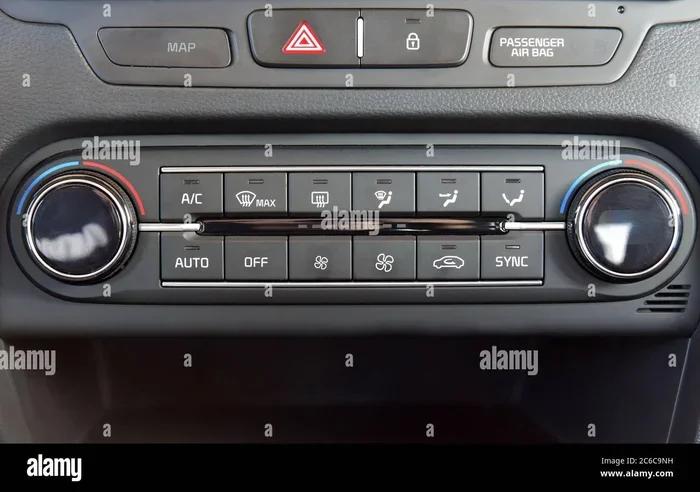
Now let us get into the specific buttons. Every vehicle is slightly different, but most cars share a similar set of climate control buttons. Here is a detailed look at what each one does.
MAX AC Button
The MAX AC setting is one of the most useful buttons in your car. When you press it, the system recirculates the air inside the cabin and runs the compressor at full power. This gives you the fastest cooling possible. It is perfect for those moments when you step into a boiling hot car and need relief fast.
However, you should not use MAX AC for long periods. Recirculating the same air can make the cabin feel stuffy. After your car cools down, switch back to normal AC mode for fresher air. Also, avoid using MAX AC when your cabin air filter is dirty, because it restricts airflow and reduces cooling power.
Recirculation Button
The recirculation mode pulls air from inside the car instead of drawing in outside air. This button is great for quick cooling and for keeping exhaust fumes or bad smells out of your cabin. You will often see an icon that looks like a car with a curved arrow inside it.
There is a catch, though. If you leave recirculation on too long, the windows can fog up because the air inside becomes humid. In humid climates, this is a real issue. A good rule of thumb is to use recirculation for a few minutes to cool down, then switch back to fresh air mode.
Defrost Button
The defrost setting directs all airflow to the windshield. It is essential for clearing fog, ice, and condensation from your front window. Most cars also include a rear defroster button that heats the rear windshield with embedded wires.
Interestingly, the defrost setting often uses the air conditioning system to dry the air. Dry air clears fog faster than humid air. So even in winter, pressing the defrost button may activate the AC compressor behind the scenes. This is a smart design that many drivers do not realize.
Fan Speed Control
The blower motor is the fan that pushes air through the vents. Fan speed control lets you adjust how strong or weak the airflow is. On most cars, you will see numbers from 0 to 4 or a series of fan icons. Higher numbers mean stronger airflow and more noise.
Setting the fan too high can strain the blower motor over time. For everyday driving, a moderate fan speed works just fine. Save the highest setting for when you need quick cooling or defrosting. Also, remember to turn the fan down before switching off the engine. This prevents moisture buildup inside the system, which can lead to mold and bad smells.
Air Distribution Buttons
Many cars have buttons that direct airflow to different zones. You might see icons for feet, face, feet and face, or windshield. These vent adjustment controls let you customize where the air flows inside your cabin.
For example, directing air to your feet keeps your lower body warm in winter while keeping your face comfortable. Pointing air at the windshield helps with demisting. Experiment with these settings to find what feels best for you and your passengers. The right airflow pattern makes a big difference in overall comfort.
How Car AC Buttons Work Together
Understanding individual buttons is only half the battle. The real magic happens when you combine them correctly. Your car AC controls work as a system, and knowing how they interact helps you get the best performance.
The Cooling Cycle Explained Simply
When you press the AC button, the compressor starts running. It pressurizes the refrigerant, which flows through the condenser and evaporator. The evaporator absorbs heat from the cabin air, and the blower motor pushes that cooled air through the air vents. This cycle repeats continuously while AC is on.
The temperature dial tells the system how much cooling to apply. The fan speed controls how much of that cooled air reaches you. And the distribution buttons decide where it goes. All of these pieces work together in real time. That is why understanding each one matters.
Hot and Cold Air Modes
Your car can produce both cool air and hot air using the same system. The heater core, located behind the dashboard, uses engine heat to warm the air. The AC compressor, on the other hand, cools it. By blending these two sources, your climate control system creates the perfect temperature.
In summer, you rely mostly on the AC compressor. In winter, you lean on the heater core. But here is a pro tip: running the AC in winter helps keep the refrigerant flowing and prevents moisture buildup in the system. It also dries the air, which keeps your windows clear. So do not be afraid to use AC year round.
What Each Dashboard Symbol Means
Modern cars use icons and symbols to represent different air conditioning functions. If you have ever wondered what those little pictures on your dash mean, this section is for you.
Snowflake Symbol
The snowflake icon means AC is on and the system is set to cool. This is the universal symbol for cooling mode across most vehicle brands. If you see this light up on your dashboard, the compressor is active and producing cool air.
Curved Arrow Inside a Car
This symbol represents recirculation mode. The curved arrow shows air moving in a loop inside the cabin. When this light is on, your system is not pulling in outside air. It is reusing the air already inside the car, which cools faster but can increase humidity over time.
Windshield with Wavy Lines
This icon stands for the defrost setting. It directs maximum airflow to the windshield to clear fog or ice. Some vehicles also include wavy lines near the feet icon to show dual-zone airflow. Learning these symbols helps you react faster when you need a specific setting in a hurry.
Auto Button Symbol
Many newer cars have an auto climate control button. The symbol usually shows a fan with curved arrows. When you press it, the system automatically adjusts fan speed, temperature, and airflow distribution to maintain your set temperature. It takes the guesswork out of staying comfortable.
Quick Tips for Using Car AC Buttons Effectively
Knowing what each button means is great. But using them the right way makes all the difference. Here are some practical tips that help you get the most from your air conditioning system.
- Start with windows down: When you first get in a hot car, roll down the windows for a minute before turning on MAX AC. This lets the superheated air escape faster.
- Turn on AC before driving: Start the system a minute or two before you begin moving. This pre-cools the cabin and reduces strain on the compressor.
- Use recirculation wisely: Switch to fresh air mode after the cabin cools down. This keeps the air quality high and prevents window fogging.
- Check your cabin air filter: A clogged filter reduces airflow and cooling power. Replace it every 12,000 to 15,000 miles for best performance.
- Run AC in winter too: This keeps the refrigerant circulating and prevents seals from drying out. It also dries the air to keep windows clear.
- Set temperature to a comfortable level: Cranking the dial to maximum cold does not cool faster. It just makes the compressor work harder and use more fuel.
Common Mistakes People Make with AC Buttons
Even experienced drivers make mistakes with their car AC controls. Here are the most common ones to avoid.
- Leaving recirculation on all the time: This builds up humidity and causes foggy windows. Switch to fresh air regularly.
- Ignoring strange smells: A musty smell from the vents often means a dirty cabin filter or mold in the evaporator. Address it early to avoid air conditioning repair costs.
- Turning AC off at traffic lights: Modern systems handle stop-and-go traffic just fine. Turning AC off repeatedly can stress the compressor.
- Neglecting the refrigerant level: Low refrigerant means weak cooling. If your AC is not blowing cold air, have a mechanic check the refrigerant level before it becomes a bigger problem.
- Using max cold with low fan speed: This creates a damp, cold environment that promotes mold growth inside the vents. Use a moderate fan speed with cold air for better airflow.
When to Seek Professional Help for Your AC System
Most car air conditioner buttons meaning issues are simple and easy to fix. But sometimes, the problem goes deeper than a button or a setting. Knowing when to call a professional saves you time and money.
If your AC blows warm air even after checking the buttons and settings, the issue might be a refrigerant leak, a failing compressor, or a broken blower motor. These problems require professional diagnosis and repair. You should also seek help if you notice unusual noises, strong odors, or inconsistent airflow from different vents.
Regular maintenance goes a long way in preventing major air conditioning repair bills. Have your system inspected annually, especially before summer. A technician can check the refrigerant level, inspect the cabin air filter, and look for leaks in the system. This proactive approach keeps your AC running smoothly for years.
How Modern Auto Climate Control Systems Differ
Newer vehicles come with advanced auto climate control systems that go far beyond basic buttons. These systems use sensors to monitor cabin temperature, humidity, and even sunlight exposure. They then adjust the air conditioning system automatically to maintain a consistent environment.
Some cars offer dual-zone or tri-zone climate control. This means the driver and passengers can set different temperatures in their own areas. The dashboard controls for these systems are more complex but also more intuitive. Touchscreens and digital displays make it easy to customize every zone.
While these advanced systems are convenient, they still rely on the same core components. The compressor, condenser, evaporator, and blower motor work the same way whether you have basic manual controls or a fully automatic system. Understanding the basics of car AC controls helps you troubleshoot problems even in high-tech vehicles.
Key Takeaways
- Every button has a purpose: From AC and MAX AC to recirculation and defrost, each control serves a specific function in your climate system.
- AC works year round: Your air conditioning system dehumidifies air and keeps windows clear, not just in summer.
- Use recirculation wisely: It cools faster but can cause fog and humidity if left on too long.
- Combine settings for best results: Temperature dial, fan speed, and air distribution work together to create the perfect cabin environment.
- Maintain your system regularly: Replace the cabin air filter, check refrigerant levels, and schedule annual inspections to avoid costly repairs.
- Modern systems are smarter: Auto climate control and dual-zone features make comfort easier, but the core mechanics remain the same.
What does the AC button do in a car?
The AC button activates the compressor, which cools and dehumidifies the air inside your car. It is the main switch for your air conditioning system and is essential for producing cool air during hot weather.
Should I use recirculation or fresh air mode?
Use recirculation for quick cooling and to block outside fumes. Switch to fresh air mode after the cabin cools down to maintain good air quality and prevent window fogging. Both modes are part of your car AC controls and serve different purposes.
Why is my car AC blowing warm air?
Warm air from the vents often means low refrigerant, a clogged cabin air filter, or a failing compressor. Check your refrigerant level and cabin filter first. If the problem persists, it is time to visit a mechanic for proper air conditioning repair.
Can I use AC in winter?
Yes, and you should. Running AC in winter keeps the refrigerant circulating, prevents moisture buildup, and dries the air to clear foggy windows. It is one of the best ways to maintain your air conditioning system year round.
What does MAX AC mean?
MAX AC activates the strongest cooling mode by recirculating cabin air and running the compressor at full power. It is great for rapid cooling on hot days but should not be used for extended periods to avoid stuffiness and excess humidity.
How often should I replace my cabin air filter?
Most manufacturers recommend replacing the cabin air filter every 12,000 to 15,000 miles. A dirty filter restricts airflow and reduces cooling efficiency. Check your owner’s manual for the exact schedule for your vehicle.
Conclusion
Understanding the car air conditioner buttons meaning is one of the simplest ways to improve your daily driving experience. Every button, dial, and symbol on your dashboard plays a role in keeping you comfortable, safe, and cool. When you know what each control does, you can use your air conditioning system more effectively and avoid common mistakes that lead to breakdowns.
From the AC button and temperature dial to recirculation mode and the defrost setting, each piece of the puzzle works together. Take a few minutes to study your own dashboard. Play with the settings and notice how they change the airflow, temperature, and clarity of your windows. Once you understand your car AC controls, you will never look at them the same way again.
Stay cool, stay comfortable, and drive with confidence knowing you have mastered every button on your dashboard. Your climate control system is ready to work for you — all you need to do is use it wisely.
Frequently Asked Questions
What is car air conditioner buttons meaning?
car air conditioner buttons meaning is an important topic with many practical applications.