Can You Drive Without a Cabin Air Filter and Stay Safe
Yes, you can technically drive without a cabin air filter, but it is not a smart move. Your cabin air filter keeps dust, pollen, and pollutants out of the air you breathe inside your car. Skipping it can lead to poor air quality, health issues, and damage to your vehicle’s HVAC system. This guide covers everything you need to know about driving without a cabin air filter and how to stay safe on the road.
You are cruising down the highway. The sun is out. Your favorite song is playing. Then you notice something odd. Your nose is irritated. Your eyes are watering. You look at your dashboard and wonder, can you drive without a cabin air filter and still be okay?
The short answer is yes. You can drive without one. But the better question is, should you? Your cabin air filter plays a big role in the air quality inside your vehicle. It traps dust, pollen, smog, and other tiny particles before they reach your lungs. Without it, your car’s interior becomes a lot less healthy, fast.
In this article, we will walk through everything you need to know. We will cover what a cabin air filter does, what happens when you skip it, how to spot a bad one, and how to replace it yourself. Whether you are dealing with a missing filter right now or just curious about car air quality, you are in the right place.
Key Takeaways
- You can drive without a cabin air filter temporarily: Your car will still run, but the air inside your cabin will be unfiltered.
- Health risks increase significantly: Without a filter, dust, pollen, exhaust fumes, and allergens enter your car’s interior.
- Your HVAC system suffers over time: Debris can clog the system and lead to costly repairs down the road.
- Replacement is simple and affordable: Most cabin air filters cost between $15 and $50 and can be swapped in minutes.
- Watch for warning signs: Reduced airflow, bad odors, and increased sneezing signal a dirty or missing filter.
- Regular maintenance matters: Replacing your cabin air filter every 15,000 to 25,000 miles keeps your car running smoothly.
- Driving without a filter is not the same as driving without an engine air filter: Both matter, but they serve different purposes.
📑 Table of Contents
What Is a Cabin Air Filter and Why Does It Matter
A cabin air filter is a small but important part of your car’s ventilation system. It sits behind your dashboard, usually near the base of the windshield. Its job is simple but essential. It cleans the air that flows into your car’s interior through the dashboard vents.
Most cabin air filters are made of folded paper or synthetic material. They trap airborne particles like dust, pollen, mold spores, and exhaust fumes. Think of it like a net that catches the bad stuff while letting clean air pass through.
Your car’s HVAC system pushes air through this filter every time you turn on the fan or the air conditioning. Over time, the filter collects debris and gets clogged. That is why regular cabin filter replacement is so important.
Now, you might be wondering how this differs from your engine air filter. Great question. The engine air filter keeps dirt out of your engine. The cabin air filter keeps the air inside your car clean. They serve different purposes, but both are critical for your vehicle’s health. If you want to learn more about driving without certain car parts, check out Can You Drive a Car Without a Muffler to see how missing one part can affect your drive.
Can You Drive Without a Cabin Air Filter
Here is the honest truth. You absolutely can drive without a cabin air filter. Your engine does not need the cabin filter to run. The car will start, the wheels will turn, and you can reach your destination. But that does not mean you should make a habit of it.
Driving without a cabin air filter is a bit like driving without a steering assist system. Technically, you can still steer the wheel. But it becomes harder, less comfortable, and potentially dangerous over time. The same logic applies here. Your car works, but the experience and safety drop.
Some people drive for months without a cabin air filter and feel fine. Others notice problems within days. It depends on your environment. If you live in a city with heavy traffic and lots of pollution, the effects hit fast. If you drive on clean country roads, you might not notice much difference right away.
The bottom line is this. Your cabin air filter exists to protect you. Even if your car does not break down without it, your health and comfort take a hit. And that is not worth the risk.
Short-Term vs. Long-Term Driving Without a Filter
Let us break this down. In the short term, driving without a cabin air filter might not cause any obvious issues. You will still have air flowing through your vents. The fan will still work. But the air quality inside your car will drop fast.
Over the long term, the problems stack up. Dust builds up on your dashboard and interior surfaces. Pollen enters your airways, which can trigger allergies. Exhaust particles seep into the cabin, which is especially dangerous during rush hour. And your HVAC system has to work harder without the filter, which can wear out the blower motor.
If you are currently driving without a filter, it is worth asking yourself how long you plan to keep it that way. If the answer is “a few days,” that is one thing. If the answer is “I have not thought about it,” that is a problem.
What Happens When You Skip the Cabin Air Filter
So what exactly goes wrong when you drive without a cabin air filter? Let us walk through the real consequences. These are not hypothetical. They happen to real drivers every day.
First, your air quality suffers. Without a filter, every particle in the outside air enters your car. That includes exhaust fumes, road dust, industrial pollutants, and pollen. For people with asthma or allergies, this can be especially dangerous.
Second, your HVAC system takes a beating. The blower motor pushes air through the system constantly. Without a filter to catch debris, dust and dirt enter the vents and settle on internal components. Over time, this causes buildup that reduces airflow and can lead to expensive repairs.
Third, your cabin gets dirty faster. You might notice a film forming on your dashboard or a fine layer of dust on your seats. This is all coming in through the unfiltered air. You would essentially be vacuuming your car interior more often, and that gets old fast.
Fourth, bad smells develop. Without a clean filter, moisture can build up in the system and create a musty odor. This is especially common when you use the air conditioning. Nobody wants to sit in a smelly car.
If you are dealing with a car that has other issues on top of a missing filter, it is important to understand the broader picture. For instance, if your car has been overheating, you might want to read Can I Drive My Car After It Overheats to understand the full risks of driving a compromised vehicle.
Health Risks of Driving Without Filtered Air
The health risks are real and should not be ignored. Here are the main concerns:
- Allergic reactions: Pollen and dust particles can trigger sneezing, itchy eyes, and congestion.
- Respiratory issues: Exhaust fumes and fine particulate matter can irritate your lungs and worsen asthma.
- Headaches and fatigue: Poor air quality inside your car can make you feel tired and unfocused while driving.
- Long-term exposure: Repeated breathing of unfiltered air over months can contribute to chronic respiratory problems.
These risks are especially high for children, elderly passengers, and anyone with pre-existing breathing conditions. Even if you feel fine now, the cumulative effect of breathing unfiltered air adds up over time.
Signs Your Cabin Air Filter Is Dirty or Missing
How do you know if your cabin air filter is dirty or if you are driving without one? There are several clear signs. Watch for these symptoms:
- Reduced airflow from the vents: If the air coming out feels weak, a clogged filter might be blocking it. Or if there is no filter at all, debris could be obstructing the system.
- Unusual smells from the dashboard vents: A musty or dusty smell often means the filter is dirty or absent, and moisture is building up inside the system.
- Increased sneezing or coughing inside the car: If you or your passengers start sniffling more than usual, unfiltered air is likely the cause.
- Visible dust on the dashboard: A thin layer of dust that reappears quickly, even after you clean it, suggests the air entering your car is not being filtered.
- Worsening allergy symptoms while driving: If your allergies flare up inside the car but improve when you step outside, your cabin air filter may be the culprit.
If you notice any of these signs, it is time to check your filter. In many cases, the fix is simple and inexpensive. A cabin filter replacement can take as little as ten minutes and cost under $30 for the part.
How to Replace Your Cabin Air Filter
Replacing your cabin air filter is one of the easiest maintenance jobs you can do at home. You do not need a mechanic. You do not need special tools. And you do not need an engineering degree. Here is how to do it.
Step-by-Step Replacement Guide
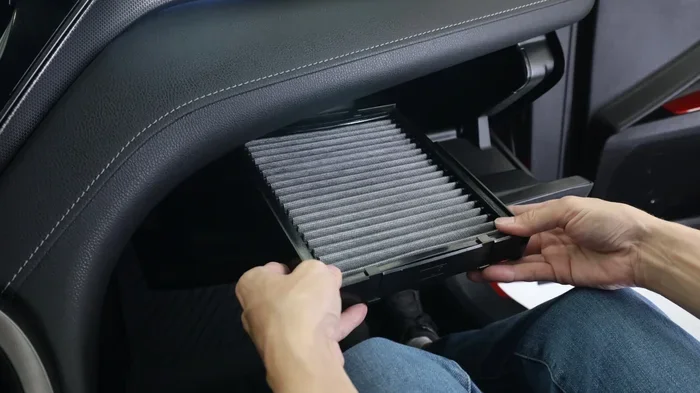
- Find your cabin air filter location: Most cars have the filter behind the glove box or under the dashboard near the windshield. Check your owner’s manual for the exact spot.
- Gather your supplies: You need the correct replacement filter for your car model. You can find this at any auto parts store or online. A screwdriver or trim removal tool is usually helpful too.
- Remove the old filter: Open the access panel, slide out the old filter, and note which direction it was facing. Air flow direction matters, so pay attention to the arrow printed on the filter frame.
- Insert the new filter: Place the new filter in the same orientation as the old one. Push it firmly into the housing.
- Close the panel and test: Snap the access panel back in place. Turn on your fan and air conditioning to make sure everything works properly.
That is it. You just saved yourself a trip to the shop and maybe $50 in labor costs. It is one of the simplest vehicle maintenance tasks you can do. And it makes a huge difference in the air you breathe every day.
How Often Should You Replace Your Cabin Air Filter
Most manufacturers recommend replacing your cabin air filter every 15,000 to 25,000 miles. However, your driving conditions matter a lot. If you drive in a dusty area, near construction sites, or in heavy traffic often, you should replace it more frequently, around every 10,000 to 15,000 miles.
If you live in a place with lots of trees and pollen, spring and fall are great times to swap out your filter. Keeping up with a regular cabin filter replacement schedule is one of the best things you can do for your car and your health.
Cabin Air Filter Maintenance Tips for Long-Term Safety
Once you have replaced your cabin air filter, you want to keep it in good shape. Here are some practical tips to help you maintain clean air inside your car for the long haul.
- Check your filter every oil change: Make it a habit to peek at your cabin air filter when you get your oil changed. It only takes a minute and helps you catch problems early.
- Keep your windows closed in heavy traffic: Even with a clean filter, closing your windows in congested areas reduces the amount of pollution entering your car.
- Use recirculated air in dusty conditions: When driving on gravel roads or behind construction trucks, switch to recirculated air mode to limit outside particles from entering.
- Clean your dashboard vents: Use a soft brush or compressed air to clear dust from your vents regularly. This helps maintain good air flow and prevents buildup.
- Do not ignore warning signs: If you notice reduced airflow or strange smells, check your filter right away. Catching a problem early saves you money and keeps your car safe.
Taking care of your cabin air filter is part of good car maintenance habits. It is easy to overlook, but the impact on your daily driving experience is significant. Clean air means better focus, fewer allergy symptoms, and a more comfortable ride for everyone in the car.
Now, you might be thinking about other car parts you can drive without. While we are on the topic of driving safely, it is worth noting that some car features are more critical than others. For example, if you are curious about what happens when you drive without steering assistance, check out Can You Drive Without Steering Assist for a deeper look at how missing safety features affect your drive.
Conclusion
So, can you drive without a cabin air filter? Yes. Should you? No, not for long. Your cabin air filter is a small but powerful component that protects your health and keeps your car’s ventilation system running smoothly. Driving without it exposes you to dust, pollen, exhaust fumes, and other harmful particles every time you hit the road.
The good news is that replacing a cabin air filter is quick, easy, and affordable. You can do it yourself at home in under fifteen minutes. And the benefits are immediate. Cleaner air, better airflow, fewer allergy symptoms, and a healthier interior for your car.
Make cabin air filter replacement a regular part of your vehicle maintenance routine. Check it often, replace it on schedule, and never underestimate the power of clean air inside your car. Your lungs will thank you, and your car will run better too.
Stay safe out there. Keep your car maintained. And breathe easy knowing you made the right choice for your health and your vehicle.
Frequently Asked Questions
What happens if you drive without a cabin air filter?
Driving without a cabin air filter allows dust, pollen, exhaust fumes, and other pollutants to enter your car’s interior unfiltered. Over time, this can cause poor air quality, health issues like allergies and respiratory irritation, and damage to your HVAC system from debris buildup. While your car will still run, the long-term effects on your health and vehicle comfort are not worth the risk.
Can you drive a car without any air filter at all?
Technically yes, you can drive without any air filter, whether it is the cabin filter or the engine filter. However, driving without an engine air filter can allow dirt into the engine and cause serious damage over time. Driving without a cabin air filter affects the air quality inside your car. Both filters serve important purposes, and skipping them is not recommended.
How long can you drive without a cabin air filter safely?
There is no safe duration for driving without a cabin air filter. Even short trips expose you to airborne pollutants and allergens. If you have driven without one for a few days, it is best to replace it as soon as possible. The longer you go without a filter, the more dust and debris accumulate inside your HVAC system, which can lead to costly repairs later.
Is a cabin air filter the same as an engine air filter?
No, they are not the same. The engine air filter keeps dirt and debris from entering the engine, which is critical for engine performance and longevity. The cabin air filter cleans the air that enters your car’s interior through the dashboard vents. Both are important, but they serve completely different functions in your vehicle.
How much does it cost to replace a cabin air filter?
A cabin air filter typically costs between $15 and $50 for the part alone. If you replace it yourself, that is the total cost. If you have a mechanic do it, labor charges may add another $20 to $50 depending on your location and vehicle model. Either way, it is one of the most affordable maintenance jobs you can do.
Where is the cabin air filter located in most cars?
In most vehicles, the cabin air filter is located behind the glove box or under the dashboard near the base of the windshield. Some cars have it under the hood near the windshield cowl. Check your owner’s manual for the exact location in your specific model. Access is usually straightforward and requires removing a few screws or clips.