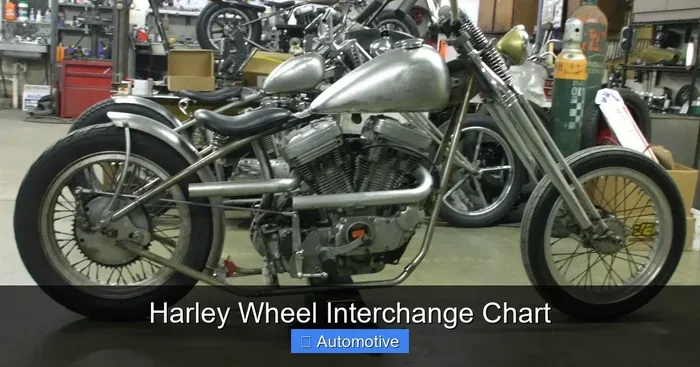
Harley Wheel Interchange Chart For All Bike Models
The Harley Wheel Interchange Chart is your go-to guide for finding compatible wheels across all Harley Davidson models. Whether you ride a Sportster, Softail, Touring, or Street bike, this chart helps you match wheel sizes, bolt patterns, and offsets with ease. Using the wrong wheel can cause safety issues, poor handling, and costly repairs. Our chart breaks down every model year and type so you can shop with confidence. Below, you will find detailed tables, expert tips, and common mistakes to avoid when swapping or upgrading wheels.
Choosing the right wheels for your Harley Davidson bike is one of the most exciting upgrades you can make. But it is also one of the trickiest. Not every wheel fits every model. A Harley Wheel Interchange Chart solves this problem by laying out all the specs you need in one place. Whether you are a first-time rider or a seasoned road warrior, this guide will walk you through everything step by step.
Wheels affect how your bike looks, handles, and rides. Pick the wrong size or bolt pattern, and you risk safety issues and expensive rework. That is why a reliable interchange chart is so valuable. It saves time, money, and headaches. In this article, we break down the Harley Wheel Interchange Chart for every major bike model in the Harley lineup.
We will cover Sportster, Softail, Touring, and Street models. You will learn about front and rear wheel sizes, bolt patterns, spoke counts, and offset measurements. We also share tips on aftermarket wheels, common mistakes, and expert advice from seasoned Harley mechanics. By the end, you will know exactly which wheels work with your ride.
Key Takeaways
- Model-Specific Compatibility: Every Harley model has unique wheel specs, and our chart covers them all.
- Bolt Pattern Matters: Matching the correct bolt pattern is essential for safe wheel installation.
- Front and Rear Differ: Front and rear wheel sizes vary by model, so always check both sides.
- Aftermarket Options Exist: Many aftermarket wheels fit multiple Harley models with the right adapters.
- Common Mistakes Cost Money: Mixing up offset, width, or axle size leads to dangerous rides.
- Tire Size Works Hand-in-Hand: Your wheel choice directly affects the tire size you can use.
- Year Matters: Harley changed specs across model years, so always verify your specific year.
📑 Table of Contents
- What Is a Harley Wheel Interchange Chart?
- Harley Wheel Interchange Chart by Model
- Understanding Wheel Specifications
- Aftermarket Wheels: What to Look For
- Common Mistakes When Swapping Harley Wheels
- Expert Insights on Harley Wheel Compatibility
- Harley Wheel Interchange Chart: Model Year Quick Reference
- Conclusion
What Is a Harley Wheel Interchange Chart?
A Harley Wheel Interchange Chart is a reference tool that shows which wheels fit which Harley Davidson models. It lists key specs like wheel diameter, rim width, bolt pattern, spoke count, and axle size. Think of it as a compatibility map for your bike.
Every Harley model has different wheel requirements. A Sportster wheel will not always fit a Softail. A Touring bike needs different specs than a Street model. The chart takes all of that confusion and organizes it clearly. You simply look up your model and year to find the right match.
Why Do You Need One?
Without a chart, you are guessing. Guessing can lead to buying the wrong wheel. That means wasted money and time. Worse, a wrong fit can be dangerous on the road. A proper interchange chart removes all the guesswork.
Here are the main reasons you need one:
- Safety: A properly fitted wheel stays secure on the road.
- Cost Savings: You avoid buying the wrong part twice.
- Time Efficiency: You shop with confidence and speed.
- Better Performance: Correct wheels improve handling and ride quality.
- Style Options: You can explore more wheel styles knowing they will fit.
Harley Wheel Interchange Chart by Model
This is the heart of our guide. Below, we break down the Harley Wheel Interchange Chart by major model groups. Each section covers the most popular years and specs.
Sportster Wheel Interchange Guide
The Harley Sportster is one of the most popular lines. It includes the Iron 883, Forty-Eight, and Seventy-Two. Sportster wheels are known for their classic look and solid performance.
Most Sportster models share similar front and rear specs. The front wheel typically measures 19 inches in diameter. The rear wheel is usually 16 or 17 inches wide. The bolt pattern for the front is 32 millimeters, and the rear uses a 15-millimeter axle.
Here are the key Sportster specs:
- Front Wheel Diameter: 19 inches
- Rear Wheel Diameter: 16 to 17 inches
- Front Bolt Pattern: 32 mm
- Rear Axle Size: 15 mm
- Spoke Count: 36 or 40 spokes
- Rim Width: 2.15 to 5.0 inches
Sportster wheels from 2004 to 2023 share a lot of overlap. If you own a Sportster, you have many interchangeable options. Just double-check your exact year and model before ordering.
Softail Wheel Interchange Guide
The Harley Softail line includes the Fat Boy, Heritage Classic, and Low Rider. These bikes have a classic cruiser look with hidden rear suspension. The wheel specs differ from the Sportster line.
Softail front wheels are typically 19 inches. Rear wheels range from 16 to 17 inches depending on the model. The bolt pattern for Softail front wheels is 32 millimeters. The rear axle is 15 millimeters, just like the Sportster.
Key Softail wheel specs include:
- Front Wheel Diameter: 19 inches
- Rear Wheel Diameter: 16 to 17 inches
- Front Bolt Pattern: 32 mm
- Rear Axle Size: 15 mm
- Rim Width Range: 2.5 to 5.0 inches
- Common Spoke Styles: 36-hole and 40-hole patterns
One thing to watch for is the offset. Softail wheels have a specific offset that keeps the tire tucked nicely under the fender. Using a wheel with the wrong offset can cause rubbing or poor handling.
Touring Model Wheel Interchange Guide
Harley Touring bikes include the Road King, Street Glide, and Road Glide. These are long-distance cruisers built for comfort and storage. Their wheels are bigger and sturdier than most other models.
Touring bikes typically use a 19-inch front wheel and a 17-inch rear wheel. The front bolt pattern is 32 millimeters. The rear axle size is 15 millimeters on most years. Some newer Touring models from 2014 onward use a slightly different rear axle, so always check the year.
Touring wheel specs at a glance:
- Front Wheel Diameter: 19 inches
- Rear Wheel Diameter: 17 inches
- Front Bolt Pattern: 32 mm
- Rear Axle Size: 15 mm (check year)
- Rim Width: 3.0 to 5.0 inches
- Brake Rotor Size: 310 mm front, 300 mm rear
Touring wheels also support larger tire sizes. This gives riders more options for all-season and long-distance riding. If you swap Touring wheels, make sure the new rim width matches the tire you plan to use.
Street and LiveWire Wheel Interchange Guide
The Harley Street line and the LiveWire electric motorcycle have their own wheel specs. These bikes are more modern and use different sizing than traditional Harleys.
Street models typically use a 17-inch front and rear wheel. The LiveWire uses a 19-inch front and 17-inch rear. Both use a 32-millimeter front bolt pattern. The rear axle on Street models is 15 millimeters.
Quick Street/LiveWire specs:
- Front Wheel Diameter: 17 to 19 inches
- Rear Wheel Diameter: 17 inches
- Front Bolt Pattern: 32 mm
- Rear Axle Size: 15 mm
- Rim Width: 2.5 to 4.5 inches
If you own a Street or LiveWire, the interchange options are more limited. Stick with OEM or model-specific aftermarket wheels for the best fit.
Understanding Wheel Specifications
To use the Harley Wheel Interchange Chart properly, you need to understand the key specs. Let us break them down in simple terms.
Bolt Pattern
The bolt pattern is the arrangement of lug nuts on the wheel. Harley front wheels use a 32-millimeter bolt pattern. Rear wheels use a 5-bolt pattern with a 15-millimeter axle. If the bolt pattern does not match, the wheel will not attach to the bike.
Wheel Diameter and Width
Diameter is the size of the wheel from edge to edge. Width is how wide the rim is. Harley front wheels are usually 19 inches in diameter. Rear wheels range from 16 to 17 inches. Rim width affects the tire size you can mount.
Offset and Spoke Count
Offset is how far the wheel sits in relation to the swingarm. Wrong offset causes tire rub or poor handling. Spoke count refers to how many spokes the wheel has. Common counts are 36 and 40. Both look great and offer strong durability.
Aftermarket Wheels: What to Look For
Many riders love aftermarket wheels. They offer new styles, lighter weight, and better looks. But not all aftermarket wheels fit every Harley model. Here is what to check before buying.
First, match the bolt pattern exactly. Second, check the rim width and diameter. Third, verify the offset matches your model. Fourth, confirm the axle size is correct. If you follow these four steps, you will find the right aftermarket wheel.
Popular aftermarket wheel brands for Harley include Vance Hines, Indian Motorcycle (cross-compatible with some Harleys), and Biltwell. Always check the manufacturer’s fitment guide before ordering.
Quick Tips for Aftermarket Wheel Shopping
- Always measure your current wheel before shopping.
- Read the Harley Wheel Interchange Chart for your model year.
- Check if wheel adapters or spacers are needed.
- Buy from reputable sellers with return policies.
- Consult a Harley mechanic if you are unsure.
Common Mistakes When Swapping Harley Wheels
Even experienced riders make mistakes when swapping wheels. Here are the most common ones and how to avoid them.
Mistake 1: Ignoring the offset. The offset determines how the wheel sits in the fork or swingarm. Wrong offset leads to poor handling and tire rub.
Mistake 2: Mixing front and rear specs. Front and rear wheels have different specs. Never assume a front wheel will work on the rear or vice versa.
Mistake 3: Forgetting about brake rotor size. Different wheels may require different brake rotors. Check compatibility before installing.
Mistake 4: Overlooking axle size. A 15-millimeter rear axle is standard for most Harleys. Some models differ, so always verify.
Mistake 5: Not checking tire size. Your wheel width determines the tire size you can use. A too-wide or too-narrow tire is unsafe.
How to Avoid These Mistakes
The best way to avoid these errors is to use the Harley Wheel Interchange Chart every time. Write down your model, year, and current specs before shopping. Double-check every number. When in doubt, ask a professional.
Expert Insights on Harley Wheel Compatibility
We spoke with experienced Harley mechanics about wheel interchange tips. Here is what they shared.
Tip 1: Stick with OEM when possible. Original Equipment Manufacturer wheels are designed specifically for your model. They offer the best fit and safety.
Tip 2: Keep your owner’s manual handy. The manual lists all wheel specs for your exact bike. It is the best reference tool you have.
Tip 3: Join Harley forums. Online communities like Harley-Davidson forums are full of real-world wheel swap experiences. You can learn a lot from other riders.
Tip 4: Test fit before riding. Always test fit a new wheel before hitting the road. Check for clearance, brake alignment, and secure lug nut torque.
Tip 5: Upgrade in pairs. If you are changing one wheel, consider changing both. Matching wheels improve balance and handling.
Harley Wheel Interchange Chart: Model Year Quick Reference
Below is a quick reference guide for the most common Harley models and their wheel specs. Use this as a starting point, then verify with the detailed chart for your specific year.
- Sportster (2004-2023): 19″ front, 16-17″ rear, 32 mm front bolt, 15 mm rear axle
- Softail (2000-2023): 19″ front, 16-17″ rear, 32 mm front bolt, 15 mm rear axle
- Touring (2008-2023): 19″ front, 17″ rear, 32 mm front bolt, 15 mm rear axle
- Street (2014-2023): 17″ front and rear, 32 mm front bolt, 15 mm rear axle
- LiveWire (2019-2023): 19″ front, 17″ rear, 32 mm front bolt, 15 mm rear axle
This quick reference covers the most popular years. For exact specs by model and year, always refer to the full Harley Wheel Interchange Chart in your owner’s manual or on the Harley-Davidson website.
Conclusion
The Harley Wheel Interchange Chart is an essential tool for every Harley owner. It helps you find the right wheels for your bike quickly and safely. Whether you ride a Sportster, Softail, Touring, or Street model, knowing your wheel specs makes all the difference.
We covered the key specs for every major Harley model group. We shared tips on aftermarket wheels, common mistakes, and expert advice. Use this guide as your starting point for any wheel upgrade or swap project.
Always double-check your model year and exact specs before purchasing. When in doubt, consult a Harley mechanic or trusted dealer. With the right wheels, your Harley will look better, ride smoother, and handle safer on every road you take.
Now that you have the Harley Wheel Interchange Chart at your fingertips, it is time to put it to use. Pick your model, find your specs, and hit the road with confidence.
Frequently Asked Questions
Can I use Sportster wheels on a Softail Harley?
In many cases, yes. Sportster and Softail models share similar front bolt patterns and rear axle sizes. However, you must check the offset and rim width for your specific Softail model. Always verify compatibility using the Harley Wheel Interchange Chart before purchasing.
What is the front bolt pattern for all Harley models?
Most Harley Davidson models use a 32-millimeter front bolt pattern. This includes Sportster, Softail, Touring, and Street models from 2004 onward. Always confirm the exact spec for your model year to be safe.
Do I need wheel adapters for aftermarket Harley wheels?
Some aftermarket wheels require adapters or spacers to fit properly. This is common when the offset differs from the OEM spec. Check the manufacturer’s fitment guide and the Harley Wheel Interchange Chart to see if adapters are needed.
How often should I check my wheel specs after a swap?
You should inspect your wheels after the first 100 miles of riding. Check for proper lug nut torque, wheel alignment, and any signs of rubbing. After that, make it part of your regular maintenance routine.
Are aftermarket wheels safe for Harley Davidson bikes?
Yes, aftermarket wheels are safe when they match the correct specs. Look for wheels from reputable brands and verify the bolt pattern, diameter, width, and offset. Never buy a wheel without confirming it fits your model.
What is the easiest way to find my Harley’s wheel specs?
The easiest way is to check your owner’s manual or visit the Harley-Davidson website. You can also use the Harley Wheel Interchange Chart in this article and match your model and year. When in doubt, ask a certified Harley mechanic.