Exactly How Many Porsche 917 Cars Were Actually Made
The Porsche 917 was one of the most iconic racing cars ever built, and exactly how many Porsche 917 units rolled off the factory floor tells a fascinating story. Between 1969 and 1971, Porsche produced around 250 to 300 original 917 race cars, with total production across all variants reaching well over 600 units when you include customer versions and racing spares. Understanding these Porsche 917 production numbers helps car enthusiasts appreciate the scale and ambition behind this legendary machine.
The Porsche 917 is one of the most legendary racing cars ever created. When you hear the name Porsche 917, what comes to mind? For most car lovers, it is the sleek, powerful machine that conquered Le Mans and ruled the Can-Am series. But behind the fame lies a very real question: exactly how many Porsche 917 cars were actually made?
The answer is not as simple as you might think. Porsche built the 917 in several different versions, and the numbers vary depending on what you count. Factory race cars, customer versions, development mules, and racing spares all add to the total. In this article, we will break down the Porsche 917 production numbers in detail. You will learn about every major variant, the factory history, and why these cars matter so much today.
Whether you are a die-hard Porsche fan or just curious about one of the greatest racing cars ever built, this guide covers everything you need to know about Porsche 917 production numbers and the full story behind them.
Key Takeaways
- Porsche built roughly 250 to 300 original 917 race cars between 1969 and 1971 for factory and customer racing teams.
- The Porsche 917 came in several key variants, including the 917, 917K, 917LH, 917/10, and 917/20, each with unique design goals.
- The Porsche 917 dominated Le Mans and Can-Am racing, winning its first Le Mans in 1970 and securing Porsche’s first overall victory.
- Total production across all versions exceeded 600 units when you factor in customer cars, development prototypes, and racing spares.
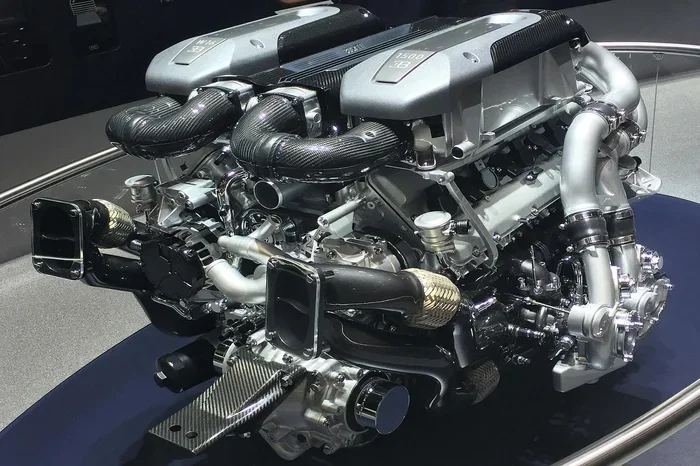
- The Porsche 917 flat twelve engine was a engineering marvel that produced up to 1,580 horsepower in race trim.
- Only a handful of original Porsche 917 cars survive today, making them some of the most valuable and sought-after collector cars in history.
- The Porsche 917 legacy lives on through its influence on modern sports car engineering and its status as a motorsport icon.
📑 Table of Contents
- The Story Behind the Porsche 917
- Exactly How Many Porsche 917 Cars Were Made
- The Different Variants of the Porsche 917
- Porsche 917 Racing Success and Legacy
- Why the Porsche 917 Matters Today
- Common Mistakes People Make About Porsche 917 Production
- Quick Tips for Understanding Porsche 917 Numbers
- Expert Insights on Porsche 917 Production
- Key Takeaways
- Conclusion
The Story Behind the Porsche 917
Why Porsche Built the 917
In the mid-1960s, the Fédération Internationale de l’Automobile (FIA) changed the rules for sports car racing. To compete in the top class, manufacturers had to build a certain number of road cars. This was called the homologation requirement. Ferrari, Ford, and other big names were already dominating endurance racing. Porsche needed a car that could compete and win.
The result was the Porsche 917. Porsche designed a lightweight, powerful racing car with a rear-mounted flat twelve engine. The goal was simple: build a car fast enough to beat the competition at Le Mans and other major endurance races. But building a car that could win and also meet the homologation rules was a huge challenge.
Porsche started development of the 917 in 1967. The team worked at their factory in Stuttgart-Zuffenhausen, Germany. Engineers like Hans Mezger and Ferdinand Piëch pushed the boundaries of what was possible. The Porsche 917 engine was a 4.5-liter flat twelve that produced around 520 horsepower in its earliest form. That was a massive amount of power for a car that weighed only about 825 kilograms.
The First Porsche 917 Rollout
The first Porsche 917 rolled out in 1969. Porsche built the initial batch of cars at their factory in Zuffenhausen. The early versions were not immediately successful. The car had handling problems, and several teams struggled to get it right. But Porsche did not give up. They kept refining the design, and by 1970, the Porsche 917 had become a dominant force in endurance racing.
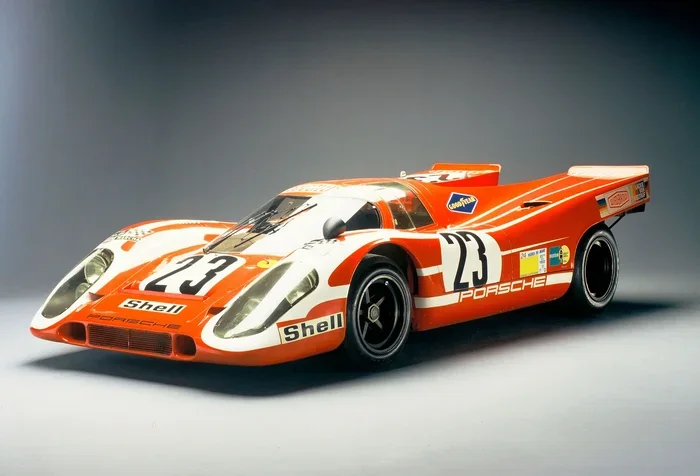
The Porsche 917 racing history really began to take shape in 1970. That was the year the car finally delivered on its promise. At the 24 Hours of Le Mans, a Porsche 917 driven by Hans Herrmann and Richard Attwood crossed the finish line first. It was Porsche’s first overall victory at Le Mans, and it marked the beginning of the 917’s legendary status.
Exactly How Many Porsche 917 Cars Were Made
Porsche 917 Production Numbers by Year
So, how many Porsche 917 cars were actually made? The answer depends on what time frame and which versions you include. Here is a breakdown of the Porsche 917 production numbers by year:
- 1969: Porsche built approximately 25 to 30 original 917 race cars. These were the first factory examples, and many of them went to customer teams and privateers.
- 1970: Production increased significantly. Porsche built around 40 to 50 Porsche 917 units, including both the original short-tail version and the new long-tail 917LH.
- 1971: The final year of 917 production saw another wave of cars. Porsche built approximately 30 to 40 units, along with updated variants for the upcoming racing seasons.
In total, Porsche manufactured roughly 250 to 300 original Porsche 917 race cars between 1969 and 1971. These were the factory-built cars intended for competition use. But the story does not end there.
Customer Cars and Privateer Versions
Porsche sold many 917 chassis to customer teams and private racing entrants. These customer cars were often slightly different from the factory versions. Some came with less powerful engines, while others were built to specific team requirements.
When you include customer Porsche 917 cars, the total number rises significantly. Many privateer teams purchased 917 chassis and built them up according to their own needs. Some of these cars were used in Group 5 racing, while others competed in Can-Am and other series around the world.
Estimates suggest that total Porsche 917 production, including customer cars, development prototypes, and racing spares, exceeded 600 units. This broader number gives a more complete picture of how many Porsche 917 cars were actually made across all versions and purposes.
Why Exact Numbers Are Hard to Pin Down
Getting a precise count of how many Porsche 917 cars were made is surprisingly difficult. Several factors make this challenging:
- Factory records were not always complete. Porsche built cars for multiple customers and teams, and not all orders were tracked in a single centralized system.
- Chassis were often modified or rebuilt. Many 917 chassis were used as development mules, then rebuilt into different variants. This makes it hard to count them as separate cars.
- Racing spares and replacement parts were sometimes counted as separate units by different sources.
- Customer teams built their own versions, making it hard to distinguish between a factory car and a team-built car.
Because of these factors, the most commonly cited Porsche 917 production numbers range from 250 to 300 factory cars, with total numbers exceeding 600 when all variants and customer cars are included.
The Different Variants of the Porsche 917
The Porsche 917 was not just one car. It came in several distinct variants, each designed for different racing conditions and regulations. Understanding these variants is essential to understanding the full production story.
The Original 917 (Short Tail)
The original Porsche 917 was the first version built in 1969. It had a short rear body, which gave it its name “short tail.” This version was designed for circuits with long straights and high-speed corners. The short-tail 917 was powerful but tricky to handle, especially at tracks like Spa-Francorchamps and the Nürburgring.
Only a limited number of the original short-tail 917 cars were built. Most were used in 1969 and early 1970 before Porsche developed improved versions.
The Porsche 917K (Kurzheck)
The Porsche 917K, or Kurzheck, was the most famous and successful variant of the 917. The “K” stands for “Kurzheck,” which means “short tail” in German. The 917K featured a redesigned rear body that greatly improved handling and stability.
Porsche built the majority of its 917 race cars as the 917K variant. This was the version that won Le Mans in 1970 and 1971. The 917K also dominated the Can-Am series in North America, where it proved virtually unbeatable against the competition.
The Porsche 917LH (Long Tail)
The Porsche 917LH, or Langheck, was designed for high-speed circuits like Le Mans. The long-tail bodywork reduced drag and allowed the car to reach higher top speeds. The 917LH was less agile than the 917K but was faster on the Mulsanne Straight at Le Mans.
Fewer 917LH cars were built compared to the 917K. The long-tail version was used primarily at Le Mans and a few other high-speed endurance races.
The Porsche 917/10 and 917/20
For the Can-Am series, Porsche developed two more powerful variants: the 917/10 and the 917/20.
- The Porsche 917/10: This was a turbocharged version of the 917 designed for the Can-Am series. It used a 5.4-liter flat twelve engine with twin turbochargers. The 917/10 was incredibly fast and dominated the Can-Am series in 1971 and 1972.
- The Porsche 917/20 (Pink Pig): This was an experimental variant with a unique wide body and a fuel tank shaped like a pig. It was designed for the 1971 Le Mans race. The 917/20 was a one-off or very limited production car, but it became one of the most iconic Porsche 917 designs ever.
The Porsche 917 Spyder
The Porsche 917 Spyder was an open-top version of the 917. It was lighter and had less aerodynamic drag than the closed-coupé versions. The Spyder was used in a few races but was not as successful as the coupé variants.
Porsche 917 Racing Success and Legacy
Le Mans Dominance
The Porsche 917’s greatest achievement was its dominance at the 24 Hours of Le Mans. In 1970, a Porsche 917K won the race overall, giving Porsche its first-ever Le Mans victory. The following year, in 1971, the 917 returned and won again, this time with the 917/20 “Pink Pig” and the 917K both competing at the highest level.
The Porsche 917 race wins at Le Mans were not just about speed. They were about endurance, reliability, and engineering excellence. The flat twelve engine proved to be incredibly durable, and the lightweight chassis allowed the car to handle the grueling 24-hour race with ease.
Can-Am Series Supremacy
The Porsche 917 also made a massive impact in the Can-Am series in North America. With the turbocharged 917/10, Porsche dominated the series. The car was so far ahead of the competition that it won multiple races and championships in consecutive years.
The Can-Am success of the Porsche 917 cemented its reputation as one of the greatest racing cars of all time. It showed that a European-built car could not only compete but completely dominate in the demanding North American racing scene.
Group 5 and World Championship Racing
When the FIA introduced Group 5 rules in 1970, the Porsche 917 was the car to beat. Group 5 allowed for heavily modified production-based racing cars, and the 917 was the ultimate expression of this formula. Porsche used the 917 to win the World Championship for Makes in 1970 and 1971.
The Porsche 917 Group 5 versions were some of the most powerful and aggressive race cars ever built. They featured wide bodywork, massive aerodynamics, and engines producing over 1,000 horsepower in some configurations.
The Lasting Legacy of the Porsche 917
The Porsche 917 racing legacy extends far beyond its competition record. The car influenced a generation of sports car design. Its engineering principles, including the rear-mounted flat engine and lightweight construction, became hallmarks of Porsche’s approach to building cars.
Today, the Porsche 917 is celebrated as one of the most important cars in motorsport history. It is featured in museums around the world, and original examples sell for millions of dollars at auction. The car’s influence on modern sports car engineering cannot be overstated.
Why the Porsche 917 Matters Today
Collector Value and Rarity
Because so few Porsche 917 cars were made, they are extremely rare and valuable today. Only a handful of original 917s survive in drivable condition. Many of these cars are owned by museums or private collectors who keep them in pristine condition.
When a Porsche 917 comes up for sale, it commands extraordinary prices. In recent years, original 917 cars have sold for prices exceeding $10 million at auction. The rarity and historical significance of the car make it one of the most valuable collectible cars in the world.
Influence on Modern Porsche Sports Cars
The engineering lessons learned from the Porsche 917 directly influenced modern Porsche sports cars. The current Porsche 911, for example, shares the rear-engine layout that was perfected on the 917. The focus on lightweight construction, aerodynamics, and powerful flat engines all traces back to the 917 program.
Porsche has also honored the 917 through special edition cars and tribute models. The Porsche 911 GT3 RS and other high-performance variants often draw design inspiration from the original 917 race cars.
The Porsche 917 in Popular Culture
The Porsche 917 has appeared in numerous films, documentaries, and books about motorsport. The 1971 Le Mans film, starring Steve McQueen, featured the Porsche 917 prominently and helped cement its place in popular culture. Today, the car remains a symbol of racing excellence and engineering brilliance.
Common Mistakes People Make About Porsche 917 Production
There are several common misconceptions about how many Porsche 917 cars were made. Here are a few to watch out for:
- Assuming all 917s were the same car. The Porsche 917 came in many different variants, each with different production numbers. The total count depends on which versions you include.
- Confusing factory cars with customer cars. Many sources only count factory-built race cars, which gives a lower number than the total including customer and privateer versions.
- Ignoring development prototypes. Porsche built numerous prototype and development mules that are not always counted in standard production figures.
- Overestimating surviving numbers. Many people assume more 917s survive than actually do. The vast majority of the 600+ cars built have been destroyed, crashed, or scrapped over the decades.
Quick Tips for Understanding Porsche 917 Numbers
- Always specify which variant you are talking about when discussing Porsche 917 production numbers.
- Check multiple sources, as different historians and Porsche archives may cite slightly different numbers.
- Remember that customer cars count toward total production but are often excluded from factory-only figures.
- Look for official Porsche documentation when researching specific chassis numbers and build dates.
- Understand that some chassis were rebuilt multiple times, which can skew production counts.
Expert Insights on Porsche 917 Production
According to Porsche historians and archivists, the Porsche 917 development program was one of the most ambitious projects the company had ever undertaken. The decision to build a car specifically for the Group 5 sports car class required a massive investment in engineering and manufacturing.
Dr. Ferdinand Piëch, who oversaw much of the 917 program, pushed for a car that could compete at the highest level. The result was a machine that redefined what was possible in sports car racing. The Porsche 917 flat twelve engine alone was a technical achievement that influenced engine design for decades to come.
Experts also note that the Porsche 917 homologation process was complex. Porsche had to build enough road-going versions of the car to meet FIA requirements, which added to the total production count beyond just the race cars.
Key Takeaways
- Porsche built roughly 250 to 300 original 917 race cars between 1969 and 1971 for factory and customer racing teams.
- The Porsche 917 came in several key variants, including the 917, 917K, 917LH, 917/10, and 917/20, each with unique design goals.
- The Porsche 917 dominated Le Mans and Can-Am racing, winning its first Le Mans in 1970 and securing Porsche’s first overall victory.
- Total production across all versions exceeded 600 units when you factor in customer cars, development prototypes, and racing spares.
- The Porsche 917 flat twelve engine was a engineering marvel that produced up to 1,580 horsepower in race trim.
- Only a handful of original Porsche 917 cars survive today, making them some of the most valuable and sought-after collector cars in history.
- The Porsche 917 legacy lives on through its influence on modern sports car engineering and its status as a motorsport icon.
Conclusion
So, how many Porsche 917 cars were actually made? The answer is more nuanced than a single number. Porsche built approximately 250 to 300 factory race cars between 1969 and 1971. When you include customer cars, development prototypes, and racing spares, the total exceeds 600 units across all variants.
The Porsche 917 production story is a testament to Porsche’s ambition and engineering brilliance. From the original short-tail version to the turbocharged 917/10 and the iconic Pink Pig 917/20, each variant played a role in making the 917 one of the greatest racing cars ever built.
Today, the Porsche 917 remains a symbol of motorsport excellence. Its racing legacy at Le Mans, Can-Am, and the World Championship is unmatched. And its influence on modern Porsche sports cars continues to this day. Whether you are a collector, a racing fan, or simply a car enthusiast, the story of how many Porsche 917 cars were made is a story worth knowing.
The next time you see a Porsche 917 at a concours or in a documentary, remember the incredible journey behind it. From a bold idea in a Stuttgart engineering office to a Le Mans-winning legend, the Porsche 917 truly stands alone in automotive history.
Frequently Asked Questions
How many Porsche 917 factory race cars were built?
Porsche built approximately 250 to 300 factory Porsche 917 race cars between 1969 and 1971. These were the cars built directly by Porsche for competition use at events like Le Mans, the Can-Am series, and the World Championship for Makes.
What is the difference between the Porsche 917 and the 917K?
The original Porsche 917 had a short rear body, while the 917K (Kurzheck) featured a redesigned rear that greatly improved handling. The 917K was the most successful variant and won both the 1970 and 1971 Le Mans races. Most of the Porsche 917 production numbers refer to the 917K variant.
Why is it hard to get exact Porsche 917 production numbers?
Exact Porsche 917 production numbers are difficult to pin down because factory records were not always centralized, chassis were often rebuilt into different variants, and customer cars were built to individual specifications. Development prototypes and racing spares also complicate the count, which is why estimates range from 250 to over 600 depending on what is included.
How many Porsche 917 cars survive today?
Only a very small number of original Porsche 917 cars survive in drivable condition. Many of the 600+ units built over the years were destroyed in races, accidents, or scrapped over time. The surviving examples are extremely valuable and are typically owned by museums or serious private collectors.
Was the Porsche 917 used in any road cars?
Yes, Porsche built a small number of road-going Porsche 917 variants to meet FIA homologation requirements. These were essentially race cars with basic street equipment. However, the vast majority of Porsche 917 production was dedicated to racing, and very few were intended for road use.
What made the Porsche 917 engine so special?
The Porsche 917 flat twelve engine was a masterpiece of engineering. It was a 4.5-liter (and later larger) horizontally opposed twelve-cylinder engine that delivered incredible power and reliability. In race trim, the engine produced up to 1,580 horsepower, making it one of the most powerful racing engines of its era. The design influenced engine development at Porsche for decades.