How Fast Can a NASCAR Race Car Go and Why It Roars
NASCAR race cars can reach speeds over 200 mph on superspeedways, making them some of the fastest vehicles on earth. The combination of powerful engines, advanced aerodynamics, and skilled drivers creates an unforgettable racing experience. Here we break down exactly how fast these machines go and what makes them roar down the track.
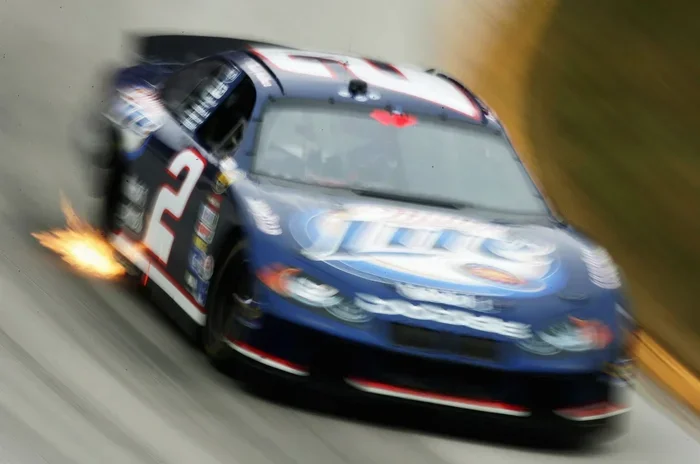
There is nothing quite like the sound of a NASCAR race car screaming down a straightaway. The roar of the engine, the blur of color, and the sheer speed all come together to create something truly electric. Fans from all over the world tune in to watch these machines push the limits of what is possible on four wheels.
So, how fast can a NASCAR race car go? The answer might surprise you. On the biggest superspeedways, these stock cars can reach speeds well over 200 miles per hour. That is faster than most supercars you can buy off the lot. But speed is not just about raw power. It is also about aerodynamics, strategy, and the skill of the NASCAR drivers behind the wheel.
In this article, we will take a deep dive into the world of stock car racing speed. We will look at what makes these cars so fast, the role of drafting and aerodynamics, and how tracks like the Daytona 500 and Talladega Superspeedway test the limits of both machine and driver. Whether you are a lifelong fan or just curious, this guide has everything you need to know about NASCAR race car speed.
Key Takeaways
- NASCAR cars hit over 200 mph on superspeedways, making them among the fastest oval-track vehicles in the world.
- Restrictor plates limit speed at tracks like Daytona and Talladega to keep drivers safe during high-speed pack racing.
- Drafting is essential for maintaining top speeds and conserving fuel during long green flag runs.
- Engine horsepower reaches 750 in modern NASCAR Cup Series cars, powering them through every turn and straightaway.
- Short tracks offer a different thrill with tighter turns and lower speeds but intense side-by-side action.
- Top drivers like Bill Elliott and Rusty Wallace have pushed NASCAR qualifying speed to record-breaking levels.
📑 Table of Contents
What Makes a NASCAR Race Car So Fast
Every NASCAR race car is a finely tuned machine built for one purpose: going fast. But what exactly makes these vehicles so much quicker than your average car? Let us break it down into the two biggest factors: the engine and the aerodynamics.
The Engine Power Behind the Speed
At the heart of every stock car racing machine is a powerful V8 engine. These engines produce around 750 horsepower in the current Cup Series. That is a lot of power packed into a relatively small car. For comparison, a typical family sedan has about 200 to 300 horsepower.
The NASCAR engine horsepower comes from a specially built carburetor system that feeds fuel and air into the engine at high volumes. These engines run on high-octane racing fuel that is designed to burn efficiently at extreme temperatures. The result is a machine that can go from zero to 60 mph in just a few seconds.
Here are some key facts about the NASCAR engine:
- Engine type: V8, pushrod, naturally aspirated
- Horsepower: Around 750 hp on superspeedways
- Displacement: 358 cubic inches (5.9 liters)
- Fuel: Sunoco Green E15 racing fuel
- Top RPM: Around 9,000 to 9,500 revolutions per minute
These engines are built to be tough. They handle extreme heat and pressure race after race. Teams rebuild them after every few races to keep them running at peak performance. The stock car acceleration these engines provide is what allows a NASCAR race car to hit top speed so quickly.
Aerodynamics and Body Design
Power alone does not make a car fast. You also need to manage the air flowing around it. That is where race car aerodynamics come in. Every curve, wing, and splitter on a NASCAR race car is designed to reduce drag and increase downforce.
Aerodynamics play a huge role in how fast a car can go. Less drag means the car cuts through the air more easily. More downforce means the car stays pressed to the track, giving it better tire grip at high speeds. Both of these factors are critical for achieving top NASCAR top speed.
Teams use wind tunnel testing to fine-tune the body of each car. They test different shapes and angles to find the perfect balance between speed and stability. Even small changes to the front splitter or rear spoiler can make a big difference in how fast the car goes.
The roll cage is another important part of the design. It protects the driver during crashes while keeping the car light enough to maintain high speeds. Every inch of a NASCAR car is designed with speed and safety in mind.
How Fast Can a NASCAR Race Car Go on Different Tracks
Not all NASCAR tracks are the same, and that means the speeds vary a lot from track to track. The type of track has a big impact on how fast a car can go. Let us look at the different kinds of tracks and what speeds you can expect.
Superspeedways: Where the Magic Happens
If you want to see the fastest NASCAR race car speeds, you need to visit a superspeedway. These massive tracks are over two miles long and feature wide, sweeping turns. The two most famous superspeedways are Talladega Superspeedway and Daytona International Speedway.
At these tracks, NASCAR qualifying speed can reach incredible levels. The fastest qualifying lap ever recorded at Talladega was 212.809 mph by Bill Elliott in 1987. That is an amazing feat of speed and skill. On a typical race day, cars often run between 190 and 210 mph on the straightaways.
The Daytona 500 is the most famous race on the NASCAR calendar. It is held every February and draws millions of viewers. The high speeds at Daytona make it one of the most exciting events in all of motorsports. Drivers must be at the top of their game to handle the intense pace.
Here is a quick comparison of top speeds at major superspeedways:
- Talladega Superspeedway: Top speeds over 210 mph
- Daytona International Speedway: Top speeds around 200 mph
- Michigan International Speedway: Top speeds around 200 mph
- Indianapolis Motor Speedway: Top speeds around 185 mph
Short Tracks and Road Courses
Not all NASCAR tracks are superspeedways. Short tracks like Bristol Motor Speedway and Richmond Raceway are much smaller, often less than a mile long. At these tracks, speeds are much lower, usually in the 80 to 100 mph range.
But do not let the lower speeds fool you. Racing on a short track is incredibly intense. Cars are bumper to bumper, and passing requires bold moves and precise racing lines. The close quarters make for some of the most exciting racing in the sport.
Road courses add yet another dimension to stock car racing. Tracks like Watkins Glen and the Charlotte ROVAL feature tight turns, elevation changes, and technical sections. Speeds vary widely depending on the corner, but cars still reach over 150 mph on the fastest straights. Road courses test a driver’s skill in a completely different way than oval racing.
The Role of Drafting in NASCAR Speed
One of the most fascinating aspects of NASCAR race car speed is drafting. This technique is essential for going fast, especially on superspeedways. Without drafting, cars would use much more fuel and struggle to maintain top speed.
How Drafting Works
Drafting is a technique where one car follows closely behind another to reduce air resistance. When a car moves at high speed, it creates a pocket of low-pressure air behind it. The car following behind can slip into this pocket and experience less drag.
This drafting technique allows the trailing car to conserve fuel and maintain higher speeds with less effort. It is like a slipstream in cycling, where riders tuck behind each other to save energy. In NASCAR, drafting can make the difference between winning and losing a race.
Teams practice drafting technique extensively during race day preparation. They learn how to read the track, position their car, and work with teammates to gain an advantage. The best drafting can add several miles per hour to a car’s top speed.
Pack Racing and Close Calls
On superspeedways, drafting often leads to pack racing. This is when a large group of cars runs close together at high speeds. Pack racing can be thrilling to watch but also very dangerous. One small mistake can cause a multi-car crash.
Drivers must stay alert and focused at all times when pack racing. They need to read the movements of the cars around them and be ready to react in a split second. The combination of high speed and close proximity makes every race day at a superspeedway an intense experience.
How NASCAR Controls Speed on Super Speedways
With cars going over 200 mph, safety is a top priority. That is why NASCAR has implemented rules to control speed on certain tracks. The most well-known of these is the restrictor plate.
Restrictor Plates Explained
A restrictor plate is a metal plate with four small holes that is placed on the engine’s intake manifold. It limits the amount of air and fuel that can enter the engine, which reduces horsepower and, therefore, speed.
Restrictor plate racing has been used at superspeedways since the early 1980s. It was introduced after several serious accidents at high-speed tracks. The goal is to slow cars down enough to make racing safer while still keeping the excitement alive.
Some fans and drivers have criticized restrictor plates. They argue that the plates make racing less competitive and can still lead to dangerous crashes. Despite the debate, restrictor plates remain a key part of superspeedway racing today.
Safety First: Why Speed Limits Exist
Safety is the main reason NASCAR controls speed on super speedways. At 200 mph, a crash can be devastating. The force of impact is enormous, and even with modern safety equipment, injuries can be severe.
NASCAR has made many safety improvements over the years. The roll cage, HANS device, and reinforced NASCAR tracks barriers all help protect drivers. But reducing speed through restrictor plates is one of the most effective ways to prevent serious accidents.
The balance between speed and safety is always a topic of discussion in the sport. NASCAR continues to evaluate its rules and make changes to keep drivers safe while preserving the thrill of racing.
The Fastest NASCAR Cars and Drivers in History
The history of stock car racing is filled with incredible speed records and legendary drivers. Let us take a look at some of the most memorable moments in NASCAR speed history.
Record-Breaking Speeds
The fastest speed ever recorded in a NASCAR race car was 212.809 mph by Bill Elliott at Talladega in 1987. This record still stands today and is a testament to the incredible machines and talented drivers that make the sport what it is.
Other notable speed records include:
- Buddy Baker hit 200.447 mph at Talladega in 1979, the first 200 mph lap in NASCAR history
- Rusty Wallace reached 201.368 mph at Talladega in 1993 during testing
- Bill Elliott set the qualifying record of 212.809 mph at Talladega in 1987
These records were set during testing or qualifying, not during races. Race speeds are typically lower because of drafting, pit stops, and the restrictor plate rules. But even race speeds are incredibly fast and exciting to watch.
Legendary Drivers Who Pushed the Limits
Many NASCAR drivers have become legends because of their speed and skill. Bill Elliott, Rusty Wallace, and Dale Earnhardt Sr. are just a few of the names that come to mind. These drivers pushed their machines to the limit and entertained millions of fans along the way.
Modern drivers like Joey Logano, Chase Elliott, and Kyle Busch continue to push the boundaries of NASCAR race car speed. They train year-round to handle the physical demands of racing at over 200 mph. The sport continues to evolve, and so does the speed.
What It Feels Like to Drive at NASCAR Speeds
Watching a NASCAR race from the stands is one thing. But what is it actually like to drive a NASCAR race car at those incredible speeds? The experience is intense, demanding, and unlike anything else in the world.
Inside the Cockpit
The cockpit of a NASCAR race car is a tight, hot, and noisy space. Drivers sit just inches from the engine and are surrounded by carbon fiber and steel. The temperatures inside the car can reach over 120 degrees Fahrenheit on a hot day.
Drivers wear multiple layers of safety gear, including a helmet, fire suit, and HANS device. Despite all this protection, they still feel every bump and vibration at high speeds. The steering is heavy, and the G-forces in the turns can be intense.
Communication with the crew is limited. Drivers rely on hand signals and a two-way radio to stay in touch with their team. Every decision must be made quickly and with precision. The mental focus required to drive at NASCAR top speed is extraordinary.
The Physical and Mental Demands
Driving a NASCAR race car at 200 mph takes a serious toll on the body. Drivers must have strong neck muscles to handle the G-forces in the turns. They also need excellent core strength to steer and brake with precision.
The mental demands are just as challenging. Drivers must stay focused for hours, processing information about racing lines, tire wear, fuel levels, and the positions of other cars. A split-second lapse in concentration can lead to a crash.
Top NASCAR drivers train like athletes. They work on cardiovascular fitness, strength training, and reaction time. Many also practice in simulators to sharpen their skills before race day. The combination of physical fitness and mental sharpness is what sets the best drivers apart.
Conclusion
The answer to how fast can a NASCAR race car go is truly remarkable. These machines can reach speeds over 200 mph on superspeedways, thanks to powerful engines, advanced aerodynamics, and the skill of talented drivers. From the roar of the engine to the thrill of pack racing, stock car racing offers an experience unlike any other sport.
Whether you are watching from the stands or following from home, the speed and excitement of NASCAR race car speed is something that captivates millions of fans around the world. The sport continues to evolve, with new technologies and safety measures making every race faster and safer than the last.
If you have never attended a live race, now is the perfect time to start. The sights, sounds, and sheer speed of a NASCAR race car up close is an experience you will never forget. So grab your tickets, pick your favorite driver, and get ready for the ride of a lifetime.
Frequently Asked Questions
How fast can a NASCAR race car go in a straight line?
On superspeedways, a NASCAR race car can reach speeds over 200 mph in a straight line. The fastest ever recorded was 212.809 mph by Bill Elliott at Talladega in 1987. Race speeds are usually a bit lower due to drafting and track conditions.
Why do NASCAR cars use restrictor plates?
Restrictor plates are used to limit engine power and reduce speed on superspeedways. They were introduced in the 1980s after several serious high-speed crashes. The plates help keep drivers safe by slowing cars down during pack racing.
How does drafting help NASCAR cars go faster?
Drafting reduces air resistance for the car following behind. By slipstreaming behind another car, a driver can maintain higher speeds while using less fuel. This technique is essential for success on superspeedways like Daytona and Talladega.
What is the difference between a superspeedway and a short track?
A superspeedway is over two miles long and allows for very high speeds, often over 200 mph. A short track is less than a mile long and typically sees speeds of 80 to 100 mph. Short tracks feature tighter turns and more intense close-quarters racing.
How much horsepower does a NASCAR race car have?
Modern NASCAR Cup Series cars produce around 750 horsepower on superspeedways. On shorter tracks, the horsepower may be slightly lower depending on the track rules and engine setup. This power comes from a specially built V8 engine running on high-octane racing fuel.
What safety equipment do NASCAR drivers wear at high speeds?
Drivers wear a fire-resistant suit, a full-face helmet, gloves, shoes, and a HANS device to protect against neck injuries. The car itself features a roll cage, reinforced chassis, and energy-absorbing barriers. All of this gear works together to keep drivers safe at extreme speeds.