Are Tesla Tires Run Flats Worth the Hype and Price
Tesla tires are not traditional run flats, but they are built with reinforced sidewalls that offer similar puncture resistance. Many Tesla owners wonder if the premium price tag is justified by the performance and safety benefits. This guide breaks down everything you need to know about Tesla tire technology, cost, and whether run flat style tires are worth the investment.
Key Takeaways
- Tesla tires are not true run flats: They use reinforced sidewalls instead of the traditional run flat foam insert technology.
- They cost more than standard tires: Expect to pay a premium for Tesla-specific models, often ranging from $250 to $400 per tire.
- Durability is impressive: The reinforced design helps resist punctures and maintains handling even at low pressure.
- Replacement can be tricky: Tesla recommends specific tire models, and not all shops carry them.
- TPMS is essential: Tesla’s tire pressure monitoring system alerts you instantly to pressure loss.
- They are worth it for safety: The added stability and puncture resistance make them a smart choice for daily driving.
📑 Table of Contents
- Are Tesla Tires Run Flats? Here Is What You Need to Know
- What Makes Tesla Tires Different From Standard Tires?
- The Cost of Tesla Tires: Are They Worth the Price?
- Run Flat Technology: How Does It Work in Tesla Tires?
- Real-World Performance: How Do Tesla Tires Handle Daily Driving?
- Maintenance Tips for Tesla Tires
- The Verdict: Are Tesla Tires Run Flats Worth the Hype?
- Frequently Asked Questions
Are Tesla Tires Run Flats? Here Is What You Need to Know
Tesla tires are not traditional run flats in the way most people understand them. They do not use the foam inserts or support rings found in classic run flat designs. Instead, Tesla uses reinforced sidewalls and specialized rubber compounds to deliver run flat-like performance. This is a key distinction that many buyers miss when shopping for Tesla tires.
So what does this mean for you? It means your Tesla can handle a slow leak better than most standard tires. You get extra driving distance even after a puncture. But you still need to fix the tire promptly. Tesla tires run flat technology is more about reinforcement than full puncture immunity.
The question on every Tesla owner’s mind is simple. Are these tires worth the higher price tag? The short answer is yes for most drivers. But the full answer requires a deeper look at the technology, cost, durability, and real-world performance. Let us break it all down.
Many people assume that because Tesla cars are electric, the tires must be completely different. That is only partially true. The tires share some DNA with high-performance rubber but are engineered specifically for electric vehicles. The added weight of the battery pack demands stronger, more durable tires. Tesla tire design addresses this challenge head-on.
What Makes Tesla Tires Different From Standard Tires?
Reinforced Sidewall Construction
The biggest difference is the sidewall. Tesla tires feature extra-thick sidewalls that can support the vehicle’s weight even when pressure drops. Traditional tires rely on air pressure alone to hold the car up. When pressure falls, the sidewall flexes too much, and you risk rim damage.
Tesla’s reinforced design prevents this flex. The sidewall stays stiff and stable. This gives you a similar experience to run flat tires without the foam technology. It is a clever engineering solution that keeps costs lower than traditional run flat systems.
Low Rolling Resistance Tread
Electric vehicles need tires that create minimal friction with the road. This is called low rolling resistance. Tesla tires are specially designed with tread patterns that reduce drag. Less drag means more range per charge.
This is a huge deal for Tesla owners. Every mile of range matters. Standard tires create more rolling resistance, which eats into your battery life. Tesla-specific tires are optimized to preserve range while still delivering excellent grip and handling.
Weight Handling Capabilities
Tesla vehicles are heavy. The battery packs add hundreds of pounds to the curb weight. A Model 3 weighs around 4,000 pounds. A Model Y can exceed 4,700 pounds. Standard tires simply cannot handle this weight as well over time.
Tesla tires are built with stronger materials and deeper tread depths. They distribute the weight more evenly across the contact patch. This reduces uneven wear and extends the overall tire lifespan. The result is a tire that lasts longer and performs better under heavy loads.
The Cost of Tesla Tires: Are They Worth the Price?
Let us talk numbers. Tesla tires are not cheap. A single Tesla tire can cost anywhere from $250 to $400 depending on the model and size. A full set of four tires can easily run $1,000 to $1,600. That is a significant investment.
But you are paying for more than just rubber. You are paying for the engineering that goes into making them work with an electric drivetrain. The reinforced sidewalls, the low rolling resistance compounds, and the weight capacity all add to the cost.
So are they worth it? Here is a quick comparison to help you decide.
| Feature | Tesla Tires | Standard Performance Tires |
|---|---|---|
| Puncture Resistance | High (reinforced sidewalls) | Moderate |
| Rolling Resistance | Low (optimized for range) | Moderate to High |
| Weight Capacity | High (EV optimized) | Standard |
| Average Cost Per Tire | $250 – $400 | $120 – $250 |
| Lifespan (miles) | 40,000 – 60,000 | 40,000 – 55,000 |
| Run Flat Capability | Partial (reinforced sidewall) | None (unless specifically rated) |
| Range Impact | Minimal (low drag) | Moderate (higher drag) |
As you can see, Tesla tires offer clear advantages in puncture resistance and range optimization. The higher upfront cost can be offset by longer lifespan and better fuel efficiency. Over time, the total cost of ownership may actually be lower with Tesla tires.
Tesla Tire Replacement and Service
One thing to keep in mind is replacement logistics. Tesla recommends specific tire models for each vehicle. Not every tire shop carries these tires. You may need to visit a Tesla Service Center or a specialized shop.
This can add time and inconvenience to the replacement process. Some owners choose to keep a spare tire or a portable air compressor in the trunk. It is a smart precaution that costs very little and can save you a lot of hassle on the road.
Run Flat Technology: How Does It Work in Tesla Tires?
Traditional run flat tires use a foam insert or a support ring inside the tire. When pressure drops, this structure holds the tire shape. You can keep driving for about 50 miles at reduced speed. This gives you time to reach a safe location or a tire shop.
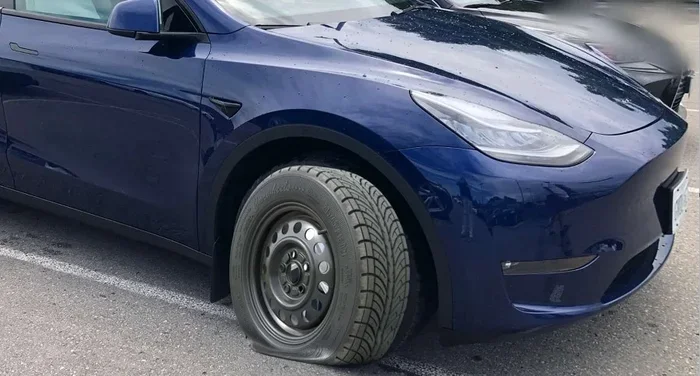
Tesla tires do not use this technology. Instead, they rely on the reinforced sidewall design. The sidewall is stiff enough to support the vehicle even with reduced air pressure. You can typically drive a short distance at low speed to find a safe spot.
This is not the same as a full run flat system. You should not push it. But it does provide a safety buffer that standard tires lack. The run flat capability in Tesla tires is more of a safety net than a long-term solution.
Why Tesla Chose Reinforced Sidewalls Over Foam Inserts
There are good reasons Tesla opted for reinforced sidewalls instead of traditional run flat inserts. Foam inserts add weight. More weight means less range. For an electric vehicle, range is everything. By avoiding foam, Tesla keeps the tires lighter and more efficient.
Foam inserts also reduce ride comfort. They make the tire stiffer, which translates to a harsher ride on rough roads. Tesla prioritized a smooth, comfortable driving experience. The reinforced sidewall approach achieves both puncture resistance and ride quality.
Additionally, reinforced sidewalls are cheaper to manufacture. This helps keep the overall tire cost more reasonable than traditional run flat systems. It is a win-win engineering decision that benefits the driver in multiple ways.
Real-World Performance: How Do Tesla Tires Handle Daily Driving?
In everyday driving, Tesla tires perform exceptionally well. The ride quality is smooth and quiet. The handling is precise and responsive. Even in wet conditions, the grip is impressive. These tires were designed with the modern driver in mind.
Here is what real Tesla owners report about their tire experience:
- Ride comfort: Most owners say the ride is smoother than expected for a performance tire. The reinforced sidewalls do not make the ride harsh.
- Noise levels: Tesla tires are surprisingly quiet for their size and performance rating. Road noise is well controlled.
- Handling in rain: The tread pattern channels water effectively. Hydroplaning risk is low even in heavy rain.
- Winter performance: Tesla offers winter tire options. The all-season tires handle light snow well but are not a substitute for dedicated winter tires.
- Puncture incidents: Many owners report driving on a slightly deflated tire for several miles without damage. This is the real benefit of the reinforced design.
The overall consensus is clear. Tesla tires deliver a balanced mix of performance, comfort, and safety. They are not perfect for every situation, but they are excellent for the vast majority of driving scenarios.
Comparing Tesla Tires to Other EV Tires
How do Tesla tires stack up against tires from other electric vehicles? Let us look at a few comparisons.
- Tesla Model 3 vs. Nissan Leaf: The Leaf uses standard tires with less reinforcement. The Model 3 tires offer better puncture resistance and handling.
- Tesla Model Y vs. Ford Mustang Mach-E: Both use similar reinforced designs. The Tesla tires have slightly better range optimization due to lower rolling resistance.
- Tesla Model S vs. Lucid Air: The Lucid Air uses high-performance tires that rival Tesla’s. Both offer excellent puncture resistance and ride quality.
In general, Tesla tires are among the best in the EV segment. They are purpose-built for electric vehicles and deliver on all fronts. The reliability of these tires matches or exceeds most competitors.
Maintenance Tips for Tesla Tires
Taking care of your Tesla tires is straightforward. A few simple habits can extend their life and keep you safe on the road.
Check tire pressure regularly. Tesla vehicles have a Tire Pressure Monitoring System (TPMS) that alerts you to pressure drops. But it is still a good idea to check manually once a month. Proper pressure is the single most important factor in tire longevity.
Rotate your tires every 6,000 to 8,000 miles. This ensures even wear across all four tires. Uneven wear shortens the lifespan and reduces performance. Rotation is a quick service that pays off big time.
Keep your tires clean. Road debris, salt, and chemicals can degrade the rubber over time. A simple rinse after driving on dirty roads goes a long way. Use a gentle tire cleaner and avoid harsh chemicals.
Watch for uneven wear patterns. If you notice the inside or outside of the tread wearing faster, it could indicate an alignment issue. Get your alignment checked promptly. Misaligned wheels cause premature wear and reduce handling precision.
Store your Tesla properly. If you have a garage, use it. UV exposure and temperature extremes accelerate tire degradation. A covered parking spot can add months to your tire life.
Common Tire Mistakes Tesla Owners Make
Even the best tires suffer from poor maintenance habits. Here are some common mistakes to avoid:
- Ignoring the TPMS warning: That light is there for a reason. Ignoring it can lead to further tire damage and unsafe driving conditions.
- Overinflating the tires: More pressure does not mean better performance. Overinflation reduces the contact patch and causes uneven wear.
- Mixing tire brands: Tesla recommends using the same brand and model on all four tires. Mixing brands can cause handling inconsistencies.
- Driving on a flat tire too long: Even with reinforced sidewalls, driving on a fully flat tire can cause permanent rim damage. Stop and address the issue quickly.
The Verdict: Are Tesla Tires Run Flats Worth the Hype?
After looking at the technology, cost, performance, and maintenance requirements, the answer is clear. Tesla tires are worth the investment for most drivers. They are not traditional run flats, but they offer run flat-like protection through reinforced sidewalls. The added cost is justified by the durability, range optimization, and safety benefits.
If you drive a Tesla daily, these tires are the right choice. They are designed specifically for your vehicle and deliver where it counts. The higher upfront cost pays off over time through longer lifespan and better efficiency.
For owners of older vehicles or those looking for budget options, standard tires may work fine. But if you want the best performance and safety for your Tesla, stick with the recommended tires. The peace of mind alone is worth the extra cost.
Think of it this way. You invest in a Tesla for its cutting-edge technology and safety features. The tires are a natural extension of that commitment. Tesla tires run flat technology may not be traditional, but it is smart, effective, and engineered for the demands of electric driving.
Just as you trust your vehicle to deliver a premium experience, trust the tires that were built specifically for it. The hype is real, and the price reflects the quality you get in return.
When shopping for tires, always consider the full picture. Look beyond the sticker price and evaluate the total value. Tesla tires deliver on every front. They are safe, durable, efficient, and purpose-built. That is worth more than any short-term savings from a cheaper alternative.
Your Tesla is an investment. The tires should be treated the same way. Choose quality, choose performance, and choose the tires that were designed to match your vehicle perfectly.
Frequently Asked Questions
Can Tesla tires handle a full puncture and still be driven?
Yes, to a limited extent. The reinforced sidewalls allow you to drive a short distance at low speed after a puncture. However, you should not push the tire beyond a few miles. Get to a safe location and address the puncture promptly.
How much does it cost to replace a Tesla tire?
Replacement costs typically range from $250 to $400 per tire depending on the model and size. A full set of four tires can cost between $1,000 and $1,600. The price reflects the specialized EV-optimized construction and materials.
Do Tesla tires come with a warranty?
Tesla tires are covered under the vehicle’s warranty for manufacturing defects. Wear and tear is generally not covered. However, Tesla offers tire service plans that can help offset replacement costs. Check with your local Tesla Service Center for details.
Can I use non-Tesla tires on my Tesla vehicle?
Yes, you can use non-Tesla tires as long as they meet the correct size and load rating specifications. However, Tesla-specific tires are optimized for the vehicle’s weight, range, and handling. Using non-recommended tires may void certain warranty provisions.
How long do Tesla tires typically last?
Tesla tires generally last between 40,000 and 60,000 miles depending on driving habits and road conditions. Regular maintenance, proper inflation, and timely rotations can help maximize their lifespan.
Are Tesla tires louder than standard tires?
No, Tesla tires are designed to be quiet. The tread patterns and rubber compounds are optimized to reduce road noise. Most owners report that Tesla tires are quieter than comparable performance tires from other brands.