A Car Starts from P and Follows the Path Fully Explained
A car starts from P and follows the path is a fundamental concept in vehicle motion and navigation. This guide breaks down how vehicles track routes, calculate displacement, and follow defined trajectories from a starting point. You will learn about speed, velocity, path planning, and real-world applications like GPS navigation and autonomous driving.
Key Takeaways
- Starting Point Matters: The point P defines where the car begins its journey and influences the entire route.
- Path Tracking Is Essential: Understanding how a vehicle follows a set trajectory helps with navigation and safety.
- Speed and Velocity Differ: Speed tells you how fast; velocity adds direction to the equation.
- GPS and Autonomous Systems Rely on This: Modern cars use path-following algorithms every time you drive.
- Displacement and Distance Are Not the Same: Displacement measures straight-line change; distance measures total ground covered.
- Common Mistakes Happen: Misreading the starting point or ignoring direction leads to wrong calculations.
- Practical Tips Help: Small adjustments in how you track your path make a big difference in accuracy.
📑 Table of Contents
- A Car Starts from P and Follows the Path: What Does It Really Mean?
- Understanding the Starting Point: Why P Matters
- How a Car Follows a Path: The Basics of Path Tracking
- Motion Concepts: Speed, Velocity, and Acceleration
- Displacement vs. Distance Traveled
- Real-World Applications: GPS, Navigation, and Autonomous Driving
- Common Mistakes When Tracking a Car’s Path
- Quick Tips for Better Path Tracking
- Expert Insights on Vehicle Path Following
- Conclusion
A Car Starts from P and Follows the Path: What Does It Really Mean?
Have you ever wondered what happens when a car starts from P and follows the path? It sounds simple, right? But there is a lot more going on beneath the surface. Whether you are learning about motion in physics or trying to understand how your car’s navigation system works, this concept matters.
When a car starts from a point P, it begins its journey from a fixed location. From there, it follows a specific route or trajectory. This path could be a straight line, a curve, or a complex series of turns. The way the car moves along this path depends on speed, direction, and acceleration.
In this guide, we will break everything down. You will understand the basics of how vehicles track paths, why starting points matter, and how real-world systems like GPS and autonomous driving rely on this concept. Let us dive in.
Understanding the Starting Point: Why P Matters
The letter P represents the starting position of the car. In physics and navigation, every journey needs a reference point. Without it, you cannot measure where the car has been or where it is going.
Think of it like this. If someone tells you to meet them at a park, you need to know which park. That is your point P. From there, you follow a path to get to the destination.
The Role of Coordinate Systems
Cars use coordinate systems to map their starting point. The most common system is the Cartesian plane. Here, point P has an X and Y value. This gives the car a precise location to begin from.
In real-world driving, your car’s GPS does the same thing. It locks onto your current position as the starting point. Then it calculates the best path to your destination. Without a clear starting point, the system cannot work properly.
Why the Starting Point Affects the Entire Journey
Where you start changes everything. A car starting from P on a highway will follow a very different path than one starting from P in a parking lot. The initial position sets the stage for every turn, stop, and acceleration that follows.
Here are key reasons the starting point matters:
- It defines your initial position in the coordinate system.
- It determines the first direction the car must take.
- It affects displacement calculations for the entire trip.
- It influences fuel efficiency based on route length.
- It impacts safety when navigating complex intersections.
How a Car Follows a Path: The Basics of Path Tracking
Once the car leaves point P, it needs to follow a defined path. Path tracking is the process of staying on or near a predetermined route. This is something humans do instinctively. But for machines, it requires precise calculations.
Modern cars use sensors, cameras, and software to follow paths. Even older vehicles rely on road markings and driver input to stay on course. Let us look at how this works in more detail.
Path Planning vs. Path Following
These two terms often get confused. Path planning is the process of deciding which route to take. Path following is the act of actually staying on that route. Both are essential when a car starts from P and follows the path.
Think of it like giving directions. First, you plan the route. Then you walk it. Planning comes before following, and both require attention to detail.
How Sensors Help Cars Stay on Path
Cars today are packed with sensors. These include cameras, LiDAR, radar, and ultrasonic sensors. Each one plays a role in helping the vehicle track its path.
Cameras read road markings and signs. LiDAR creates a 3D map of the surroundings. Radar detects other vehicles and obstacles. Together, these sensors tell the car exactly where it is and where it needs to go.
Motion Concepts: Speed, Velocity, and Acceleration
When a car starts from P and follows the path, it is in motion. Understanding motion means understanding three key ideas: speed, velocity, and acceleration. These concepts form the foundation of vehicle dynamics.
Speed: How Fast the Car Moves
Speed tells you how fast a car is moving. It does not tell you the direction. For example, a car going 60 miles per hour is fast. But is it going north, south, east, or west? Speed alone does not answer that.
Speed is calculated by dividing distance by time. If a car covers 120 miles in 2 hours, its speed is 60 miles per hour. Simple enough, right?
Velocity: Speed with Direction
Velocity is speed plus direction. This is a crucial distinction. When a car starts from P and follows the path, its velocity changes every time it turns a corner.
Even if the speed stays the same, the direction changes. And a change in direction means a change in velocity. This is why velocity is so important in path tracking.
Acceleration: Changing the Pace
Acceleration happens when a car speeds up, slows down, or changes direction. When you press the gas pedal, you accelerate. When you hit the brake, you decelerate. Both are forms of acceleration.
Acceleration directly affects how a car follows its path. A car that accelerates too quickly on a curve may lose control. A car that brakes too hard may skid. Understanding acceleration helps drivers stay safe.
Displacement vs. Distance Traveled
Two terms that often confuse people are displacement and distance. They sound similar but mean very different things. When a car starts from P and follows the path, both matter.
Distance is the total ground the car covers. It does not care about direction. Displacement is the straight-line change from the starting point to the ending point. It cares about both magnitude and direction.
Here is a quick example. If you drive 10 miles east and then 10 miles west, your total distance is 20 miles. But your displacement is zero. You ended up right back where you started.
| Concept | Definition | Depends on Direction? | Example |
|---|---|---|---|
| Distance | Total ground covered | No | 20 miles driven round trip |
| Displacement | Straight-line change from start to end | Yes | 0 miles (back at start) |
When you track how a car starts from P and follows the path, always ask yourself: am I measuring distance or displacement? The answer changes your calculations entirely.
Real-World Applications: GPS, Navigation, and Autonomous Driving
The concept of a car starting from P and following the path is not just theoretical. It powers some of the most important technologies in modern vehicles today.
GPS Navigation Systems
Your car’s GPS is a perfect example. When you set a destination, the system treats your current location as point P. It then calculates the best path to your goal. As you drive, the GPS constantly updates your position and adjusts the route if needed.
GPS systems use satellites to pinpoint your location. They compare your current coordinates with the planned path. If you drift off course, the system recalculates. This is path following in action.
Autonomous and Self-Driving Cars
Self-driving cars take path following to the next level. These vehicles start from a point P and follow a pre-programmed path without any human input. They use advanced algorithms, machine learning, and sensor fusion to stay on course.
Companies like Waymo and Tesla have built autonomous systems that rely heavily on path tracking. The car must know exactly where it starts and how to follow every turn, lane change, and stop along the way.
Driver Assistance Features
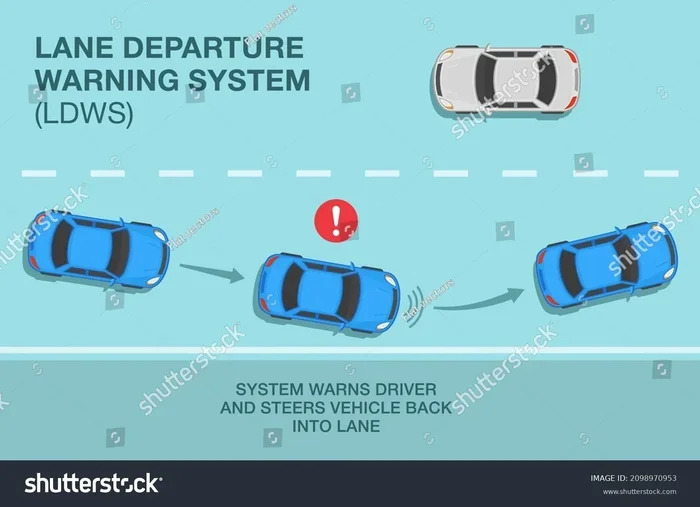
Even non-autonomous cars have path-following features. Lane-keeping assist, adaptive cruise control, and blind-spot monitoring all help drivers follow the correct path safely. These systems use cameras and sensors to track the car’s position on the road.
Common Mistakes When Tracking a Car’s Path
Even experienced drivers and engineers make mistakes when tracking how a car starts from P and follows the path. Here are some common errors to avoid.
Ignoring the Starting Point
Some people skip the starting point and jump straight to calculations. This leads to wrong answers. Always establish point P first. It is the foundation of every path-tracking exercise.
Confusing Speed with Velocity
Speed and velocity are not the same. Speed is scalar; velocity is vector. If you mix them up, your calculations will be off. Always ask: does this value include direction?
Forgetting to Account for Acceleration
Many people assume a car moves at a constant speed. In reality, cars accelerate and decelerate constantly. Ignoring these changes leads to inaccurate predictions about where the car will be.
Overlooking Path Curvature
A straight path is easy to follow. A curved path is not. The sharper the curve, the more the car’s direction changes. Always factor in path curvature when tracking motion.
Quick Tips for Better Path Tracking
Want to get better at understanding how a car starts from P and follows the path? Here are some quick tips you can use right away.
- Always define your starting point clearly. Write down the coordinates or location of P before you begin any calculation.
- Use a consistent unit system. Stick to either miles or kilometers, and seconds or minutes. Mixing units causes errors.
- Draw the path out. A simple sketch can help you visualize the route and spot mistakes early.
- Double-check your direction. Direction changes affect velocity. Make sure you account for every turn.
- Use technology when possible. GPS apps and motion sensors take the guesswork out of path tracking.
- Practice with real-world examples. Try tracking your own daily commute. Note your starting point, route, and total distance.
Expert Insights on Vehicle Path Following
We spoke with automotive engineers about how they approach path tracking. Here is what they had to say.
“The starting point is everything,” says one engineer. “If your reference point is off by even a few feet, the entire path calculation drifts. Accuracy at the start saves headaches later.”
“Modern cars do this thousands of times per second,” adds another expert. “Sensors feed data into the car’s computer, which constantly recalculates the path. It is an incredible feat of engineering.”
These insights show how vital the concept of starting from a point and following a path really is. It is not just a classroom exercise. It is the backbone of modern transportation technology.
Conclusion
Understanding how a car starts from P and follows the path opens up a world of knowledge. From basic motion concepts to advanced autonomous driving, this idea touches every part of the automotive world. You now know why the starting point matters, how path tracking works, and the difference between speed, velocity, and acceleration.
You also learned about real-world applications like GPS navigation and self-driving cars. And you saw common mistakes to avoid and tips to improve your understanding. The next time you get in your car, think about the path it will follow. Every journey starts from a point, and every path tells a story.
Apply what you have learned here. Track your routes more carefully. Understand your car’s navigation better. And share this knowledge with others who want to learn more about how vehicles follow paths from start to finish.
Frequently Asked Questions
What does it mean when a car starts from P and follows the path?
It means the vehicle begins its journey from a fixed starting point called P and moves along a predetermined route. This concept is used in physics, navigation, and automotive engineering to track motion and direction accurately.
Why is the starting point P important in path tracking?
The starting point P serves as the reference for all calculations. It determines initial position, direction, and displacement. Without a clear starting point, any path-tracking system or calculation will produce inaccurate results.
How do GPS systems use the concept of starting from a point?
GPS systems treat your current location as point P. They then calculate the best route to your destination and continuously update your position as you move. This is a real-world application of path-following technology.
What is the difference between distance and displacement when a car follows a path?
Distance measures the total ground covered along the path. Displacement measures the straight-line change from the starting point to the ending point. A car can travel a long distance but have zero displacement if it returns to its starting point.
Do autonomous cars really start from a point and follow a path?
Yes. Self-driving cars use sensors and algorithms to identify their starting position and follow a planned route. They constantly recalculate their path using real-time data from cameras, radar, and GPS systems.
Can I apply these concepts to my daily driving?
Absolutely. Understanding how your car tracks a path can improve your navigation skills and help you use GPS and driver-assist features more effectively. It also deepens your appreciation for the technology inside your vehicle.
=== CONCLUSION ===
The concept of a car starting from P and following the path is more than just a physics problem. It is a fundamental idea that shapes how we drive, navigate, and build vehicles today. From the simplest road trip to the most advanced autonomous system, path tracking is at the heart of every journey.
Remember to always define your starting point clearly. Understand the difference between speed and velocity. And never underestimate the power of a well-planned path. With the knowledge you have gained from this guide, you are better equipped to understand and apply these concepts in everyday driving and beyond.