Do Honda and Acura Use the Same Replacement Parts
Honda and Acura share many replacement parts because Acura is Honda’s luxury division. Engine components, brake systems, and suspension parts often overlap across both brands. However, body panels, interior trim, and luxury-specific components differ significantly between Honda and Acura vehicles.
This is a comprehensive guide about Do Honda and Acura Use the Same Parts?.
Key Takeaways
- Shared Platform: Honda and Acura use the same base platforms, meaning many mechanical parts are interchangeable between the two brands.
- OEM vs Aftermarket: Both genuine OEM and aftermarket parts are available for Honda and Acura vehicles, with varying price points and quality levels.
- Luxury Differences: Acura-specific parts like interior trim, exhaust systems, and luxury features are not shared with Honda models.
- Cost Savings: Using shared Honda parts on an Acura can save you significant money on repairs and maintenance.
- Model-Year Matters: Part compatibility depends heavily on the specific model and year of your Honda or Acura vehicle.
- Mechanic Knowledge: A skilled mechanic who works on both brands can help you identify cross-compatible parts.
[FEATURED_IMAGE_PLACEHOLDER]
Do Honda and Acura Use the Same Replacement Parts?
If you own a Honda or an Acura, you have probably wondered whether the two brands share replacement parts. The short answer is yes, but with some important exceptions. Honda and Acura are closely related. Acura is Honda’s luxury division, and both brands share the same engineering backbone. This means many parts overlap between the two. But not every single component is the same.
Understanding which parts are shared and which are unique can save you a lot of time and money. Whether you are a DIYer or you rely on a mechanic, knowing about parts interchangeability gives you an edge. You will make smarter buying decisions. You will avoid overpaying. And you will keep your car running smoothly for years to come.
This guide breaks down everything you need to know. We will cover shared components, unique parts, OEM vs aftermarket options, and practical tips for finding the right parts. By the end, you will have a clear picture of how Honda and Acura parts compare.
So let us dive in. Whether you drive a Honda Civic or an Acura TLX, this information applies to you.
Honda and Acura: Same Brand, Different Identity
Honda and Acura share the same parent company. Acura was launched in 1986 as Honda’s luxury brand. Because of this shared origin, many of the core engineering principles are the same. Both brands use similar platforms, engines, and chassis designs. This is why parts compatibility exists between them.
But there is a key difference in positioning. Honda focuses on reliability and affordability. Acura focuses on luxury, performance, and premium features. This difference affects which parts are shared and which are unique.
The Engineering Connection
Both Honda and Acura vehicles are built on the same fundamental architecture. The engines, transmission systems, and braking components often come from the same production lines. This is especially true for models that share the same platform. For example, the Honda Accord and the Acura TLX have a lot in common under the hood.
Because they share engineering roots, many mechanical parts are identical or very similar. This includes items like:
- Engine blocks and cylinder heads
- Brake rotors and calipers
- Suspension components
- Transmission internals
- Electrical wiring harnesses
These shared components mean that a part designed for a Honda model might also fit an Acura model. And vice versa. But you always need to verify compatibility by checking the model, year, and trim level.
Which Parts Are Shared Between Honda and Acura?
Now let us get into the specifics. Certain categories of parts are commonly shared between Honda and Acura vehicles. Understanding these categories helps you identify opportunities to save money on replacements.
Engine and Drivetrain Components
The engine is the heart of any vehicle. Honda and Acura share many engine components because they use similar engine designs. Piston rings, timing belts, water pumps, and oil pumps are often identical across both brands. If you own a Honda Accord and an Acura TLX from the same era, there is a good chance their engines share many internal parts.
This is great news for your wallet. Engine parts tend to be among the most expensive replacements. Finding a shared part between Honda and Acura can reduce your cost significantly.
Brake Systems
Brake components are another area where Honda and Acura overlap heavily. Brake pads, rotors, calipers, and brake lines are frequently shared across both brands. The braking systems on Honda and Acura vehicles are designed with similar specifications.
If you need new brake pads for your Acura, there is a good chance a Honda part will work. Many auto mechanics take advantage of this overlap to source more affordable parts. In fact, do auto mechanics make good money partly because they know how to find cost-effective parts like these for their customers.
Suspension and Steering Parts
Suspension components like shocks, struts, control arms, and tie rods are often shared between Honda and Acura models on the same platform. Steering racks and steering components also overlap in many cases.
This means that if your Honda suspension part is worn out, you might be able to use an Acura equivalent or vice versa. Always double-check the part number and fitment guide before purchasing.
Electrical and Lighting Components
Many electrical components are shared between Honda and Acura. Headlights, taillights, and interior lighting fixtures often use the same bulbs and housings. Wiring harnesses for basic functions like power windows and door locks are also commonly shared.
However, luxury features unique to Acura, like adaptive lighting or premium audio systems, will have different components. We will cover that in the next section.
Which Parts Differ Between Honda and Acura?
While many parts are shared, there are clear differences too. Acura is a luxury brand, and that means certain components are exclusive to Acura models. Understanding these differences prevents you from buying the wrong part.
Body Panels and Exterior Trim
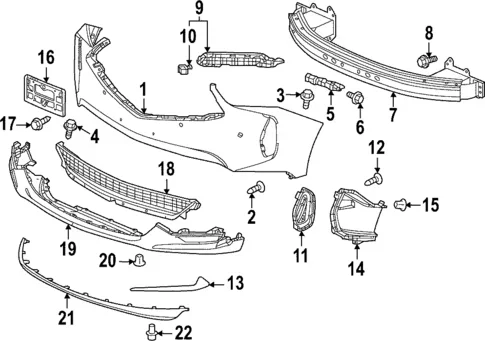
Body panels are one of the most obvious areas where Honda and Acura differ. The shape, design, and fitment of fenders, hoods, doors, and bumpers are unique to each brand. Even when Honda and Acura share a platform, the exterior styling is different.
This means you cannot swap a Honda fender for an Acura fender. The dimensions and mounting points are different. If you need a replacement body panel, you must get the one designed specifically for your brand and model.
Interior Trim and Luxury Features
Acura interiors are designed with premium materials and luxury features. Leather seats, wood trim, and soft-touch surfaces are standard on most Acura models. Honda interiors, while comfortable, use more practical materials.
Interior parts like dashboard components, seat frames, and door panels are generally not interchangeable. Even if the underlying structure is similar, the trim, upholstery, and electronics differ. If you are looking to replace a seat or dashboard component, you need the Acura-specific version for an Acura vehicle.
Interestingly, if you are considering upgrading your sound system, you might wonder can I change the sound system in my car. The answer is yes, but you will need to ensure the new system is compatible with your specific Honda or Acura model.
Exhaust and Performance Components
Acura vehicles often come with performance-tuned exhaust systems. These systems are designed to deliver a different sound and flow characteristics compared to Honda models. The catalytic converters, mufflers, and exhaust pipes on Acura vehicles are typically unique.
If you are replacing an exhaust component, do not assume a Honda part will fit your Acura. The mounting points, diameter, and tuning are different. Always verify the part is designed for your specific Acura model.
Luxury Electronics and Safety Features
Acura vehicles often come equipped with advanced technology and safety features. Adaptive cruise control, premium infotainment systems, and Acura-specific driver assistance features use unique components. These electronics are not shared with Honda models.
If a sensor or module fails in your Acura, you will likely need the Acura-specific version. These parts are more expensive because they are specialized and not produced in the same volume as shared Honda components.
OEM vs Aftermarket Parts: What You Need to Know
When replacing parts on your Honda or Acura, you have two main options: OEM (Original Equipment Manufacturer) parts and aftermarket parts. Both have pros and cons, and understanding the difference is essential.
What Are OEM Parts?
OEM parts are made by the same manufacturer that produced the original part for your vehicle. For Honda and Acura, OEM parts carry the Honda or Acura branding. They are designed to meet the exact specifications of your vehicle.
OEM parts offer the best fit and finish. They come with warranties and are backed by the manufacturer. However, they tend to be more expensive. If you need a Honda replacement part or an Acura OEM part, expect to pay a premium compared to aftermarket alternatives.
What Are Aftermarket Parts?
Aftermarket parts are made by third-party manufacturers. They are designed to fit your vehicle but are not produced by Honda or Acura. Aftermarket parts can be significantly cheaper than OEM parts. Some aftermarket manufacturers produce parts that are just as good as the originals.
However, quality varies widely among aftermarket brands. Some parts are excellent, while others may not last as long or fit as precisely. It is important to buy from reputable aftermarket brands and to check reviews before purchasing.
Which Parts Should You Always Buy OEM?
Not all parts are equal when it comes to aftermarket options. Some parts are safe to buy aftermarket, while others should always be OEM. Here is a simple guide:
- Always OEM: Safety-critical parts like airbags, seat belts, and brake lines
- Always OEM: Engine internals like pistons and crankshafts
- Aftermarket OK: Body panels, trim pieces, and exterior accessories
- Aftermarket OK: Suspension bushings and certain filters
- Aftermarket OK: Light bulbs and non-electrical trim pieces
When in doubt, consult your owner’s manual or ask a trusted mechanic. They can guide you on which parts are safe to buy aftermarket and which ones need to be genuine OEM.
How to Know Which Parts Fit Your Vehicle
Finding the right part for your Honda or Acura can feel overwhelming. There are thousands of part numbers and variations. But there is a straightforward process you can follow to ensure you get the correct part every time.
Check Your VIN
Your Vehicle Identification Number (VIN) is the single most important piece of information when ordering parts. The VIN encodes your vehicle’s make, model, year, engine type, trim level, and production details. When you provide a VIN to a parts supplier, they can look up the exact part that fits your specific vehicle.
Always have your VIN handy before ordering any part. You can find it on your dashboard, driver’s side door jamb, or your vehicle registration documents.
Use Fitment Guides
Most online parts retailers and dealership websites offer fitment guides. These tools let you enter your vehicle’s details and see a list of compatible parts. Always use these guides before making a purchase. They eliminate guesswork and reduce the risk of ordering the wrong part.
Consult Your Owner’s Manual
Your owner’s manual is a valuable resource. It lists the parts used in your vehicle, including part numbers and specifications. If you are unsure about a part, check the manual first. It can save you time and money.
Ask a Professional
When you are not sure, ask a professional. A qualified mechanic or dealership technician can confirm whether a Honda part will work on your Acura or vice versa. Their expertise is especially valuable for complex or safety-critical components.
Cost Comparison: Honda vs Acura Parts
One of the biggest concerns for car owners is the cost of replacement parts. Let us look at how Honda and Acura parts compare in terms of pricing.
| Part Category | Honda OEM Price Range | Acura OEM Price Range | Aftermarket Price Range |
|---|---|---|---|
| Brake Pads | $30 – $80 | $40 – $100 | $20 – $60 |
| Oil Filter | $5 – $15 | $8 – $18 | $3 – $10 |
| Headlight Assembly | $100 – $300 | $150 – $400 | $60 – $200 |
| Suspension Strut | $150 – $400 | $200 – $500 | $100 – $350 |
| Exhaust Muffler | $100 – $250 | $150 – $350 | $60 – $200 |
| Dashboard Module | $300 – $800 | $400 – $1,000 | $200 – $600 |
As you can see, Acura parts tend to cost more than Honda parts. This is because Acura is positioned as a luxury brand. The materials are premium, and the production volume is lower. Aftermarket parts offer a more affordable alternative for both brands, but quality varies.
If you are looking to reduce your maintenance costs, consider using shared Honda parts where compatible. This approach works best for mechanical components like brakes, suspension, and engine parts. For luxury-specific components, you will need to stick with Acura OEM parts.
One thing to keep in mind is that Japanese cars in general are known for their reliability and lower long-term maintenance costs compared to many American brands. do Japanese cars last longer than American cars? Often, yes, and part availability and affordability play a big role in that longevity.
Common Mistakes When Buying Honda and Acura Parts
Avoiding common mistakes can save you time, money, and frustration. Here are the most frequent errors car owners make when purchasing replacement parts.
- Assuming all parts are interchangeable: Just because Honda and Acura share some parts does not mean all parts are compatible. Always verify fitment.
- Buying the cheapest option: The lowest-priced part is not always the best value. Cheap parts may wear out faster and cost more in the long run.
- Ignoring the VIN: Ordering parts without checking your VIN can lead to returns, delays, and wasted money.
- Skipping the fitment guide: Online fitment tools exist for a reason. Use them every time you order a part.
- Mixing OEM and aftermarket: Combining OEM and aftermarket parts on critical systems like brakes can create compatibility issues.
Expert Insight
Experienced technicians recommend always keeping your VIN on file when shopping for parts. It is the fastest way to confirm compatibility and avoid costly returns. If you are unsure about a part, it is always better to double-check before installing it.
Quick Tips for Saving Money on Honda and Acura Parts
- Buy in bulk: If you need multiple parts, buying them together often comes with a discount.
- Compare prices online: Check multiple retailers before purchasing. Prices can vary significantly.
- Consider refurbished parts: For non-safety-critical components, refurbished OEM parts can save you up to 50 percent.
- Use shared parts when possible: If a Honda part fits your Acura, take advantage of the lower cost.
- Join loyalty programs: Some parts retailers offer discounts and rewards for repeat customers.
- Ask about warranty: Always check if the part comes with a warranty, even for aftermarket options.
Frequently Asked Questions
Are Honda and Acura parts the same?
Many Honda and Acura parts are the same, especially mechanical components like brakes, suspension, and engine parts. However, body panels, interior trim, and luxury-specific components are different. Always verify compatibility before purchasing.
Can I use Honda OEM parts on my Acura?
Yes, for shared components like brake pads, suspension parts, and certain engine components. But you must confirm fitment using your VIN or a fitment guide. Not all Honda parts will work on every Acura model.
Are Acura parts more expensive than Honda parts?
Generally, yes. Acura parts tend to cost more because Acura is a luxury brand with premium materials and lower production volume. Aftermarket parts can help reduce costs for both brands.
Where can I find compatible parts for my Honda or Acura?
You can find compatible parts at Honda and Acura dealerships, online parts retailers, and local auto parts stores. Always provide your VIN to ensure you get the right part for your specific vehicle.
How do I know if a part is OEM or aftermarket?
OEM parts carry the Honda or Acura branding and come in official packaging. Aftermarket parts are made by third-party manufacturers and may not carry the original brand logo. Check the packaging and seller description to confirm.
Can I mix OEM and aftermarket parts on my car?
For most non-safety-critical parts, mixing is fine. However, for safety systems like brakes and airbags, it is best to use OEM parts or parts from the same quality tier. Mixing incompatible parts can lead to performance issues.
Final Thoughts
So, do Honda and Acura use the same replacement parts? The answer is both yes and no. They share many mechanical components, which is great news for your wallet. But luxury-specific parts, body panels, and interior components are unique to each brand. Understanding this distinction empowers you to make smarter purchasing decisions.
When shopping for parts, always start with your VIN. Use fitment guides. Compare OEM and aftermarket options. And do not hesitate to ask a professional if you are unsure. Taking these steps ensures you get the right part at the right price.
Whether you drive a Honda or an Acura, proper maintenance and smart part choices keep your vehicle running strong. Use the tips in this guide to navigate your next parts purchase with confidence. Your car deserves the best, and now you have the knowledge to give it exactly that.
Frequently Asked Questions
What is Do Honda and Acura Use the Same Parts??
Do Honda and Acura Use the Same Parts? is an important topic with many practical applications.