Can I Get My Subaru Serviced Anywhere Without Worry
Yes, you can get your Subaru serviced almost anywhere, but the choice between a dealership and an independent shop matters more than most people realize. Whether you need a simple oil change or a complex repair, understanding your options helps you save money and keep your Subaru serviced anywhere without voiding your warranty. In this guide, we break down everything you need to know about getting your Subaru serviced anywhere you feel comfortable.
So you just bought a Subaru, or maybe you have owned one for years. Either way, a question keeps popping up: Can I Get My Subaru Serviced Anywhere? The short answer is yes. But the full answer is a little more nuanced than that. Where you take your car for service affects your warranty, your wallet, and even how long your vehicle lasts.
Some Subaru owners swear by their local dealership. Others prefer the neighborhood independent shop. And a growing number of owners handle basic maintenance themselves at home. Each option has real benefits and real tradeoffs. This guide walks you through all of them so you can make a confident decision.
Whether you drive a brand-new Subaru Outback or a high-mileage Subaru Legacy, the information here applies. We will cover warranty rules, maintenance tasks, cost comparisons, and practical tips. By the end, you will know exactly where to take your car and why.
Key Takeaways
- You have options: Your Subaru can be serviced at a dealership, independent shop, or even by yourself for basic tasks.
- Warranty protection matters: Using non-dealership shops is legal, but you must follow maintenance guidelines to keep your warranty intact.
- Cost differences exist: Independent shops often cost less, but dealerships offer specialized Subaru-trained technicians.
- Quality varies: Not every shop is equal, so choosing a certified or Subaru-specialized mechanic is key.
- DIY is possible: Basic maintenance like oil changes and tire rotations can be done at home with the right tools.
- Fuel and fluid choices count: Using the right products matters for your Subaru’s longevity and performance.
📑 Table of Contents
- What Does It Mean to Service Your Subaru Anywhere?
- Dealership vs. Independent Shop: Where Should You Go?
- Understanding Your Subaru Warranty and Service Requirements
- Common Subaru Maintenance Tasks You Can Do Anywhere
- Can You Service a Subaru Hybrid or Electric Model?
- Quick Tips for Choosing the Right Service Location
- Common Mistakes People Make When Choosing a Service Shop
- Fuel Choices and Their Impact on Your Subaru
- Keeping Your Subaru Clean and Well-Maintained
- Final Thoughts
What Does It Mean to Service Your Subaru Anywhere?
When we say “service your Subaru anywhere,” we mean any location that can perform maintenance or repairs on your vehicle. This includes authorized Subaru dealerships, independent repair shops, chain auto parts stores, and even your own garage. The key question is not just where but what you are having done and how it affects your car.
Think of it this way. You can eat at a fancy restaurant or cook at home. Both options feed you. But the experience, cost, and quality can be very different. The same idea applies to car service. The location you choose shapes the outcome.
Subaru vehicles are known for their reliability and all-wheel-drive systems. They are also known for specific maintenance needs. For example, Subaru engines often use CVT transmissions that require special attention. Your service interval matters, and not every shop understands Subaru-specific requirements the same way.
The Role of Routine Maintenance
Routine maintenance keeps your Subaru running smoothly. This includes oil changes, tire rotations, brake inspections, and fluid changes. These tasks are universal. Any qualified shop can handle them. But the quality of the work and the parts used can vary widely from one shop to another.
Subaru recommends following a maintenance schedule outlined in your owner’s manual. Sticking to this schedule is important. It helps prevent breakdowns and keeps your car running at its best. Whether you follow this schedule at a dealership or an independent shop, the tasks themselves do not change.
Dealership vs. Independent Shop: Where Should You Go?
This is the big question every Subaru owner faces. Both options have strong points. Both also have drawbacks. Let us break them down so you can decide what works best for your situation.
The Dealership Advantage
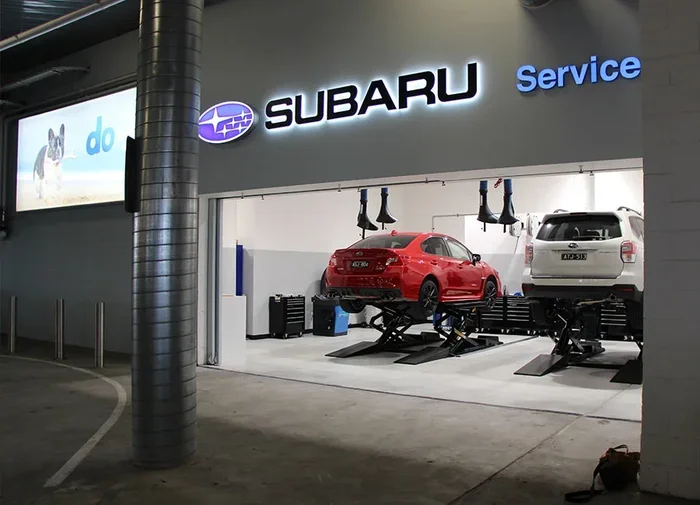
Authorized Subaru dealerships have several clear advantages. First, their technicians are trained specifically on Subaru vehicles. They understand the quirks and features of each model. They also have access to Subaru-specific diagnostic tools and software.
Second, service records stay with the dealership. This is important if you ever sell your car or need to prove maintenance history. Third, dealerships use genuine Subaru parts. These parts are designed specifically for your vehicle and come with manufacturer warranties.
However, dealerships also have downsides. Labor costs tend to be higher. Wait times can be long, especially at busy locations. And you may feel pressure to approve additional services that are not strictly necessary.
The Independent Shop Benefit
Independent repair shops offer a different set of advantages. Cost savings are usually the biggest one. Independent shops often charge 30 to 50 percent less for labor than dealerships. This adds up quickly, especially for routine maintenance like oil changes and brake jobs.
Many independent mechanics are experienced with Subarus. Some even specialize in them. They may use high-quality aftermarket parts that perform just as well as genuine Subaru parts. The relationship with a good independent mechanic can also feel more personal and flexible.
The downside is quality control. Not every independent shop is created equal. Some may use lower-quality parts or skip steps in the service process. This is why choosing the right independent shop matters so much.
Quick Tip: Always ask if a shop is ASE certified or has Subaru-specific training. This is a strong indicator of quality and expertise.
Understanding Your Subaru Warranty and Service Requirements
This is where things get important. Many Subaru owners worry that taking their car to a non-dealership shop will void the warranty. Let us clear this up right away.
By law, you can service your Subaru anywhere you choose. The Magnuson-Moss Warranty Act protects consumers in the United States. This means a dealership cannot void your warranty simply because you used an independent shop. However, there are important conditions.
If a problem arises that is related to a service you skipped or performed incorrectly, the manufacturer may deny the claim. For example, if you skip oil changes and your engine fails, the dealership may refuse to cover the repair. The key is keeping detailed service records no matter where you go.
What the Warranty Actually Covers
New Subaru vehicles typically come with a 3-year or 36,000-mile bumper-to-bumper warranty. Powertrain coverage often extends to 5 years or 60,000 miles. During this period, certain maintenance tasks are considered part of your responsibility as the owner.
These tasks include:
- Regular oil and filter changes
- Tire rotations
- Brake pad and rotor inspections
- Fluid flushes (coolant, brake fluid, transmission fluid)
- Air filter and cabin filter replacements
If you handle all of these tasks properly and keep records, your warranty remains valid regardless of where the work was done.
When the Dealership Matters Most
There are times when the dealership is the better choice. If your car is still under warranty and you have a complex issue, the dealership may be the safer option. They have direct access to Subaru technical support and recall information.
Also, if a check engine light comes on, a dealership can run manufacturer-specific diagnostics. Some independent shops can do this too, but the dealership has the deepest level of access. You can also get a free car diagnostic at some locations, which helps you understand what is going on before committing to repairs.
Common Subaru Maintenance Tasks You Can Do Anywhere
Most routine Subaru maintenance can be performed at any qualified location. Let us look at the most common tasks and what to expect.
Oil Changes and Fluid Services
Oil changes are the backbone of car maintenance. Subaru recommends changing your oil every 6,000 to 7,500 miles for most models. This interval can vary based on driving conditions, so always check your owner’s manual.
You can get an oil change at a dealership, an independent shop, or even do it yourself. The important thing is using the correct oil grade. Subaru engines typically require 0W-20 or 5W-20 synthetic oil. Using the wrong grade can affect engine performance and longevity.
Fluid services include coolant, brake fluid, and transmission fluid changes. These are more complex than oil changes but still routine for most shops. Always confirm the shop uses Subaru-approved fluids for your specific model.
Tire Rotations and Brake Inspections
Tire rotations should happen every 5,000 to 7,500 miles. This simple task helps your tires wear evenly and extends their lifespan. Any shop that services cars can perform a tire rotation.
Brake inspections are equally important. Subaru vehicles with all-wheel drive put extra stress on brake components. Regular inspections help you catch worn pads or rotors early. If you notice squealing or grinding, do not wait to get them checked.
Filter Replacements and Basic Inspections
Air filters and cabin filters are easy to replace and inexpensive. Most shops will check these during a routine service. Some Subaru owners prefer to handle these at home. It is a simple task that requires no special tools and takes just a few minutes.
During any service visit, ask the technician to perform a basic inspection. This should include checking belts, hoses, lights, and fluid levels. A good technician will flag potential issues before they become expensive problems.
Can You Service a Subaru Hybrid or Electric Model?
Subaru has been expanding its hybrid lineup. The Subaru Solterra and Crosstrek Hybrid introduce new considerations for service. Hybrid maintenance is similar to traditional Subaru service in many ways, but there are important differences.
Hybrid vehicles have high-voltage battery systems that require specialized training to service. Not every independent shop is equipped to handle hybrid components. For this reason, dealership service is often recommended for hybrid Subaru models, especially for battery-related work.
That said, basic maintenance like oil changes, tire rotations, and brake inspections on hybrids can be done at any qualified shop. The gas engine components still need regular care, even if the electric motor handles some of the workload.
Subaru also offers all-wheel drive systems that work in coordination with hybrid powertrains. These systems require specific knowledge. If you are unsure about where to take your hybrid Subaru, the dealership is a safe starting point.
Expert Insight: Subaru’s hybrid systems are designed to work seamlessly with the traditional engine. Regular maintenance of both the gas and electric components is essential for long-term reliability.
Quick Tips for Choosing the Right Service Location
Choosing where to service your Subaru does not have to be stressful. Here are some practical tips to help you decide.
- Check reviews and ratings. Look for shops with consistently positive feedback from other Subaru owners. Online reviews give you real-world insight into quality and customer service.
- Ask about certifications. ASE certification is a strong indicator of mechanic skill. Subaru-specific training is even better.
- Compare quotes. Get estimates from at least two shops before committing to major repairs. This helps you understand fair pricing for your area.
- Ask about parts quality. Some shops use aftermarket parts to save money. Others use genuine or OEM parts. Know what you are getting before the work begins.
- Consider convenience. Location, hours, and shuttle services all matter. If a shop is hard to reach, you may skip services altogether, which hurts your car.
- Keep your own records. Maintain a log of all services, regardless of where they are performed. This protects your warranty and helps you track your car’s health.
Following these tips puts you in a strong position. You can confidently choose a service location that fits your budget, your schedule, and your Subaru’s needs.
Common Mistakes People Make When Choosing a Service Shop
Even well-meaning Subaru owners sometimes make avoidable mistakes when choosing where to service their cars. Here are the most common ones.
Choosing Based on Price Alone
The cheapest shop is not always the best. Extremely low prices can signal lower-quality parts, shortcuts in the service process, or inexperienced technicians. You want value, not just the lowest price tag. A slightly higher price often means better workmanship and longer-lasting repairs.
Ignoring Warning Signs
Every car gives you signals when something is wrong. Unusual noises, vibrations, warning lights, or changes in fuel efficiency all point to potential issues. Ignoring these signs and hoping they go away is a mistake that can lead to costly repairs down the road.
Skipping Regular Services
Some owners only take their car in when something breaks. This reactive approach costs more in the long run. Regular maintenance catches small problems before they become big ones. It also keeps your Subaru running at peak performance.
Overlooking the Importance of Quality Parts
Cheap parts may save money upfront but can fail sooner. This means more frequent replacements and more labor costs. Investing in quality parts, whether genuine Subaru or high-grade aftermarket, pays off over time.
Not Asking Questions
A good service shop welcomes your questions. If a technician cannot explain what they are doing and why, that is a red flag. You deserve transparency and clear communication about your car’s needs.
Fuel Choices and Their Impact on Your Subaru
Fuel choice is another factor in Subaru service. Most Subaru models run perfectly well on regular unleaded gasoline. You do not need premium fuel for most models.
However, some owners wonder about premium gas in any car and whether it benefits their Subaru. For standard Subaru engines, premium gas offers no significant advantage. It will not improve performance or fuel economy in most cases.
On the other hand, using 88 gas (higher ethanol blends) can be a concern. Most Subaru models are approved for E10 fuel (10% ethanol). Higher ethanol blends may not be recommended for all models. Always check your owner’s manual before filling up with anything other than standard unleaded.
Using the wrong fuel can affect engine performance and potentially trigger warning lights. If you are ever unsure, your Subaru dealership or a trusted mechanic can provide guidance specific to your model and year.
Keeping Your Subaru Clean and Well-Maintained
Service is not just about the engine. Keeping your Subaru clean and well-maintained on the outside matters too. Regular washing protects the paint and undercarriage from corrosion.
However, there is such a thing as washing your car too much. Over-washing can strip protective coatings and lead to premature paint wear. Stick to a reasonable washing schedule and use quality products.
Interior maintenance is equally important. Clean seats, functioning electronics, and properly inflated tires all contribute to the overall ownership experience. A well-maintained Subaru looks good, feels good, and holds its value better over time.
Final Thoughts
Can I Get My Subaru Serviced Anywhere without worry? The answer is a clear yes. You have the freedom to choose where your Subaru gets serviced. Whether you prefer the expertise of a dealership, the affordability of an independent shop, or the convenience of DIY maintenance, the choice is yours.
The key is staying informed. Understand your warranty, follow the maintenance schedule, keep detailed records, and choose a shop you trust. These steps ensure your Subaru stays reliable for years to come, no matter where you take it for service.
Your Subaru is a significant investment. Treating it well through proper, consistent maintenance pays off in performance, safety, and long-term value. Take the time to find the right service partner, and you will enjoy the drive for many miles ahead.
Frequently Asked Questions
Will taking my Subaru to an independent shop void the warranty?
No, by law your warranty cannot be voided simply because you used an independent shop. However, if the shop performs work incorrectly and causes damage, the manufacturer may deny the related claim. Always keep detailed service records and use quality parts to protect your warranty.
How often should I service my Subaru?
Subaru recommends following the maintenance schedule in your owner’s manual. Most models need an oil change every 6,000 to 7,500 miles. Other services like tire rotations and brake inspections follow different intervals. Sticking to the recommended schedule keeps your car running at its best.
Can I service my Subaru hybrid at an independent shop?
Basic maintenance like oil changes and brake inspections can be done at any qualified shop. However, for hybrid-specific work involving the high-voltage battery system, a dealership is usually the safer choice. They have the specialized training and equipment needed for hybrid components.
What is the difference between genuine Subaru parts and aftermarket parts?
Genuine Subaru parts are manufactured by Subaru and designed specifically for your vehicle. Aftermarket parts are made by third-party manufacturers. High-quality aftermarket parts can perform just as well, but genuine parts offer the closest match to factory specifications.
Do I need to use premium fuel in my Subaru?
Most Subaru models run perfectly well on regular unleaded gasoline. Premium fuel is not required and offers no significant benefit for standard engines. Always check your owner’s manual to confirm the recommended fuel type for your specific model.
What should I do if my check engine light comes on?
Do not ignore the light. Get your car diagnosed as soon as possible. You can visit a dealership, an independent shop, or even some auto parts stores that offer free diagnostics. Identifying the issue early prevents minor problems from becoming expensive repairs.
=== CONCLUSION ===
Getting your Subaru serviced anywhere is entirely possible and often a smart financial move. The key is making informed choices. Know your warranty requirements, choose a trusted shop, and stay on top of your maintenance schedule. Whether you visit a dealership or an independent mechanic, what matters most is the quality of the work and the parts used.
Your Subaru deserves the best care you can give it. By understanding your options and staying proactive about maintenance, you keep your car running strong for years to come. So go ahead, take your Subaru wherever you feel confident, and enjoy the drive knowing you made the right choice.