What Is the Thing You Slide Under a Car Called Explained
The thing you slide under a car is called a car jack. It is an essential tool used to lift vehicles for tire changes, repairs, and maintenance. Understanding the different types of car jacks helps you choose the right one for your needs and keeps you safe while working under your vehicle.
Have you ever been stuck on the side of the road with a flat tire and wondered what that tool is called that goes under your car? You are not alone. What Is the Thing You Slide Under a Car Called is one of the most common questions new drivers and car owners ask. The answer is a car jack, and it is one of the most important pieces of car equipment you will ever own. In this article, we will explore everything you need to know about car jacks, from the different types available to safety tips that could save your life.
Whether you are a complete beginner or someone who just wants to refresh their knowledge, this guide covers it all. We will look at how each type of car jack works, when to use it, and how to avoid common mistakes. By the end, you will feel confident about choosing and using the right jack for your vehicle. Let us dive in.
Key Takeaways
- A car jack is the tool you slide under a vehicle to lift it off the ground for maintenance or repairs.
- There are several types of car jacks, including hydraulic floor jacks, scissor jacks, bottle jacks, and mechanical jacks.
- Always use a jack stand alongside a car jack for safety. Never rely on a jack alone to hold a vehicle.
- Choosing the right jack depends on your vehicle type, the ground clearance, and the kind of work you need to do.
- Common mistakes include using a jack on uneven ground and skipping the jack stand, which can lead to serious injury.
- Regular maintenance of your car jack ensures it works reliably when you need it most.
- A car jack is a must-have in every emergency road kit for safe and confident roadside repairs.
📑 Table of Contents
- What Is the Thing You Slide Under a Car Called?
- Types of Car Jacks You Should Know
- How to Use a Car Jack Safely
- Common Mistakes People Make When Using a Car Jack
- Car Jack vs. Jack Stand: What Is the Difference?
- How to Choose the Right Car Jack for Your Needs
- Expert Insights on Car Jacks and Vehicle Maintenance
- Key Takeaways
- Conclusion
What Is the Thing You Slide Under a Car Called?
The device you slide under your car to lift it is called a car jack. A car jack is a mechanical tool designed to lift vehicles off the ground. It uses mechanical advantage or hydraulic pressure to raise heavy loads with minimal effort. People use car jacks for tire changes, auto repair, and routine car maintenance.
Most vehicles come with a basic jack in the trunk. However, many car owners upgrade to a better model for easier use and improved safety. The car jack is a simple yet powerful tool that has been around for over a century. Understanding how it works and which type suits your needs makes all the difference.
Why Knowing the Name Matters
You might think knowing the name of a car jack is trivial. But when you go to an auto parts store or search for replacement parts online, using the right term saves time and confusion. The term car jack covers a broad category of lifting tools. Within that category, there are hydraulic jacks, scissor jacks, and bottle jacks, among others. Using the correct name helps you find the right product quickly.
It also matters for communication. If you call a mechanic or ask for help in a forum, saying “I need a car jack” gets you the right advice. Using vague terms like “the thing under the car” might lead to confusion. So learning the proper name is a small step that pays off big time.
How a Car Jack Works
A car jack works by converting a small input force into a large output force. This is called mechanical advantage. In a hydraulic jack, fluid pressure does the heavy lifting. You pump a handle, and the fluid pushes a piston upward. This raises the lifting pad under your car.
In a scissor jack, a simple screw mechanism does the work. You turn a rod, and the zigzag arms expand or collapse. This raises or lowers the vehicle. Both types get the job done, but they work in different ways. Knowing how each one operates helps you use it safely and effectively.
Types of Car Jacks You Should Know
Not all car jacks are the same. Different types serve different purposes. Some are great for quick tire changes, while others are perfect for heavy-duty auto repair. Let us look at the most common types you will encounter.
Hydraulic Floor Jack
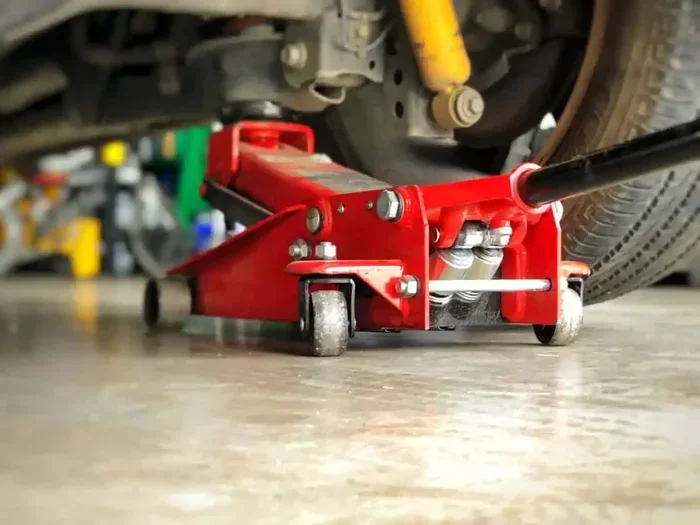
The hydraulic floor jack is the most popular type among DIY mechanics. It features a low-profile design and a wide base for stability. You slide it under the vehicle, pump the handle a few times, and the car rises smoothly. Hydraulic floor jacks come in various weight capacities, from 2 tons to 10 tons or more.
These jacks are ideal for car maintenance tasks like oil changes, brake repairs, and suspension work. They offer a wide range of height adjustment, which makes them versatile. Most hydraulic floor jacks also come with a jack stand receptacle on top for added safety.
Scissor Jack
The scissor jack is the small jack that comes with most new cars. It gets its name from the crossing metal arms that look like scissors. You turn a knob or wrench, and the arms extend or retract. Scissor jacks are compact and lightweight, making them easy to store in your trunk.
However, scissor jacks have limitations. They lift vehicles to a lower height than floor jacks. They also require more effort to operate. Many drivers keep a scissor jack in the car for emergencies but use a hydraulic floor jack for regular maintenance. They are perfect for quick tire changes on the roadside.
Bottle Jack
A bottle jack looks like a tall, cylindrical container. It gets its name from its shape. You pump the handle to raise the piston inside. Bottle jacks are very strong and compact. They are popular in automotive tools collections for lifting heavy vehicles like trucks and SUVs.
The main advantage of a bottle jack is its lifting power. It can handle loads that many other jack types cannot. The downside is its height. A bottle jack needs more ground clearance to fit under the vehicle. It also has a narrower base, which means you need to be extra careful about stability.
Mechanical Jack
A mechanical jack uses a screw or lever system instead of hydraulic fluid. You turn a handle or crank, and the screw lifts the vehicle. Mechanical jacks are simple and reliable. They do not rely on fluid, so they work in any position and in any temperature.
These jacks are common in older vehicles and classic cars. They are also popular as emergency equipment in emergency road kits. While they are not as fast as hydraulic options, they are durable and require very little maintenance. A mechanical jack is a great backup tool to have in your garage.
Low-Profile Jack
A low-profile jack is designed for vehicles with minimal ground clearance. Sports cars, sedans, and some modern vehicles sit very close to the road. A standard floor jack may not fit underneath them. A low-profile jack solves this problem by offering a smaller lifting height while still providing strong support.
If you own a low-slung vehicle, a low-profile jack is a smart investment. It allows you to perform car maintenance tasks without needing a vehicle lift in your garage. These jacks are widely available and come in both hydraulic and mechanical versions.
Car Ramp
While not technically a jack, a car ramp serves a similar purpose. You drive your vehicle onto the ramp, and it lifts the wheels off the ground. Car ramps are popular for oil changes and undercarriage inspections. They are very stable because the vehicle drives onto them rather than being lifted by a single point.
Car ramps are especially useful for vehicles with low ground clearance. They eliminate the risk of the jack slipping or tipping. If you do a lot of auto repair at home, consider keeping a set of car ramps in your garage alongside your car jack.
How to Use a Car Jack Safely
A car jack is a powerful tool, but it can be dangerous if used incorrectly. Thousands of injuries happen every year from improper jack use. Following safety guidelines is not optional. It is essential. Here is how to use a car jack safely and confidently.
Step-by-Step Guide to Using a Car Jack
Using a car jack properly is straightforward once you know the steps. Follow this guide for safe and effective lifting:
- Park on a flat, hard surface. Never use a car jack on grass, gravel, or a slope. The ground must be level and firm to prevent the jack from tipping.
- Engage the parking brake. This prevents the vehicle from rolling while you are underneath it. It is a simple step that makes a huge difference.
- Place wheel wedges behind the tires. Use bricks or wooden blocks to secure the wheels that are not being lifted. This adds an extra layer of safety.
- Locate the jack point on your vehicle. Check your owner’s manual for the correct vehicle support point. Placing the jack in the wrong spot can damage the car or cause it to slip.
- Position the jack under the jack point. Make sure the jack is centered and stable before you start lifting.
- Lift the vehicle slowly. Pump the handle or turn the crank steadily. Do not rush. Stop lifting once the vehicle is high enough for your task.
- Place a jack stand under the vehicle. Never work under a car supported only by a car jack. A jack stand provides secure, stable support.
- Lower the vehicle onto the jack stand. Carefully lower the car jack until the vehicle rests fully on the stand.
- Perform your work. Now you can safely do your tire change, auto repair, or maintenance task.
- Remove the jack stand and lower the vehicle. Once you are done, carefully remove the stand and lower the car back to the ground using the car jack.
The Importance of Jack Stands
A jack stand is a separate support tool that holds the vehicle in place once it is lifted. Think of it as a safety net. A car jack is designed to lift, not to hold a vehicle for extended periods. A jack stand is built to support the weight securely.
Never skip the jack stand. This is the number one safety rule for anyone working under a vehicle. A car jack can slip, leak, or fail. Without a jack stand, the entire weight of the vehicle could come crashing down. It is simply not worth the risk. Always use both tools together for car safety.
Quick Tips for Safe Jack Use
- Always check your jack for damage or leaks before each use.
- Use the jack on a clean, flat surface to prevent slipping.
- Never get under a vehicle supported only by a jack.
- Keep your emergency road kit stocked with a quality jack and jack stands.
- Store your jack in a dry place to prevent rust and maintain performance.
- Know your vehicle’s weight and choose a jack with a matching or higher capacity.
Common Mistakes People Make When Using a Car Jack
Even experienced car owners make mistakes with their car jack. These errors can lead to vehicle damage, personal injury, or worse. Let us look at the most common mistakes and how to avoid them.
Using the Wrong Jack Point
Every vehicle has designated vehicle support points. These are reinforced areas designed to handle the weight of the lifted vehicle. Placing the car jack on the wrong spot can crack the frame, damage the body, or cause the jack to slip. Always check your owner’s manual before lifting.
Skipping the Jack Stand
This mistake cannot be stressed enough. Some people lift the car with a car jack and immediately start working underneath. This is incredibly dangerous. A jack stand is not optional. It is a must-have piece of car equipment for anyone who works on their vehicle.
Using a Jack on Uneven Ground
Using a car jack on a slope or soft ground is a recipe for disaster. The jack can shift or sink, causing the vehicle to fall. Always find the flattest, hardest surface available. If you are on a road trip and the only option is gravel, place a flat board or sturdy plate under the jack for stability.
Overloading the Jack
Every car jack has a weight capacity. Exceeding this limit can cause the jack to fail. Check your vehicle’s weight and compare it to the jack’s rating. If you own a truck or SUV, you may need a heavier-duty model than what comes standard with passenger cars.
Neglecting Maintenance
A car jack needs regular care to function properly. Hydraulic jacks can leak fluid over time. Mechanical jacks can develop rust. Inspect your jack before each use. Clean it after use, and lubricate moving parts as recommended by the manufacturer. Proper maintenance extends the life of your automotive tools and keeps you safe.
Car Jack vs. Jack Stand: What Is the Difference?
People often confuse a car jack with a jack stand. While both are used in vehicle maintenance, they serve very different purposes. A car jack lifts the vehicle off the ground. A jack stand holds it in place once it is lifted.
Think of it this way. The car jack is the tool that does the lifting. The jack stand is the tool that keeps the vehicle at that height safely. You need both to work properly. Using only a car jack without a jack stand is like climbing a ladder without locking the rungs in place.
Some people try to save money by buying a cheap car jack and skipping the jack stand. This is a false economy. A jack stand costs relatively little compared to the protection it provides. Investing in quality car equipment including both a car jack and jack stands is one of the best decisions you can make as a car owner.
How to Choose the Right Car Jack for Your Needs
Choosing the right car jack depends on several factors. Your vehicle type, the kind of work you do, and your budget all play a role. Here is a simple guide to help you decide.
Consider Your Vehicle Type
A small sedan needs a different car jack than a heavy-duty truck. Check your vehicle’s weight and ground clearance before buying. A low-profile jack works well for sports cars and low-slung sedans. A hydraulic floor jack with a higher lifting capacity suits trucks and SUVs.
Think About How Often You Will Use It
If you only need a jack for occasional tire changes, a basic scissor jack might be enough. But if you do regular auto repair at home, a hydraulic floor jack will save you time and effort. The more you use it, the more value you get from a higher-quality model.
Check the Weight Capacity
Always choose a car jack rated for at least the weight of your vehicle. Most passenger cars weigh between 2,500 and 4,000 pounds. A 2-ton to 3-ton jack should handle most sedans and compact SUVs. Trucks and larger vehicles need 5-ton or higher capacity jacks.
Look for Quality Build and Safety Features
A good car jack should feel solid and well-built. Look for features like a wide base, smooth lifting mechanism, and a jack stand receptacle. Reading reviews from other car owners can also help you make an informed decision. Brands with a strong reputation in automotive tools are usually a safe bet.
Expert Insights on Car Jacks and Vehicle Maintenance
Professional mechanics agree that the car jack is one of the most underappreciated tools in a driver’s arsenal. Many people buy a car and forget about the jack until they need it for a flat tire. By then, they may not even know how to use it properly.
Experts recommend familiarizing yourself with your car jack before you actually need it. Practice lifting your vehicle in your driveway. Get comfortable with the process. This way, when a real emergency comes up, you will be calm and prepared. Keeping your emergency road kit complete with a car jack, jack stands, and a lug wrench is a habit every driver should build.
Mechanics also stress the importance of car safety. A car jack is only as good as the person using it. Follow all manufacturer guidelines, never cut corners on safety, and always double-check your setup before getting under the vehicle. These simple habits make a world of difference.
Key Takeaways
- A car jack is the tool you slide under a vehicle to lift it off the ground for maintenance or repairs.
- There are several types of car jacks, including hydraulic floor jacks, scissor jacks, bottle jacks, and mechanical jacks.
- Always use a jack stand alongside a car jack for safety. Never rely on a jack alone to hold a vehicle.
- Choosing the right jack depends on your vehicle type, the ground clearance, and the kind of work you need to do.
- Common mistakes include using a jack on uneven ground and skipping the jack stand, which can lead to serious injury.
- Regular maintenance of your car jack ensures it works reliably when you need it most.
- A car jack is a must-have in every emergency road kit for safe and confident roadside repairs.
Conclusion
So, what is the thing you slide under a car called? The answer is a car jack. This essential piece of car equipment makes it possible to lift your vehicle safely for tire changes, auto repair, and routine car maintenance. From hydraulic floor jacks to compact scissor jacks, there is a car jack for every need and every budget.
Understanding the different types of jacks and how to use them safely empowers you as a car owner. You do not need to be a mechanic to handle basic tasks like a tire change. With the right car jack, a jack stand, and a little knowledge, you can save time and money while staying safe.
Remember to always prioritize car safety. Use the correct jack points, never skip the jack stand, and maintain your equipment regularly. Keep a quality car jack in your emergency road kit, and you will be prepared for whatever the road throws at you. Invest in the right automotive tools, learn how to use them, and you will handle vehicle maintenance with confidence for years to come.
Frequently Asked Questions
What is the thing you slide under a car called?
The thing you slide under a car is called a car jack. It is a mechanical or hydraulic device designed to lift vehicles off the ground. Different types include hydraulic floor jacks, scissor jacks, and bottle jacks. Every car owner should know what a car jack is and how to use it safely.
Can I use a car jack without a jack stand?
No, you should never use a car jack without a jack stand. A car jack is designed to lift the vehicle, not hold it in place for extended periods. A jack stand provides stable support while you work underneath. Skipping the jack stand is one of the most dangerous mistakes you can make.
How much weight can a typical car jack lift?
Most standard car jacks for passenger vehicles can lift between 2 and 3 tons, which is roughly 4,000 to 6,000 pounds. Heavy-duty models for trucks and SUVs can lift 5 tons or more. Always check your vehicle’s weight and choose a car jack with a matching or higher capacity rating.
What is the difference between a hydraulic jack and a mechanical jack?
A hydraulic jack uses fluid pressure to lift the vehicle smoothly and quickly. A mechanical jack uses a screw or lever system and requires more manual effort. Hydraulic jacks are faster and easier to use, while mechanical jacks are simpler and more reliable in extreme conditions.
Where should I place the car jack when lifting my vehicle?
You should always place the car jack on a designated jack point specified in your vehicle’s owner manual. These points are reinforced areas of the frame designed to handle the lifting weight. Placing the jack anywhere else can damage the vehicle or cause it to slip, creating a serious safety hazard.
How often should I inspect my car jack?
You should inspect your car jack before every use. Check for leaks, rust, or damage to moving parts. For hydraulic jacks, look for fluid leaks around the seal. For mechanical jacks, check the screw and handle for wear. Regular inspection keeps your car jack working reliably and safely.