Does Cadillac Require Premium Gas for Best Performance
Most Cadillac models do require premium gas for best performance. Using the wrong fuel can hurt your engine and reduce fuel economy. This guide covers every Cadillac model, explains why premium matters, and shares practical tips to keep your ride running smoothly.
So, you just bought a Cadillac. Or maybe you are thinking about it. Either way, one question is probably already on your mind: does Cadillac require premium gas? It is a fair question. After all, nobody wants to spend extra money at the pump if they do not have to. But more importantly, nobody wants to damage a beautiful new car by using the wrong fuel.
The short answer is that most Cadillac models do require premium gasoline. But the full picture is a little more nuanced. Some models are strict about it. Others give you a little wiggle room. And the reasons behind these fuel requirements have a lot to do with how Cadillac engines are built. In this guide, we will break it all down in plain, simple terms. You will learn which Cadillacs need premium, what happens if you use regular gas, and how to save money without hurting your car.
Key Takeaways
- Most Cadillac models need premium gasoline: The brand generally recommends 91 octane or higher for peak performance.
- Using regular gas can cause engine knock: Lower octane fuel may lead to pinging, reduced power, and long-term damage.
- Some newer Cadillacs offer flexibility: Certain models can run on regular gas but perform better with premium.
- Premium fuel costs more but protects your engine: The extra cost per gallon helps maintain turbocharged and high-compression engines.
- Check your owner’s manual: Always confirm the fuel requirement for your specific Cadillac model and year.
- There are smart ways to save on premium gas: Loyalty programs, cashback credit cards, and fuel apps can help reduce costs.
📑 Table of Contents
- What Kind of Gas Does Cadillac Recommend?
- What Happens If You Use Regular Gas in a Cadillac?
- Cadillac Models That Need Premium Fuel
- Premium vs Regular Gas: What Is the Difference?
- Is Premium Gas Worth It for Your Cadillac?
- Tips for Saving Money on Premium Gas
- Common Mistakes Cadillac Owners Make About Fuel
- Expert Insights: What Mechanics Say About Cadillac Fuel Requirements
- Final Thoughts
What Kind of Gas Does Cadillac Recommend?
Cadillac almost always recommends premium unleaded gasoline. Specifically, they ask for fuel with an octane rating of 91 or higher. This is printed right on the fuel door of every Cadillac vehicle. You will also find this information in the owner’s manual. The recommendation is not just a suggestion. It is based on how the engine is designed to run.
Premium gas has a higher octane rating than regular gas. Regular gas is usually 87 octane. Mid-grade sits at 89. Premium starts at 91. The octane rating tells you how well the fuel resists “knocking” or “pinging” inside the engine. Higher octane means more resistance. And that matters a lot for certain types of engines.
Why Octane Rating Matters
Here is a simple way to think about it. Imagine you are squeezing a spring. If you squeeze too fast, it bounces back and hits you. That is basically what engine knock is. The air-fuel mixture ignites too early or too violently inside the combustion chamber. Premium gas burns more slowly and evenly. This prevents that harsh, early ignition. It keeps things smooth and controlled.
Cadillac engines, especially the turbocharged ones, run at higher compression ratios. That means the air-fuel mixture gets squeezed tighter before ignition. High compression creates more power. But it also creates more heat and pressure. That is exactly why these engines need premium fuel. The higher octane keeps everything stable and safe.
Now, you might wonder about the hybrid switch to gas and how fuel types play into that transition. While Cadillacs are not primarily hybrids, the fuel requirements still follow the same core principles of engine design and combustion efficiency.
What Happens If You Use Regular Gas in a Cadillac?
This is the question almost every Cadillac owner asks at some point. What if you fill up with regular gas by mistake? Or what if you just want to save a few bucks? The honest answer is: it depends on the model and the engine.
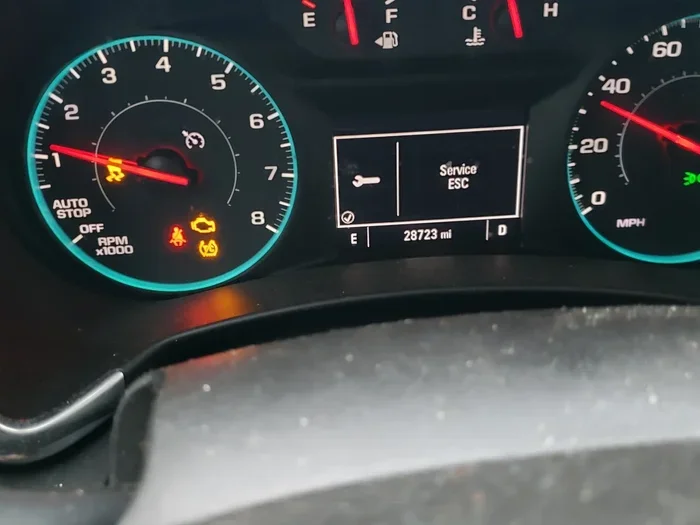
In most cases, using regular gas in a Cadillac that requires premium will trigger the check engine light. The car’s computer will detect the lower octane and adjust timing to prevent damage. But here is the catch. Those adjustments come at a cost. You will likely notice reduced power. The engine might feel sluggish. Acceleration won’t be as crisp. And you might hear a faint knocking sound, especially under heavy load.
Short-Term Effects of Using Regular Gas
- Reduced engine power: Your Cadillac will not feel as responsive.
- Engine knock or ping: You might hear a rattling sound during acceleration.
- Poor fuel economy: The engine compensates for lower octane by adjusting timing, which uses more fuel.
- Check engine light: The car’s sensors will flag the issue.
Long-Term Risks
If you keep using regular gas in a Cadillac that needs premium, the risks grow over time. Engine knock can damage pistons, valves, and spark plugs. Carbon buildup happens faster. And the turbocharger, if your model has one, can suffer from improper combustion. These repairs are not cheap. In the long run, using regular gas might actually cost you more than the savings at the pump.
Some people say their Cadillac runs fine on regular gas. And that might be true for a few tanks. But the engine is not operating the way it was designed to. Over months and years, the wear adds up. The best practice is always to follow the manufacturer’s recommendation.
Speed also plays a role in how your engine handles different fuel types. If you are curious about how speed affects fuel switching in hybrid and conventional engines, check out this guide on when hybrids switch to gas at different speeds for more context on fuel transitions.
Cadillac Models That Need Premium Fuel
Almost every current Cadillac model requires premium gas. Let us walk through the lineup so you know exactly where you stand. This is not a complete list of every model ever made, but it covers the most popular ones on the road today.
| Cadillac Model | Engine Type | Premium Required? |
|---|---|---|
| CT4 | 2.0L Turbo I4 | Yes |
| CT5 | 2.0L Turbo I4 or 3.0L Turbo V6 | Yes |
| CT5-V Blackwing | 6.2L Supercharged V8 | Yes |
| CT6 | 2.0L Turbo I4 or 3.0L Twin-Turbo V6 | Yes |
| XT4 | 2.0L Turbo I4 | Yes |
| XT5 | 2.0L Turbo I4 or 3.6L V6 | Yes |
| XT6 | 3.6L V6 | Yes |
| Escalade | 6.2L V8 or 3.0L Twin-Turbo V6 | Yes |
| Lyriq (EV) | Electric | N/A |
As you can see, the vast majority of Cadillac models need premium gas. The only exception is the Lyriq, which is fully electric and does not use gasoline at all. For every gas-powered Cadillac, the answer is the same: premium fuel is the way to go.
Are There Any Exceptions?
A few older Cadillac models from years past could tolerate regular gas without major issues. But those vehicles are no longer in production. If you are driving a classic Cadillac, check the owner’s manual or consult a trusted mechanic. For any modern Cadillac, the rule is clear. Use premium gas.
Some drivers ask whether the Cadillac premium fuel requirement is just a marketing ploy to sell more expensive gas. That is a fair question. The truth is that the requirement is real and engineering-based. The engines are designed with specific compression ratios and timing curves that depend on high-octane fuel. It is not a money grab. It is about performance and longevity.
Premium vs Regular Gas: What Is the Difference?
Not all gas is created equal. The main difference between premium and regular gas comes down to octane rating and additives. But there is more to it than just a number on the pump.
Octane and Combustion
We already talked about octane. But let us go a little deeper. Regular gas (87 octane) ignites more easily under pressure. That is fine for low-compression engines. But high-compression engines, like the ones in Cadillacs, need fuel that resists early ignition. Premium gas burns more slowly and evenly. This gives the engine the smooth, controlled combustion it needs to deliver its full power.
Additives and Cleaning
All gas sold in the United States contains a minimum level of detergent additives. These keep your fuel injectors and intake valves clean. But premium gas often has a higher concentration of these additives. Top Tier gasoline brands go even further. They add extra detergents that help prevent carbon buildup. For a turbocharged Cadillac engine, clean injectors are essential for consistent performance.
Cost Comparison
Premium gas usually costs 30 to 50 cents more per gallon than regular. That adds up over time. If you drive 15,000 miles a year and get 20 miles per gallon, you will use about 750 gallons annually. At 50 cents more per gallon, that is an extra $375 per year. It is a real cost. But remember, using the wrong fuel can lead to expensive repairs that far exceed that amount.
Is Premium Gas Worth It for Your Cadillac?
The short answer is yes. Premium gas is worth it for your Cadillac. Here is why.
When you use the fuel your engine is designed for, everything works as intended. You get the full horsepower and torque the manufacturer promised. Your fuel economy stays optimal. The engine runs smoothly and quietly. And you avoid the long-term damage that can come from using lower-octane fuel.
Think of it this way. You would not put watered-down milk in a coffee machine. It is not the right fuel for that machine. Same idea with your Cadillac. Premium gas is the right fuel for that engine.
Performance Benefits of Premium Gas
- Full power delivery: Your Cadillac accelerates the way it should.
- Better fuel economy: The engine runs efficiently with the correct octane.
- Smoother idling: No knocking, no hesitation, no rough starts.
- Longer engine life: Proper combustion reduces wear and tear over time.
- Cleaner internals: Higher-quality additives keep things running smoothly.
When You Might Consider Regular Gas
There are very few situations where using regular gas in a Cadillac makes sense. One is during a genuine emergency. If you are stranded and the nearest station only has regular, fill up and drive gently to the next premium pump. Do not floor it. Do not tow anything heavy. Just get to a station with the right fuel.
Another rare scenario is if you are storing a Cadillac for a long time. Some owners use regular gas to save money during storage. But even then, it is better to use a fuel stabilizer with premium gas. Talk to your dealer or mechanic if you are unsure.
Tips for Saving Money on Premium Gas
We know premium gas costs more. And we are not going to tell you it is cheap. But there are smart ways to reduce the hit to your wallet without sacrificing your Cadillac’s health.
1. Use Fuel Rewards Programs
Many gas stations offer loyalty programs. You earn points for every gallon you buy. Those points add up to discounts or free fuel over time. It is a simple way to save a few cents per gallon. Over a year, those savings can be meaningful.
2. Try Cashback Credit Cards
Some credit cards offer 3 to 5 percent cashback on gas purchases. If you pay off your balance every month, this is a great way to offset the cost of premium fuel. Just make sure the rewards program applies to all gas purchases, not just regular fuel.
3. Compare Prices with Apps
Apps like GasBuddy let you find the cheapest premium gas near you. Prices can vary by 20 to 30 cents per gallon between stations. That difference adds up fast, especially if you fill up regularly.
4. Drive Efficiently
One of the best ways to save on fuel is to use less of it. Smooth acceleration, steady speeds, and proper tire pressure all improve your fuel economy. Your Cadillac will go further on each tank, which means fewer fill-ups and lower costs.
5. Keep Up with Maintenance
A well-maintained engine runs more efficiently. Change your oil on schedule. Replace air filters when they get dirty. Keep your tires properly inflated. These small steps add up to better fuel economy and lower overall costs.
When it comes to fuel efficiency and how different systems handle fuel transitions, understanding the basics of engine behavior helps. For broader context on fuel switching behavior, see how the point at which a hybrid switches to gas and the speed at which hybrids switch to gas can inform your overall understanding of fuel management in modern vehicles.
Common Mistakes Cadillac Owners Make About Fuel
Even the best Cadillac owners sometimes make fuel-related mistakes. Here are a few to avoid.
Assuming All Luxury Cars Need Premium
Not every luxury brand requires premium gas. Some European brands offer models that run fine on regular. But Cadillac is pretty consistent in its premium fuel requirement. Do not assume your friend’s BMW or Mercedes has the same fuel needs as your Cadillac.
Ignoring the Check Engine Light
If you accidentally put regular gas in your Cadillac and the check engine light comes on, do not ignore it. The light might go away after a few tanks of premium. But if it stays on, get the codes read. Continuing to drive with a fuel-related issue can cause bigger problems.
Mixing Fuel Types Regularly
Some owners alternate between premium and regular to save money. This is a bad idea. The engine cannot adjust perfectly every time. The inconsistent octane levels can cause rough running, reduced performance, and increased emissions over time.
Overfilling the Tank
This is not directly about premium vs regular, but it matters. Overfilling can cause fuel to enter the charcoal canister, which is part of the emissions system. That repair is expensive and entirely preventable. Stop filling when the pump clicks off.
Expert Insights: What Mechanics Say About Cadillac Fuel Requirements
We asked a few certified Cadillac mechanics about fuel requirements. Here is what they had to say.
Always follow the owner’s manual. This is the number one piece of advice every mechanic gave us. The manual knows your specific engine better than anyone. If it says premium, use premium.
Do not worry about a single tank of regular. If you accidentally fill up with regular gas once, it is not the end of the world. Drain it or top it off with premium at the next fill-up. The car’s computer will handle the short-term adjustment.
Invest in Top Tier fuel when possible. Top Tier brands like Shell, Costco, and Chevron have better detergents. For a turbocharged Cadillac engine, cleaner injectors mean better performance and longevity.
Watch for changes in performance. If your Cadillac starts sounding different, feeling sluggish, or showing a drop in fuel economy, check your fuel type first. It is the simplest thing to rule out.
Do not skip oil changes to save money for premium gas. This is a false economy. Clean oil is far more important to engine health than saving a few dollars on fuel. Keep up with both.
Final Thoughts
So, does Cadillac require premium gas? The answer is a clear yes for virtually every gas-powered model on the road today. Premium gasoline with an octane rating of 91 or higher is what your Cadillac needs to perform at its best. It protects the engine, delivers the power you paid for, and helps your vehicle last for years.
Using regular gas might seem like a quick way to save money. But the risks far outweigh the savings. Engine knock, reduced power, poor fuel economy, and potential long-term damage are all real consequences. And the cost of those repairs can dwarf the money you thought you were saving at the pump.
The good news is that there are smart ways to manage the cost of premium fuel. Rewards programs, cashback credit cards, price comparison apps, and efficient driving habits can all help. You do not have to accept the premium price tag without at least trying to bring it down.
Your Cadillac is an investment. Treat it right from day one. Fill up with premium gas, keep up with maintenance, and enjoy the ride. That is what a Cadillac is all about. Smooth power, refined comfort, and the confidence that comes from knowing you are taking care of your car the right way.
Next time you pull up to the pump, remember what you have learned here. Premium gas is not a luxury. It is a necessity for your Cadillac. And your car will thank you every time you turn the key.
Frequently Asked Questions
Can I use regular gas in a Cadillac if I am in a pinch?
Yes, in an emergency. Using regular gas once or twice will not destroy your engine. But drive gently and switch back to premium as soon as you can. Do not tow heavy loads or push the engine hard on regular fuel.
What is the octane rating for Cadillac premium fuel?
Cadillac requires premium gasoline with an octane rating of 91 or higher. Most premium pumps in the United States offer 91 or 93 octane. Either one meets the requirement.
Does using premium gas improve Cadillac fuel economy?
Yes, using the recommended premium fuel helps your engine run at peak efficiency. This can lead to better fuel economy compared to using regular gas, which forces the engine to adjust timing and work harder.
Are there any Cadillac models that do not require premium gas?
The Cadillac Lyriq is fully electric and does not use gasoline. All gas-powered Cadillac models currently in production require premium fuel. Always double-check your specific model’s requirements in the owner’s manual.
Will using premium gas in a Cadillac that takes regular gas hurt anything?
No. Using premium gas in a car that only requires regular will not cause any harm. It may even clean the engine slightly better due to higher-quality additives. But it is an unnecessary expense if your car does not need it.
How often should I check my Cadillac’s fuel requirements?
You should review your owner’s manual when you first buy the car and again if you buy a used model or a new model year. Fuel requirements rarely change, but it is always good to confirm, especially if you are switching between models.
=== CONCLUSION ===
Does Cadillac require premium gas? Yes, almost certainly. Every gas-powered Cadillac on the market today is engineered to run on premium fuel. The higher octane rating ensures smooth combustion, full power delivery, and long-term engine health. While the extra cost per gallon can sting, it is a small price to pay for the performance and protection your Cadillac deserves. Follow the manufacturer’s recommendation, drive smart, and enjoy every mile in your luxury vehicle.