How to Measure Positioning for a Stronger Brand Strategy
Measuring your brand positioning helps you understand how customers see your automotive business compared to competitors. This guide covers practical methods, key metrics, and real-world examples to track and improve your brand strategy. You will learn how to use perceptual maps, customer surveys, and digital analytics to make smarter branding decisions.
In the automotive world, your brand is more than a logo or a tagline. It is the feeling a customer gets when they think about your cars, your service, and your reputation. But how do you know if that feeling is working in your favor? How to Measure Positioning gives you the answer. When you measure your brand positioning, you uncover exactly where you stand in the minds of buyers compared to your rivals.
This matters more than ever. The automotive market is crowded. New electric vehicle brands appear every year. Legacy manufacturers push harder into tech and sustainability. Customers have more choices than ever before. Without a clear sense of your brand positioning, you risk blending into the background. You lose the chance to stand out. Measuring positioning gives you the data you need to make confident, strategic decisions. It tells you what is working, what is not, and where you should focus next.
In this guide, we walk through everything you need to know about measuring brand positioning in the automotive industry. We cover the key metrics, practical tools, and real-world methods you can use right away. Whether you run a dealership, manage a marketing team, or lead a car brand, this article gives you a clear roadmap. You will learn how to build a positioning strategy backed by real numbers and customer insights.
Key Takeaways
- Brand positioning measurement is essential: Knowing how your brand ranks in customers’ minds gives you a clear edge in the automotive market.
- Use multiple metrics together: No single tool tells the full story. Combine surveys, analytics, and competitive analysis for the best results.
- Perceptual maps reveal gaps: These visual tools show where your brand sits compared to rivals and where opportunities exist.
- Customer perception drives decisions: Measuring how buyers feel about your brand directly impacts loyalty, sales, and long-term growth.
- Track position over time: Positioning is not static. Regular measurement helps you spot shifts early and adjust your strategy.
- Avoid common mistakes: Relying on vanity metrics or ignoring competitor moves can weaken your brand strategy.
- Data leads to action: The real value comes from using insights to refine your messaging, targeting, and brand identity.
📑 Table of Contents
- What Is Brand Positioning and Why Should You Measure It?
- Key Metrics to Measure Positioning
- How to Create a Positioning Map for Your Brand
- Measuring Brand Perception in the Automotive Market
- Tools and Methods for Tracking Positioning Over Time
- Common Mistakes When Measuring Brand Positioning
- How to Improve Your Positioning Based on What You Measure
- Conclusion
What Is Brand Positioning and Why Should You Measure It?
Defining Brand Positioning in the Automotive Industry
Brand positioning is the place your brand occupies in the customer’s mind. It is the reason someone chooses your car over another. Maybe your brand stands for luxury and performance. Maybe it stands for affordability and reliability. Either way, that position exists in the minds of buyers. And it can shift based on what competitors do, what trends emerge, and how you market yourself.
In the automotive sector, positioning often revolves around a few core themes. These include price range, quality perception, innovation, sustainability, and lifestyle fit. A brand like Tesla positions around cutting-edge technology and electric performance. A brand like Toyota positions around reliability and value. Both are strong positions, but they target very different buyers. Your job is to define your position clearly and then measure whether customers see you that way.
Why Measuring Positioning Matters
You cannot improve what you do not measure. This simple truth applies directly to brand positioning. If you do not track how customers perceive your brand, you are flying blind. You might think you are the go-to for affordable family cars, but your audience may see you as a luxury brand. That gap between your intended position and customer perception is dangerous.
Measuring your position helps you in several key ways:
- Spot competitive gaps: You see where competitors are weak and where you can fill a need.
- Align marketing efforts: Your campaigns hit harder when they reinforce your actual position.
- Boost customer loyalty: When buyers feel your brand matches their needs, they stay loyal.
- Guide product development: Clear positioning tells engineers and designers what to focus on.
- Increase market share: A well-measured and refined position attracts new customer segments.
Ultimately, measuring positioning turns guesswork into strategy. It gives you a foundation for every branding decision you make.
Key Metrics to Measure Positioning
Brand Awareness Metrics
The first step in how to measure positioning is understanding how many people know your brand. Brand awareness is the foundation of everything else. If nobody knows you exist, your position does not matter. In the automotive space, awareness can be measured through several channels.
Start with search volume data. Tools like Google Trends and SEMrush show how often people search for your brand name. High search volume usually means strong awareness. Next, look at social media reach. How many people see your posts? How many follow your brand pages? These numbers give you a baseline for your visibility.
You should also track brand recall surveys. These ask people to name car brands in a specific category without any prompts. If your brand comes up often, your awareness is solid. If it does not, you may need to invest more in visibility campaigns.
Brand Perception and Sentiment Analysis
Awareness gets people to notice you. Perception determines whether they like what they see. Brand perception is the collection of beliefs, feelings, and associations customers have about your brand. Measuring it is a core part of measuring brand positioning.
Sentiment analysis is one of the most powerful tools for this. It uses natural language processing to scan reviews, social media comments, and forum discussions. The tool categorizes each mention as positive, negative, or neutral. Over time, you build a clear picture of how people feel about your brand.
For automotive brands, common perception themes include:
- Quality and reliability: Do customers trust your vehicles to last?
- Design and style: Is your brand seen as modern, classic, or sporty?
- Customer service: How do buyers rate their experience at dealerships?
- Value for money: Do customers feel they get a fair deal?
- Innovation: Is your brand seen as cutting-edge or outdated?
Tracking these themes over time gives you a living snapshot of your brand positioning in the marketplace.
Customer Loyalty and Retention Rates
Loyal customers are the strongest signal of a well-positioned brand. When buyers return to your brand for their next purchase, it means your position resonates with them. In the automotive industry, customer retention rate is a key positioning metric.
Calculate your retention rate by dividing the number of repeat customers by the total number of customers in a given period. A high rate suggests your positioning is clear and compelling. A low rate may mean your brand message is unclear or your competitors offer a stronger value proposition.
Net Promoter Score, or NPS, is another useful metric. It asks customers one simple question: “How likely are you to recommend our brand to a friend?” Scores range from -100 to 100. Automotive brands with strong positioning typically see NPS scores above 50. Anything below 30 signals a need to revisit your positioning strategy.
Market Share and Competitive Benchmarks
Your market share tells you what percentage of total industry sales your brand captures. It is a direct measure of your competitive strength. When your market share grows, your positioning is likely working. When it shrinks, something needs to change.
But market share alone does not tell the full story. You need competitive benchmarks. Compare your share to top rivals in your segment. If a competitor with a similar price point has double your share, their positioning may be stronger. Use these benchmarks to identify where you need to improve or differentiate.
How to Create a Positioning Map for Your Brand
What Is a Perceptual Map?
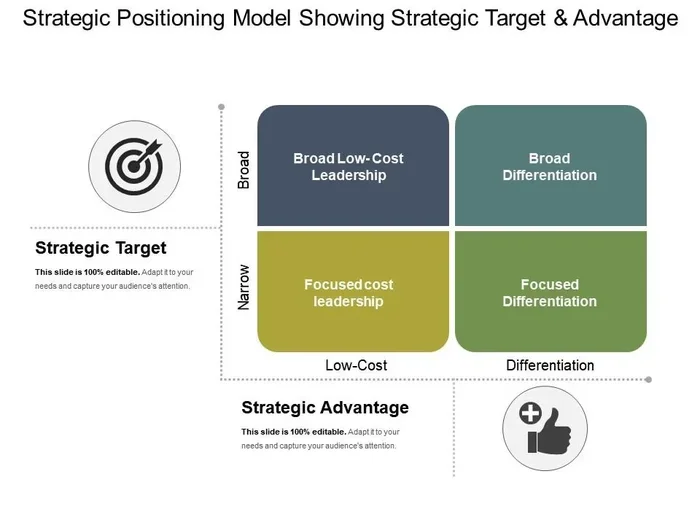
A perceptual map is one of the most visual and effective tools for how to measure positioning. It plots brands on a two-dimensional grid based on two key attributes that matter to your target audience. For example, you might plot brands on the axes of “Price” (low to high) and “Performance” (basic to premium).
Each dot on the map represents a brand. The closer two dots are, the more similar customers perceive those brands to be. The farther apart they are, the more differentiated they appear. This simple visual gives you instant clarity on where your brand sits relative to competitors.
Steps to Build Your Own Positioning Map
Building a perceptual map is straightforward. Follow these steps to get started:
- Choose two key attributes: Pick dimensions that matter most to your target buyers. In automotive, common pairs include price vs. quality, luxury vs. practicality, and innovation vs. tradition.
- Gather customer data: Run surveys asking customers to rate each brand (including yours) on those two attributes. Use a scale of 1 to 10 for consistency.
- Plot the brands: Place each brand on the grid based on average customer ratings. Label each point clearly.
- Analyze the gaps: Look for empty spaces on the map. These represent positioning opportunities your brand could fill.
- Revisit regularly: Customer perceptions shift over time. Update your map every quarter or twice a year to stay current.
Example: Automotive Positioning Map
Imagine a map with “Affordability” on the X-axis and “Luxury” on the Y-axis. Toyota and Honda sit in the affordable, practical quadrant. Mercedes-Benz and BMW sit in the expensive, luxury quadrant. If your brand lands in the middle with no clear identity, that is a problem. Customers do not know what to expect from you. This is exactly the kind of insight a positioning map reveals, and it is why measuring brand positioning with visual tools is so valuable.
Measuring Brand Perception in the Automotive Market
Customer Surveys and Focus Groups
Direct feedback from customers is gold when you are trying to understand your brand positioning. Surveys let you ask targeted questions about how buyers see your brand. You can measure attributes like trustworthiness, innovation, value, and style.
Keep your survey questions simple and specific. Instead of asking, “How do you feel about our brand?” ask, “How would you describe our brand in three words?” This gives you concrete data to analyze. Focus groups go a step deeper. They let you observe real reactions and hear the language customers use to describe your brand. In the automotive industry, the words customers choose matter a lot. If they call your brand “boring” or “dated,” that is a clear signal your positioning needs work.
Social Media and Online Review Analysis
Today, customers share their opinions publicly and constantly. Social media platforms and review sites like Yelp, Google Reviews, and Edmunds are rich sources of brand perception data. Monitoring these channels gives you real-time insight into how your position is perceived.
Set up alerts for your brand name and key competitors. Track mentions, hashtags, and review scores over time. Look for patterns. Are customers consistently praising your safety features but complaining about your infotainment system? That tells you exactly where to focus your positioning strategy.
Website and Digital Behavior Metrics
Your website tells a story about how people find and interact with your brand. Analytics tools like Google Analytics reveal important clues about your market positioning.
Look at these key digital metrics:
- Search terms: What keywords bring people to your site? If they search for “affordable SUVs,” that confirms your position in that segment.
- Bounce rate: A high bounce rate may mean your site does not match visitor expectations set by your brand promise.
- Time on page: Longer visits suggest people are engaged with your content and interested in what you offer.
- Conversion rate: This measures how many visitors take a desired action, like booking a test drive or requesting a quote.
These metrics help you verify whether your digital presence supports your intended brand positioning. If there is a mismatch, you need to align your online experience with your brand promise.
Tools and Methods for Tracking Positioning Over Time
Brand Tracking Studies
A brand tracking study is a long-term research program that measures your brand’s performance at regular intervals. It tracks awareness, perception, loyalty, and preference over months or years. For automotive brands, this is one of the most reliable ways to monitor how to measure positioning in a changing market.
Tracking studies typically involve surveying the same group of consumers multiple times a year. This longitudinal approach reveals trends that one-time surveys miss. You can see whether your position is strengthening, weakening, or staying the same. You can also detect when a competitor’s move impacts your standing.
Competitive Analysis Frameworks
You cannot measure your own position without understanding your competitors. Several frameworks help with this:
- SWOT Analysis: Identifies your brand’s Strengths, Weaknesses, Opportunities, and Threats relative to rivals.
- Brand Positioning Canvas: A visual tool that maps your target audience, key benefits, and differentiation points.
- Benchmarking: Compares your metrics directly against top competitors in your segment.
Using these frameworks together gives you a 360-degree view of your competitive positioning in the automotive market.
AI and Automation Tools for Brand Monitoring
Technology has made measuring brand positioning faster and more accurate. AI-powered tools can scan millions of data points across the web in minutes. They identify trends, sentiment shifts, and emerging conversations that would take humans weeks to find manually.
Popular tools for automotive brands include Brandwatch, Sprout Social, and Meltwater. These platforms aggregate data from social media, news sites, forums, and review platforms. They generate dashboards and reports that make it easy to track your position over time. Investing in the right tools pays for itself quickly by giving you actionable insights instead of raw data.
Common Mistakes When Measuring Brand Positioning
Relying on Vanity Metrics
One of the biggest traps in measuring positioning is focusing on vanity metrics. These are numbers that look impressive but do not actually reflect your brand’s strength. Social media follower counts and website traffic are common examples. A brand can have millions of followers and still be perceived as irrelevant or out of touch.
Instead, focus on metrics that directly relate to your brand positioning. These include customer sentiment, brand recall, retention rates, and market share. These numbers tell you whether your brand is resonating, not just whether it is visible.
Ignoring Competitor Moves
Positioning does not exist in a vacuum. Your position is defined relative to your competitors. If you measure your brand in isolation, you miss critical context. A competitor might launch a new campaign that shifts customer perceptions. Or a new market entrant might redefine what customers expect from a certain vehicle type.
Always benchmark your metrics against at least two or three key competitors. This gives you the competitive lens needed to interpret your own data accurately.
Measuring Only Once
Brand positioning is not a one-time project. It is an ongoing process. Markets evolve. Customer preferences shift. New technologies disrupt established segments. Measuring your position once and then forgetting about it is a recipe for falling behind.
Set a regular cadence for your measurement activities. Monthly social listening, quarterly surveys, and annual tracking studies create a rhythm that keeps you informed and agile.
How to Improve Your Positioning Based on What You Measure
Turning Data into Action
Data without action is just information. The real power of how to measure positioning lies in what you do with the results. Once you identify gaps, weaknesses, or opportunities, you need a plan to act on them.
Start by prioritizing the findings that have the biggest impact. If your perception data shows customers see your brand as reliable but not innovative, focus your messaging and product development on innovation. If your perceptual map shows you overlap too much with a competitor, look for a whitespace opportunity where you can own a unique position.
Refining Your Brand Messaging
Your messaging should reinforce your intended brand positioning. Every piece of content, from your website copy to your social media posts, should echo the same core message. Use the insights from your measurement efforts to sharpen that message. Make sure it aligns with how customers actually perceive you.
In the automotive industry, messaging often revolves around a few key pillars. These might include safety, performance, sustainability, technology, or value. Choose the pillars that match your data, and build all your communications around them.
Testing and Iterating Your Strategy
Once you make changes, measure again. A/B test new ad copy, survey customers about updated messaging, and track whether sentiment improves. Measuring positioning is a cycle, not a one-time event. Each round of measurement gives you better data and sharper insights. Over time, this iterative process builds a stronger and more resilient brand.
Think of it like tuning a car engine. You make small adjustments, test the performance, and adjust again. The result is a finely tuned brand that connects with your audience and outperforms the competition.
Conclusion
How to Measure Positioning is not just a research exercise. It is a strategic discipline that shapes every part of your automotive brand. From awareness and perception to loyalty and market share, the metrics you track determine how well your brand performs in a competitive market. By using perceptual maps, customer surveys, digital analytics, and competitive benchmarks, you gain a clear picture of where your brand stands and where it needs to go.
Avoid the common traps of vanity metrics, one-time measurement, and ignoring competitors. Instead, commit to an ongoing process of tracking, analyzing, and refining your brand positioning. The brands that win in the automotive industry are the ones that listen to their customers, watch their competitors, and continuously adjust their strategy based on real data.
Start measuring your position today. The insights you gain will sharpen your messaging, strengthen your customer relationships, and set your brand on a path to lasting success in the automotive market.
Frequently Asked Questions
What does brand positioning mean in the automotive industry?
Brand positioning is the unique place your automotive brand holds in a customer’s mind compared to competitors. It is shaped by factors like price, quality, innovation, and lifestyle fit. A strong position helps buyers instantly understand what your brand stands for and why they should choose it over alternatives in a crowded market.
How often should I measure my brand positioning?
You should measure your brand positioning at least quarterly for digital metrics and annually for comprehensive surveys and tracking studies. The automotive market changes quickly with new models, tech trends, and consumer preferences. Regular measurement helps you catch shifts early and adjust your positioning strategy before your brand falls behind.
What is a perceptual map and how does it help with positioning?
A perceptual map is a visual tool that plots brands on a grid based on two attributes customers care about, such as price and luxury or innovation and reliability. It helps you see where your brand sits compared to rivals and identify empty spaces or gaps in the market. This makes it one of the most practical methods for measuring brand positioning visually and intuitively.
Can small automotive dealerships benefit from measuring positioning?
Absolutely. Even small dealerships can use brand positioning measurement to understand how local customers perceive them. Simple surveys, online review tracking, and Google Analytics can reveal valuable insights. These tools help independent dealers differentiate themselves from big chains and build a loyal local customer base.
What is the difference between brand awareness and brand positioning?
Brand awareness is about how many people know your brand exists. Brand positioning goes deeper. It is about how people perceive your brand and where it stands relative to competitors. You can have high awareness but weak positioning if customers do not connect with your brand’s identity or value proposition in a meaningful way.
What tools are best for tracking automotive brand positioning?
The best tools depend on your budget and goals. Google Analytics and social listening platforms like Brandwatch help track digital perception. Survey tools like SurveyMonkey or Typeform are great for collecting direct customer feedback. For competitive analysis, SEMrush and similar SEO tools provide benchmarks. Combining several tools gives you the most complete picture of your market positioning.