How Bugattis Quad-Turbo Technology Revolutionizes Performance
Bugatti’s quad-turbo technology uses four turbochargers to force extra air into the engine, creating massive horsepower and torque. This system powers iconic models like the Bugatti Veyron and Bugatti Chiron, delivering acceleration and top speed that redefine performance. Understanding how quad-turbo works helps car enthusiasts appreciate the engineering brilliance behind these machines.
Bugatti quad-turbo technology has changed the automotive world forever. This incredible system pushes engines to levels that seemed impossible just a few decades ago. If you have ever wondered what makes Bugatti cars so insanely fast, the answer lies in how they force air into the engine.
In this article, we will break down everything you need to know about Bugatti quad-turbo technology. You will learn how the system works, why four turbochargers make such a big difference, and what this means for real-world driving. We will also look at maintenance tips and compare quad-turbo setups to other forced induction methods.
Whether you are a car enthusiast or just curious about extreme engineering, this guide has something for you. Let us dive into the world of Bugatti quad-turbo technology and see what makes it so special.
Bugatti quad-turbo technology is more than just a marketing term. It represents decades of engineering breakthroughs that have redefined what a car engine can achieve. From the legendary Bugatti Veyron to the modern Bugatti Chiron, quad-turbo systems have been at the heart of every record-breaking machine.
Key Takeaways
- Quad-turbo technology uses four turbochargers: This setup delivers more air and power than single or twin-turbo systems.
- The W16 engine is the heart of Bugatti’s power: It works hand-in-hand with the quad-turbo system for maximum performance.
- Bugatti quad-turbo technology improves acceleration and top speed: Real-world numbers prove this system outperforms competitors.
- Regular maintenance is essential: Turbocharged engines need proper care to stay reliable and perform at their best.
- Quad-turbo systems are the future of forced induction: More automakers are adopting multi-turbo setups for better efficiency and power.
📑 Table of Contents
What Is Quad-Turbo Technology?
The Basics of Forced Induction
To understand quad-turbo technology, you first need to understand forced induction. A normal engine breathes air on its own. It pulls in air through the intake, mixes it with fuel, and burns the mixture to create power. But there is a limit to how much air a naturally aspirated engine can take in.
Forced induction solves this problem. It uses turbochargers or superchargers to push extra air into the engine. More air means more fuel can burn at once. More burning means more power. This is the basic principle behind every turbocharged car on the road today.
A single turbocharger is the most common setup. It uses one turbine driven by exhaust gases to compress air and feed it into the engine. But there is a problem. At low speeds, the turbine does not spin fast enough to produce much boost. This creates a delay known as turbo lag. Drivers feel this as a pause between pressing the pedal and feeling the power.
Bugatti quad-turbo technology solves the lag problem completely. By using four turbochargers, the system can deliver power across the entire engine performance range. Small turbos handle low speeds. Large turbos take over at high speeds. The result is smooth, instant power delivery no matter the acceleration demand.
Why Four Turbochargers Make a Huge Difference
You might wonder why anyone would need four turbochargers. The answer comes down to combustion efficiency. A bigger engine can burn more fuel and make more power. But engineers found a smarter way. They can use smaller turbos that spool up quickly, paired with larger turbos for top-end power.
In a quad-turbo setup, the four turbochargers work in stages. Two turbos handle the lower engine speed range. They spin up fast and eliminate lag. The other two turbos activate at higher speeds to maintain strong torque and horsepower all the way to the redline.
This staged approach means the engine never runs out of breath. Drivers feel smooth, consistent power from idle to maximum top speed. It is this seamless delivery that sets Bugatti quad-turbo technology apart from everything else on the market.
How Bugatti’s Quad-Turbo System Works
The Layout and Configuration
Bugatti does not just bolt four random turbos onto an engine. Every detail of the quad-turbo system is carefully designed. The turbochargers are arranged in a specific pattern to balance exhaust flow and air delivery.
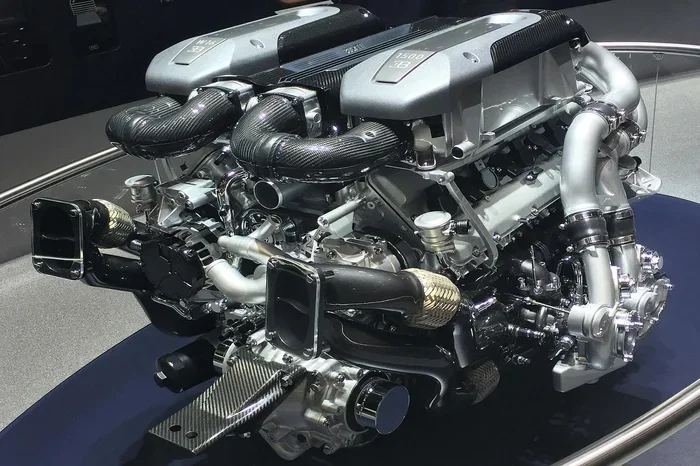
In the Bugatti W16 engine, the four turbos are split into two pairs. Each pair feeds one bank of cylinders. This V-shaped arrangement keeps things compact and balanced. It also allows for shorter exhaust paths, which means the turbos spool up faster.
The air intake system is equally important. Cold air is denser and carries more oxygen. Bugatti uses large intercoolers to chill the compressed air before it enters the engine. This process, called thermal management, ensures the engine stays cool even under extreme engine performance demands.
Managing Air and Heat
One of the biggest challenges with any turbocharged engine is heat. When air is compressed by a turbocharger, it gets hot. Hot air is less dense, which means it carries less oxygen. This reduces power and can damage the engine over time.
Bugatti solves this with advanced intercooler systems. These massive heat exchangers cool the compressed air before it reaches the engine. The result is denser, cooler air that burns more efficiently. This directly improves combustion efficiency and overall engine performance.
The exhaust system also plays a key role. Each turbocharger is fed by a carefully tuned exhaust manifold. This ensures exhaust gases flow smoothly and evenly to all four turbos. Proper exhaust system design reduces back pressure and helps the turbos respond faster.
The Role of Variable Geometry
Some modern quad-turbo systems use variable geometry turbochargers. These turbos have adjustable vanes that change the airflow angle. At low speeds, the vanes narrow to speed up the turbine. At high speeds, they widen to prevent over-boosting.
Bugatti has explored this technology in its latest models. Variable geometry allows for even more precise control over power delivery. It means the engine can produce the right amount of boost at exactly the right moment. This level of precision is what makes Bugatti quad-turbo technology truly world-class.
The W16 Engine and Quad-Turbo Synergy
Power Meets Precision
The W16 engine is the beating heart of every Bugatti. This 16-cylinder engine is unlike anything else in production cars. It combines two V8 banks into a single massive powerplant. With four turbochargers attached, the W16 becomes a force of nature.
The Bugatti Veyron was the first car to bring this combination to the public. It produced over 1,000 horsepower and could reach speeds above 250 mph. The Bugatti Chiron took things even further. Its quad-turbo W16 engine produces 1,479 horsepower and 1,180 pound-feet of torque.
What makes this pairing so effective is balance. The W16 engine is naturally smooth thanks to its 16 cylinders. Adding four turbochargers fills in the power gaps that smaller engines struggle with. The result is an engine that feels effortless no matter the speed.
Cooling and Thermal Management
Generating nearly 1,500 horsepower creates an enormous amount of heat. Bugatti has developed sophisticated cooling systems to handle this thermal load. The engine uses multiple coolant circuits, large radiators, and dedicated oil coolers for the turbochargers themselves.
Thermal management is not just about preventing overheating. It is about maintaining consistent engine performance over long periods. When the engine stays at the right temperature, the turbos produce steady boost pressure. This means the driver gets reliable power every time they hit the accelerator.
The engine management system also plays a crucial role. Modern Bugatti models use advanced computers to monitor every sensor in real time. The system adjusts fuel injection, ignition timing, and turbo boost pressure thousands of times per second. This level of control keeps the quad-turbo W16 running at peak efficiency.
Acceleration and Top Speed
The numbers speak for themselves. The Bugatti Chiron can accelerate from 0 to 60 mph in just 2.3 seconds. It reaches a top speed of 261 mph in its standard form. The Super Sport version pushes that even further to 273 mph.
These incredible figures would be impossible without quad-turbo technology. The four turbochargers ensure the engine has massive torque available from low RPMs. This means the car launches hard and stays fast through every gear change.
In real-world driving, the difference is immediately noticeable. There is no hesitation, no waiting for the turbos to spool. The power arrives the instant you demand it. This is what makes Bugatti quad-turbo technology so revolutionary. It removes every barrier between the driver and raw speed.
Comparing Turbocharger Setups
Single vs Twin vs Quad-Turbo
Not all turbocharged engines are created equal. Different setups offer different trade-offs in power, response, and complexity. Here is how the most common configurations compare:
| Feature | Single Turbo | Twin Turbo | Quad Turbo |
|---|---|---|---|
| Number of Turbos | 1 | 2 | 4 |
| Power Potential | Moderate | High | Extreme |
| Turbo Lag | High at low RPM | Moderate | Very Low |
| Complexity | Low | Medium | High |
| Cost | Low | Medium | Very High |
| Best For | Everyday driving | Sport performance | Ultimate performance |
Single turbo setups are the simplest and most affordable. They work well for daily drivers and modest performance cars. However, they struggle with power delivery at low engine speeds. The large turbo needed for high-end power takes time to spool up.
Twin turbo systems split the work between two turbos. This reduces lag compared to a single setup. Many modern sports cars use twin turbos, including BMW, Mercedes-AMG, and Porsche models. They offer a great balance of response and power.
Quad-turbo technology takes things to the extreme. Four turbos mean four times the air delivery potential. The system eliminates turbo lag almost entirely. It also allows engineers to tune each turbo for a specific engine speed range. This is why Bugatti uses quad-turbo setups for its hypercars.
Why Bugatti Chose Four Turbos Over Other Options
Bugatti could have used a twin-turbo setup for the W16 engine. In fact, many manufacturers do exactly that with large V8 and V10 engines. So why four turbos?
The answer is scale. The W16 engine is massive, with a displacement of 8.0 liters. A single turbo or even a twin-turbo setup would struggle to feed enough air to all 16 cylinders at once. Four turbos allow each pair of cylinders to get dedicated air supply.
This means better combustion efficiency across the entire RPM range. Each turbo can be sized specifically for its workload. The result is an engine that produces incredible power without sacrificing responsiveness or reliability.
Maintaining and Looking After Your Quad-Turbo Engine
Common Mistakes to Avoid
Owning a car with quad-turbo technology comes with responsibilities. These engines are complex and operate under extreme conditions. Making avoidable mistakes can lead to costly repairs or reduced performance.
- Skipping oil changes: Turbocharged engines need fresh oil more frequently. Dirty oil can clog turbo bearings and reduce engine performance.
- Ignoring coolant levels: The cooling system works overtime in a quad-turbo setup. Low coolant can cause overheating and serious damage.
- Shutting off the engine immediately after hard driving: The turbos are extremely hot. Letting the engine idle for a minute allows oil to cool the bearings before shutdown.
- Using low-quality fuel: High-compression, turbocharged engines need premium fuel. Lower octane fuel can cause knocking and reduce power delivery.
- Neglecting the intercooler: A clogged intercooler reduces air intake efficiency and hurts overall performance.
Quick Maintenance Tips
Keeping your quad-turbo engine in top shape does not have to be complicated. Follow these simple tips and your Bugatti quad-turbo technology will reward you with years of reliable performance:
- Change your oil every 5,000 to 7,500 miles using high-quality synthetic oil.
- Check coolant levels weekly and top up with the manufacturer-recommended fluid.
- Inspect the exhaust system for leaks or damage during regular service visits.
- Replace air filters on schedule to ensure clean air intake for the turbos.
- Let the engine warm up gently before pushing it to high speeds.
- Have the turbochargers inspected annually by a qualified technician.
- Monitor boost pressure readings through the onboard diagnostics system.
When to Seek Professional Help
Some signs that your quad-turbo system needs professional attention include unusual whining noises from the turbos, a drop in horsepower or torque, excessive smoke from the exhaust, or warning lights on the dashboard. Do not ignore these symptoms. Early diagnosis can prevent expensive repairs down the road.
Always take your vehicle to a technician who has experience with turbocharged engines. General mechanics may not have the specialized tools or knowledge needed to properly service Bugatti quad-turbo technology. Investing in expert care pays off in long-term reliability and performance.
The Future of Quad-Turbo Technology
What’s Next for Bugatti and Beyond
The automotive industry is changing fast. Electrification is reshaping how we think about engine performance. But quad-turbo technology is far from obsolete. In fact, it is evolving alongside new technologies to create even more impressive results.
Bugatti has already begun exploring hybrid powertrains that combine electric motors with quad-turbo engines. The Bugatti Chiron Super Sport 300+ proved that combustion engines still have incredible potential. Adding electric assist could make these machines even faster while improving efficiency.
Other manufacturers are also embracing multi-turbo setups. Porsche uses twin-turbo systems in its 911 models. Mercedes-AMG has moved to quad-turbo configurations in its flagship sedans. This trend shows that quad-turbo technology is becoming more accessible beyond just hypercars.
Advances in Turbo Design and Materials
New materials are making turbochargers lighter and more durable. Ceramic ball bearings reduce friction and allow turbos to spin faster. Advanced coatings help turbos withstand higher temperatures. These innovations mean future quad-turbo systems will be even more responsive and efficient.
Engine management software is also advancing rapidly. Artificial intelligence and machine learning could soon optimize turbo boost in real time based on driving conditions, fuel quality, and even road surface. The possibilities for Bugatti quad-turbo technology are truly exciting.
One thing is certain: the pursuit of speed and performance will never stop. Quad-turbo technology represents one of the most impressive achievements in automotive history. And with continued innovation, the next generation of turbocharged engines will push boundaries we can barely imagine today.
Conclusion
Bugatti quad-turbo technology has revolutionized the way we think about car performance. From the first W16-powered Bugatti Veyron to the current Bugatti Chiron, quad-turbo systems have delivered mind-blowing numbers that were once thought impossible. The combination of four turbochargers, a massive W16 engine, and advanced thermal management creates a driving experience like nothing else on Earth.
This technology is not just about raw speed. It is about power delivery, efficiency, and engineering excellence. Every component of the quad-turbo system works together in perfect harmony to give drivers confidence and control at any speed. Whether you are cruising on the highway or pushing the car to its top speed on a track, the system delivers exactly what you need.
If you own a Bugatti or are considering one, understanding your quad-turbo technology is essential. Proper maintenance, smart driving habits, and regular professional service will keep your engine running at its best for years to come. The future of Bugatti quad-turbo technology is bright, and it will continue to shape the automotive world for generations to come.
Embrace the power, respect the engineering, and enjoy every moment behind the wheel of a machine built with quad-turbo technology. These cars are more than transportation. They are rolling monuments to human ingenuity and the relentless pursuit of perfection.
Frequently Asked Questions
What makes Bugatti’s quad-turbo technology different from other turbo systems?
Bugatti’s quad-turbo system uses four turbochargers instead of one or two. This staged approach eliminates turbo lag and delivers smooth power across the entire RPM range. The W16 engine paired with four turbos produces over 1,400 horsepower, which no single or twin-turbo setup can match.
How often should I maintain the turbochargers in my Bugatti?
You should have the turbochargers inspected annually by a qualified technician. Oil changes should happen every 5,000 to 7,500 miles using high-quality synthetic oil. Regular maintenance prevents buildup and keeps the quad-turbo system performing at its best.
Can quad-turbo technology be added to any car engine?
Not practically. Quad-turbo systems require a large engine with enough cylinders to benefit from four turbos. The W16 engine in Bugatti cars is specifically designed for this setup. Smaller engines can use single or twin-turbo configurations more effectively.
Does quad-turbo technology improve fuel efficiency?
Yes, to a degree. By using smaller turbos that spool up quickly, Bugatti quad-turbo technology reduces the need for excessive boost pressure. This improves combustion efficiency compared to a single large turbo. However, the primary benefit is increased power rather than fuel savings.
What was the first Bugatti model to use quad-turbo technology?
The Bugatti Veyron was the first production car to feature quad-turbo technology. Introduced in 2005, it used a quad-turbo W16 engine that produced 1,001 horsepower. It set the standard for hypercar performance and proved that four turbochargers could work together flawlessly.
Is quad-turbo technology the future of high-performance cars?
It is certainly part of the future. More manufacturers are adopting multi-turbo setups for better power delivery and efficiency. As materials and engine management software improve, quad-turbo systems will become even more advanced. However, electrification will also play a major role in the future of performance cars.