How Bugatti Veyrons Aerodynamics Enhance Top Speed
The Bugatti Veyron is a masterclass in supercar aerodynamics, using active wings, underbody diffusers, and vortex generators to slice through air at extreme speeds. Its design reduces drag while generating massive downforce, keeping the car planted at over 250 mph. This article breaks down every aerodynamic system that makes the Veyron one of the fastest production cars ever built.
When you think about the fastest cars ever made, the Bugatti Veyron always comes up. It was a game-changer when it launched back in 2005. But what really made it special wasn’t just the massive W16 engine. It was the aerodynamics. The way air flows around, under, and through this car is pure engineering art. In this article, we will break down exactly how Bugatti Veyron aerodynamics enhance top speed and why every single detail matters.
Most people focus on horsepower when talking about supercars. And yes, the Veyron’s 1,001 horsepower engine is insane. But all that power means nothing if the car cannot handle the air pushing against it at 250+ mph. That is where aerodynamics steps in. It keeps the car stable, cool, and fast. Let us dive into how this incredible machine uses air to its advantage.
Key Takeaways
- Active Aerodynamics: The Veyron uses adjustable wings and spoilers that change shape based on speed and driving mode.
- Downforce Generation: Aerodynamic components push the car down onto the road, improving stability at high velocity.
- Drag Reduction: A sleek body shape and smooth underbody minimize air resistance for maximum top speed.
- Cooling Integration: Aerodynamic ducts channel air to the engine and brakes without adding drag.
- Wind Tunnel Testing: Every curve and surface was refined through extensive testing for optimal airflow.
- Active Underbody Systems: The diffuser and flat underbody work together to accelerate airflow underneath the car.
- Driver Control: The driver can adjust aerodynamic settings depending on driving conditions and speed.
📑 Table of Contents
- Understanding Aerodynamics in Supercars
- The Front End: Splitter and Air Intakes
- The Rear: Wing, Spoiler, and Diffuser
- The Underbody: Flat Floor and Vortex Generators
- Active Aerodynamics and Driving Modes
- Wind Tunnel Testing and Real-World Validation
- Cooling and Aerodynamics: A Perfect Balance
- Common Mistakes People Make About Supercar Aerodynamics
- How Aerodynamics Compare to Other Hypercars
- Quick Tips: What You Can Learn from Veyron Aerodynamics
- Expert Insight: Why Bugatti’s Approach Was Revolutionary
- The Legacy of Bugatti Veyron Aerodynamics
Understanding Aerodynamics in Supercars
Before we get into the specifics of the Veyron, let us talk about what aerodynamics actually means in the car world. Simply put, it is the science of how air moves around a moving object. For a car, this means managing two big forces: drag and downforce.
Drag is the air resistance that slows a car down. The faster you go, the more drag pushes back. Downforce is the opposite. It pushes the car down onto the road, giving it more grip. A great supercar aerodynamics design balances both of these forces perfectly.
Why Aerodynamics Matter for Top Speed
At high speeds, air resistance becomes the biggest enemy. Below 100 mph, drag is manageable. But push past 200 mph and air becomes a solid wall. The Veyron had to be shaped in a way that lets air flow smoothly over every surface. Even tiny bumps or flat spots can create turbulence and slow the car down.
The drag coefficient is a number that measures how aerodynamic a shape is. Lower numbers mean less air resistance. The Veyron achieves a drag coefficient of just 0.36. That is incredibly low for a car this wide and this powerful. It means the Veyron cuts through the air like a knife through butter.
The Front End: Splitter and Air Intakes
The front of the Veyron is designed with one main goal in mind. It needs to manage airflow efficiently while feeding the engine and brakes. Let us look at the key components up front.
The Front Splitter
The front splitter is a flat panel that extends below the bumper. It sits at the bottom of the front end and acts like a wall for air. When the car moves fast, air hits the splitter and gets redirected. Some of it goes under the car, and some flows around the sides. This creates a low-pressure zone under the front of the car, which pulls the nose down. More downforce up front means better stability and grip.
On the Veyron, the front splitter is integrated seamlessly into the body. It does not look like an aftermarket add-on. It is part of the car’s shape. This is what separates a well-designed active aerodynamics system from a bolt-on accessory.
Air Intake Systems
The Veyron’s W16 engine needs a tremendous amount of air to breathe. The intakes on the front and sides are carefully positioned to capture the most airflow possible. These are not random holes in the bumper. They are precisely shaped channels that direct air straight to the engine intercoolers.
Here is a clever trick. The intakes are designed to work with the car’s overall airflow. They do not just create drag. They actually help manage how air moves around the entire front end. This is a perfect example of how Bugatti Veyron aerodynamics serve multiple purposes at once.
The Rear: Wing, Spoiler, and Diffuser
The rear end of the Veyron is where some of the most impressive aerodynamics happen. This is where the car manages the air leaving the back, and it does so with incredible precision.
The Active Rear Wing
The Veyron features an active rear wing that adjusts based on driving conditions. At low speeds, the wing lies flat and creates minimal drag. This is important for everyday driving and acceleration. But when you push the car to its limits, the wing rises and angles to generate downforce.
The wing has three positions:
- Low Drag Mode: The wing lies flat for maximum top speed.
- Medium Downforce Mode: The wing tilts slightly for balanced performance.
- High Downforce Mode: The wing rises fully for maximum grip during hard cornering.
This active spoiler system is controlled by the car’s onboard computer. It reads speed, steering input, and driving mode to adjust automatically. The driver does not need to do anything. The car handles it all.
The Rear Diffuser
Underneath the rear of the Veyron is a specially shaped diffuser. Its job is to accelerate the air flowing under the car and release it smoothly at the rear. When air speeds up, pressure drops. This low pressure under the car pulls it down toward the road. That is downforce from below.
The diffuser works hand in hand with the flat underbody. Together, they create what engineers call a venturi effect. This is the same principle used in airplane wings, but in reverse. Instead of lifting the car, it pushes it down.
Vufoil Exhaust System
The exhaust outlets at the rear are not just for looks. They are shaped to help manage airflow exiting the car. Clean airflow at the rear reduces turbulence and drag. This small detail contributes to the overall drag reduction that helps the Veyron reach its top speed.
The Underbody: Flat Floor and Vortex Generators
Most people never look at the bottom of a supercar. But for the Veyron, the underbody is just as important as the body panels above. In fact, the underside plays a huge role in how the car handles air at extreme speeds.
Flat Underbody Design
The entire underside of the Veyron is nearly flat. This is no accident. A flat floor allows air to flow smoothly underneath the car without creating turbulence. When air moves smoothly, there is less drag and more consistent downforce.
Many cars have exposed exhaust pipes, suspension components, and other parts hanging underneath. These create drag and disrupt airflow. The Veyron covers these components with smooth panels. Every inch of the underbody is designed for aerodynamic efficiency.
Vortex Generators
Small fins and ridges on the underbody serve as vortex generators. These tiny structures create controlled swirls of air. These swirls, or vortices, energize the boundary layer of air flowing under the car. This keeps the air attached to the surface longer and delays airflow separation.
Think of it like this. Without vortex generators, air could separate from the underbody at high speeds and create a low-pressure pocket. This would reduce downforce and increase drag. The vortex generators prevent that from happening. They keep the airflow attached and controlled.
Active Aerodynamics and Driving Modes
One of the most impressive things about Bugatti Veyron aerodynamics is how adaptive they are. The car is not stuck in one aerodynamic setup. It changes based on what the driver needs.
Driving Modes and Their Aerodynamic Effects
The Veyron offers multiple driving modes, and each one adjusts the aerodynamics differently:
- Top Speed Mode: The car lowers itself, the wing goes flat, and every aerodynamic surface is optimized for minimum drag. This is the mode used when attempting the top speed record.
- Sport Mode: The car sits slightly higher and the wing begins to generate moderate downforce. This is for spirited driving on twisty roads.
- Handling Mode: Maximum downforce is activated. The wing rises fully, and the car is set up for aggressive cornering at lower speeds.
Switching between these modes happens automatically or manually through the driver interface. The car reads sensor data and adjusts in real time. This level of vehicle stability control through aerodynamics is what puts the Veyron in a league of its own.
The Role of the Central Air Management System
Bugatti engineered a central air management system for the Veyron. This system controls where air goes at all times. It directs air to the engine for cooling, to the brakes for heat dissipation, and over the body for aerodynamic balance. All of this happens without creating unnecessary drag.
For example, when the brakes get hot during hard driving, the system opens specific vents to channel air directly to the brake discs. Once the brakes cool down, the vents close. This keeps the airflow clean and efficient at all times.
Wind Tunnel Testing and Real-World Validation
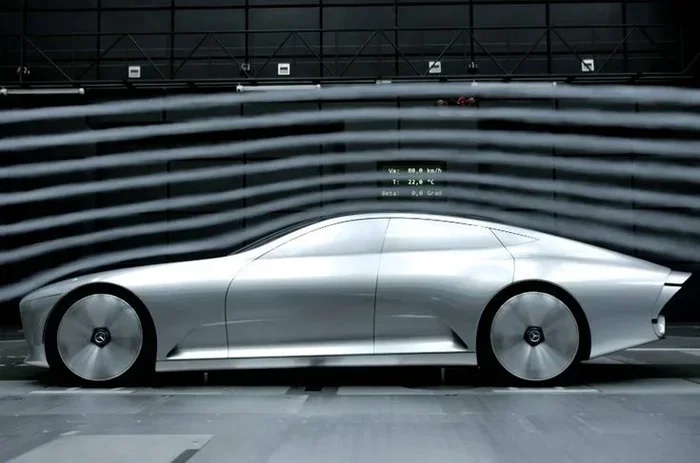
You cannot just design aerodynamics on a computer and call it done. Bugatti spent countless hours testing the Veyron in wind tunnels. These tunnels simulate real-world airflow at different speeds and allow engineers to measure forces like drag and downforce with precision.
The Veyron was tested at speeds well beyond its top speed. Engineers needed to understand how the car behaved at 250 mph, 270 mph, and beyond. Every curve, every vent, and every surface was adjusted based on wind tunnel data.
But wind tunnel testing is not the only validation method. Bugatti also tested the Veyron on real roads and tracks. This allowed them to see how aerodynamics perform in actual driving conditions. Turbulence from other cars, crosswinds, and road surface variations all play a role. The real-world testing confirmed what the wind tunnels showed.
This combination of computer simulation, wind tunnel testing, and real-world validation is what makes Bugatti Veyron aerodynamics so effective. It is not guesswork. It is data-driven engineering at the highest level.
Cooling and Aerodynamics: A Perfect Balance
A car producing over 1,000 horsepower generates enormous heat. The engine, transmission, and brakes all need cooling. But adding cooling vents and ducts can increase drag. The challenge is to cool the car without slowing it down.
The Veyron solves this problem with a clever integration of cooling and aerodynamics. The intakes are positioned where they naturally capture airflow. The ducts are shaped to guide air exactly where it is needed. And the vents close when they are not needed, eliminating unnecessary drag.
The radiators are massive, and they require a constant flow of air. The Veyron uses channels built into the front bumper and side skirts to direct air to these radiators. This means the cooling system works with the aerodynamics instead of against it.
Even the tires benefit from aero cooling. The wheel designs include channels that allow air to flow through and cool the brakes. This reduces the need for open brake ducts, which would add drag.
Common Mistakes People Make About Supercar Aerodynamics
There are a few misconceptions about how aerodynamics work on cars like the Veyron. Let us clear some of those up.
- More downforce always means more speed: Not true. Too much downforce creates drag. The goal is balance, not maximum force in one direction.
- Aerodynamics only matter at top speed: Wrong. Aerodynamic effects start at any speed. Even at 60 mph, downforce helps with cornering grip.
- Spoilers and wings are just for looks: On a car like the Veyron, every aerodynamic element serves a functional purpose. They are not decorative.
- You can add aerodynamics later with aftermarket parts: While some aftermarket parts help, factory aero design is far more refined. Every surface is integrated into the overall shape.
Understanding these points helps you appreciate what Bugatti achieved with the Veyron. The aerodynamics are not add-ons. They are baked into every inch of the car.
How Aerodynamics Compare to Other Hypercars
The Veyron is not the only hypercar with advanced aerodynamics. Let us look at how it compares to a few rivals.
| Car | Top Speed | Drag Coefficient | Active Aerodynamics |
|---|---|---|---|
| Bugatti Veyron 16.4 | 253 mph | 0.36 | Yes, multi-mode wing |
| Ferrari Enzo | 217 mph | 0.35 | Yes, adjustable flaps |
| McLaren F1 | 240 mph | 0.32 | No, passive design |
| Koenigsegg Agera RS | 278 mph | 0.33 | Yes, fully adjustable |
As you can see, the Veyron’s drag coefficient is competitive but not the lowest. However, its combination of top speed, downforce, and cooling makes it one of the most complete aero packages ever. The active wing system gives it versatility that purely passive designs cannot match.
The Koenigsegg Agera RS has a lower drag coefficient and a higher top speed. But the Veyron was designed as a grand tourer first. It needed to be fast AND comfortable. The aerodynamics reflect that dual purpose perfectly.
Quick Tips: What You Can Learn from Veyron Aerodynamics
Even if you do not own a Bugatti Veyron, there are lessons here that apply to any car enthusiast.
- Keep your car clean: Dirt and debris on the body disrupt airflow. A clean car is more aerodynamic.
- Remove roof racks when not in use: Roof racks create significant drag at highway speeds.
- Close windows at high speeds: Open windows create turbulence and increase drag noticeably.
- Maintain proper tire pressure: Tires affect how air flows around the wheel wells and underbody.
- Consider aero upgrades carefully: Not all aftermarket aero parts are designed well. Look for parts that are tested and validated.
These small steps can improve your car’s efficiency and performance. You do not need a W16 engine to benefit from better aerodynamics.
Expert Insight: Why Bugatti’s Approach Was Revolutionary
According to automotive engineers, the Veyron set a new standard for integrating aerodynamics into a production car. Before the Veyron, most hypercars focused on either speed or handling. The Veyron did both simultaneously.
The active wing system alone was groundbreaking for a production car in 2005. Most cars at that time had fixed spoilers or none at all. Bugatti showed that a road car could use the same adaptive aero principles found in race cars.
Engineers also praise the way Bugatti handled cooling. Managing 1,000 horsepower means managing enormous heat. The fact that the Veyron did this without adding significant drag was a major achievement. It showed that cooling and aerodynamics do not have to be at odds.
Today, many modern hypercars follow the same philosophy. The Veyron paved the way for cars like the Chiron, the Koenigsegg Jesko, and the Rimac Nevera. Its aerodynamic DNA is still influencing supercar design more than 15 years after its launch.
The Legacy of Bugatti Veyron Aerodynamics
The Veyron proved that aerodynamics is just as important as engine power. A car with 1,000 horsepower but poor aerodynamics would be undriveable at its top speed. The Veyron’s aero design made that power usable and safe.
When you drive the Veyron at high speed, you feel the confidence that comes from great aerodynamics. The car feels planted. It does not float or wobble. That is the result of thousands of hours spent perfecting every curve, every vent, and every surface.
The Veyron also showed that aerodynamics is not just for the rich. The principles it used, like managing airflow, reducing drag, and generating downforce, apply to every car on the road. Understanding these principles helps you appreciate car design at a deeper level.
In the end, the Bugatti Veyron is more than a fast car. It is a statement about what aerodynamics can achieve. It proved that air, which we usually think of as invisible and insignificant, can be shaped and controlled to create something extraordinary.
If you ever get the chance to see a Veyron in person, take a moment to look at it from every angle. Notice how smooth the lines are. Notice how every vent, splitter, and wing has a purpose. That is the beauty of Bugatti Veyron aerodynamics. Every detail serves the goal of going fast, staying stable, and looking incredible while doing it.
The next time you hear about a car’s top speed, remember that the engine is only half the story. The aerodynamics are the other half. And in the case of the Veyron, that other half is just as impressive as the first.
Frequently Asked Questions
What makes Bugatti Veyron aerodynamics so effective?
The Veyron combines a low drag coefficient, active rear wing, front splitter, underbody diffuser, and vortex generators into one integrated system. Every component works together to manage airflow for speed, stability, and cooling simultaneously.
Does the Veyron’s wing really change position while driving?
Yes, the active rear wing adjusts automatically based on driving mode and speed. It can lie flat for low drag, tilt for balanced downforce, or rise fully for maximum grip during cornering.
How does aerodynamics affect a car’s top speed?
Aerodynamics reduces air resistance or drag. Less drag means the engine does not have to work as hard to push the car through the air. This directly translates to higher top speed and better fuel efficiency.
Can you improve a car’s aerodynamics with aftermarket parts?
Yes, but results vary. Well-designed aftermarket splitters, diffusers, and spoilers can improve downforce and reduce drag. However, factory aerodynamic designs like the Veyron’s are far more refined and tested.
Why is the underbody of the Veyron so smooth?
A smooth underbody allows air to flow cleanly beneath the car. This reduces turbulence and drag while creating consistent downforce through the diffuser and venturi effect.
Do aerodynamics matter for everyday driving, not just top speed?
Absolutely. Aerodynamic effects start at any speed. Even at highway speeds of 70 mph, good aerodynamics improve stability, reduce wind noise, and can slightly improve fuel economy.
=== CONCLUSION ===
The Bugatti Veyron remains one of the greatest achievements in automotive aerodynamics. Its active aerodynamics system, from the front splitter to the rear wing and underbody diffuser, works as one unified system. Every element serves a purpose. Every surface is shaped with intent. And the result is a car that can reach over 250 mph while staying stable, cool, and controlled.
Understanding how Bugatti Veyron aerodynamics enhance top speed gives you a deeper appreciation for what makes this car special. It is not just about raw power. It is about mastering the invisible force of air and using it to go faster, safer, and more efficiently.
Whether you are a car enthusiast, an engineering student, or just someone who loves fast machines, the Veyron offers a masterclass in aerodynamic design. It shows that the path to extreme speed is not just about building a more powerful engine. It is about shaping the car so that air becomes your ally instead of your enemy.
Take what you have learned here and apply it to how you think about cars. Next time you see a supercar on the road, look beyond the engine. Look at the shape. Look at the vents, the wings, and the lines. You will start to see the invisible science of aerodynamics in action everywhere you look.