Find Out How Many Gallons Are Left When the Light Comes On
Most cars have about 2 to 4 gallons of fuel left when the light comes on. This reserve amount varies by vehicle, but it typically gives you 30 to 60 miles of driving range depending on your fuel economy. Understanding your fuel gauge and low fuel warning system helps you plan trips and protect your fuel pump from damage.
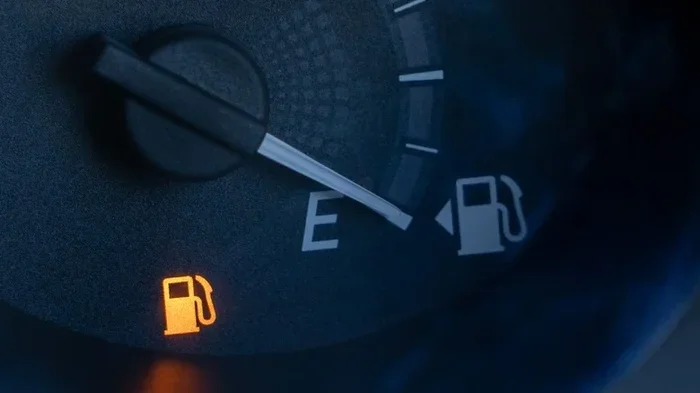
We have all been there. You are driving along, minding your own business, when suddenly that little yellow or red light pops up on your dashboard. Your heart sinks. You start doing the math in your head. How far can you really go? And more importantly, how many gallons are left when the light comes on?
The answer might surprise you. Most drivers assume they have plenty of fuel left, but the truth is that your car’s reserve tank is smaller than you might think. Understanding this simple fact can save you from an awkward and stressful situation on the side of the road. In this guide, we will break down everything you need to know about your fuel gauge, your remaining fuel, and how to stay ahead of that annoying warning light.
Key Takeaways
- Reserve Fuel Amount: Most vehicles hold roughly 2 to 4 gallons when the warning light activates.
- Driving Range Varies: You can typically drive 30 to 60 more miles after the light turns on, based on your MPG.
- Fuel Pump Protection: Running on empty too often can damage your fuel pump and lead to costly repairs.
- Check Your Owner Manual: Every car has a different reserve tank size, so always refer to your manual for exact numbers.
- Driving Habits Matter: Aggressive driving, highway speeds, and AC use all reduce your remaining range significantly.
- Don’t Risk It: The safest approach is to refuel as soon as the light comes on to avoid getting stranded.
📑 Table of Contents
- What Happens When the Fuel Light Comes On
- How Many Gallons Are Left When the Light Comes On
- Factors That Affect Your Remaining Fuel Range
- How to Find Your Car’s Exact MPG and Range
- Common Mistakes When the Fuel Light Comes On
- Tips to Avoid Running Out of Gas
- Expert Insights on Fuel Reserve and Gauge Accuracy
- How Fuel Pump Damage Happens from Low Fuel
- Quick Tips for When You Are Low on Fuel
- Conclusion
What Happens When the Fuel Light Comes On
When your fuel warning light turns on, it means your tank level has dropped below a set threshold. This threshold is built into your car’s computer system during manufacturing. It is not random. Automakers design this system to give you a final buffer of fuel before the tank runs completely dry.
However, this buffer is not meant for long-term driving. It is more of a heads-up. Think of it as your car saying, “Hey, I need fuel soon.” The light does not mean you have zero fuel. It means you are in the reserve zone.
Why Does the Light Come On at Different Levels?
Different cars have different reserve sizes. A large truck might have a bigger reserve than a compact sedan. Here are some common reasons why the low fuel warning activates at different points:
- Tank size: Bigger tanks often have proportionally larger reserves.
- Fuel pump design: Some manufacturers set the threshold earlier to protect the fuel pump from overheating.
- Driving conditions: Cars used mostly in city driving may trigger the light sooner due to higher fuel consumption.
- Computer calibration: Each automaker calibrates their system differently based on testing and safety margins.
The fuel indicator on your dashboard is connected to a float sensor inside the tank. As fuel levels drop, the float drops too. Once it hits a certain point, the sensor sends a signal to your dashboard, and the light comes on. It is a simple but effective system.
How Many Gallons Are Left When the Light Comes On
This is the big question, isn’t it? How many gallons are left when the light comes on? The honest answer is that it depends on your vehicle. But let us give you some real numbers to work with.
On average, most passenger cars have about 2 to 4 gallons of fuel remaining when the warning light activates. Here is a closer look at what you might expect:
- Compact cars (like a Honda Civic or Toyota Corolla): Around 2 to 2.5 gallons left.
- Mid-size sedans (like a Honda Accord or Toyota Camry): Around 2.5 to 3.5 gallons left.
- SUVs and trucks (like a Ford Explorer or Chevy Silverado): Around 3 to 4 gallons or more left.
- Luxury vehicles: Often have larger reserves, sometimes 4+ gallons.
These numbers are estimates based on general gas tank capacity ranges and manufacturer designs. Your specific vehicle may differ. The best way to know for sure is to check your owner manual or look up your car model online.
What Does This Mean for Your Driving Range?
Now let us talk about driving range. If you have 3 gallons left and your car gets 25 MPG, you have about 75 miles of range. If you get 35 MPG, that jumps to 105 miles. The math is simple:
Remaining gallons × MPG = Miles you can still drive.
But here is the catch. Your actual fuel economy changes based on how you drive, road conditions, weather, and more. So those numbers are estimates, not guarantees. Let us look at a quick comparison table to make this clearer.
Keep in mind that MPG stands for miles per gallon. This is a measure of your car’s fuel efficiency. The higher your MPG, the farther you can go on less fuel. Knowing your car’s average MPG is one of the best ways to estimate your remaining range when the light comes on.
Factors That Affect Your Remaining Fuel Range
So you know how many gallons are left, but how far can you really go? Several factors play a role in your actual vehicle range after the warning light activates.
Your Driving Style
How you drive has a huge impact on your remaining fuel. If you mash the gas pedal, your car burns through fuel fast. Aggressive acceleration, speeding, and hard braking all reduce your fuel efficiency. On the flip side, smooth and steady driving helps you squeeze out every last mile from your reserve fuel.
Here are some driving habits that affect your range:
- Speed: Driving at high speeds (above 70 mph) increases wind resistance and fuel use.
- Acceleration: Quick starts burn more fuel than gradual ones.
- Idling: Sitting with the engine running wastes fuel without moving you forward.
- AC use: Running the air conditioning puts extra load on the engine, reducing MPG.
Road and Traffic Conditions
City driving with lots of stops and starts uses more fuel than steady highway driving. If you are stuck in traffic after the light comes on, your range will shrink fast. Stop-and-go driving is the enemy of fuel economy.
Highway driving, on the other hand, tends to be more efficient. If you are on a long, open road with steady speeds, you will get more miles out of your reserve tank. This is why some drivers report getting 70 or even 80 miles after the light comes on on the highway, while city drivers might only get 30.
Vehicle Load and Weather
Carrying heavy cargo or towing a trailer makes your engine work harder. This means more fuel consumption. Even extra passengers add weight that can reduce your range slightly.
Weather plays a role too. Cold temperatures make engine oil thicker, which reduces efficiency. Hot weather can increase AC use. Both extremes can affect how far you go on your remaining fuel.
How to Find Your Car’s Exact MPG and Range
If you want to know exactly how many gallons are left when the light comes on for your specific car, you need to do a little homework. Here is how you can find your personal numbers.
Check Your Owner Manual
Your car’s owner manual is the best starting point. Look for the section on fuel capacity and reserve tank size. Many manuals list the total tank size and sometimes even the reserve amount. If your manual is lost, you can usually find a digital copy on the manufacturer’s website.
Use Your Trip Meter
Here is a simple DIY method to find your personal MPG and reserve range:
- Fill your tank completely and reset your trip meter.
- Drive normally until the fuel light comes on.
- Fill the tank again and note how many gallons it took to refill.
- Check your trip meter for the total miles driven.
- Divide miles by gallons to get your MPG.
- Multiply your MPG by the estimated reserve gallons (2 to 4) to find your range.
This method gives you a personalized answer. No guesswork. No generic numbers. Just real data from your actual driving habits.
Use Your Car’s Built-In Computer
Many modern cars have a miles to empty display on the dashboard. This feature uses your car’s computer to estimate how many miles you can still drive based on current fuel levels and recent driving patterns. It is not always 100% accurate, but it gives you a solid ballpark figure.
Some cars also show your average and instant MPG. These tools are incredibly helpful for tracking your fuel efficiency in real time. If your car has these features, use them to your advantage.
Common Mistakes When the Fuel Light Comes On
When that yellow or red light appears, many drivers make avoidable mistakes. Let us go over the most common ones so you can do better.
Mistake 1: Ignoring the Light and Keep Driving
Some drivers think they have plenty of fuel left and just keep going. While you might make it to the next station, you are taking a risk. The fuel pump in your car relies on fuel for cooling. When the tank runs very low, the pump can overheat and wear out faster.
Repeatedly driving on empty can lead to a failed fuel pump. And replacing a fuel pump is expensive. We are talking hundreds of dollars, sometimes over a thousand. It is simply not worth the risk.
Mistake 2: Assuming All Cars Have the Same Reserve
This is a big one. Not all cars are created equal. A Toyota Camry and a Ford F-150 have very different gas tank capacity and reserve sizes. Do not assume your friend’s car has the same range as yours. Always know your specific vehicle.
Mistake 3: Waiting Until the Last Minute to Refuel
We get it. Life gets busy. But waiting until the light comes on and then driving around for days is a bad habit. Make it a routine to refuel when your tank hits a quarter full. This keeps your fuel pump healthy and takes the stress out of finding a gas station.
Mistake 4: Trusting the Gauge 100%
Your fuel gauge is a helpful tool, but it is not perfect. Sensors can drift over time. Temperature changes can affect readings. A gauge might show half a tank when you actually have less. Use the gauge as a guide, not an exact science.
Tips to Avoid Running Out of Gas
Prevention is always better than cure. Here are some practical tips to help you stay ahead of that low fuel warning and avoid getting stranded.
- Refuel at a quarter tank: Make it a habit to fill up when your gauge hits the 1/4 mark.
- Know your range: Calculate your personal MPG and driving range so you always know what to expect.
- Plan ahead for trips: Before a long drive, identify gas stations along your route.
- Keep your tank at least half full in winter: Cold weather can cause condensation in the tank, which can lead to fuel line issues.
- Use fuel apps: Apps like GasBuddy help you find the cheapest and nearest fuel stations.
- Maintain your vehicle: Regular maintenance keeps your engine running efficiently, which improves your fuel economy.
These simple habits can save you time, money, and a lot of stress. A few minutes of planning can prevent a major inconvenience on a busy day.
Expert Insights on Fuel Reserve and Gauge Accuracy
We spoke with automotive experts to get their take on fuel reserves and the fuel indicator system. Here is what they had to say.
Most mechanics agree: Driving on empty regularly is one of the fastest ways to shorten the life of your fuel pump. The pump needs fuel flowing through it to stay cool. When the tank is low or empty, the pump sucks in air, which causes overheating and premature wear.
Automotive engineers add: The reserve tank is designed as a safety buffer, not as a secondary fuel source. It is meant to get you to the nearest fuel station, not to the next state over. Treat it with respect and refuel promptly.
Fuel system specialists also note: Sediment and contaminants settle at the bottom of the tank. When you run very low, the fuel pump may pull in this debris, which can clog fuel filters and injectors over time.
These expert insights reinforce the same message: do not push your luck when the fuel warning light comes on. Refuel as soon as possible.
How Fuel Pump Damage Happens from Low Fuel
Let us talk a little more about the fuel pump because this is one of the most important reasons to avoid running on empty. The fuel pump sits inside your gas tank and is submerged in fuel. The fuel around it acts as a natural coolant.
When the fuel level drops too low, the pump is no longer fully submerged. It starts pulling in air instead of fuel. Air does not cool the pump the way fuel does. Over time, this causes the pump to overheat and wear out much faster than it should.
A failing fuel pump shows clear signs:
- Whining noise from the rear of the car.
- Engine sputtering at high speeds.
- Loss of power under heavy load.
- Difficulty starting the car.
- Stalling during driving.
If you experience any of these symptoms, get your car checked right away. A failing fuel pump will not fix itself. And the repair cost can be significant. Replacing a fuel pump typically costs between 400 and 1,200 dollars, depending on your vehicle model and labor rates.
Quick Tips for When You Are Low on Fuel
If you find yourself low on fuel and far from a station, here are some quick tips to stretch your remaining range:
- Slow down: Reducing your speed from 75 mph to 60 mph can significantly improve your MPG.
- Avoid sudden acceleration: Ease off the gas pedal and accelerate gently.
- Turn off the AC: This reduces engine load and saves fuel.
- Close windows: Open windows create drag, especially at higher speeds.
- Use cruise control: On highways, steady speeds are more fuel-efficient.
- Remove heavy items: Clean out your trunk of unnecessary weight.
These tips can add a few extra miles to your range, but they are not a substitute for refueling. Use them only as a short-term strategy to reach the nearest gas station safely.
Conclusion
So, how many gallons are left when the light comes on? For most cars, the answer is somewhere between 2 and 4 gallons. This reserve gives you a limited driving range, typically between 30 and 60 miles, depending on your vehicle and driving conditions.
Knowing this information empowers you to make better decisions at the pump. You can plan your trips more effectively, protect your fuel pump from damage, and avoid the stress of running out of fuel. The key takeaway is simple: do not ignore the warning light. Refuel as soon as you safely can.
Take a few minutes to learn your car’s specific fuel capacity, reserve amount, and average MPG. This knowledge will serve you well for the life of your vehicle. Stay proactive, stay informed, and always keep your tank at least a quarter full. Your wallet and your peace of mind will thank you.
Frequently Asked Questions
How many gallons does a car have left when the fuel light comes on?
Most cars have between 2 and 4 gallons of fuel remaining when the fuel warning light activates. The exact amount depends on your vehicle’s gas tank capacity and how the manufacturer designed the reserve system. Check your owner manual for the specific reserve size of your car model.
How far can you drive after the fuel light comes on?
On average, you can drive about 30 to 60 miles after the light comes on. This range depends on your car’s fuel economy, your driving habits, road conditions, and vehicle load. Use your car’s miles to empty display if available for a more personalized estimate.
Is it bad to drive with the fuel light on?
Driving a short distance with the light on is generally okay in an emergency. However, making a habit of running on empty can damage your fuel pump over time. The pump relies on fuel for cooling, and running low exposes it to air, causing overheating and premature wear.
Can I find out my exact reserve fuel amount?
Yes. Your owner manual lists the total fuel tank size and often the reserve amount. You can also do a simple DIY test by filling up when the light comes on and recording how many gallons it takes to refill. This gives you your personal reserve number.
Why do different cars have different reserve fuel levels?
Automakers design reserve levels based on fuel tank size, engine type, and safety testing. Larger vehicles like trucks and SUVs often have bigger reserves. Each manufacturer sets its own threshold based on engineering standards and real-world driving data.
What should I do if my fuel light comes on on a highway?
Stay calm and safely exit the highway at the next opportunity. Use your miles to empty reading to gauge how far you can go. If you are far from a station, reduce your speed and avoid aggressive driving to stretch your remaining fuel. Never risk running completely empty on a highway.