Car Images for Kids Drawing Ideas to Spark Creativity
Car images for kids drawing is a fantastic way to ignite imagination and build artistic skills in young children. Whether your child loves race cars, cartoon vehicles, or simple shapes, there are easy car drawing ideas for every skill level. This guide covers step-by-step tutorials, fun themes, and practical tips to make drawing cars an exciting adventure for kids of all ages.
Kids love cars. There is no denying that. From shiny sedans to roaring race cars, vehicles capture the imagination of young minds like almost nothing else does. And when you combine that love with drawing, something magical happens. Car images for kids drawing becomes a gateway to creativity, self-expression, and pure fun.
Whether your child is a complete beginner or already loves sketching, there is always a new car drawing for kids project waiting. In this guide, we will explore everything from simple shape-based designs to detailed cartoon cars for kids. You will find easy car drawing ideas, practical tips, and plenty of inspiration to keep young artists busy for hours.
The best part? You do not need to be an artist yourself to help your child get started. With the right guidance and a few basic tools, any kid can create amazing vehicle drawings for children. So grab some paper, pencils, and crayons, and let us dive into the wonderful world of car images for kids drawing.
Key Takeaways
- Boosts Creativity: Drawing cars helps kids express themselves and develop fine motor skills through car images for kids drawing activities.
- Easy to Start: Simple shape-based methods make car drawing for beginners approachable and fun for young learners.
- Variety of Themes: From race cars to trucks, there are cool car pictures to draw that match every child’s interest.
- Builds Confidence: Step-by-step guides give kids a clear path to create printable car drawings they can be proud of.
- Screen-Free Fun: Drawing cars is a healthy, engaging kids art project that keeps children entertained and focused.
- Learn Through Play: Combining drawing with coloring and storytelling makes vehicle drawing for kids a rich learning experience.
📑 Table of Contents
- Why Car Images for Kids Drawing Is So Popular
- Easy Car Drawing Ideas for Beginners
- Types of Cars Kids Love to Draw
- Step-by-Step Guide to Drawing Cars
- Tips to Make Car Drawings More Fun
- Common Mistakes and How to Avoid Them
- Printable Resources and Tools for Car Drawing
- How Drawing Cars Supports Other Learning Areas
- Encouraging a Lifelong Love of Drawing
- Conclusion
Why Car Images for Kids Drawing Is So Popular
The Joy of Drawing Cars
There is something about cars that makes kids excited. Maybe it is the wheels. Maybe it is the speed. Or maybe it is just the cool shapes. Whatever the reason, car images for kids drawing consistently ranks among the most popular subjects for young artists.
Cars are everywhere in a child’s world. They see them on the street, in movies, and in toy boxes. When a child draws a car, they are recreating something familiar. That familiarity gives them confidence. It makes the drawing process feel natural and enjoyable.
Unlike more abstract subjects, cars have clear, recognizable shapes. A rectangle for the body. Circles for the wheels. A triangle for the roof. These basic forms make simple car drawing ideas accessible even to very young children. And as kids grow more confident, they can add details like headlights, spoilers, and racing stripes.
Benefits of Drawing Cars for Children
Drawing cars is not just fun. It offers real developmental benefits that parents and educators value. Here are some of the key advantages of car art for children:
- Fine Motor Skills: Holding a pencil and controlling lines strengthens hand muscles and improves coordination.
- Spatial Awareness: Drawing cars helps kids understand shapes, proportions, and spatial relationships.
- Focus and Patience: Completing a drawing teaches children to concentrate and follow through on a task.
- Self-Expression: Every car a child draws is unique. It reflects their personality, preferences, and imagination.
- Vocabulary Building: Drawing cars introduces kids to words like wheels, axles, chassis, and spoiler.
- Problem Solving: Figuring out how to draw a complex car shape builds critical thinking skills.
These benefits make kids car drawings a valuable activity beyond just entertainment. It is a learning tool disguised as play.
Easy Car Drawing Ideas for Beginners
Starting with Basic Shapes
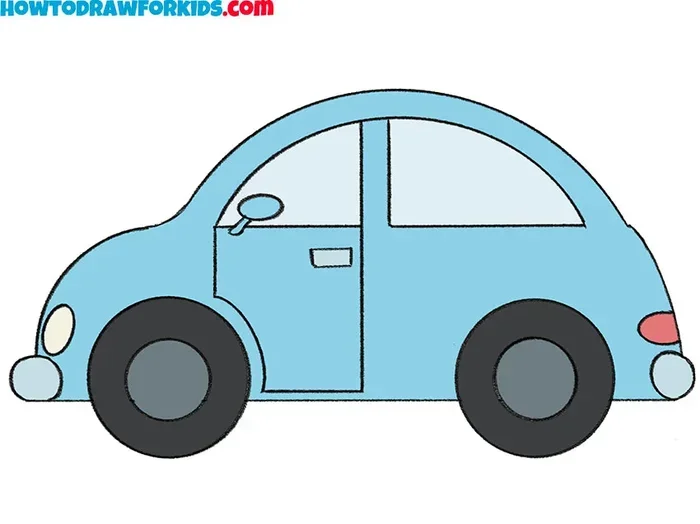
The best way to introduce car images for kids drawing is through basic shapes. Almost any car can be broken down into simple forms. A rectangle for the body. Two circles for the wheels. Smaller circles for the headlights. That is it.
Here is a simple approach to get started:
- Draw a large rectangle for the car body.
- Add two circles underneath for the wheels.
- Draw smaller circles or dots for the headlights.
- Add a line across the middle for the window.
- Include details like doors, mirrors, and a bumper.
This method works for beginner car drawing because it removes the pressure of perfection. Kids can focus on shapes and lines without worrying about getting every detail right. Once they master the basics, they can experiment with different car styles.
Cartoon Car Designs
Once kids are comfortable with basic shapes, they can move on to cartoon cars for kids. Cartoon cars are fun because they allow for exaggeration and creativity. Wheels can be huge. The body can be extra long. The windows can take up the entire side.
Cartoon car drawing is perfect for children who love imagination and storytelling. They can give their cars faces, names, and personalities. A car with big googly eyes becomes a character in a story. This type of car sketch for beginners keeps kids engaged and coming back for more.
Some popular cartoon car styles include:
- Smiling Cars: Cars with friendly faces and big smiles.
- Racing Cars: Sleek, colorful cars with flames and stripes.
- Funny Cars: Cars with silly features like oversized wheels or tiny bodies.
- Fantasy Cars: Imaginary vehicles with wings, rockets, or unusual shapes.
Types of Cars Kids Love to Draw
Race Cars and Sports Cars
Race cars are a favorite among young artists. Their low, sleek profiles and bold colors make them exciting to draw. Race car drawing is a great way to challenge kids who already feel confident with basic shapes.
A typical race car has a wide body, a low roofline, and large spoilers. Kids can add flames, checkered flags, or sponsor logos to make their drawings more dynamic. Cool car pictures to draw like these keep children motivated to practice and improve.
Sports cars are another hit. Think of the classic Porsche or Lamborghini shapes. These cars have curved lines and aggressive angles that look impressive on paper. Even a simplified version of a sports car can look stunning when a child adds their own creative touches.
Trucks and SUVs
Not every child is drawn to sleek sports cars. Many kids prefer big, sturdy trucks and SUVs. Truck drawing for kids offers a different set of challenges and rewards. Trucks have larger bodies, bigger wheels, and often include cargo beds or tool boxes.
Drawing a truck is a great exercise in proportion. Kids learn how to make the body wider and the wheels bigger. They can add details like side mirrors, running boards, and tailgates. Printable car drawings of trucks are especially popular because they give kids a starting point to trace and then customize.
Classic and Vintage Cars
Vintage cars have a charm that captivates children and adults alike. Think of the classic convertible with whitewall tires and chrome details. Or the old-school pickup truck with a wooden bed. These cars tell stories and spark curiosity.
Introducing car images for kids drawing with a vintage theme can open up conversations about history and design. Kids learn that cars have changed over time. They can compare old cars to modern ones and notice differences in shape, size, and features. This makes drawing a cross-curricular learning experience.
Step-by-Step Guide to Drawing Cars
Starting with Basic Shapes
Every great car drawing starts with a foundation. For kids, that foundation is basic shapes. Here is a simple step-by-step process that works for almost any car style:
- Draw the body: Start with a rectangle or a rounded rectangle. This is the main part of the car.
- Add the wheels: Draw two circles, one near the front and one near the back. Make them the same size.
- Sketch the windows: Draw a line across the upper part of the body. Add a parallelogram shape on top for the roof.
- Include details: Add headlights, a grille, doors, and mirrors. Keep them simple at first.
- Refine the lines: Go over the drawing with a darker pencil or marker. Erase any unnecessary guidelines.
This approach works for how to draw cars for kids because it breaks the process into manageable steps. Kids feel a sense of accomplishment after each step, which keeps them motivated.
Adding Details and Features
Once the basic structure is in place, kids can start adding details. This is where creativity really takes off. Here are some details to encourage:
- Wheels and tires: Add inner circles to the wheels to show the tire and hubcap.
- Windows and mirrors: Draw reflections inside the windows for a more realistic look.
- Racing stripes: Add bold stripes down the center or sides of the car.
- Spoiler: A small wing at the back makes any car look fast.
- Exhaust pipes: Draw small circles or rectangles at the back bottom.
- License plate: A small rectangle at the back adds a nice finishing touch.
Encourage kids to add as many details as they want. There are no wrong answers in car images for kids drawing. The more details they add, the more personal and unique their drawing becomes.
Coloring and Finishing Touches
Coloring is the most exciting part for many kids. This is where their car drawings for beginners really come to life. Bright reds, bold blues, shiny silvers, and glossy blacks all work great for cars.
Here are some coloring tips:
- Use light pressure first: Build up color gradually to avoid mistakes.
- Blend colors: Use two shades of the same color for a more realistic look.
- Add highlights: Leave small white spots on the windows and body to simulate reflections.
- Try different media: Crayons, colored pencils, markers, and paint all produce different effects.
For a polished finish, kids can add a background to their drawing. A road, a garage, or a race track makes the car drawing feel complete and gives it context.
Tips to Make Car Drawings More Fun
Use Reference Images
One of the best ways to improve car images for kids drawing is by using reference images. Print out photos of different cars and let your child study them. They will notice details they might otherwise miss, like the curve of a fender or the shape of a headlight.
Reference images also help kids understand proportion and perspective. They can see how a car looks from the side, the front, and the back. This knowledge translates directly into better drawings.
Create a Drawing Station
Setting up a dedicated drawing station makes car art for children more special. It does not need to be elaborate. A small table with good lighting, a stack of paper, and a pencil cup is all you need.
Some ideas for a kid-friendly drawing station:
- A flat, sturdy surface at the right height for your child.
- A cup filled with pencils, markers, and crayons.
- A roll of paper for big drawings.
- A display board to hang finished artwork.
When kids have a dedicated space, they feel like real artists. It builds a sense of ownership and pride in their work.
Turn Drawing into a Game
Making car images for kids drawing into a game adds an extra layer of fun. Try these creative game ideas:
- Roll the Dice: Assign different car parts to numbers. Roll the dice and draw whatever comes up.
- Draw and Guess: One person draws a car, and others guess what type it is.
- Speed Challenge: Set a timer and see who can draw a car the fastest.
- Story Drawing: Draw a car, then write a short story about where it goes.
Games make practice feel like play. Kids do not even realize they are learning because they are having too much fun.
Common Mistakes and How to Avoid Them
Overcomplicating the Design
One of the most common mistakes in car images for kids drawing is trying to draw too much too soon. Kids sometimes want to add every detail at once, which leads to frustration and messy drawings.
The solution is simple. Start with the basic shapes. Get comfortable with those. Then add details one at a time. Car drawing for beginners should always start simple and build up gradually. Remind your child that even professional artists start with basic shapes.
Skipping the Basics
Another mistake is jumping straight to complex car designs without mastering the fundamentals. A child who has not practiced drawing circles and rectangles will struggle with a detailed sports car.
Make sure kids spend time on the basics. Practice drawing straight lines, curves, and circles. These fundamental skills are the building blocks of every car drawing. Once they are solid, more complex vehicle drawings for children become much easier and more enjoyable.
Printable Resources and Tools for Car Drawing
There are many great resources available to support car images for kids drawing. Printable templates give kids a head start, while the right tools make the process smoother and more enjoyable.
Some recommended resources include:
- Printable car outlines: These give kids a skeleton to trace and then add their own details.
- Car drawing apps for kids: Digital tools can supplement traditional drawing and introduce new techniques.
- Drawing books: Step-by-step car drawing books designed for children provide structured learning.
- Coloring pages: Pre-drawn car coloring pages are perfect for kids who are not yet ready to draw from scratch.
Having a variety of resources keeps kids engaged and gives them options based on their skill level and interests. The goal is to make car images for kids drawing accessible, enjoyable, and rewarding for every child.
How Drawing Cars Supports Other Learning Areas
Car images for kids drawing does more than build artistic skills. It supports learning in other areas too. When a child draws a car, they engage with concepts from multiple subjects.
In math, they practice shapes, measurements, and symmetry. In science, they learn about how cars work, from wheels to engines. In language arts, they can describe their drawings or write stories about them. In social studies, they can explore how cars have changed over time and across cultures.
This cross-curricular connection is one of the most overlooked benefits of drawing. It turns a simple art activity into a rich learning experience. Parents and teachers can use car images for kids drawing as a springboard for lessons in many different subjects.
Encouraging a Lifelong Love of Drawing
The most important thing you can do for a young artist is to encourage them. Praise their efforts, not just their results. Display their artwork proudly. And most importantly, make drawing a positive, pressure-free experience.
When kids associate drawing with fun and support, they develop a love for creativity that can last a lifetime. Car images for kids drawing is a wonderful starting point for that journey. Every car they draw builds skills, confidence, and a deeper appreciation for art and design.
So keep the paper flowing, the pencils sharp, and the encouragement flowing. You never know where a simple car drawing might lead. It could spark a lifelong passion for art, design, engineering, or storytelling. The possibilities are as endless as a child’s imagination.
Conclusion
Car images for kids drawing offers so much more than just a fun activity. It builds creativity, develops fine motor skills, and gives children a powerful way to express themselves. From simple shape-based designs to detailed race cars, there is a car drawing for kids project for every age and skill level.
The key is to keep it fun, keep it encouraging, and let kids explore at their own pace. Whether they draw a basic rectangle car or a detailed cartoon racer, every drawing is a step forward. Celebrate the process, not just the final product.
Now that you have all the tools, tips, and ideas, it is time to get started. Grab some paper, gather your supplies, and sit down with your child. Together, you can explore the exciting world of car images for kids drawing and watch their creativity soar.
Frequently Asked Questions
What age is car images for kids drawing suitable for?
Car images for kids drawing is suitable for children as young as three years old. Very young kids can start with simple shapes and scribbles. Older children can tackle more detailed designs. The key is to match the activity to the child’s skill level and interest.
What supplies do kids need for car drawing?
Basic supplies include paper, pencils, erasers, and crayons or markers. For more advanced projects, colored pencils or watercolor paints work great. The most important supply is encouragement. Keep things simple and let the child explore different tools.
Can car drawing help with a child’s development?
Yes, absolutely. Drawing cars strengthens fine motor skills, improves hand-eye coordination, and builds spatial awareness. It also boosts confidence, encourages focus, and supports creative thinking. Car images for kids drawing is a valuable developmental tool wrapped in fun.
Are there printable resources for car drawing?
Yes, many websites offer free printable car drawing templates and coloring pages. These are great for beginners who need a starting point. You can also create your own simple outlines to help your child get started with car images for kids drawing.
How can I make car drawing more engaging for my child?
Turn drawing into a game, use reference images of real cars, or let your child draw their dream car. You can also create a special drawing station and display finished artwork. The more fun and personal the experience, the more engaged your child will be.
What if my child gets frustrated with car drawing?
Frustration is normal, especially for beginners. Break the task into smaller steps and celebrate small wins. Start with very simple designs and gradually increase complexity. Remind your child that every artist starts somewhere, and the goal is to enjoy the process, not achieve perfection.