Is Driving a Forklift Difficult Here Is Everything You Need
Is driving a forklift difficult? The short answer is no, but it does require proper training and practice. Forklift operation is very different from driving a car, and understanding those differences is the first step. With the right forklift training and certification, most people can learn to operate this warehouse equipment safely and confidently. This guide covers everything from forklift controls to OSHA forklift requirements so you know exactly what to expect.
So, is driving a forklift difficult? If you have never touched one before, this question probably keeps you up at night. Maybe you just got a job offer in a warehouse, or perhaps you are thinking about a career change. Either way, you want to know what you are getting into.
The truth is that driving a forklift is not as scary as it seems. But it is also not as simple as hopping in a car and going. There are real skills involved, real safety rules, and real consequences if you skip the training. This guide breaks down everything you need to know about forklift operation, from the basics to the finer points of material handling in a busy warehouse.
By the end of this article, you will have a clear picture of what it takes to become a confident forklift operator. You will learn about the different types of industrial forklift machines, what forklift certification involves, and the most common challenges new drivers face. Let us get into it.
Key Takeaways
- Forklift driving is learnable: Most people can pick it up with proper forklift training and practice.
- It is not like driving a car: Forklift controls and steering work very differently, which is the biggest adjustment.
- Certification is required: You need a valid forklift license and must meet OSHA forklift requirements before operating one.
- Safety is the top priority: Forklift safety habits prevent accidents and injuries in the workplace.
- Career opportunities are strong: Certified forklift operators are in high demand across many industries.
- Practice matters: Hands-on experience with a sit-down forklift builds confidence and skill quickly.
- Load handling is a skill: Understanding load capacity and forklift stability keeps every operation safe.
📑 Table of Contents
- What It Takes to Drive a Forklift
- Is Driving a Forklift Difficult Compared to Driving a Car?
- Forklift Training and Certification Requirements
- Common Challenges New Operators Face
- Tips to Make Forklift Driving Easier
- Who Benefits from Learning Forklift Skills?
- Comparing Forklift Driving to Other Types of Heavy Equipment
- Final Thoughts on Forklift Difficulty
What It Takes to Drive a Forklift
Understanding How a Forklift Works
Before you can answer the question is driving a forklift difficult, you need to understand what a forklift actually is. A forklift is a small, powerful vehicle designed to lift and move heavy loads. You will find them in warehouses, construction sites, and loading docks everywhere.
Unlike a car, a forklift has a pair of prongs, or forks, at the front. These forks slide under pallets and lift the entire load off the ground. The counterbalance forklift is the most common type. It uses a heavy weight at the back to keep the machine stable when lifting something heavy in front.
The forklift controls are also different from what you might expect. Most sit-down forklift models have a steering wheel, but the steering works in reverse. When you turn the wheel to the left, the back of the forklift swings left. This takes some getting used to, but it is not hard to master.
Different Types of Forklifts You May Encounter
Not all forklifts are the same. Depending on where you work, you might operate several different kinds of warehouse equipment. Here are the most common ones:
- Counterbalance forklift: The standard model used in most warehouses and distribution centers.
- Reach truck: Designed for narrow aisles and high stacking in cold storage or tight spaces.
- Pallet jack: A manual or powered pallet mover that lifts loads just enough to roll them on the ground.
- Order picker: A smaller machine that lets the operator walk alongside while picking items from shelves.
- Rough terrain forklift: Built for outdoor use on uneven ground, common in construction and agriculture.
Each type has its own quirks, but the core forklift operation principles stay the same. Once you learn one, transitioning to another becomes much easier.
Is Driving a Forklift Difficult Compared to Driving a Car?
Steering and Control Differences
This is the part that surprises most people. Is driving a forklift difficult when it comes to steering? Yes and no. A forklift steers from the rear axle, which means the back end swings wide when you turn. This is called “rear-end swing,” and it is the single biggest difference from driving a car.
In a car, the front wheels do the turning. In a forklift, the back wheels do. This means you have to think about what is happening behind you, not just in front. It feels awkward at first, but after a few hours of practice, it starts to feel natural.
The forklift controls are also more compact. Everything is within arm’s reach. You have a lever for lifting and lowering the forks, a pedal for the gas, and brakes that work differently than in a standard vehicle. The hydraulic system that raises and lowers the mast is smooth and responsive, which makes the learning curve much gentler than you might think.
Visibility and Blind Spots
Here is another big difference. When you drive a forklift forward with the forks raised, your view is mostly blocked by the load itself. You are essentially driving in reverse most of the time. This sounds dangerous, but it is just a different way of thinking.
Experienced operators learn to travel with the forks low to the ground and to look in the direction they are going. When you need to move backward, you use a rear mirror or, in modern models, a camera system. Forklift visibility takes practice, but it becomes second nature over time.
The good news is that warehouse forklift environments are controlled spaces. There are marked lanes, speed limits, and traffic signals. You are not sharing the road with unpredictable drivers, which makes the job safer than it might seem from the outside.
Forklift Training and Certification Requirements
What the Training Process Looks Like
If you are wondering is driving a forklift difficult from a learning perspective, the answer is that the training itself is very manageable. A typical forklift training program includes both classroom instruction and hands-on practice. You cannot skip either part.
In the classroom portion, you will learn about:
- Forklift safety rules and regulations
- How to read the load capacity data plate on the machine
- Basic material handling principles
- Pre-operation inspection checklists
- Workplace hazard awareness
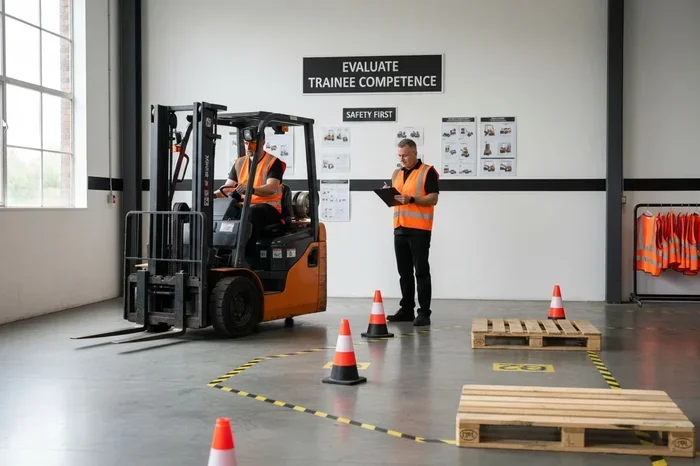
The hands-on portion puts you behind the wheel. You will practice starting the machine, lifting loads, stacking pallets, and navigating tight spaces. A trained instructor evaluates your skills and signs off when you are ready.
OSHA Requirements You Must Know
The Occupational Safety and Health Administration, or OSHA, sets the rules for powered industrial truck operation in the United States. Under OSHA forklift requirements, every operator must be trained and certified before they can drive a forklift on the job.
Here is what OSHA requires:
- Formal training that covers general safety and machine-specific knowledge.
- Practical training where you demonstrate your skills in real operating conditions.
- Evaluation by a qualified trainer who confirms you are competent.
- Refresher training every three years, or sooner if an accident or near-miss occurs.
Your forklift certification is not a one-time deal. You need to stay current, and your employer is responsible for making sure you do. This system keeps everyone safe and ensures that no one operates a heavy equipment operation machine without proper preparation.
Getting a forklift license is straightforward. Many community colleges, vocational schools, and even online programs offer courses. The cost is usually reasonable, and the time commitment is short. Most programs can be completed in one to three days.
Common Challenges New Operators Face
Mastering the Controls
The first few times you get behind the wheel of a warehouse forklift, everything feels unfamiliar. The steering is different. The pedals work differently. The mast raises and lowers with a pull of a lever, and the speed can surprise you if you are not careful.
New operators often struggle with the hydraulic levers. These levers control how high the forks go, how much they tilt, and how the side shift works on some models. It is a lot of hand-foot coordination at first, but your muscle memory develops fast.
Forklift stability is another concept that takes time to fully understand. A forklift can tip over if you turn too fast with the forks raised high. The center of gravity shifts, and the machine becomes unstable. Learning to keep the forks low during movement is one of the most important forklift driving tips you will ever receive.
Loading and Unloading Safely
Lifting a load is not just about going up and down. You need to center the forks under the pallet, make sure the load is balanced, and check the load capacity before you pick anything up. A counterbalance forklift can only handle so much weight, and exceeding that limit is one of the leading causes of forklift accidents.
When you are stacking loads on a rack, precision matters. You need to place the forks into the pallet slots carefully and lower the load gently. Rushing this process leads to dropped loads, damaged goods, and potential injuries.
One of the most overlooked aspects of material handling is inspecting the load itself. Is the pallet in good condition? Are the boxes stacked evenly? Is the load stable enough to lift? These small checks make a huge difference in daily forklift safety.
Navigating Tight Spaces
Warehouses are not always spacious. You will often find yourself working in narrow aisles with racks on both sides. Maneuvering a sit-down forklift in these spaces requires patience and precision.
The rear-end swing we talked about earlier becomes a real factor here. You have to swing wide enough to clear the rack without hitting it. This takes spatial awareness and practice. Many operators also use a spotter when working in tight areas, and that is a smart habit to build early.
Tips to Make Forklift Driving Easier
Practice and Preparation
The best way to get comfortable with a forklift is to spend time on one. Forklift training gives you a foundation, but real confidence comes from hands-on experience. If you have the opportunity to practice in a low-traffic area, take it.
Before you start the machine every single day, do a pre-operation inspection. Check the tires, the hydraulic lines, the brakes, the horn, and the lights. This habit keeps you safe and also helps you spot problems before they become expensive repairs. Most accidents happen because operators skip these simple checks.
Another great forklift driving tip is to always wear your seatbelt. It sounds basic, but it saves lives. If a forklift does tip over, the seatbelt keeps you inside the operator cage. Jumping out during a tip-over is one of the most dangerous things you can do.
Safety Habits That Help
Forklift safety is not just about following rules. It is about building habits that protect you and everyone around you. Here are some habits that every good operator develops:
- Always sound the horn at intersections and blind corners.
- Keep the forks low when traveling, typically about 4 to 6 inches off the ground.
- Slow down on wet or uneven surfaces.
- Never raise a load while the forklift is in motion.
- Respect the load capacity limits posted on the data plate.
- Keep your eyes on the path ahead and use mirrors to check your surroundings.
- Come to a complete stop before raising or lowering the forks.
These habits are simple, but they are powerful. They reduce risk and make you a more professional forklift operator. Over time, they become automatic, and you will not even have to think about them.
Who Benefits from Learning Forklift Skills?
Career Opportunities for Certified Operators
Is driving a forklift difficult enough to keep you from pursuing it as a career? Absolutely not. The demand for certified forklift operators is strong across the country. Nearly every manufacturing plant, distribution center, and construction company needs skilled operators.
The pay is decent, especially as you gain experience. Entry-level operators can expect to earn a solid hourly wage, and those with specialized skills, such as operating a rough terrain forklift or working in cold storage, often earn more. Many companies also offer benefits and opportunities for advancement into supervisory roles.
Your forklift certification is a portable credential. You can take it from one employer to another, which gives you flexibility and job security. In a tight labor market, certified operators are often the first to be hired and the last to be let go.
Industries That Hire Forklift Operators
The need for material handling professionals extends far beyond traditional warehouses. Here are some industries that regularly hire forklift operators:
- Retail and e-commerce fulfillment centers – massive distribution operations that move millions of products daily.
- Manufacturing plants – moving raw materials and finished goods along the production line.
- Construction sites – lifting heavy building materials like steel beams, concrete blocks, and lumber.
- Food and beverage distribution – handling pallets of products in temperature-controlled environments.
- Pharmaceutical companies – moving sensitive materials with precision and care.
- Shipping and logistics ports – loading and unloading cargo containers and freight.
As you can see, the opportunities are wide open. Learning to drive a forklift opens doors to stable, in-demand work in many different fields.
Comparing Forklift Driving to Other Types of Heavy Equipment
To put things in perspective, here is how forklift operation compares to other common types of heavy equipment you might encounter in industrial settings:
| Equipment Type | Steering Type | Primary Use | Learning Curve | Certification Required |
|---|---|---|---|---|
| Counterbalance Forklift | Rear-wheel steering | Lifting and stacking pallets | Moderate | Yes |
| Reach Truck | Rear-wheel steering | Narrow aisle stacking | Moderate to High | Yes |
| Telehandler | Four-wheel steering | Lifting at height on uneven ground | High | Yes |
| Excavator | Track or wheel | Digging and earth moving | High | Yes |
| Pallet Jack (Manual) | Tiller steering | Moving pallets on the ground | Low | No formal certification required |
As the table shows, a counterbalance forklift falls in the moderate range when it comes to difficulty. It is easier to learn than a telehandler or excavator, but more complex than a manual pallet jack. For most people, the learning curve is very manageable with proper forklift training.
The key takeaway here is that is driving a forklift difficult depends a lot on your background. If you have experience with any kind of machinery or vehicles, you will likely pick it up faster. But even if you have zero experience, the training is designed to take you from beginner to competent operator in a short time.
Final Thoughts on Forklift Difficulty
So, is driving a forklift difficult? The honest answer is that it is not inherently hard, but it does require respect for the machine and the environment you are working in. Forklift operation is a skill that anyone can learn with the right forklift training, a willingness to practice, and a commitment to forklift safety.
The differences between driving a forklift and driving a car are real, but they are not insurmountable. The rear-wheel steering, the limited visibility, and the hydraulic controls all take a little time to get comfortable with. But thousands of people go through forklift certification every year, and the vast majority become safe, competent operators within days or weeks.
If you are considering this path, take the first step. Look up forklift training programs in your area, talk to employers who are hiring, and invest in your future. The powered industrial truck industry offers steady work, good benefits, and a clear path for growth. You do not need a college degree. You just need the right training, a strong safety mindset, and the desire to learn.
Start today. Get your forklift license, build your skills, and join the thousands of professionals who keep our supply chains moving every single day. Is driving a forklift difficult? Not when you have the right preparation and the right attitude.
Frequently Asked Questions
How long does it take to get a forklift certification?
Most forklift training programs can be completed in one to three days. The classroom portion typically takes a few hours, and the hands-on evaluation is done on the same day or the next. Some employers offer on-the-job training, which may take a bit longer, but the process is generally fast and straightforward.
Do I need a driver’s license to operate a forklift?
A regular driver’s license is not required to operate a forklift, but you do need a forklift certification or forklift license that proves you have completed approved forklift training. This certification is specific to powered industrial truck operation and is issued by a qualified trainer or training program.
Can I drive a forklift if I have never operated heavy equipment before?
Yes, absolutely. Many certified forklift operators started with zero experience. The forklift training programs are designed for beginners and cover everything from basic controls to forklift safety procedures. As long as you are willing to learn and follow the rules, you can do this.
What is the most common mistake new forklift operators make?
The most common mistake is raising the forks too high while driving. This raises the center of gravity and makes the forklift unstable. Other mistakes include skipping the pre-operation inspection, speeding in tight spaces, and not using the horn at blind corners. Good forklift driving tips like keeping the forks low and staying aware of your surroundings go a long way.
Is forklift driving a good career choice?
Yes, it is a stable and in-demand career. Certified operators work in warehouses, manufacturing, construction, logistics, and many other industries. The skills you learn in material handling and warehouse equipment operation are valuable and transferable. With experience, you can move into supervisory or specialized roles that pay even more.
How often do I need to renew my forklift certification?
OSHA requires that forklift operators receive refresher training at least every three years. However, if you are involved in an accident, receive a safety violation, or start operating a new type of industrial forklift, you may need additional training sooner. Staying current with your forklift license keeps you compliant and safe on the job.
=== CONCLUSION ===
Is driving a forklift difficult? The answer is a clear no, as long as you approach it the right way. With proper forklift training, a solid understanding of forklift safety, and the willingness to practice, anyone can become a skilled forklift operator. The key is to take the training seriously, respect the machine, and build good habits from day one.
Whether you are looking for a new career, a side skill, or a way to advance in your current job, learning to operate a counterbalance forklift or other warehouse equipment is a smart investment. The forklift certification process is fast, the demand for operators is high, and the skills you gain are useful for life.
So take that first step. Sign up for a forklift training program, get your forklift license, and start your journey. The world of material handling and heavy equipment operation is waiting for you.