How to Check Engine Codes on Your 2015 Jeep Cherokee
Checking engine codes on your 2015 Jeep Cherokee is something every owner should know how to do. With an OBD-II scanner and a few simple steps, you can read diagnostic trouble codes in minutes right from your driveway. This guide covers everything from finding the port to understanding what the codes mean and how to fix common issues.
Checking engine codes on your 2015 Jeep Cherokee is easier than most people think. You do not need to visit a mechanic every time the check engine light comes on. With the right tools and a little patience, you can read the codes yourself in just a few minutes. This guide will show you exactly how to check engine codes on your 2015 Jeep Cherokee step by step. You will learn what tools to use, where to find the port, and what the codes actually mean.
Whether you are a DIY enthusiast or just want to save money on diagnostics, this article has you covered. We will walk through every detail so you feel confident doing it on your own. By the end, you will know how to read, understand, and respond to engine codes like a seasoned pro.
Key Takeaways
- Point 1: The OBD-II port on a 2015 Jeep Cherokee is located under the dashboard on the driver’s side, near the steering column.
- Point 2: You can use a basic code reader or a full OBD-II scanner to check engine codes quickly and affordably.
- Point 3: Common codes like P0300, P0420, and P0171 frequently appear on Jeep Cherokees and each has a specific meaning.
- Point 4: Always address the root cause before clearing codes, or the light will simply come back on.
- Point 5: You can reset the check engine light after fixing the underlying problem using your scanner or by disconnecting the battery.
- Point 6: Free smartphone apps paired with a Bluetooth adapter can also read codes effectively.
📑 Table of Contents
- Why Checking Engine Codes Matters for Your Jeep Cherokee
- How to Find the OBD-II Port on Your 2015 Jeep Cherokee
- Tools You Need to Check Engine Codes
- Step-by-Step Guide to Reading Engine Codes on Your 2015 Jeep Cherokee
- Common Engine Codes on the 2015 Jeep Cherokee
- What to Do After You Get Your Codes
- Final Thoughts
Why Checking Engine Codes Matters for Your Jeep Cherokee
Your 2015 Jeep Cherokee is a capable and reliable SUV. But like any vehicle, it can throw codes that signal something is not right. The good news is that you do not need expensive equipment or years of experience to figure out what those codes mean. A basic understanding of the system goes a long way.
The onboard diagnostic system in your Jeep has been standard since the mid-1990s. It monitors everything from fuel trim to emission system health. When something goes wrong, it stores a code and lights up the dashboard. Learning to read those codes empowers you as a vehicle owner. You can catch small problems before they turn into expensive repairs.
What Are Diagnostic Trouble Codes
Diagnostic trouble codes, or DTC codes, are alphanumeric codes stored by your vehicle’s computer. Each code points to a specific issue or fault. For example, a code starting with P0 usually relates to the powertrain. A code starting with B0 often relates to the body system. Understanding this basic structure helps you narrow down the problem fast.
The powertrain control module is the brain behind this system. It constantly reads data from sensors throughout your Jeep. When a sensor reading falls outside the expected range, the module logs a code. This is what triggers the engine warning light on your dashboard. The light stays on until the issue is resolved or the code is cleared.
How to Find the OBD-II Port on Your 2015 Jeep Cherokee
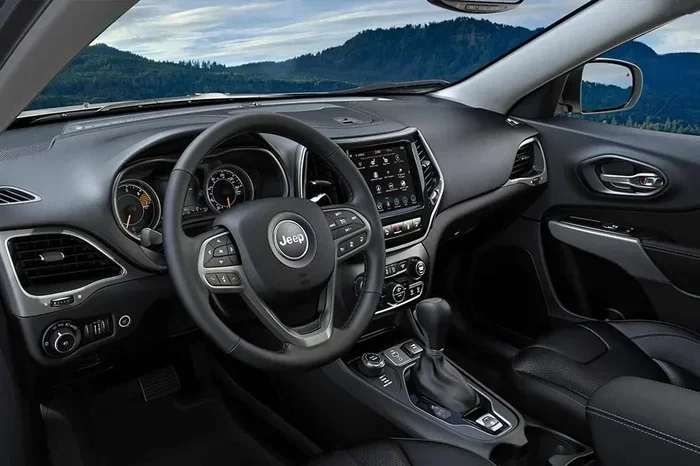
Before you can read any codes, you need to know where the OBD-II port is. On the 2015 Jeep Cherokee, the port is located under the dashboard on the driver’s side. It sits near the steering column, below the radio area. You may need to look closely or feel around with your hand to find it.
The port is a 16-pin trapezoidal connector. It is the same standard port used on all vehicles sold in the United States since 1996. If you have trouble spotting it, check near the 12V car socket area. Sometimes the OBD-II port is tucked close to the power outlet, making it easy to overlook.
Make sure your Jeep is parked on a flat surface. Turn the ignition to the ON position without starting the engine. This powers up the diagnostic system and allows your scanner to communicate with the vehicle’s computer. You do not need to start the engine to read codes.
Tools You Need to Check Engine Codes
You do not need a garage full of tools to check engine codes. In fact, you really only need one thing: a scanner. But not all scanners are created equal. Let us look at your options so you can pick the best one for your needs.
OBD-II Scanners vs. Code Readers
A basic code reader device is the simplest and most affordable option. These small tools plug into the OBD-II port and display the codes on a small screen. They are great for a quick read. Most cost between $20 and $50. However, they usually do not offer detailed explanations or live data.
A full OBD-II scanner gives you much more. You get access to live sensor data, freeze frame data, and detailed code definitions. Some advanced scanners can even perform active tests and reset codes. Prices range from $50 for basic models to $300 or more for professional-grade tools. If you plan to do your own vehicle diagnostics regularly, investing in a good scanner is worth it.
Free Smartphone Apps and Bluetooth Adapters
If you want a budget-friendly option, consider using your smartphone. You can buy a Bluetooth OBD-II adapter for around $15 to $30. Pair it with a free app like Torque or OBD Fusion. These apps read the codes and display clear definitions right on your phone screen.
One thing to keep in mind: you will need a way to power your scanner or adapter while working. If your 12V car socket is occupied or not working, you might need a different power source. In some cases, a 12V to 230V car inverter can help you power additional tools or devices while diagnosing issues in your Jeep.
Free vs. Paid Scanning Tools
Free apps work well for basic code reading. But if you want deeper insights, paid apps often provide better support and more features. Paid options typically offer enhanced code definitions, repair tips, and access to a community of users. Think about how often you plan to use the tool before deciding. For occasional use, a free app with a Bluetooth adapter works perfectly.
Step-by-Step Guide to Reading Engine Codes on Your 2015 Jeep Cherokee
Now that you have your tool ready, let us walk through the actual process. Following these steps ensures you get accurate results every time.
- Park your Jeep on a flat surface. Turn off the engine and all accessories. Make sure the parking brake is engaged.
- Locate the OBD-II port. It is under the dashboard on the driver’s side, near the steering column.
- Plug in your scanner or adapter. Push the connector firmly into the port until it clicks into place.
- Turn the ignition to ON. Do not start the engine. The scanner should power on automatically.
- Wait for the scanner to connect. This usually takes a few seconds. You may see a message on the screen saying “Searching for ECU” or similar.
- Read the codes. The scanner will display any stored codes. Write them down or take a photo with your phone.
- Look up each code. Use your scanner’s database or an online resource to understand what each code means.
Take your time with this process. Rushing through it can lead to mistakes or missed codes. If your scanner reads multiple codes, address them in order of priority. Codes related to misfires or emission failures should be dealt with first.
Quick Tips for Accurate Readings
- Make sure the scanner connector is fully inserted. A loose connection can cause error readings.
- Check for codes with the engine off and then again with the engine running. Some codes only appear under specific conditions.
- Write down the codes exactly as they appear. Even one wrong letter or number can lead to a wrong diagnosis.
- If you get a code you do not understand, do not guess. Look it up in a reliable source before taking any action.
Common Engine Codes on the 2015 Jeep Cherokee
Certain codes show up more often on the 2015 Jeep Cherokee than others. Knowing what these codes mean can save you time and money. Here are some of the most common ones you might encounter.
P0300: Random/Multiple Cylinder Misfire Detected
This code means your Jeep’s engine is misfiring in more than one cylinder. Misfires can cause rough idling, poor fuel economy, and increased emissions. Common causes include worn spark plugs, faulty ignition coils, or clogged fuel injectors. This is one of the most frequent fault codes on Jeep vehicles.
P0420: Catalyst System Efficiency Below Threshold
The P0420 code points to a problem with the catalytic converter. It means the converter is not working as efficiently as it should. This code often appears after the vehicle has high mileage. Replacing a catalytic converter can be expensive, so getting a proper diagnosis is essential before jumping to conclusions.
P0171: System Too Lean (Bank 1)
This code means the engine is running too lean on the first bank of cylinders. It usually indicates a vacuum leak, a dirty mass airflow sensor, or a fuel delivery problem. A simple vacuum hose crack can trigger this code. Always check the easy fixes first before replacing expensive parts.
P0455: Evaporative Emission Control System Leak Detected
The P0455 code signals a large leak in the EVAP system. This system captures fuel vapors and prevents them from escaping into the atmosphere. A loose or damaged gas cap is the most common cause. Before you worry, try tightening or replacing the gas cap and see if the code clears on its own.
| Code | Description | Common Cause | Repair Cost Range |
|---|---|---|---|
| P0300 | Random Cylinder Misfire | Spark plugs, coils, injectors | $100 – $400 |
| P0420 | Catalyst Efficiency Low | Faulty catalytic converter | $500 – $1,500 |
| P0171 | System Too Lean | Vacuum leak, MAF sensor | $50 – $300 |
| P0455 | EVAP System Leak | Loose gas cap, cracked hose | $0 – $150 |
What to Do After You Get Your Codes
Getting the codes is only the first step. The real work begins when you need to act on them. Here is a practical approach to handling engine codes effectively.
Research Each Code Thoroughly
Do not just clear the codes and hope for the best. Take the time to research each one. Look up the code definition, common causes, and recommended fixes. Online forums and repair databases are great resources. The check engine light meaning can vary depending on the specific code and your driving conditions.
Address the Root Cause
This is the most important rule of all. If you clear a code without fixing the underlying problem, the light will come right back on. Worse, you could end up causing more damage by ignoring the real issue. For example, if a misfire code points to a bad spark plug, replacing the plug fixes the problem. Simply clearing the code does not.
When to Seek Professional Help
Some codes are straightforward to fix. Others require professional tools and expertise. If you get a code related to the transmission or internal engine components, it is wise to consult a mechanic. You do not want to make things worse by attempting a repair you are not qualified for. If your Jeep needs to stay at the shop for a while, consider renting an 8 seater car on rent in Pune if you need a temporary vehicle.
Resetting the Check Engine Light
Once you have fixed the problem, you can reset the check engine light. Most OBD-II scanners have a built-in reset function. Simply follow the on-screen instructions. Alternatively, you can disconnect the negative battery terminal for about 15 minutes. This clears all stored codes and resets the light. However, use this method carefully, as it also erases other learned settings in your vehicle’s computer.
Common Mistakes to Avoid
- Do not ignore the light. Even if the Jeep seems to drive fine, a code means something needs attention.
- Do not guess at repairs. Always verify the issue with proper diagnostics before replacing parts.
- Do not clear codes repeatedly. This masks the real problem and can lead to bigger repairs down the road.
- Do not use cheap, unreliable scanners. A low-quality reader may give inaccurate readings and lead you down the wrong path.
Expert Insights on Jeep Diagnostics
Experienced mechanics recommend keeping a log of all codes you read, even if they clear on their own. Sometimes a code appears once and never returns. But if it comes back, you will have a record that helps your mechanic diagnose the issue faster. This small habit can save you a lot of time and money in the long run.
The Jeep Cherokee is a well-built vehicle, but it is not immune to common issues. Regular maintenance goes a long way in preventing many of the codes mentioned above. Stay on top of oil changes, spark plug replacements, and air filter checks. These simple habits keep your Jeep running smoothly and reduce the chances of unexpected codes appearing.
Final Thoughts
Learning how to check engine codes on your 2015 Jeep Cherokee puts you in control of your vehicle’s health. You no longer have to wait at the repair shop or pay for unnecessary diagnostics. With a simple scanner or a Bluetooth adapter and your phone, you can read codes in minutes. Understanding what those codes mean helps you make smart decisions about repairs.
Start with the basics. Get a reliable scanner, find the OBD-II port, and read the codes. Research each code carefully and address the root cause. Over time, you will become more confident and more skilled at diagnosing issues on your own. The knowledge you gain is invaluable, and it can save you hundreds of dollars in mechanic bills over the life of your Jeep.
Remember, the check engine light is your vehicle talking to you. It is not something to fear. It is something to understand. The more you learn about your Jeep’s diagnostic system, the better equipped you are to handle whatever comes your way. So grab your scanner, plug it in, and start exploring the codes on your 2015 Jeep Cherokee today.
Frequently Asked Questions
Can I drive my 2015 Jeep Cherokee with the check engine light on?
It depends on the code. If the light is steady and the Jeep drives normally, you can usually drive a short distance. However, if the light is flashing, stop driving immediately and get your Jeep inspected. A flashing light often indicates a serious issue like a misfire that can damage the catalytic converter.
How much does an OBD-II scanner cost for a 2015 Jeep Cherokee?
A basic code reader costs between $20 and $50. A more advanced OBD-II scanner ranges from $50 to $300. Bluetooth adapters for smartphone apps typically cost $15 to $30. You can find a reliable tool at most auto parts stores or online retailers.
Will clearing the check engine light fix the problem?
No. Clearing the light only erases the code from the computer. It does not fix the underlying issue. The light will come back on if the problem is not resolved. Always diagnose and repair the root cause before clearing any codes.
What should I do if my scanner does not connect to the Jeep?
First, make sure the scanner is fully plugged into the OBD-II port. Check that the ignition is in the ON position. If it still does not connect, try a different scanner or adapter. Sometimes the port itself can have a loose connection that needs cleaning or repair.
How often should I check engine codes on my Jeep Cherokee?
You do not need to check codes regularly if everything is working fine. However, it is a good habit to scan for codes whenever the check engine light comes on. You can also do a quick scan during routine maintenance to catch any hidden issues early.
Are OBD-II scanners the same for all Jeep models?
Yes, OBD-II scanners work on all Jeep models because they follow a universal standard. The OBD-II port and communication protocol are the same across all vehicles sold in the United States since 1996. Your scanner for a 2015 Jeep Cherokee will work on any other Jeep or vehicle with an OBD-II system.