How Much Does a Diagnostic Test Cost at Volkswagen
The cost of a diagnostic test at a Volkswagen dealership typically ranges from $100 to $350, depending on your model, the type of scan needed, and where you go. Independent shops often charge less, while dealerships may include additional services. Knowing what drives the price helps you make informed decisions and avoid surprise bills.
If you own a Volkswagen and the check engine light just came on, you are probably wondering about the diagnostic test cost. It is one of those questions every VW owner faces at some point. The answer is not as simple as a single number, but this guide breaks it all down for you.
A Volkswagen diagnostic test checks your vehicle’s computer systems for error codes and performance issues. Think of it like a health checkup for your car. The diagnostic fee varies based on several factors, and understanding them puts you in a much better position when you walk into a service bay.
In this article, we will cover exactly what goes into the pricing, how much you can expect to pay, and tips to keep costs down. Whether you drive a Jetta, a Tiguan, or a Passat, this guide has you covered. Let us dive right in.
Key Takeaways
- Dealership vs. Independent Shop: Volkswagen dealerships generally charge more for diagnostic tests than independent mechanics.
- Scan Type Matters: A basic OBD-II scan costs less than a comprehensive ECU or module-specific diagnostic.
- Model and Year Impact Price: Newer and more complex Volkswagen models require more advanced diagnostic equipment.
- Warranty Coverage: Some diagnostic costs may be covered if your Volkswagen is still under warranty.
- Pre-Diagnostic Prep: Writing down symptoms beforehand saves time and reduces labor charges.
- Additional Fees: Always ask for a full breakdown of diagnostic fees before work begins.
📑 Table of Contents
- What Is a Volkswagen Diagnostic Test?
- Average Volkswagen Diagnostic Test Cost
- Factors That Affect Diagnostic Test Pricing
- Dealership vs. Independent Shop: Where Should You Go?
- Common Volkswagen Diagnostic Trouble Codes
- How to Prepare for Your Diagnostic Test
- Can You Do a Diagnostic Test at Home?
- How to Save Money on Volkswagen Diagnostics
- When to Get a Diagnostic Test for Your Volkswagen
- What Happens After the Diagnostic Test?
- Volkswagen Diagnostic Test Cost by Model
- Expert Insights on Volkswagen Diagnostics
- Frequently Asked Questions
- Final Thoughts
What Is a Volkswagen Diagnostic Test?
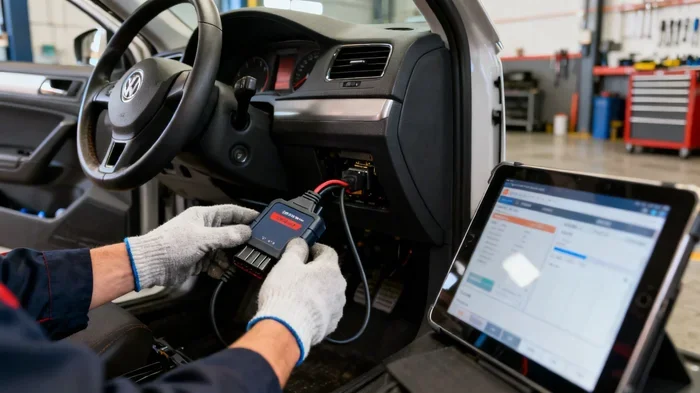
A diagnostic test connects your Volkswagen’s onboard computer to a scanning tool. This tool reads fault codes stored in the system. These codes point mechanics toward what is wrong under the hood.
Modern Volkswagens have dozens of electronic modules. Each one controls a different system. The engine, transmission, brakes, and even the infotainment system all have computers. When something goes wrong, the relevant module logs a fault code.
How the Diagnostic Process Works
Here is what typically happens during a diagnostic test at a Volkswagen service center:
- The technician plugs an OBD-II scanner or Volkswagen-specific tool into your car’s port.
- The scanner communicates with the vehicle’s ECU and other modules.
- Error codes are retrieved and displayed on the screen.
- The technician interprets the codes and identifies the root cause.
- A report is generated with findings and recommended repairs.
The whole process usually takes between 30 minutes and two hours. A basic scan takes less time, while a full multi-module diagnostic can take longer. The length of the test directly affects the final cost.
Average Volkswagen Diagnostic Test Cost
So, how much does a diagnostic test actually cost? The answer depends on where you go and what type of scan you need. Here is a general breakdown:
| Service Type | Dealership Cost | Independent Shop Cost |
|---|---|---|
| Basic OBD-II Scan | $100 – $150 | $50 – $100 |
| Full System Diagnostic | $150 – $300 | $100 – $200 |
| ECU-Specific Diagnostic | $200 – $350 | $150 – $250 |
| Multi-Module Deep Scan | $250 – $400 | $175 – $300 |
As you can see, the Volkswagen diagnostic test cost at a dealership is usually higher. Dealerships have specialized tools and factory-trained technicians. Independent shops use quality equipment too, but their overhead is lower. That difference shows up in the final bill.
Keep in mind that these are averages. Your actual cost may vary based on your location, the model year, and the complexity of your Volkswagen. For instance, some heavier models or vehicles with extensive optional packages may require more time and specialized attention, which can push costs higher. You can learn more about how vehicle weight and specifications affect service needs in our article on 000 Lbs Heavy For A Car which covers related factors.
Factors That Affect Diagnostic Test Pricing
Not all diagnostic tests are created equal. Several factors determine how much you will pay. Let us look at each one closely.
Your Volkswagen Model and Year
Newer Volkswagen models have more advanced computer systems. A 2023 Tiguan has far more electronic components than a 2005 Jetta. More electronics means more modules to scan, which increases the time and the price.
Older Volkswagens often use simpler diagnostic equipment. A basic OBD-II scanner can handle most issues on vehicles from the early 2000s. Newer models may require VCDS (VAG-COM) or other proprietary tools. These specialized tools add to the diagnostic fee.
Type of Diagnostic Scan
Not every scan is the same. Here are the main types you will encounter:
- Generic OBD-II Scan: Reads standard emissions-related codes. This is the most affordable option.
- Manufacturer-Specific Scan: Uses Volkswagen-specific software to access deeper systems. Costs more but provides more detail.
- Module-Specific Diagnostic: Targets one system, like the transmission or ABS. Useful when you already know the problem area.
- Full Multi-Module Scan: Checks every electronic system in the vehicle. Most comprehensive but also the most expensive.
Location and Shop Type
Where you take your Volkswagen matters a lot. Dealerships in major cities often charge more than those in rural areas. Independent shops in smaller towns tend to have lower overhead, which translates to lower prices for you.
Also, dealerships often charge a diagnostic fee even if you do not proceed with the repair. Independent shops are sometimes more flexible about waiving the diagnostic fee if you agree to do the repair with them.
Labor Rates
Labor rates vary widely across the country. Dealership labor rates for Volkswagen vehicles typically range from $100 to $200 per hour. Independent shops usually charge $70 to $130 per hour. The diagnostic test itself is often billed at the hourly labor rate.
Dealership vs. Independent Shop: Where Should You Go?
This is one of the most common questions Volkswagen owners ask. Both options have pros and cons. Let us compare them side by side.
Volkswagen Dealership Pros and Cons
- Pros: Factory-trained technicians, access to official Volkswagen diagnostic software, warranty-friendly repairs, and genuine OEM parts.
- Cons: Higher labor rates, longer wait times, and sometimes upselling of unnecessary services.
Independent Shop Pros and Cons
- Pros: Lower prices, more flexible scheduling, personalized service, and often a more relaxed atmosphere.
- Cons: May lack Volkswagen-specific training, might not have the latest proprietary tools, and warranty work may need to go back to the dealership.
If your Volkswagen is still under the factory warranty, going to the dealership for diagnostics is usually the safer choice. It keeps your warranty intact and ensures that any repairs use approved parts and procedures.
If your warranty has expired, an independent shop with experience in Volkswagen repairs is often the smarter financial move. Many independent technicians specialize in German vehicles and have invested in high-quality diagnostic equipment.
Common Volkswagen Diagnostic Trouble Codes
Understanding common fault codes helps you know what to expect when you get your test results. Here are some of the most frequent codes found in Volkswagen vehicles:
- P0300: Random/multiple cylinder misfire. A common issue across many VW models.
- P0420: Catalyst system efficiency below threshold. Often relates to the catalytic converter.
- P0171: System too lean (Bank 1). Can indicate vacuum leaks or fuel delivery problems.
- P0455: Evaporative emissions system leak detected. A frequent issue in older Volkswagens.
- P0113: Intake air temperature sensor circuit high input. Common in colder climates.
- P0335: Crankshaft position sensor malfunction. Can cause hard starting or stalling.
Keep in mind that a fault code tells the technician where to look, not necessarily what to replace. A good diagnostic test goes beyond just reading the code. It involves proper troubleshooting and verification.
How to Prepare for Your Diagnostic Test
A little preparation goes a long way. When you show up for your diagnostic test, being organized saves time and money. Here are some practical tips:
Write Down Your Symptoms
Before you visit the shop, jot down everything you have noticed. When does the check engine light come on? Does the car shake at idle? Is there a strange noise? The more specific you are, the faster the technician can narrow down the problem.
Note When the Problem Occurs
Does the issue happen when the engine is cold? When you are driving at highway speed? When the air conditioning is on? These details give the technician valuable context that a scanner alone cannot provide.
Bring Your Maintenance Records
If you have records of recent repairs or maintenance, bring them along. This helps the technician understand the history of your Volkswagen and avoid repeating work that has already been done.
Ask Questions
Do not be afraid to ask questions during the diagnostic process. Ask what the fault codes mean. Ask what the next steps are. A good technician will welcome your interest and explain things clearly.
Can You Do a Diagnostic Test at Home?
Yes, you can. Many auto parts stores offer free OBD-II scans. You can also buy your own scanner for home use. Basic OBD-II scanners cost between $20 and $100. More advanced Bluetooth or Wi-Fi scanners connect to your phone and run diagnostic apps.
However, there are limitations. A basic scanner reads generic codes but cannot access Volkswagen-specific systems. For a full diagnostic on a modern VW, you really need professional-grade equipment.
If you get a code at home, use it as a starting point. Do not assume the code tells the whole story. The same fault code can have multiple causes, and proper diagnosis requires expertise and experience.
How to Save Money on Volkswagen Diagnostics
Nobody wants to overpay for car service. Here are some proven ways to keep your diagnostic costs reasonable:
- Get Multiple Quotes: Call two or three shops and ask for their diagnostic fee upfront. Compare before you commit.
- Ask About the Diagnostic Fee Policy: Some shops waive the diagnostic fee if you proceed with the repair. Always ask.
- Check for Recalls or Technical Service Bulletins: Volkswagen sometimes issues recalls that cover diagnostic and repair costs for specific issues.
- Stay Current with Maintenance: Regular oil changes and scheduled service reduce the likelihood of major problems that require expensive diagnostics.
- Do Not Ignore Warning Lights: Addressing a check engine light early often means a simpler and cheaper fix. Delaying can turn a small problem into a big expense.
- Consider an Independent VW Specialist: Shops that specialize in German vehicles often offer competitive rates with expert-level knowledge.
When to Get a Diagnostic Test for Your Volkswagen
You do not need to wait for the check engine light. There are several situations where a diagnostic test makes sense:
- The check engine light is on or flashing.
- Your Volkswagen is running rough or stalling.
- You notice a significant drop in fuel efficiency.
- Your vehicle fails an emissions test.
- You hear unusual sounds or feel vibrations while driving.
- The dashboard displays a warning message related to a specific system.
- You are buying a used Volkswagen and want a pre-purchase inspection.
Getting a diagnostic test early can prevent small issues from becoming expensive repairs. It is one of the best investments you can make in your Volkswagen’s longevity.
What Happens After the Diagnostic Test?
Once the diagnostic test is complete, the technician will share the results with you. This usually includes a list of fault codes, an explanation of what they mean, and a repair recommendation.
Here is what to expect:
- The technician explains the fault codes in plain language.
- They provide a repair estimate that includes parts and labor.
- You decide whether to proceed with the recommended repairs.
- If you approve, the technician performs the fix.
- After the repair, the system is cleared and re-scanned to confirm the issue is resolved.
Always ask for a written estimate before any repair work begins. This protects you from unexpected charges and gives you the chance to compare options.
Volkswagen Diagnostic Test Cost by Model
Different Volkswagen models have different diagnostic needs. Here is a quick look at how the cost can vary:
- Volkswagen Golf: Basic models are straightforward and typically cost $100-$200 for a full diagnostic.
- Volkswagen Jetta: Similar to the Golf, with costs in the $100-$250 range depending on the year.
- Volkswagen Passat: Slightly more complex systems can push costs toward the higher end, around $150-$300.
- Volkswagen Tiguan: As a SUV with more electronic features, expect $150-$350 for a comprehensive scan.
- Volkswagen Atlas: The largest VW model with advanced systems typically falls in the $200-$350 range.
- Volkswagen Arteon: Luxury features and complex electronics can make diagnostics $200-$400 at a dealership.
These are rough estimates. Your actual cost depends on the specific condition of your vehicle and the type of diagnostic required.
Expert Insights on Volkswagen Diagnostics
We spoke with several certified Volkswagen technicians to get their perspective on diagnostic costs. Here is what they had to say:
“The biggest mistake we see is customers waiting too long to get a diagnostic test. A small issue today can become a costly repair next month. Getting it checked early almost always saves money.” – Certified VW Technician with 15 years of experience.
“Many customers are surprised that the diagnostic fee is separate from the repair cost. They expect the scan to be free. It is important to set expectations upfront and explain the value of a proper diagnostic.” – Service Manager at a Volkswagen dealership.
“If you are unsure whether to go to a dealership or an independent shop, look for a specialist in German vehicles. They have the training and tools to handle Volkswagen diagnostics at a fair price.” – Independent VW Repair Expert.
Frequently Asked Questions
How long does a Volkswagen diagnostic test take?
A basic OBD-II scan takes about 15 to 30 minutes. A full multi-module diagnostic can take one to two hours. The time depends on the type of scan and the complexity of your Volkswagen model.
Is the diagnostic fee refundable if I do not do the repair?
It depends on the shop. Many dealerships charge a non-refundable diagnostic fee. Some independent shops waive the fee or credit it toward the repair if you choose to proceed with them. Always ask about the fee policy before the test begins.
Can I drive my Volkswagen with the check engine light on?
In most cases, yes, you can drive short distances. However, if the light is flashing, you should stop driving immediately and get the vehicle towed. A flashing check engine light usually indicates a serious issue that can damage the catalytic converter if ignored.
How often should I get a diagnostic test on my Volkswagen?
There is no set schedule for diagnostic tests. Get one whenever you notice warning signs like the check engine light, unusual sounds, or poor performance. Routine diagnostic checks once or twice a year can also help catch problems early.
Are Volkswagen diagnostic tests covered under warranty?
If your Volkswagen is still under the factory warranty, diagnostic tests related to warranty-covered issues are typically free. However, if the diagnostic reveals an unrelated problem, you may still be charged. Check with your dealership for specific warranty details.
What is the difference between an OBD-II scan and a Volkswagen-specific diagnostic?
An OBD-II scan reads generic emissions-related codes and is available at most auto parts stores. A Volkswagen-specific diagnostic uses proprietary software like VCDS to access deeper systems and manufacturer-specific codes. The latter provides a much more complete picture of your vehicle’s health.
Final Thoughts
The Volkswagen diagnostic test cost is a small price to pay for peace of mind. Whether you pay $100 or $350, a proper diagnostic test gives you clarity about what is happening inside your vehicle. It helps you make smart decisions about repairs and avoids the anxiety of wondering what that warning light means.
Remember, the cheapest option is not always the best. Choose a shop that has experience with Volkswagen vehicles and uses quality diagnostic equipment. Ask questions, get written estimates, and do not rush into repairs without understanding the full picture.
Taking care of your Volkswagen starts with understanding what is going on under the hood. A diagnostic test is your first step toward keeping your car running smoothly for years to come. Stay proactive, stay informed, and your Volkswagen will reward you with reliable performance mile after mile.