How Much Can a Ford F-250 Tow – What It Really Hauls
The Ford F-250 is one of the most capable heavy-duty trucks on the road, with a towing capacity that ranges from about 14,000 to over 20,000 pounds depending on the setup. Your specific maximum towing weight depends on the engine, axle ratio, and towing configuration you choose. Understanding these numbers helps you haul safely and avoid costly mistakes.
Key Takeaways
- towing capacity ranges from 14,000 to 20,000+ pounds, depending on configuration
- Engine choice and axle ratio play a huge role in how much weight you can safely pull
- Gooseneck and fifth wheel setups offer better stability and higher towing limits than conventional hitches
- Payload and towing are different — both matter for safe hauling
- Proper hitch selection and weight distribution are essential for towing safety
📑 Table of Contents
- Understanding Ford F-250 Towing Capacity
- What Affects the Ford F-250 Towing Capacity
- Towing Configurations: Gooseneck vs Fifth Wheel vs Conventional
- Real-World Towing Examples
- How to Maximize Your Ford F-250 Towing Ability
- Common Mistakes When Towing with an F-250
- Final Thoughts on Ford F-250 Towing
Understanding Ford F-250 Towing Capacity
The Ford F-250 is a heavy-duty truck built for serious work. Whether you’re hauling a boat, a horse trailer, or a large camper, this truck was designed to handle heavy loads. But the exact Ford F-250 tow rating varies a lot based on how the truck is configured.
So, how much can a Ford F-250 tow? The answer is not a single number. It depends on several factors that we will break down in this guide. Think of it like this: every truck is different, just like every towing job is different. What works for one person might not work for another.
The base towing capacity for most F-250 models starts around 14,000 pounds. But with the right setup, you can push that number well past 20,000 pounds. That is a huge range, and knowing where your truck falls matters a lot for safety and performance.
Why Towing Numbers Vary
Ford does not give one single towing number for the F-250. Instead, they list a range. This is because the truck comes with different engines, axle ratios, and towing packages. Each combination changes what the truck can handle.
For example, a base model with a smaller engine will tow less than a fully loaded model with the biggest engine and the right gearing. It is simple math, really. More power and better gearing mean more pulling ability.
What Affects the Ford F-250 Towing Capacity
Several key factors determine how much your F-250 can actually pull. Let us look at each one so you understand what really matters.
Engine Options and Power Output
The engine is the heart of your truck’s towing ability. The Ford F-250 offers different engine choices, and each one delivers different levels of torque and horsepower. More torque means more pulling power. That is the basic idea.
The 6.2-liter V8 engine is a popular choice for heavy towing. It provides strong low-end torque, which is exactly what you need when pulling a heavy load from a stop. Some models also offer the Power Stroke diesel engine, which is famous for its high torque output and fuel efficiency under load.
When you compare engines, look at torque numbers first. Horsepower gets attention, but torque is what actually moves heavy weight down the road.
Axle Ratio and Gearing
The rear axle ratio is a gear set inside your truck’s differential. It affects how much torque reaches the wheels. A lower numerical ratio, like 3.73 or 4.10, gives you more pulling power. A higher ratio like 3.55 is better for fuel economy but less towing strength.
Here is a quick comparison:
- 3.55 axle ratio: Good for lighter loads and better fuel economy
- 3.73 axle ratio: A solid all-around choice for most towing needs
- 4.10 axle ratio: Best for heavy towing and steep grades
Choosing the right axle ratio can make a big difference in your truck’s real-world performance. It is one of the most overlooked factors when people ask, “how much can a Ford F-250 tow?”
Towing Package and Equipment
Ford offers different towing packages that add features designed for hauling. These packages often include things like a towing hitch, upgraded cooling systems, and special wiring for trailer lights. Some packages also include trailer sway control, which helps keep your load stable.
The Max Trailer Tow Package is the top-tier option. It includes everything you need for the heaviest loads. If you plan to tow near your truck’s maximum capacity, this package is worth the investment.
Do not skip the basics either. Even with a towing package, you still need the right hitch, the right wiring, and the right brakes on your trailer. These details matter just as much as the truck itself.
Towing Configurations: Gooseneck vs Fifth Wheel vs Conventional
The type of hitch you use changes your towing capacity significantly. This is something many people do not realize at first. Let us break down the three main towing configurations.
Conventional Hitch Towing
A conventional hitch, also called a bumper hitch or receiver hitch, is the most common setup. It attaches to the back of the truck under the bumper. This setup works well for lighter loads like small trailers, jet skis, or camping gear.
The Ford F-250 towing capacity with a conventional hitch is usually on the lower end of the range. You can expect around 14,000 to 17,000 pounds depending on your specific configuration. For most everyday towing needs, this is more than enough.
Gooseneck Hitch Towing
A gooseneck hitch sits in the truck bed over the rear axle. This placement gives better weight distribution and more stability. That is why gooseneck setups are popular for horse trailers and heavy equipment haulers.
With a gooseneck hitch, the Ford F-250 can tow significantly more weight. Many configurations allow towing up to 21,000 pounds or more. The hitch design simply lets the truck handle heavier loads safely.
If you have ever watched a rancher haul horses or a contractor move heavy machinery, chances are they used a gooseneck setup. It is the workhorse choice for serious hauling.
Fifth Wheel Hitch Towing
A fifth wheel hitch also sits in the truck bed, but it uses a different locking mechanism. This setup is the go-to choice for large travel trailers and fifth wheel campers. It offers excellent stability and a smooth ride on the highway.
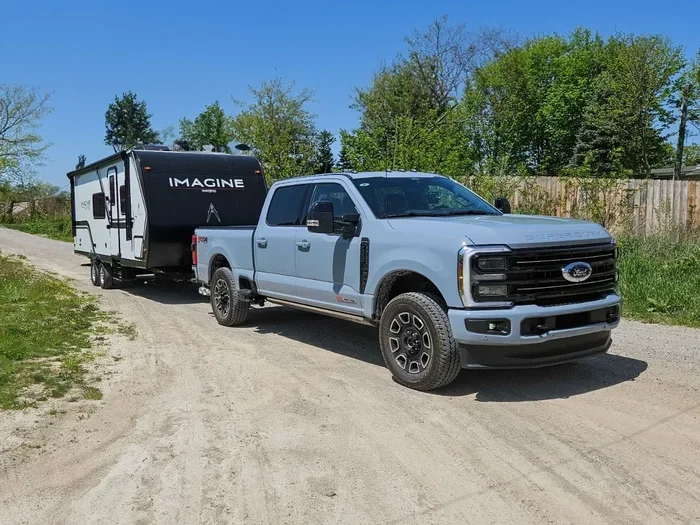
The Ford F-250 with a fifth wheel hitch can tow up to 21,000 pounds in many configurations. This makes it a great choice for families who want to tow a large camper across the country. The weight sits over the rear axle, which helps the truck stay balanced.
If you are comparing gooseneck vs fifth wheel, both offer similar towing capacity. The main difference is the type of trailer you are pulling. Fifth wheel is more common for recreational towing, while gooseneck is more common for commercial and agricultural use.
Real-World Towing Examples
The numbers on paper are one thing. But what does towing capacity look like in real life? Let us look at some practical examples.
What Can You Actually Tow?
Here are some real-world examples of what a Ford F-250 can handle:
- Boat trailers: Most bass boats and deck boats weigh between 3,000 and 6,000 pounds. The F-250 can easily tow multiple boats at once with a gooseneck setup.
- Horse trailers: A loaded horse trailer with two horses can weigh 8,000 to 12,000 pounds. The F-250 handles this with ease, especially with a gooseneck hitch.
- Travel trailers: Large fifth wheel campers can weigh 15,000 to 20,000 pounds. The F-250 is well within range for these setups.
- Work equipment: Construction trailers, generators, and heavy machinery can push close to the truck’s maximum capacity.
Remember that these numbers assume the truck is properly equipped. A base model with no towing package and a light axle ratio will tow less than a fully loaded model. Always check your specific truck’s specs before planning a haul.
Payload vs Towing: Know the Difference
This is a common point of confusion. Payload capacity is how much weight your truck can carry in its bed and cabin. Towing capacity is how much weight the truck can pull behind it. Both numbers matter, and both are limited by the truck’s overall strength.
If you load your truck bed with heavy gear and then try to tow a heavy trailer, you might exceed the truck’s limits. This is dangerous and can damage your vehicle. Always check both your payload and towing numbers before hitting the road.
Think of it this way: your truck has a total weight budget. Everything counts — the truck itself, the cargo, the passengers, and the trailer tongue weight. Stay within budget and you will have a safe, smooth tow.
How to Maximize Your Ford F-250 Towing Ability
Want to get the most out of your F-250? There are several things you can do to improve your truck’s towing performance and safety.
Choose the Right Engine and Axle Ratio
If towing is your priority, choose the engine with the most torque and pair it with a lower axle ratio like 4.10. This combination gives you the best pulling power for heavy loads. It is the most effective way to boost your truck’s capability.
Invest in the Right Towing Package
The Max Trailer Tow Package is designed for heavy-duty hauling. It includes upgraded cooling, stronger gearing, and the right wiring harness. If you tow regularly, this package pays for itself in reliability and peace of mind.
Use Proper Weight Distribution
Weight distribution hitches help spread the trailer weight more evenly across all axles. This improves stability and reduces sway. If you are towing a heavy load, a weight distribution system is a smart investment.
Check Your Tires and Brakes
Your tires are the only thing connecting your truck to the road. Make sure they are rated for the weight you are towing. Also, check that your trailer brakes are working properly. Proper maintenance keeps you safe on every trip.
Practice Safe Towing Habits
Even with a powerful truck, safe towing requires good habits. Drive slower, leave more stopping distance, and avoid sudden maneuvers. The added weight changes how your truck handles on the road. Respect the load and the road will respect you back.
Also, keep in mind that towing laws vary by state. Some states require special mirrors, breakaway brakes, or weight limits on certain roads. Always check local regulations before a long haul.
Common Mistakes When Towing with an F-250
Even experienced truck owners make mistakes when towing. Here are some common errors to avoid.
Overloading the Truck
One of the biggest mistakes is exceeding the truck’s weight limits. People see a big truck and assume it can handle anything. But every truck has limits. Pushing past them is dangerous and can cause mechanical failures.
If you are unsure about your truck’s limits, check the door jamb sticker or your owner’s manual. The numbers are right there. Do not guess.
Ignoring Trailer Weight Distribution
Improper weight distribution causes trailer sway, which is one of the most dangerous towing situations. If your trailer starts to sway, do not slam the brakes. Ease off the accelerator and let the truck slow down gradually.
Use a weight distribution hitch and make sure your load is balanced before you drive. This simple step prevents many towing problems.
Skipping Regular Maintenance
Towing puts extra stress on your truck. The engine, transmission, brakes, and tires all work harder. Skipping maintenance leads to breakdowns and costly repairs. Stay on top of oil changes, brake inspections, and tire checks.
Some people wonder if their truck is 000 lbs heavy for a car category when loaded up. The truth is, a properly equipped F-250 is built for this weight. But only if you maintain it properly.
Not Understanding When the Hybrid System Engages
Some newer truck models use hybrid or mild-hybrid technology to assist with towing. Understanding at what point does a hybrid switch to gas can help you manage fuel economy and power delivery. While the F-250 is primarily a traditional powertrain truck, knowing how your specific model works gives you an edge.
Final Thoughts on Ford F-250 Towing
The Ford F-250 is a remarkable truck when it comes to hauling. With a towing capacity that ranges from 14,000 to over 20,000 pounds, it can handle everything from small trailers to massive fifth wheel campers. The key is understanding your specific truck’s configuration and staying within its limits.
Choose the right engine, the right axle ratio, and the right hitch for your needs. Invest in proper equipment and maintain your truck regularly. And always prioritize safety over hauling more weight than you should.
The Ford F-250 is built to work hard. Give it the right setup, and it will haul anything you throw at it. Just remember: knowing your numbers is the first step to towing safely and confidently.
Frequently Asked Questions
What is the maximum towing capacity of a Ford F-250?
The maximum towing capacity of a Ford F-250 is over 20,000 pounds when equipped with the right engine, axle ratio, and towing configuration. The exact number depends on your specific setup, so always check your truck’s specs.
Can a Ford F-250 tow a fifth wheel camper?
Yes, the Ford F-250 can tow a fifth wheel camper. With a fifth wheel hitch setup, the F-250 can handle trailers weighing up to 21,000 pounds. This makes it a great choice for families who want to tow a large camper.
What is the difference between towing capacity and payload capacity?
Towing capacity is how much weight your truck can pull behind it on a trailer. Payload capacity is how much weight your truck can carry in its bed and cabin. Both numbers are important and both have limits you should never exceed.
Does the engine choice affect towing capacity?
Yes, the engine choice has a big impact on towing capacity. The 6.2-liter V8 and Power Stroke diesel engines offer the most torque and the best towing performance. Always match your engine to your towing needs.
What axle ratio is best for towing?
A lower numerical axle ratio like 3.73 or 4.10 is best for towing. These ratios send more torque to the wheels, which gives you better pulling power. A 4.10 ratio is ideal for the heaviest loads.
Do I need a special hitch to tow the maximum weight?
Yes, to tow near the maximum capacity, you need the right hitch. A gooseneck or fifth wheel hitch is recommended for the heaviest loads. A conventional hitch works fine for lighter towing but will limit your capacity.
=== CONCLUSION ===
The Ford F-250 is one of the most capable trucks for towing on the market. Its towing capacity ranges from 14,000 to over 20,000 pounds, making it suitable for a wide range of hauling needs. Whether you are pulling a boat, a horse trailer, or a large camper, the F-250 delivers the power and reliability you need.
Understanding what affects your truck’s towing ability is the key to safe and successful hauling. Choose the right engine, axle ratio, hitch, and towing package for your needs. Maintain your truck properly and always stay within the manufacturer’s limits.
With the right setup and good habits, your Ford F-250 will be a dependable hauling partner for years to come. Know your numbers, respect the limits, and enjoy the confidence that comes with a well-equipped heavy-duty truck.