How Big Is the Gas Tank on a 57 Tundra in Gallons
The gas tank on a Toyota Tundra with the 5.7L V8 engine holds approximately 26.4 gallons of fuel. This generous capacity gives the Tundra an impressive driving range, making it a great choice for towing, hauling, and long road trips. Whether you own a 2007 or a 2021 model, understanding your fuel tank size helps with trip planning and fuel budgeting.
If you own or are thinking about buying a Toyota Tundra with the 5.7L V8 engine, one of the first questions that probably comes to mind is: how big is the gas tank on a 57 Tundra in gallons? It is a simple question, but the answer matters more than you might think. Your fuel tank size affects everything from your daily commute to your weekend towing trips.
The Toyota Tundra has been a popular full-size pickup truck since it launched in 1999. The 5.7L V8 engine, known as the 1UR-FE, has been the go-to powerplant for many Tundra owners who want serious hauling and towing capability. And with that power comes the need for a reliable fuel supply. The 5.7 Tundra gas tank is designed to keep you on the road longer between fill-ups.
In this guide, we will walk you through everything you need to know about the Tundra fuel tank. We will cover the exact capacity, driving range, fuel type, dimensions, and even some tips for getting the most out of every gallon. Whether you are a new Tundra owner or have been driving one for years, this article has something useful for you.
Key Takeaways
- Tank Capacity: The 5.7 Tundra gas tank holds 26.4 gallons of fuel.
- Driving Range: With an average MPG, you can expect 400+ miles per tank on the highway.
- Fuel Type: The 5.7L V8 requires regular unleaded gasoline.
- Towing Impact: Towing heavy loads reduces fuel efficiency and range.
- Tank Dimensions: The tank is designed to fit snugly in the rear of the truck bed area.
- Replacement Costs: A new fuel tank typically costs between $500 and $1,200 depending on the model year.
📑 Table of Contents
- Understanding the 5.7 Tundra Gas Tank Capacity
- Fuel Range: How Far Can You Go on a Full Tank?
- What Type of Fuel Does the 5.7 Tundra Use?
- Gas Tank Dimensions and Physical Design
- Common Fuel Tank Issues and Maintenance Tips
- How the 5.7 Tundra Compares to Other Full-Size Trucks
- Expert Tips for Maximizing Fuel Efficiency in Your Tundra
- When to Consider a Fuel Tank Replacement
- Final Thoughts
Understanding the 5.7 Tundra Gas Tank Capacity
The official fuel tank capacity for the Toyota Tundra equipped with the 5.7L V8 engine is 26.4 gallons. This number has remained consistent across most model years, from the early 2000s through the latest 2021+ models. Toyota engineers designed this tank size to balance fuel storage with the overall weight and layout of the truck.
Now, 26.4 gallons might sound like a lot, and it is. But when you are towing a heavy trailer or hauling cargo, that fuel gets used up faster than you might expect. The tank is located in the rear section of the truck, underneath the bed, which keeps the center of gravity low and balanced.
How Does Tank Size Compare Across Tundra Models?
Toyota offers the Tundra with different engine options, and the fuel tank size can vary slightly depending on the engine and trim level. Here is a quick comparison:
- 4.6L V8: 26.4 gallons
- 5.7L V8: 26.4 gallons
- Dual-Turbo V6 (newer models): 26.4 gallons
Interestingly, all Tundra models share the same 26.4-gallon tank regardless of engine choice. This means that if you are switching from the 4.6L to the 5.7L, you will not gain or lose any fuel capacity. The difference lies in how efficiently you use that fuel.
Fuel Range: How Far Can You Go on a Full Tank?
One of the most practical questions owners ask is about driving range. With a 26.4-gallon tank, the 5.7 Tundra fuel range can be quite impressive. On the highway, where the engine operates at a steady speed, you can expect to travel between 400 and 500 miles on a single tank.
City driving tells a different story. Stop-and-go traffic, idling, and frequent acceleration all reduce your fuel efficiency. In the city, you might get around 300 miles of range per tank. Towing a trailer can cut that number even further, sometimes down to 250 miles or less depending on the load weight.
Factors That Affect Your Fuel Range
Several factors influence how far you can go on a full tank of gas. Understanding these can help you plan your trips better and avoid getting caught short:
- Driving Habits: Aggressive acceleration and speeding burn fuel faster.
- Towing Weight: Heavier loads require more fuel to move.
- Terrain: Mountainous or hilly terrain uses more gas than flat roads.
- Weather Conditions: Cold weather can reduce fuel efficiency by up to 20 percent.
- Tire Pressure: Underinflated tires create more rolling resistance.
- Vehicle Maintenance: Dirty air filters and old spark plugs reduce efficiency.
Keeping these factors in mind helps you get the most out of your Tundra fuel tank. A well-maintained truck with proper tire pressure and smooth driving habits will always go further than a neglected one.
What Type of Fuel Does the 5.7 Tundra Use?
The 5.7L V8 engine in the Toyota Tundra runs on regular unleaded gasoline. You do not need premium fuel, which is good news for your wallet. Using regular gas keeps your cost per fill-up lower and makes the truck more affordable to operate on a daily basis.
Some truck owners wonder if using premium fuel will improve performance or fuel economy. The short answer is no. The 5.7L V8 is designed to run on regular unleaded, and using a higher-octane fuel will not give you any meaningful benefits. You are just paying extra for something your engine does not need.
That said, if you are ever unsure about what fuel to use, always check your owner manual. It will clearly state the recommended fuel type. Using the wrong fuel can lead to engine knocking, reduced performance, and even long-term damage in some cases.
Can You Use Alternative Fuels?
Some truck owners explore alternative fuel options. For example, you might wonder if you can run your Tundra on E85 ethanol or even alcohol-based fuels. While some flex-fuel vehicles can handle ethanol blends, the standard 5.7 Tundra is not designed for E85. Stick with regular unleaded gasoline to keep your engine running smoothly and avoid warranty issues.
It is also worth noting that hybrid technology is becoming more common in the truck world. Some drivers who are used to hybrid vehicles might wonder if their Tundra can operate without gas entirely. The answer is no. The 5.7 Tundra is a traditional gasoline-powered truck and requires fuel to run. Unlike a hybrid vehicle that can switch between electric and gas power, the Tundra relies solely on its gasoline engine.
Gas Tank Dimensions and Physical Design
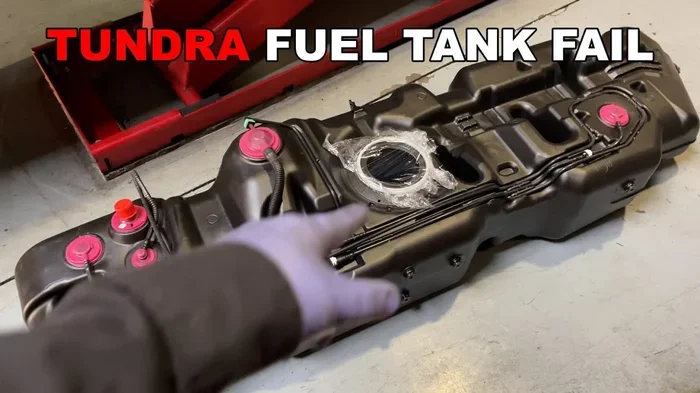
The fuel tank on the 5.7 Tundra is not just about capacity. Its physical design plays a big role in how it fits within the truck and how it performs over time. The tank is typically made from durable materials that can withstand the elements, road debris, and the vibrations that come with driving a full-size pickup.
Toyota engineers placed the tank in a location that maximizes space while maintaining vehicle balance. The tank sits beneath the rear of the truck bed, which keeps it out of the way and protects it from potential damage. This placement also helps distribute weight more evenly across the axles.
Tank Material and Durability
Modern Toyota Tundra fuel tanks are made from high-density polyethylene (HDPE) or similar durable plastics. These materials resist corrosion, do not rust, and can handle the stress of daily use. Older Tundra models from the early 2000s may have used steel tanks, which were also durable but more prone to rust over time.
Here are some key points about the tank design:
- Material: High-density polyethylene or steel, depending on model year.
- Location: Underneath the rear truck bed.
- Shape: Contoured to fit the truck frame without taking up bed space.
- Capacity: 26.4 gallons across all 5.7L V8 models.
- Fuel Gauge: Electronic gauge on the dashboard for easy reading.
Knowing the physical dimensions and design of your tank can help if you ever need to replace it or upgrade components like the fuel pump or fuel sending unit.
Common Fuel Tank Issues and Maintenance Tips
Like any vehicle component, the fuel tank on a Tundra can develop issues over time. Being aware of these problems helps you catch them early and avoid costly repairs. Regular maintenance goes a long way toward keeping your tank in top shape.
Fuel Pump Failures
The fuel pump is one of the most common issues reported by Tundra owners. A failing fuel pump can cause difficulty starting, stalling, or a loss of power under heavy load. The fuel pump is located inside the tank, so replacing it usually requires dropping the tank. This is not a cheap repair, with costs typically ranging from $400 to $800 depending on labor rates in your area.
Fuel Tank Rust and Corrosion
Older Tundra models with steel tanks are susceptible to rust, especially in areas where roads are treated with salt during winter. Rust can weaken the tank and eventually lead to leaks. If you live in a cold climate, consider washing the undercarriage of your truck regularly during the winter months to remove salt and debris.
Fuel Gauge Malfunctions
Sometimes the fuel gauge on the dashboard gives inaccurate readings. This is often caused by a faulty fuel sending unit, which is also located inside the tank. A malfunctioning sending unit can make it difficult to know exactly how much fuel you have left, which is especially problematic on long trips.
Quick Maintenance Tips for Your Fuel System
Keeping your fuel system healthy does not have to be complicated. Here are some simple tips that make a big difference:
- Keep your tank at least a quarter full: This prevents the fuel pump from overheating and extends its life.
- Use quality fuel: Buy gasoline from reputable stations to avoid contaminants.
- Replace the fuel filter regularly: A clogged filter restricts fuel flow and reduces performance.
- Check for leaks: Inspect the tank and fuel lines periodically for any signs of leakage.
- Do not run the tank completely empty: Running on empty can introduce sediment into the fuel system.
Following these simple steps can add years of life to your Tundra fuel system and keep your truck running strong for hundreds of thousands of miles.
How the 5.7 Tundra Compares to Other Full-Size Trucks
When shopping for a full-size pickup, fuel tank size is an important consideration. The 26.4-gallon tank in the 5.7 Tundra is competitive with other trucks in its class. Here is how it stacks up against some popular rivals:
- Ford F-150 (5.0L V8): 26.0 gallons
- Chevy Silverado 1500 (5.3L V8): 24.0 gallons
- Ram 1500 (5.7L HEMI): 26.0 gallons
- Toyota Tundra (5.7L V8): 26.4 gallons
As you can see, the Tundra has one of the largest fuel tanks in its class. This gives it a slight edge when it comes to driving range and fewer trips to the gas station. For owners who frequently tow or drive long distances, this extra capacity can make a real difference.
It is also worth noting that fuel efficiency varies by truck. The Tundra with the 5.7L V8 typically gets around 13 to 16 MPG in combined driving. While this is not the most fuel-efficient truck on the market, the large tank size helps offset the lower MPG by giving you more miles between fill-ups.
Expert Tips for Maximizing Fuel Efficiency in Your Tundra
Even though the 5.7 Tundra is a powerful truck, there are ways to squeeze more miles out of every gallon. These tips are especially helpful for owners who use their Tundra for towing or long highway commutes.
- Keep your tires properly inflated: Underinflated tires can reduce fuel economy by up to 3 percent.
- Remove unnecessary weight: Extra cargo in the bed increases fuel consumption.
- Use cruise control on the highway: Maintaining a steady speed improves MPG.
- Avoid excessive idling: Idling burns fuel without moving the truck forward.
- Keep your air filter clean: A dirty air filter restricts airflow and reduces engine efficiency.
- Use the recommended oil: Synthetic oil can reduce engine friction and improve fuel economy slightly.
By following these tips, you can get the most out of your 26.4-gallon tank and spend less time at the pump. Every little improvement adds up over time, especially if you drive your Tundra regularly.
When to Consider a Fuel Tank Replacement
There may come a time when your Tundra fuel tank needs to be replaced. This could be due to rust, leaks, or damage from an accident. Knowing the signs of a failing tank and the replacement process can save you time and money.
Common signs that your fuel tank may need replacement include visible rust or holes, fuel odors around the truck, fuel gauge readings that do not make sense, and leaks underneath the vehicle. If you notice any of these issues, have your truck inspected by a qualified mechanic as soon as possible.
Replacement costs for a Tundra fuel tank typically range from $500 to $1,200 for parts and labor. The exact cost depends on your model year, whether you choose an OEM or aftermarket tank, and the labor rates at your local repair shop. Always opt for quality parts to ensure longevity and safety.
Some owners also wonder about upgrading to a larger aftermarket tank. While this is possible, it is important to ensure that any aftermarket tank meets safety standards and fits properly within the truck frame. Improperly installed tanks can create safety hazards and may void your warranty.
Final Thoughts
The gas tank on a 5.7 Tundra holds 26.4 gallons, and that is a number that works hard for you. Whether you are towing a trailer to the campsite, commuting to work, or heading out on a cross-country road trip, knowing your fuel capacity helps you plan with confidence. The Tundra’s tank is one of the largest in its class, giving you an edge in range and fewer stops at the gas station.
Taking care of your fuel system through regular maintenance and smart driving habits ensures that your tank continues to serve you well for years to come. From the fuel pump to the fuel gauge, every component plays a role in delivering gasoline from the tank to the engine efficiently.
So the next time someone asks, how big is the gas tank on a 57 Tundra in gallons, you can confidently answer: 26.4 gallons. And now you know everything else that comes with that number, from driving range to maintenance tips. Your Tundra is a capable, powerful truck, and its fuel system is designed to keep up with whatever you throw at it.
Frequently Asked Questions
How many gallons is the gas tank on a 5.7 Tundra?
The gas tank on a Toyota Tundra with the 5.7L V8 engine holds 26.4 gallons of fuel. This capacity has been consistent across most model years from 2007 to 2021 and beyond. It is one of the larger tanks in the full-size pickup truck class.
How far can a 5.7 Tundra go on a full tank of gas?
On the highway, a 5.7 Tundra can travel between 400 and 500 miles on a full tank. City driving and towing reduce this range significantly, sometimes to around 250 to 300 miles. Your actual range depends on driving habits, load weight, and road conditions.
Does the 5.7 Tundra need premium gas?
No, the 5.7L V8 engine in the Tundra runs on regular unleaded gasoline. Using premium fuel will not improve performance or fuel economy. Always refer to your owner manual for the recommended fuel type to keep your engine running properly.
Can a Tundra run without gas like a hybrid car?
No, the 5.7 Tundra is a conventional gasoline-powered truck and cannot run without fuel. Unlike some hybrid vehicles that can operate on electric power alone for short distances, the Tundra requires gasoline to run its engine at all times.
What is the fuel tank material on a 5.7 Tundra?
Newer Tundra models use high-density polyethylene tanks that resist corrosion and rust. Older models from the early 2000s may have steel tanks. Both materials are durable, but plastic tanks tend to last longer in areas with harsh winters and road salt exposure.
How much does it cost to replace a Tundra fuel tank?
Fuel tank replacement costs typically range from $500 to $1,200 for parts and labor combined. The exact price depends on your model year, whether you choose OEM or aftermarket parts, and local labor rates. Always have the work done by a qualified technician to ensure safety and proper installation.
=== CONCLUSION ===
The 5.7 Tundra gas tank is a well-designed component that holds 26.4 gallons of fuel. This capacity gives the truck excellent range, competitive standing among full-size pickups, and the practicality needed for towing, hauling, and everyday driving. Whether you are planning a long road trip or just navigating your daily commute, knowing your tank size helps you make informed decisions about fuel stops and trip planning.
Regular maintenance, smart driving habits, and quality fuel all contribute to a long-lasting fuel system. Take care of your Tundra, and it will take care of you. Now you have all the information you need to understand your truck’s fuel system inside and out.
=== INTERNAL LINKS ===
If you are curious about fuel types and compatibility, check out Can You Put Premium Gas In Any Car to learn more about what fuels work best with different engines.
For those wondering about gas dependency in modern vehicles, you might also enjoy reading Can A Hybrid Run Without Gas to understand how hybrid systems compare to traditional gasoline trucks.
Finally, if towing is part of your Tundra lifestyle, understanding how your truck uses fuel is important. Learn more about Does Traction Control Use More Gas to discover how your truck’s systems impact fuel consumption.