Does the Toyota Camry Have a Tire Pressure Monitoring System
Yes, the Toyota Camry comes equipped with a tire pressure monitoring system (TPMS) across most model years and trim levels. This system alerts drivers when tire pressure drops below safe levels, helping prevent accidents, improve fuel economy, and extend tire life. Understanding how the TPMS works on your Camry can save you time, money, and unnecessary trips to the mechanic.
This is a comprehensive guide about Does the Toyota Camry Have a Tire Pressure Monitoring System.
Key Takeaways
- Standard Safety Feature: Most Toyota Camry models include a factory-installed TPMS that monitors tire pressure in real time.
- Warning Light Signals: The TPMS warning light on your dashboard alerts you when tire pressure is too low or too high.
- Two TPMS Types: The Camry uses either direct sensors inside the tire or indirect monitoring through the ABS system.
- Easy Maintenance: Regular tire pressure checks and resets keep the system working accurately.
- Fuel and Safety Benefits: Proper tire pressure improves gas mileage and reduces the risk of blowouts.
- Reset Is Simple: You can reset the TPMS light yourself in most cases with a few easy steps.
[FEATURED_IMAGE_PLACEHOLDER]
Every Toyota Camry owner wants to keep their car running safely and efficiently. One question that comes up often is whether the Camry has a tire pressure monitoring system. The short answer is yes. But understanding how this system works, what the different lights mean, and how to maintain it can make a big difference in your daily driving experience.
The Toyota Camry tire pressure monitoring system is designed to keep you informed about the air pressure inside your tires. Whether you drive a newer model or an older one, knowing how TPMS works helps you stay safe on the road. It also saves you money by preventing uneven tire wear and improving fuel economy.
In this guide, we will walk you through everything you need to know about the TPMS in the Toyota Camry. We will cover how the system works, what the warning lights mean, how to reset it, and common problems you might run into. By the end, you will feel confident managing your Camry’s tire health like a pro.
What Is a Tire Pressure Monitoring System?
A tire pressure monitoring system, commonly called TPMS, is an electronic system built into your vehicle. Its job is to track the air pressure inside each tire and alert you when something is off. Think of it as a tire health guard that works behind the scenes every time you drive.
Most modern cars, including the Toyota Camry, come with TPMS as a standard safety feature. The system uses either small sensors mounted inside the tire or the car’s anti-lock braking system to measure pressure. When the pressure drops below the recommended level, a warning light appears on your dashboard.
Why TPMS Matters for Your Camry
Driving with incorrect tire pressure is more dangerous than most people realize. Underinflated tires can cause poor handling, longer stopping distances, and even blowouts. Overinflated tires, on the other hand, wear out unevenly and reduce comfort. The TPMS in the Toyota Camry helps you catch these problems early before they turn into expensive repairs or dangerous situations.
Beyond safety, proper tire pressure also improves your fuel efficiency. Tires that are not properly inflated create more rolling resistance, which means your engine works harder and uses more gas. Keeping your tires at the right pressure is one of the simplest ways to save money at the pump.
Does the Toyota Camry Have a Tire Pressure Monitoring System?
The answer depends on the model year and trim level of your Camry. The good news is that Toyota has included TPMS as a standard feature on most Camry models for many years now. Whether you have a 2012 Camry or a 2024 Camry, there is a strong chance your car has some form of tire pressure monitoring.
TPMS Across Different Camry Model Years
Toyota started making tire pressure monitoring standard on the Camry well before federal regulations required it. Here is a quick look at how TPMS has been available across different Camry generations:
- 2007-2011 Camry: TPMS became standard on most trims, though some base models may have only had a manual tire pressure gauge recommendation.
- 2012-2017 Camry: Direct TPMS sensors were standard across all trims, giving precise pressure readings for each individual tire.
- 2018-2024 Camry: The latest Camry models feature advanced direct TPMS with more accurate sensors and clearer dashboard displays.
If you are unsure whether your specific Camry has TPMS, check your owner’s manual or look at your dashboard. When you turn the key to the “ON” position (but do not start the engine), several warning lights should briefly illuminate. If you see a horseshoe-shaped icon with an exclamation mark, that is your TPMS warning light, confirming your Camry has the system.
How Does the Camry’s TPMS Work?
The Toyota Camry tire pressure monitoring system uses one of two methods to check your tire pressure. Understanding the difference helps you know what to expect when the system activates.
Direct TPMS (Most Common in the Camry)
Direct TPMS uses small pressure sensors located inside each tire, usually mounted on the valve stem. These sensors measure the exact air pressure in each tire and send the data wirelessly to the car’s computer. If the pressure drops by 25% or more below the recommended level, the system triggers the warning light on your dashboard.
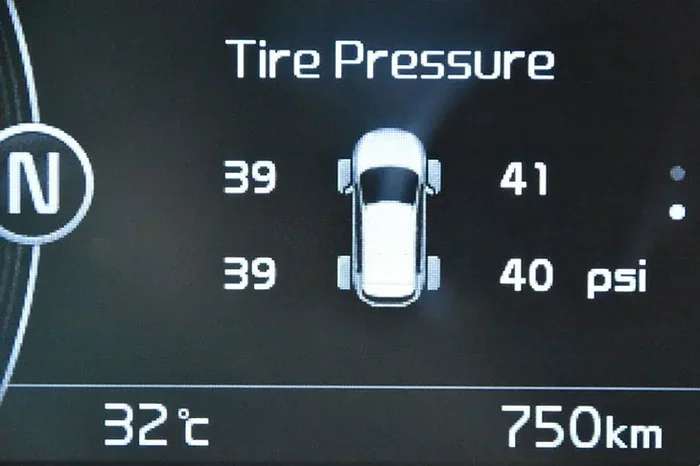
Direct TPMS gives you precise readings. Some Camry models even display individual tire pressure readings on the instrument cluster or multi-information display. This makes it easy to see exactly which tire needs attention.
Indirect TPMS (Less Common)
Indirect TPMS does not use physical sensors inside the tire. Instead, it relies on the anti-lock braking system (ABS) sensors to detect differences in wheel rotation speed. A tire with low pressure has a smaller rolling radius, which causes it to spin faster than the other tires. The system notices this difference and triggers the warning light.
Indirect TPMS is less precise than direct TPMS. It also needs to be recalibrated after you rotate your tires or change tire pressure. Most newer Camry models use direct TPMS because it provides more accurate and reliable readings.
Understanding the TPMS Warning Light
The TPMS warning light on your Toyota Camry dashboard looks like a horseshoe or a cross-section of a tire with an exclamation point in the center. It is usually yellow or orange. When this light comes on, your Camry is telling you that one or more tires are outside the safe pressure range.
What the Different TPMS Light Behaviors Mean
The way the TPMS light behaves can tell you a lot about what is going on with your tires:
- Light stays on constantly: This means one or more tires have pressure that is significantly below the recommended level. Check your tire pressure as soon as possible.
- Light flashes then stays on: This often indicates a malfunction in the TPMS system itself, such as a dead sensor battery or a faulty sensor.
- Light comes on briefly then goes off: This usually happens during startup as a self-check. If it stays off, your system is working normally.
- Light comes and goes intermittently: This could mean your tire pressure is borderline low, possibly due to temperature changes.
If you see the TPMS warning light while driving, do not ignore it. Pull over safely and check your tire pressure with a manual tire pressure gauge. If you are not near a gas station with an air pump, at least make sure the visible tires look properly inflated.
How to Maintain Your Camry’s TPMS
Keeping your Toyota Camry tire pressure monitoring system in good shape is straightforward. A little regular attention goes a long way in ensuring the system gives you accurate warnings when you need them most.
Check Your Tire Pressure Regularly
Even though TPMS does the monitoring for you, it is still a good habit to check your tire pressure manually at least once a month. The recommended tire pressure for most Toyota Camry models is between 32 and 35 PSI, but you should always check the sticker on the driver’s side door jamb for your specific model’s exact number.
Use a reliable tire pressure gauge to get an accurate reading. Gas stations often have free air pumps with built-in gauges, but they are not always the most precise. A small handheld gauge you keep in your glove box is a great investment.
Reset the TPMS After Adjusting Tire Pressure
After you inflate or deflate your tires, you may need to reset the TPMS system. The reset process varies slightly depending on your Camry model year, but here are the general steps:
- Make sure all tires are at the correct pressure.
- Turn the ignition to the “ON” position without starting the engine.
- Locate the TPMS reset button, which is usually found beneath the steering wheel.
- Press and hold the button until the TPMS warning light blinks three times.
- Start the engine and drive for about 20 minutes to allow the system to recalibrate.
If you are not sure where the reset button is, check your owner’s manual. Some newer Camry models allow you to reset the system through the touchscreen display under the vehicle settings menu.
Replace TPMS Sensors When Needed
The sensors inside your tires have batteries that typically last between 5 and 10 years. When the battery dies, the sensor stops sending data, and the TPMS light may come on. If your TPMS warning light stays on even though your tires are properly inflated, a dead sensor battery could be the cause.
Replacing a TPMS sensor costs anywhere from $50 to $100 per sensor, depending on your Camry model and where you go for service. Some tire shops offer free sensor replacement if you purchase new tires from them. You can also check if you can get a free diagnostic for your car at certain auto parts stores, which can help identify whether a sensor battery is the issue.
Common TPMS Problems and How to Fix Them
Like any electronic system, the TPMS in your Toyota Camry can experience issues from time to time. Here are the most common problems and what you can do about them.
TPMS Light Comes On After a Tire Change
If you recently changed tires or rotated them, the TPMS light may come on because the sensors need recalibration. Simply resetting the system as described above usually fixes this. If the light does not go away after resetting, one of the sensors may have been damaged during the tire change.
Cold Weather Triggers the TPMS Light
Tire pressure drops as the temperature decreases. A cold morning can cause your tire pressure to drop enough to trigger the TPMS light. This is normal and usually goes away once the tires warm up from driving. However, if the light stays on, you should add air to bring the pressure back to the recommended level.
TPMS Light Flashes and Then Stays On
A flashing TPMS light followed by a constant glow often signals a system malfunction. This could mean a faulty sensor, a weak sensor battery, or a problem with the receiver module in the car. In this case, it is best to have a professional diagnose the issue. You might want to visit a dealership or a trusted mechanic who can run a diagnostic scan on your Camry’s TPMS system.
Benefits of Having a Working TPMS on Your Camry
The tire pressure monitoring system in the Toyota Camry offers several real-world benefits that go beyond just lighting up a dashboard icon.
- Improved Safety: Properly inflated tires provide better grip, shorter stopping distances, and more predictable handling, especially in wet or icy conditions.
- Better Fuel Economy: Tires at the correct pressure reduce rolling resistance, which can improve your gas mileage by up to 3%.
- Longer Tire Life: Underinflated tires wear out on the outer edges of the tread, while overinflated tires wear out in the center. TPMS helps you avoid both, extending the life of your tires.
- Peace of Mind: Knowing that your car is constantly monitoring tire pressure gives you confidence every time you get behind the wheel.
- Lower Maintenance Costs: Catching low tire pressure early prevents uneven wear and costly tire replacements down the road.
Keeping your TPMS in good working order is one of the easiest and most affordable ways to care for your Toyota Camry. It is a small system that delivers big benefits.
Final Thoughts
The Toyota Camry tire pressure monitoring system is a valuable feature that comes standard on most model years and trim levels. It keeps you informed about your tire health, helps you stay safe on the road, and even saves you money on fuel. Understanding how the system works, what the warning lights mean, and how to maintain it puts you in control of your Camry’s tire care.
Make it a habit to check your tire pressure regularly, reset the system after any adjustments, and address TPMS warnings promptly. These small steps add up to a safer, more efficient, and more reliable driving experience. Your Toyota Camry is built to last, and a well-maintained TPMS is just one part of keeping it running at its best for years to come.
If you ever notice your TPMS light acting strangely or if you need help resetting the system, do not hesitate to consult your owner’s manual or visit a trusted mechanic. Staying on top of your tire pressure is one of the simplest and most important things you can do as a Camry owner.
Frequently Asked Questions
Can I drive my Toyota Camry with the TPMS light on?
You can drive short distances with the TPMS light on, but you should check your tire pressure as soon as possible. Driving on underinflated tires can cause poor handling, reduced fuel efficiency, and increased tire wear. If the light is flashing, it may indicate a sensor malfunction that needs professional attention.
How do I know the recommended tire pressure for my Camry?
The recommended tire pressure for your Toyota Camry is listed on a sticker inside the driver’s side door jamb. You can also find it in your owner’s manual. Most Camry models recommend between 32 and 35 PSI, but always confirm with your specific vehicle’s information.
How much does it cost to replace a TPMS sensor on a Camry?
Replacing a TPMS sensor on a Toyota Camry typically costs between $50 and $100 per sensor, depending on the model year and where you go for service. Some tire shops include sensor replacement for free when you purchase new tires from them.
Can I reset the TPMS light myself on a Toyota Camry?
Yes, you can reset the TPMS light on most Camry models yourself. Locate the TPMS reset button under the steering wheel, press and hold it until the warning light blinks three times, then drive for about 20 minutes to allow the system to recalibrate. Refer to your owner’s manual for model-specific instructions.
Why does my Camry’s TPMS light come on in cold weather?
Cold weather causes the air inside your tires to contract, which lowers the tire pressure. This can trigger the TPMS light even if your tires are properly inflated at normal temperatures. The light usually goes away once the tires warm up from driving, but you should still check and add air if needed.
How often should I check my Camry’s tire pressure manually?
It is a good practice to check your Toyota Camry’s tire pressure manually at least once a month, even if your TPMS is working properly. The system alerts you only when pressure drops significantly, so regular manual checks help you catch small problems before they become bigger issues.
Frequently Asked Questions
What is Does the Toyota Camry Have a Tire Pressure Monitoring System?
Does the Toyota Camry Have a Tire Pressure Monitoring System is an important topic with many practical applications.