Can Lightning Hit a Car And Everything You Need to Know
Yes, lightning can hit a car, but your vehicle offers surprising protection thanks to the Faraday cage effect. Understanding how lightning strike on car incidents work helps you stay safe during thunderstorm driving and make smart decisions when storms roll in.
You are driving down a highway. Dark clouds roll in fast. Thunder rumbles in the distance. You wonder, can lightning hit a car? It is a question many drivers ask, especially during storm season. The answer is yes. Lightning can and does strike vehicles regularly. But here is the good news. Your car is one of the safest places to be when a thunderstorm hits.
The physics behind this protection is fascinating. A metal-bodied vehicle acts like a giant cage. Electrical current flows around the outside of the car and reaches the ground. The people inside stay safe. This principle is called the Faraday cage effect. It has saved countless lives over the years. In this article, we will break down everything you need to know about lightning and vehicles. You will learn how strikes happen, what damage they cause, and how to stay safe on the road during a storm.
Key Takeaways
- Lightning can absolutely strike a car: Metal vehicles act as conductors, but the charge flows around you, not through you.
- The Faraday cage effect protects occupants: The metal shell of a car directs electrical current to the ground.
- Convertibles and fiberglass cars offer less protection: These vehicles lack the full metal enclosure needed for safe conductivity.
- Common lightning damage includes tire sidewalls, antennae, and electronic systems: Expect costly repairs after a strike.
- Pull over safely during storms: Turn off the engine, avoid touching metal surfaces, and stay inside the vehicle.
- Car insurance may cover lightning damage: Comprehensive coverage typically includes storm-related vehicle damage.
- Never seek shelter under a tree during a storm: A car is a much safer option than many alternatives.
📑 Table of Contents
- What Happens When Lightning Strikes a Car
- The Faraday Cage Effect Explained
- How Safe Is Your Vehicle During a Thunderstorm
- What Damage Can Lightning Cause to a Car
- Tips for Driving Safely During Thunderstorms
- Common Myths About Lightning and Cars
- What to Do Immediately After a Lightning Strike
- Final Thoughts on Lightning and Car Safety
What Happens When Lightning Strikes a Car
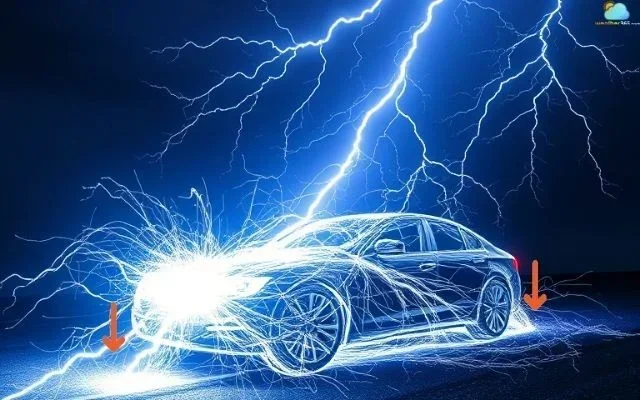
When lightning strike on car occurs, the electrical charge hits the metal roof or body of the vehicle first. The current travels through the metal shell. It moves around the passenger compartment. Then it exits through the tires and into the ground. This entire process happens in fractions of a second. You may see sparks on the exterior. You might hear a loud bang. But inside the car, you are largely shielded from harm.
The Path of the Electrical Current
Lightning seeks the path of least resistance to the ground. A car sitting on rubber tires might seem like insulation. But lightning carries millions of volts of electricity. It easily jumps through the air and through the tires. The metal frame of the vehicle becomes the main pathway. The current flows from the top of the car down to the wheels. From there, it disperses into the earth beneath.
This is why the type of car matters. A fully metal vehicle provides the best car lightning protection. Cars with partial metal frames or plastic bodies behave differently. We will cover this in more detail later in the article.
Real-World Examples of Cars Struck by Lightning
Every year, thousands of vehicles get hit by lightning across the United States alone. Drivers report seeing bright flashes around the roofline. Some describe a buzzing sound on the antenna. Others feel the car vibrate briefly. In most cases, drivers and passengers walk away unharmed. The vehicle may suffer exterior damage. But the occupants are protected by the metal shell surrounding them.
There are rare exceptions. Cars with open tops or damaged frames may not offer full protection. Wet conditions can also change how electricity behaves. But the general rule holds true. A closed metal car is a safe shelter during a lightning storm.
The Faraday Cage Effect Explained
The Faraday cage effect is the science behind why cars protect you from lightning. Michael Faraday discovered this principle in the 1800s. He found that a conductive enclosure blocks external electrical fields. The charge distributes itself across the outer surface. Nothing penetrates to the inside. This is exactly what happens when lightning hits a car.
How the Faraday Cage Works in Vehicles
A car body is made of metal. Metal is an electrical conductor. When lightning hits the car, the current spreads across the outer surface. It does not enter the cabin. The metal shell redirects the energy downward and outward. The rubber tires help ground the vehicle. They allow the charge to flow into the earth safely.
This is why you should not touch metal surfaces inside the car during a storm. The steering wheel, door handles, and center console are all connected to the frame. If you grip these parts tightly, you could become part of the electrical path. Keep your hands in your lap. Keep your feet flat on the floor. Do not lean against the doors or the center console.
Why Convertibles and Fiberglass Cars Are Different
Not all vehicles offer the same level of lightning and vehicle protection. Convertibles lack a full metal roof. Fiberglass cars have non-conductive bodies. These vehicles do not create a proper Faraday cage. The electrical current has nowhere to flow evenly around the cabin.
If you drive a convertible, take extra precautions during storms. Pull over to a safe location. Wait for the storm to pass. The same applies to cars with plastic or carbon fiber bodies. These vehicles may not provide the same shielding effect as traditional metal cars.
How Safe Is Your Vehicle During a Thunderstorm
Driving during a thunderstorm can be scary. But your car is designed to handle a lightning strike better than almost any other shelter you might find on the road. That said, you still need to follow safety rules. Simply being inside a car does not make you invincible.
When to Pull Over During a Storm
If you notice dark clouds building, reduce your speed. Turn on your hazard lights. Find a safe spot to pull over. Avoid trees, power lines, and tall structures. A ditch or low-lying area is a better option than an open field. Once you are stopped, turn off the engine. Set the parking brake. Wait calmly inside the vehicle until the storm passes.
What to Do and What Not to Do Inside the Car
Follow these simple steps to maximize your safety during a thunderstorm driving situation:
- Do keep your windows rolled up.
- Do keep your hands in your lap or on your knees.
- Do avoid leaning against the doors or dashboard.
- Do turn off the radio and GPS if possible.
- Do not touch the steering wheel with both hands.
- Do not use your phone inside the car.
- Do not lean on the car doors or frame.
- Do not step out of the vehicle immediately after a strike.
Is It Safe to Use Electronics Inside the Car?
Most electronic devices inside the car are safe to use. The metal shell blocks the electrical current from entering the cabin. However, it is best to avoid using corded devices. Cordless phones and Bluetooth devices are generally fine. Using your cell phone inside the car during a storm poses minimal risk. But to be extra cautious, save calls for after the storm passes.
What Damage Can Lightning Cause to a Car
Even though the occupants are protected, the car itself can suffer significant lightning strike damage. Understanding what to expect helps you prepare for repairs and insurance claims.
Exterior Damage From a Lightning Strike
The most visible damage occurs on the outside of the car. Lightning can scorch the paint. It can melt metal trim pieces. The antenna may melt or snap off entirely. Tire sidewalls can explode from the intense heat. You might notice circular burn marks on the roof or hood. These marks are telltale signs of a recent lightning strike on car incident.
Electrical and Electronic System Damage
Modern cars are packed with sensitive electronics. A lightning strike can fry the onboard computer system. The radio, power windows, and dashboard lights may stop working. In some cases, the entire electrical system shuts down. Resetting the car’s computer may require a trip to a mechanic. Advanced vehicles with sensors and cameras may need costly recalibration after a strike.
Structural Damage and Safety Concerns
In rare cases, a powerful lightning strike can weaken the car’s structural integrity. The roof supports or door frames may sustain hidden damage. This is uncommon but possible. If your car has been struck by lightning, have a professional inspect it thoroughly before driving again. Look for warping, discoloration, or unusual smells coming from the electrical system.
Does Car Insurance Cover Lightning Damage
Most comprehensive auto insurance policies cover lightning strike damage repair. Collision coverage does not apply here. Lightning is classified as a weather-related event. If you have comprehensive coverage, your insurer should pay for the repairs. Be sure to document the damage with photos. File your claim as soon as possible after the storm passes.
| Type of Damage | Severity Level | Typical Repair Cost | Insurance Coverage |
|---|---|---|---|
| Paint scorching and melting | Low to Moderate | $200 – $1,500 | Yes (Comprehensive) |
| Antenna or mirror damage | Low | $50 – $300 | Yes (Comprehensive) |
| Tire blowout or sidewall damage | Moderate | $200 – $800 | Yes (Comprehensive) |
| Electrical system failure | High | $1,000 – $5,000 | Yes (Comprehensive) |
| Computer system damage | High | $1,500 – $7,000 | Yes (Comprehensive) |
| Structural frame damage | Severe | $3,000 – $15,000+ | Yes (Comprehensive) |
Tips for Driving Safely During Thunderstorms
Prevention is always better than reaction. Following a few simple tips can keep you safe when lightning and vehicles collide on the road.
Plan Your Route Around Storm Activity
Check the weather forecast before you hit the road. If a severe thunderstorm is in the forecast, consider delaying your trip. Use a weather app on your phone to track storm movement. Plan alternate routes that avoid open highways and exposed bridges. Safety should always come before schedule.
Pull Over at the First Sign of Danger
Do not wait until lightning is directly overhead. At the first rumble of thunder or flash of lightning, find a safe place to stop. Parking garages, covered gas stations, and rest areas are good options. If none are available, pull off the road completely. Turn on your hazard lights. Stay inside the car until the storm passes.
Keep an Emergency Kit in Your Car
Every car should have a basic emergency kit. Include a flashlight, first aid supplies, water, and a blanket. Add a portable phone charger to stay connected during storms. These small preparations can make a big difference if you get stranded during severe weather.
Avoid Flooded Roads During Thunderstorms
Thunderstorms often bring heavy rain. Flooded roads are dangerous for many reasons. Standing water can hide deep potholes. Six inches of moving water can knock you off your feet. One foot of water can float a car. If you cannot see the road beneath the water, do not attempt to cross. Turn around and find an alternate route.
Keep Your Distance From Other Vehicles
Rain reduces visibility. Wet roads increase stopping distances. Keep a safe following distance from the car ahead of you. Use your headlights on low beam. This improves your visibility and makes your car easier for others to see. Avoid sudden braking or sharp turns on wet surfaces.
Common Myths About Lightning and Cars
There are many misconceptions about lightning strike on car incidents. Let us clear up the most common ones right now.
Myth 1: Rubber Tires Protect You From Lightning
This is one of the most widespread myths. Many people believe rubber tires insulate the car from the ground. This is not true. Lightning carries enough voltage to jump through rubber tires easily. The protection comes from the metal frame of the car, not the tires. The tires simply help ground the vehicle after the current passes through the frame.
Myth 2: Convertibles Are Just as Safe as Hardtop Cars
As we discussed earlier, convertibles do not provide the same Faraday cage protection. The lack of a metal roof means the electrical current has no enclosed path to follow. If you are driving a convertible during a storm, pull over and wait it out. Do not rely on the convertible top for protection.
Myth 3: You Should Get Out of the Car If Lightning Is Near
This is dangerous advice. Staying inside the car is almost always safer than being outside on foot. The metal shell directs the lightning around you. If you step out during a storm, you become the tallest object in the area. You are far more vulnerable to a direct strike. Stay inside with your hands in your lap until the storm passes.
Myth 4: Lightning Cannot Strike the Same Place Twice
This is completely false. Lightning frequently strikes the same location multiple times. Tall structures like skyscrapers and communication towers get hit regularly. The same applies to vehicles. If your car has been struck before, it is not immune to future strikes. Always take proper precautions during thunderstorms.
What to Do Immediately After a Lightning Strike
If your car has just been struck by lightning, stay calm. Follow these steps to ensure your safety and document the damage properly.
First, check yourself and your passengers for any injuries. Lightning strikes can cause minor burns or temporary numbness. If anyone is hurt, call emergency services immediately. Next, turn on your hazard lights. Pull the car to a safe location if it is still drivable. If the car will not start or the electrical system has failed, stay inside and call for roadside assistance.
Take photos of the damage from multiple angles. Document any burn marks, melted parts, or broken components. This evidence will be helpful when you file your insurance claim. Contact your insurance company as soon as possible. Describe the incident in detail. Ask about the claims process and what documentation they need.
Have a qualified mechanic inspect the vehicle before driving it again. Lightning can cause hidden damage that is not visible to the naked eye. Electrical systems, sensors, and safety features may all be affected. A thorough inspection ensures your car is safe to drive and that all damage is properly repaired.
Final Thoughts on Lightning and Car Safety
So, can lightning hit a car? Yes, it can. But your vehicle is built to protect you in that very situation. The Faraday cage effect is a remarkable scientific principle that works in your favor every time you drive a metal-bodied car during a storm. Understanding how lightning strike on car events work empowers you to make safer decisions on the road.
Always prioritize pulling over when storms approach. Follow the safety tips we covered. Keep your hands away from metal surfaces inside the car. Know that your vehicle can handle a lightning strike far better than you can handle being outside in one. With the right knowledge and a little preparation, you can navigate thunderstorms with confidence.
Stay informed. Stay prepared. And remember, your car is your best shelter when thunder roars. Drive safely, plan ahead, and never underestimate the power of a good storm safety routine.
Frequently Asked Questions
Can lightning hit a car and damage the electronic systems?
Yes, lightning can damage a car’s electronic systems. The intense electrical current can fry the onboard computer, radio, sensors, and dashboard electronics. Modern vehicles with advanced technology are especially vulnerable. Comprehensive car insurance typically covers this type of damage.
Is it safe to drive a convertible during a thunderstorm?
No, convertibles do not provide the same Faraday cage protection as hardtop cars. The lack of a full metal roof means the electrical current has no enclosed path to follow. If possible, pull over to a safe location and wait for the storm to pass.
Do rubber tires on a car protect you from lightning?
No, rubber tires do not protect you from lightning. Lightning carries millions of volts and can easily jump through rubber. The metal frame of the car provides the actual protection by directing the current around the cabin and into the ground.
What should I do if my car gets struck by lightning while driving?
Stay calm and keep your hands in your lap. Turn on your hazard lights and pull over safely. Do not step out of the car immediately. Check for injuries, then call for help. Document the damage with photos and contact your insurance company as soon as possible.
Does car insurance cover lightning damage to a vehicle?
Yes, comprehensive auto insurance typically covers lightning damage. This includes exterior damage, electrical system failure, and computer damage. Collision coverage does not apply to weather-related events like lightning strikes.
How long should I wait after a lightning storm before driving again?
Wait at least 30 minutes after the last thunderclap before resuming driving. This ensures the storm has moved far enough away to reduce the risk of another strike. Use a weather app to monitor storm activity and track when it is safe to continue your journey.