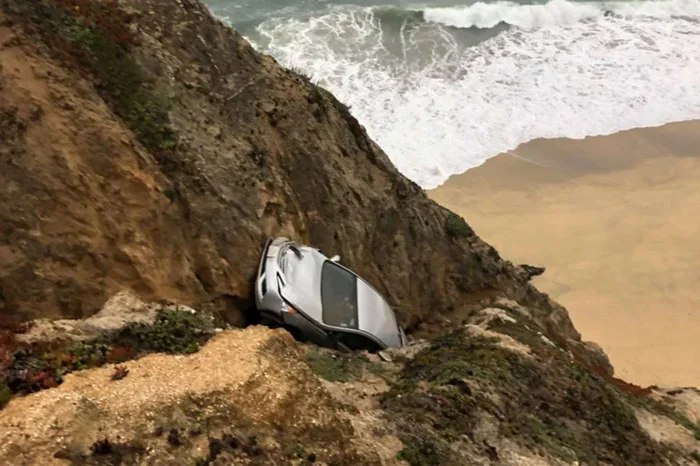
When a Car Falls Off a Ledge The Truth Will Shock You
When a car falls off a ledge, the consequences can be devastating and unpredictable. The truth behind these incidents goes far beyond what viral videos show. Understanding the causes, physics, and survival factors can help you stay safe on mountain roads and ledges. This article reveals the real story behind every car falls off a ledge event.
Have you ever watched a video of a car falls off a ledge and felt your stomach drop? It is one of the most terrifying things you can imagine. The screech of tires, the long pause in midair, and then the crash. It is a moment that stays with you.
But there is so much more to these incidents than what meets the eye. The truth behind a car falling off a ledge involves physics, human error, road design, and sometimes pure bad luck. When a car falls off a ledge, the results are almost always severe. Yet some people walk away from these events against all odds.
In this article, we will dig deep into what really happens when a vehicle goes over the edge. We will look at the causes, the science, the survival stories, and the steps you can take to protect yourself. Whether you are a curious viewer or someone who drives mountain roads often, this guide has something valuable for you.
Key Takeaways
- Point 1: A car falls off a ledge for many reasons, including road erosion, driver error, and mechanical failure. Knowing these causes can help you avoid danger.
- Point 2: The physics of a falling vehicle are more complex than most people realize. Gravity, speed, and angle all play major roles in the outcome.
- Point 3: Real survival stories from car cliff fall incidents show that preparation and quick thinking can make a life-saving difference.
- Point 4: Preventive measures like defensive driving and regular vehicle maintenance significantly reduce the risk of a vehicle over edge accident.
- Point 5: If you witness a car plunge incident, knowing the right steps to take can help rescue crews respond faster and more effectively.
- Point 6: Car ledge accident prevention starts with awareness. Understanding the dangers of mountain roads and steep drop-offs keeps you and your passengers safe.
- Point 7: The aftermath of a car falling from height involves legal, insurance, and emotional challenges that many people are not prepared for.
📑 Table of Contents
- What Happens When a Car Falls Off a Ledge
- The Real Causes Behind These Terrifying Incidents
- Survival Stories: People Who Lived Through a Car Falling Off a Ledge
- The Physics Behind a Vehicle Falling From a Height
- How to Prevent a Car From Falling Off a Ledge
- What to Do If You Witness a Car Falling Off a Ledge
- Conclusion
What Happens When a Car Falls Off a Ledge
The moment a car falls off a ledge is over in seconds. But those seconds contain a lot of force and energy. Understanding what happens during a car cliff fall helps us appreciate how dangerous these events truly are.
The Immediate Impact
The instant a vehicle leaves the edge, gravity takes over completely. A car falling from height accelerates quickly. In just one second, a car drops about 16 feet. By the time it hits the ground, the force is enormous.
The impact depends on several factors. The height of the ledge matters a lot. A car that falls from 10 feet hits very differently than one that falls from 100 feet. The surface below also plays a big role. Dirt and grass absorb more force than concrete or rock.
When a car falls off a ledge onto a soft surface, there is a slightly better chance of survival. But even then, the injuries can be life-changing. The car itself may crumple beyond recognition. Airbags deploy with tremendous force. The passengers inside experience extreme G-forces that the body is not built to handle.
What the Videos Don’t Show
Viral videos of a car falls off a ledge often focus on the dramatic moment. They show the car in midair and the crash at the bottom. But they rarely show what comes next.
The aftermath of a car plunge incident can be chaotic. Rescue teams arrive quickly. Emergency workers assess the damage. Paramedics check for survivors. In many cases, the vehicle is badly damaged and hard to access. Firefighters may need to cut through the roof or doors to reach anyone inside.
The emotional toll is just as severe. Witnesses to a vehicle over edge accident often experience trauma. Drivers who survive a car fell off mountain road event may deal with fear and anxiety for months. It is not just a physical event. It is a deeply human one.
The Real Causes Behind These Terrifying Incidents
When a car falls off a ledge, there is almost always a reason. It is rarely random. Most of the time, a combination of factors leads to the disaster. Understanding these causes is the first step in prevention.
Road Edge Erosion and Wear
One of the most common causes of a ledge car accident is road erosion. Mountain roads are built along cliffs and steep slopes. Over time, rain, wind, and traffic wear away the edge of the road.
What looks like a solid shoulder can actually be crumbling underneath. A car driving near the edge may suddenly find that the ground gives way. This is especially dangerous on older mountain roads where maintenance has been limited. A vehicle falls into canyon situations often start with hidden erosion that drivers cannot see.
Seasonal weather makes this worse. Heavy rain softens the soil. Snow and ice weaken the road edge. Freeze-thaw cycles create hidden cracks. By the time a driver notices the problem, it may be too late.
Driver Error and Distraction
Human error plays a huge role in a car falling off a ledge. Many of these incidents happen because the driver was not paying attention. A moment of distraction can lead to a vehicle over the edge.
Common driver mistakes include:
- Looking at a phone instead of the road
- Speeding on narrow mountain roads
- Not paying attention to road signs warning of drop-offs
- Overestimating the vehicle’s turning ability
- Driving while fatigued or drowsy
When a driver is distracted or going too fast, the margin for error shrinks to almost nothing. A car that is two feet from the edge can go over in an instant. This is why speed control and focus are so important on ledge-prone roads.
Mechanical Failure and Brake Issues
Sometimes the car itself is to blame. Brake failure on a steep road can send a vehicle right over the edge. A car fell off mountain road incident caused by mechanical failure is more common than most people think.
Worn brake pads, leaking brake lines, and overheated brakes on long downhill stretches all contribute. A driver who relies only on brakes going down a steep mountain road may find those brakes have failed. The car keeps accelerating. There is no way to stop. The only option becomes the edge.
Regular vehicle maintenance is essential. Checking your brakes before a mountain trip can save your life. A car falls off a ledge because of mechanical failure far too often, and most of these cases are preventable.
Survival Stories: People Who Lived Through a Car Falling Off a Ledge
Not every car falls off a ledge story ends in tragedy. Some people have survived these events against all odds. Their stories give us hope and also teach us important lessons about what helps people live through a car cliff fall.
Real-Life Accounts That Will Amaze You
There have been several documented cases of car cliff survival that made headlines around the world. In one case, a driver in Colorado survived a vehicle falls from height incident when his SUV landed on a rocky outcropping that slowed the fall. The car rolled but the undercarriage caught on a ledge, creating a makeshift platform.
In another incident in California, a family survived a car fell off mountain road event because they were wearing seatbelts. The car tumbled down a steep embankment. The seatbelts kept everyone in their seats. When the car finally stopped, all four family members were able to walk away with minor injuries.
These stories show that a car falling off a ledge does not always mean the worst. Survival is possible. But it often comes down to luck, preparation, and the specific circumstances of the fall.
What Makes the Difference Between Life and Death
So what separates a car crash from elevation incident where someone survives from one where no one makes it? Several factors come into play.
First, the speed of the vehicle matters. A slow-moving car that goes over the edge has a better chance than one going at highway speed. Second, the angle of the fall affects how the car hits the ground. A sideways tumble spreads out the force of impact. A nose-first dive concentrates it.
Third, safety features make a huge difference. Seatbelts, airbags, and strong vehicle frames all protect occupants. Modern cars are designed to absorb impact energy. This engineering helps in a car crash from elevation more than people realize.
Fourth, the landing surface matters enormously. Snow, mud, and trees can cushion a fall. A car that lands in deep snow has a much better chance than one that hits bare rock. Nature sometimes provides a soft landing when everything else goes wrong.
The Physics Behind a Vehicle Falling From a Height
The science of a car falls off a ledge is fascinating and terrifying at the same time. Understanding the physics helps us see why these accidents are so destructive and why some people survive.
How Gravity Affects a Falling Car
Gravity is the main force at work when a car falls off a ledge. Once the vehicle leaves solid ground, gravity pulls it down at an accelerating rate. The car gains speed rapidly as it falls.
A vehicle falls from height and the energy builds with every foot. The higher the fall, the more kinetic energy the car has when it hits the ground. This energy has to go somewhere. It gets absorbed by the car, the ground, and the occupants inside.
The formula for this is straightforward. The force of impact equals mass times acceleration due to gravity times height. In plain terms, a heavier car falling from a greater height creates more force on impact. This is why a car falling off a cliff from 200 feet is far more destructive than one falling from 20 feet.
The Role of Speed and Angle
Speed before the fall changes everything. A car that is moving fast when it goes over the edge travels farther horizontally. It also hits the ground with more force. A car falling off a ledge while driving at 30 mph hits very differently than one at 5 mph.
The angle of departure matters too. A car that drives straight off the edge falls almost vertically. A car that is turning or swerving at the edge takes a curved path. This changes how the car rotates in the air and how it lands.
A car falling from height at an angle often lands on its side or roof. This can actually be better than a front-first impact. The side doors and roof structure are designed to protect occupants in a rollover. A vehicle falls into canyon scenarios where the car tumbles and lands on its roof sometimes result in surprisingly survivable outcomes.
How to Prevent a Car From Falling Off a Ledge
The good news is that most car falls off a ledge incidents are preventable. With the right knowledge and habits, you can greatly reduce your risk. Here are practical steps you can take today.
Defensive Driving on Mountain Roads
Mountain roads require a different driving mindset than highways. When you are on a road with a ledge or cliff nearby, you need to be extra cautious. Defensive driving is your best tool for car ledge accident prevention.
Start by slowing down on mountain roads. The posted speed limit is a maximum, not a target. On winding roads with drop-offs, driving below the limit is smart. Keep both hands on the wheel at all times. Avoid distractions like your phone, eating, or adjusting the radio.
Stay aware of road conditions. Look for warning signs about narrow roads, drop-offs, and falling rocks. If the road looks eroded or damaged, slow down and proceed carefully. Trust your instincts. If something feels wrong, it probably is.
Vehicle Maintenance Tips
A well-maintained car is less likely to become part of a car fell off mountain road statistic. Regular maintenance keeps your vehicle responsive and safe.
Before any mountain trip, check these key items:
- Brake pads and brake fluid levels
- Tire tread depth and tire pressure
- Steering and suspension components
- Lights and signals for visibility
- Windshield wipers for clear sight lines
These simple checks take only a few minutes. They can make the difference between a safe trip and a car accident from elevation that changes your life forever. Do not skip maintenance. Your life depends on it.
Understanding Road Guardrails and Barriers
Guardrails are there to protect you, but they have limits. A car falls off a ledge even when guardrails are present if the impact is strong enough. Guardrails are designed for certain speeds and impact angles. They cannot stop every vehicle.
Do not rely on guardrails to keep you safe. Drive as if the guardrail is not there. This mindset keeps you alert and cautious. It is better to be safe than to test the limits of a roadside barrier.
What to Do If You Witness a Car Falling Off a Ledge
Witnessing a car falls off a ledge is a traumatic experience. But knowing what to do in those first moments can make a huge difference. Your actions can save lives.
Immediate Steps to Take
If you see a vehicle over edge accident happening, your first priority is safety. Pull your car over safely and turn on your hazard lights. Do not rush to the scene. The ledge may still be unstable. Another fall could happen.
Call 911 immediately. Give the dispatcher as much information as possible. Include the location, the number of vehicles involved, and any visible injuries. Stay on the line and follow their instructions. They will guide you through what to do next.
If you are trained in first aid and it is safe to approach, check on the occupants. But do not move injured people unless there is an immediate danger like fire. Moving someone with a spinal injury can cause more harm.
After the Incident
The aftermath of a car falls off a ledge event can be overwhelming. Emergency crews will arrive and take over. Your role as a witness is important. Write down what you saw while it is fresh in your mind. Note the time, weather conditions, and any details about the vehicle.
If you were involved in the incident, seek medical attention even if you feel fine. Some injuries from a car crash from elevation do not show symptoms right away. Concussions, internal bleeding, and soft tissue injuries can take hours to appear.
Document everything. Take photos of the scene if it is safe to do so. Exchange information with other parties involved. Contact your insurance company as soon as possible. The more organized you are, the smoother the recovery process will be.
Conclusion
The truth about a car falls off a ledge is both sobering and empowering. These incidents are terrifying, but they are not random mysteries. They have causes, they have patterns, and they have prevention strategies. When a car falls off a ledge, the outcome depends on many factors, but preparation and awareness are your greatest allies.
The survival stories remind us that hope exists even in the worst situations. The physics lessons show us why these crashes are so severe. The prevention tips give us practical tools to stay safe. Every piece of knowledge makes you a better, more prepared driver.
Remember that a car fell off mountain road can happen to anyone. It does not discriminate. But it can be prevented with the right habits and mindset. Drive carefully on mountain roads. Maintain your vehicle. Stay focused. And if you ever witness a car falling off a ledge, know what to do.
The road ahead should be a journey, not a danger. Take these lessons to heart. Share them with friends and family. Together, we can reduce the number of car ledge accident incidents and keep our roads safer for everyone.
Frequently Asked Questions
What causes a car to fall off a ledge?
The most common causes include road erosion, driver distraction, speeding on mountain roads, and mechanical failure. When the road edge crumbles or a driver loses focus, the vehicle can go over the side. Brake failure on steep descents is another major factor.
Can a person survive a car falling off a ledge?
Yes, survival is possible, though rare. Factors like the height of the fall, the landing surface, seatbelt use, and vehicle safety features all play a role. Some people have survived car cliff fall incidents with relatively minor injuries thanks to these factors.
What should I do if I see a car falling off a ledge?
Pull over safely, turn on your hazard lights, and call 911 immediately. Do not rush to the scene. Provide the dispatcher with the location and any details about the incident. Stay on the line and follow their instructions carefully.
How can I prevent my car from falling off a mountain ledge?
Drive slowly, stay focused, and avoid distractions on mountain roads. Maintain your vehicle regularly, especially brakes and tires. Respect guardrails but do not rely on them completely. Be extra cautious during wet or icy conditions when road edges are weaker.
What happens to a car after it falls off a ledge?
The car typically suffers severe structural damage. The frame crumples, windows shatter, and safety systems deploy. Depending on the landing surface, the vehicle may bounce, roll, or slide. Rescue teams often need specialized tools to extract occupants from a damaged vehicle after a car falls off a ledge.
Are there legal consequences when a car falls off a ledge?
Yes, depending on the cause. If driver error or negligence led to the incident, there can be legal and insurance consequences. In cases where road design or maintenance contributed, the responsible government agency may share liability. Consulting a lawyer experienced in automotive accidents is recommended after any car falls off a ledge event.