Does Carfax Show Warranty Information for Used Cars
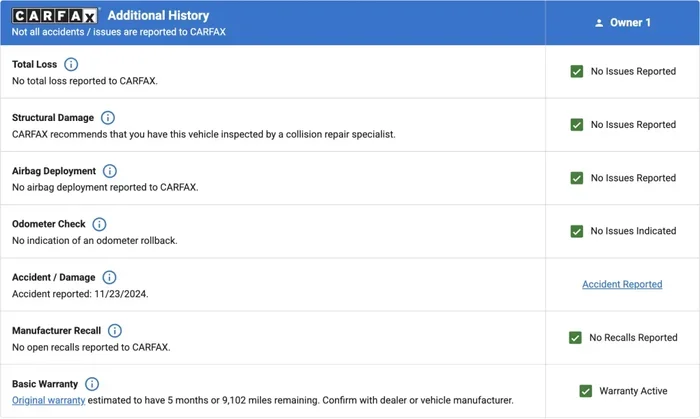
Carfax provides valuable vehicle history data, but it does not directly display warranty information. A Carfax report shows title status, accident history, service records, and odometer readings, which help buyers gauge a car’s reliability. You can use Carfax data alongside manufacturer warranty details and extended warranty options to make informed decisions. Always verify warranty coverage separately through the manufacturer or dealership before purchasing a used car.
Key Takeaways
- Carfax does not show warranty information directly: It focuses on vehicle history, not warranty coverage details.
- A Carfax report includes key data points: Title status, accident history, service records, odometer readings, and previous owners.
- You can use Carfax to verify warranty eligibility: Service records may hint at remaining factory or extended warranty coverage.
- Always check warranty status separately: Contact the manufacturer or dealer to confirm active warranty terms before buying.
- Extended warranties add protection: They can cover repairs beyond the original factory warranty period.
- Carfax BuyBack Guarantee offers extra peace of mind: This program protects buyers if a qualifying issue was missed in the report.
- Combining Carfax with a PPI gives the best results: A pre-purchase inspection complements the vehicle history report for a thorough check.
📑 Table of Contents
- Does Carfax Show Warranty Information for Used Cars?
- Why Carfax Does Not Include Warranty Data
- How to Check Warranty Information When Buying a Used Car
- What Carfax CAN Tell You About Warranty Eligibility
- The Carfax BuyBack Guarantee and Warranty
- Common Mistakes Buyers Make When Using Carfax
- Expert Tips for Using Carfax Alongside Warranty Checks
- Conclusion
Does Carfax Show Warranty Information for Used Cars?
If you are shopping for a used car, you have probably heard about Carfax. It is one of the most popular vehicle history report services out there. But here is the big question: does Carfax show warranty information? The short answer is no, not directly. Carfax focuses on vehicle history, not warranty details. However, the information it does provide can help you figure out whether a car might still be under warranty.
Buying a used car is a big decision. You want to know what you are getting into. A Carfax report gives you a snapshot of a car’s past. It shows accidents, title problems, service history, and more. But warranty information is a different beast entirely. This guide breaks down exactly what Carfax shows, what it does not show, and how to use it to your advantage when buying a used car.
Understanding the difference between vehicle history and warranty coverage is key. Many buyers assume that a clean Carfax report means the car has warranty protection. That is not always true. Let us dive deep into this topic so you can shop with confidence and avoid costly surprises.
What Exactly Is a Carfax Report?
A Carfax report is a detailed document that pulls data from many sources. These sources include state DMV records, insurance databases, and service shop records. The report gives you a comprehensive look at a vehicle’s past. But it is important to know what is inside and what is not.
Here is what a standard Carfax report typically includes:
- Title information: This shows whether the car has a clean title, salvage title, or flood damage title.
- Accident history: Any reported collisions or damage incidents are listed here.
- Odometer readings: You can track the car’s mileage over time to check for rollback issues.
- Service records: Regular maintenance and repairs that were documented at shops.
- Previous owners: The number of people who owned the car and how long they kept it.
- Lemon history: Any records of the car being classified as a lemon.
- Recalls: Open or unresolved recalls that may affect the vehicle.
Notice that warranty information is not on this list. Carfax does not track warranty start dates, end dates, or coverage specifics. It tracks the vehicle’s history, period. So if you are hoping to find warranty details on a Carfax report, you will be disappointed.
Why Carfax Does Not Include Warranty Data
Now you might be wondering why Carfax does not include warranty information. After all, would it not be helpful to know if a car is still covered? The answer comes down to how Carfax gathers its data.
Carfax pulls information from public records and participating service centers. Warranty data is not typically part of public records. Manufacturers and dealerships keep warranty information in their own private databases. They do not share this data with Carfax or similar report services.
Think of it this way. Carfax is like a detective that looks at clues left behind in public records. Warranty information is more like a private conversation between you and the manufacturer. Carfax does not have access to that conversation. That is why you need to go directly to the source to find warranty details.
Also, warranties can vary widely. A manufacturer warranty might cover powertrain issues for five years or 60,000 miles. An extended warranty from a third party could add even more coverage. These details are not something a vehicle history report service would track.
How to Check Warranty Information When Buying a Used Car
Since Carfax does not show warranty details, how do you find this information? There are several reliable ways to check whether a used car still has active warranty coverage.
Contact the Manufacturer Directly
The best way to check warranty status is to contact the car manufacturer. You will need the vehicle identification number, or VIN. This 17-character code is unique to every car. The manufacturer can use the VIN to look up the original warranty start date and remaining coverage.
Most major manufacturers have online portals where you can enter the VIN yourself. For example, Toyota, Honda, and Ford all offer warranty lookup tools on their websites. This is a quick and free way to get accurate warranty information.
Ask the Seller or Dealer
If you are buying from a dealership, ask them directly about warranty coverage. Reputable dealers will be upfront about what is still covered. They may even offer their own dealer warranty or certification program.
If you are buying from a private seller, things get trickier. Private sellers may not know the warranty status. In this case, you should verify the information yourself using the VIN lookup method mentioned above.
Check for Certified Pre-Owned Status
Many manufacturers offer certified pre-owned programs. These programs come with their own warranty coverage. A CPO vehicle has been inspected and reconditioned by the manufacturer or dealer. It usually includes a bumper-to-bumper warranty and a powertrain warranty.
If the car you are looking at is certified pre-owned, you get extra peace of mind. The warranty is backed by the manufacturer, not just the individual seller. This is one of the best ways to ensure warranty protection on a used car.
What Carfax CAN Tell You About Warranty Eligibility
Even though Carfax does not show warranty information directly, it can still help you figure out if a car might be under warranty. Here is how.
Service Records and Maintenance History
If a car has regular service records in its Carfax report, that is a good sign. It means the previous owner took care of the vehicle. More importantly, service records can give you clues about warranty status.
For example, if the car was serviced at a dealership, the records might show warranty-related repairs. If a repair was covered under warranty, the service record would reflect that. This is an indirect way to see if a car had active warranty coverage at some point.
Age and Mileage Clues
Carfax shows the car’s age and odometer readings. You can use this information to estimate warranty eligibility. Most manufacturer warranties last for three years or 36,000 miles, whichever comes first.
If the car is five years old with 40,000 miles on the odometer, the factory warranty has likely expired. But if the car is only two years old with 20,000 miles, it might still be covered. Use the Carfax data to make an educated guess, then confirm with the manufacturer.
Previous Owner History
The number of previous owners can also give you hints. A car with one previous owner who kept it for three years might still be under the original factory warranty. A car with four previous owners in five years probably does not have any warranty left.
Carfax also shows whether the car was used as a personal vehicle or a rental or fleet vehicle. Fleet vehicles often have shorter warranty periods because they are driven harder and more frequently.
The Carfax BuyBack Guarantee and Warranty
Carfax offers a BuyBack Guarantee program. This program protects buyers in specific situations. If a Carfax report misses a qualifying problem, Carfax will buy back the vehicle. This is a great feature, but it does not replace warranty coverage.
The BuyBack Guarantee is not a warranty. It is a safety net. It applies when a vehicle history report contains an error or omits a major issue. For example, if Carfax says the car has a clean title but it actually has a salvage title, Carfax may buy it back.
This program gives buyers extra confidence, but it should not be your only protection. Always combine a Carfax report with a thorough inspection and warranty verification. Think of the BuyBack Guarantee as a backup plan, not a primary defense.
How to Get the Most Out of Carfax When Buying Used
Carfax is a powerful tool, but only if you use it correctly. Here are some tips to get the most value from your Carfax report when shopping for a used car.
- Always get the VIN from the seller first. Do not rely on a generic report. Each Carfax report is tied to a specific VIN.
- Read the report carefully. Look for gaps in service history, high mileage, or red flags like flood damage.
- Use Carfax as a starting point, not the final word. Always verify warranty and other details independently.
- Compare the Carfax data with the seller’s claims. If the seller says the car has no accidents but the report shows otherwise, that is a major red flag.
- Consider getting a vehicle history report from another service too. AutoCheck is a popular alternative that may have different data sources.
Some buyers also wonder if things like does a hybrid burn gas when idling or does AC burn gas in a hybrid car affect the long-term value of the vehicle they are checking on Carfax. These are important fuel economy considerations for hybrid buyers, and understanding them helps you evaluate whether the car has been well-maintained over its life.
Similarly, if you are looking at a car that has been modified, you might wonder does vinyl wrap increase car value. The answer depends on the quality of the wrap and the car itself. A Carfax report will not show vinyl wrap information, but it can show if the car has been in accidents that might have affected any modifications.
Common Mistakes Buyers Make When Using Carfax
There are several mistakes that buyers make when relying on Carfax. Avoiding these pitfalls can save you time, money, and disappointment.
Assuming a Clean Report Means No Problems
A clean Carfax report is great, but it is not a guarantee. Carfax can only report what it finds in public records and participating databases. If a repair was done at a small independent shop that does not report to Carfax, it might not show up.
Also, some issues are simply not reported. A minor fender bender that was repaired privately might never appear in the system. This is why a pre-purchase inspection is so important.
Relying on Carfax for Warranty Details
We have said it before, and we will say it again. Carfax does not show warranty information. Do not make the mistake of assuming that a Carfax report tells you everything about a car’s warranty. Always check with the manufacturer or dealer separately.
Ignoring the Service Records
Some buyers focus only on accidents and title status. They skip over the service records entirely. This is a mistake. Service records tell you how well the car was maintained. A car with consistent oil changes and regular inspections is likely in better shape than one with no service history.
Not Verifying the VIN
Make sure the VIN on the Carfax report matches the VIN on the car itself. Check the dashboard, the driver’s side door jamb, and the vehicle title. A mismatch could indicate fraud or a swapped title.
Expert Tips for Using Carfax Alongside Warranty Checks
Experienced car buyers know that Carfax is just one piece of the puzzle. Here are some expert tips to help you combine Carfax data with warranty verification for the best results.
Tip 1: Run the Carfax report early. Get the report before you visit the seller. This saves you time if the report reveals major red flags.
Tip 2: Use the VIN to check warranty status online. Most manufacturers offer free VIN-based warranty lookups. Do this before you commit to a purchase.
Tip 3: Ask for service invoices. If the seller has records of warranty-covered repairs, ask to see them. This is solid proof of warranty history.
Tip 4: Consider an extended warranty. If the factory warranty has expired, an extended warranty can fill the gap. This is especially important for older vehicles or high-mileage cars.
Tip 5: Get a pre-purchase inspection. A trusted mechanic can spot issues that Carfax might miss. A PPI is one of the best investments you can make when buying a used car.
When considering the overall cost of ownership, factors like does traction control use more gas or does sport mode make a car faster can also play a role in how much you spend on fuel and maintenance over time. These features may affect the car’s long-term reliability and operating costs, which is something to keep in mind alongside your Carfax and warranty research.
Conclusion
So, does Carfax show warranty information? The answer is clear: Carfax does not directly display warranty details. It is a vehicle history report tool, not a warranty lookup service. However, Carfax provides valuable data that can help you estimate warranty eligibility and make a smarter buying decision.
Use Carfax to check the title, accident history, service records, and odometer readings. Then go directly to the manufacturer or dealer to verify warranty status. Combine the Carfax report with a pre-purchase inspection and, if needed, an extended warranty. This multi-layered approach gives you the best protection when buying a used car.
Shopping for a used car does not have to be stressful. With the right tools and knowledge, you can find a reliable vehicle that fits your budget and needs. Carfax is a great starting point. Just remember to go beyond the report and verify warranty information on your own. Happy car shopping!
Frequently Asked Questions
Can I find out if a used car is under warranty using Carfax?
No, Carfax does not directly show warranty status. It provides vehicle history data like accidents, title information, and service records. To check if a car is still under warranty, use the VIN to look up details through the manufacturer’s website or contact the dealership directly.
What does a Carfax report cost?
A single Carfax report typically costs around $39.99. Some dealers offer free Carfax reports with their listings. You can also get a free report in some cases when purchasing through certain platforms or dealerships.
How accurate is a Carfax report?
Carfax reports are generally accurate because they pull data from DMV records, insurance databases, and service centers. However, they are not 100% complete. Not all shops report to Carfax, and some incidents may go unreported. Always combine a Carfax report with a physical inspection.
Does Carfax show if a car has an extended warranty?
No, Carfax does not show extended warranty information. Extended warranties are purchased through third-party companies or dealers, and this data is not shared with Carfax. You will need to contact the warranty provider directly to confirm coverage details.
Should I buy a used car without a Carfax report?
It is not recommended. A Carfax report gives you important information about a car’s history that you cannot get any other way. Without it, you are essentially buying blind. If the seller refuses to provide a report, that is a red flag worth taking seriously.
Can Carfax help me avoid buying a lemon?
Carfax can help reduce the risk. It shows lemon history, title problems, and accident records. However, it is not a guarantee against buying a lemon. Always pair a Carfax report with a pre-purchase inspection and independent warranty verification for the best protection.