What Is Acceptable Tongue Weight and Why It Matters
Acceptable tongue weight is the downward force your trailer hitch puts on your tow vehicle’s hitch receiver. Keeping it in the safe range of 10% to 15% of your total trailer weight is essential for towing safety, stability, and control. Too much or too little tongue weight can cause dangerous trailer sway, poor handling, and even equipment damage.
Towing a trailer opens up a world of possibilities. Whether you haul a boat, a travel trailer, or a utility utility trailer, you need to understand one critical concept: acceptable tongue weight. It might not sound exciting, but it is the difference between a smooth, safe tow and a dangerous situation on the highway.
Acceptable tongue weight refers to the downward force the trailer coupler places on the hitch ball of your tow vehicle. This weight plays a huge role in how your vehicle handles, how stable your trailer stays, and how safely you can stop. If you have ever felt your trailer swaying uncontrollably or noticed your rear end feeling light when braking, tongue weight was likely the culprit.
In this guide, we will break down everything you need to know about acceptable tongue weight. We will cover the safe range, how to measure it, common mistakes, and practical tips to keep your towing setup balanced and secure. Let us get into it.
Key Takeaways
- Acceptable tongue weight should be 10% to 15% of your total trailer weight for safe towing.
- Too little tongue weight causes trailer sway, while too much overloads your rear axle.
- A tongue weight scale is the best tool for an accurate measurement.
- Weight distribution hitches help balance your load and improve stability.
- Proper trailer loading and placement of cargo make a big difference.
- Always check your tow vehicle payload capacity before hitting the road.
- Regularly recheck tongue weight whenever you change your cargo or trailer setup.
📑 Table of Contents
- What Is Tongue Weight and Why Does It Matter?
- What Is the Safe Range for Acceptable Tongue Weight?
- How to Measure Tongue Weight Accurately
- Common Tongue Weight Problems and How to Fix Them
- Tips for Balancing Your Trailer Correctly
- Expert Insights on Towing Safety and Tongue Weight
- Key Takeaways
- Final Thoughts on Acceptable Tongue Weight
What Is Tongue Weight and Why Does It Matter?
Tongue weight is the downward force a trailer exerts on the hitch ball of your tow vehicle. It travels through the hitch receiver, the ball mount, and into the frame of your vehicle. This force affects how your vehicle distributes weight across all four wheels.
When you tow a trailer, the total trailer weight gets split between the trailer axles and the hitch. The portion that presses down on the hitch is your tongue weight. Getting this number right is essential for safe towing.
How Tongue Weight Affects Towing Stability
Tongue weight acts as a stabilizing force. It keeps the trailer front end from lifting and helps the trailer track straight behind your vehicle. Without enough tongue weight, the trailer can fishtail or sway with even a mild gust of wind. Too much tongue weight, on the other hand, can overload your rear axle and lift the front wheels slightly.
Here is a simple way to think about it. Your tow vehicle needs the right amount of weight on the front axle for steering control and on the rear axle for traction and braking. Acceptable tongue weight keeps that balance in check.
The Role of the Hitch Receiver and Ball Mount
The hitch receiver is the metal tube attached to the rear of your vehicle. The ball mount slides into it, and the hitch ball sits on top. The trailer coupler rests on the ball, creating the connection. The weight transfers through this entire chain, so every component must be rated for the load.
Make sure your hitch receiver, ball mount, and hitch ball are all rated for your trailer weight. Using undersized equipment is a common mistake that leads to accidents and equipment failure.
What Is the Safe Range for Acceptable Tongue Weight?
The general rule of thumb for acceptable tongue weight is 10% to 15% of the total trailer weight. This is known as the tongue weight percentage. For example, if your fully loaded trailer weighs 5,000 pounds, your tongue weight should be between 500 and 750 pounds.
Why 10% to 15%?
This range has been tested and refined over decades of towing experience. At 10%, you have enough downward force to keep the trailer stable without overloading your vehicle. At 15%, you are getting close to the upper limit, which can start to affect ride quality and handling.
Going below 10% is risky because the trailer may become unstable. Going above 15% can cause excessive wear on your vehicle, reduce steering responsiveness, and even damage your suspension.
Tongue Weight for Different Trailer Types
Different trailers have different tongue weight characteristics. Here is a quick comparison:
- Travel Trailers: Typically fall in the 10% to 15% range. Larger fifth wheels may sit at the higher end due to their rear-axle-heavy design.
- Boat Trailers: Often have lower tongue weight because the boat is loaded at the rear. You may need to adjust your loading position.
- Utility Trailers: Usually lighter, so tongue weight is easier to manage. Still, follow the 10% to 15% guideline.
- Gooseneck Trailers: Sit over the rear axle of the tow vehicle, so tongue weight is measured differently and can be higher.
Gross Vehicle Weight Rating (GVWR) and Payload Capacity
Your tow vehicle has a gross vehicle weight rating (GVWR), which is the maximum weight it can safely carry, including passengers, cargo, fuel, and the trailer tongue weight. Your payload capacity is the amount of weight your vehicle can carry in its bed and cabin.
Always check your vehicle owner manual or the door jamb sticker to find these numbers. Exceeding your payload capacity is dangerous and can void your warranty.
How to Measure Tongue Weight Accurately
Measuring tongue weight is not complicated, but it does require the right tool. You cannot just guess this number. Accuracy matters for your safety and the longevity of your vehicle.
Using a Tongue Weight Scale
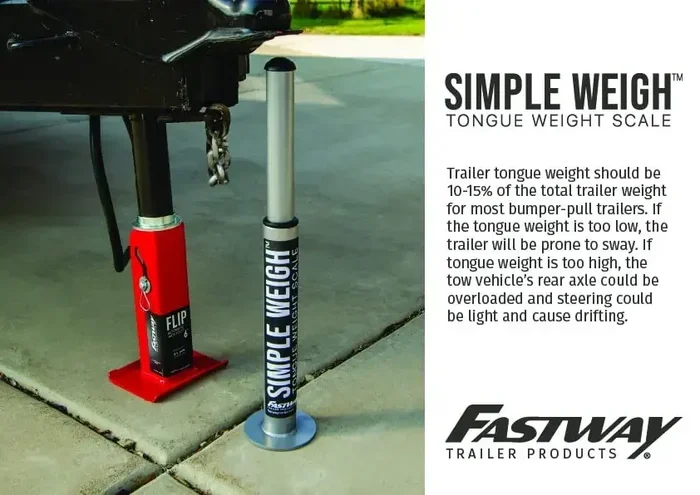
A dedicated tongue weight scale is the easiest and most accurate way to measure tongue weight. These scales are designed specifically for this purpose and are available at most automotive or trailer supply stores. They typically cost between 30 and 100 dollars, which is a small price for peace of mind.
To use one, you simply back the trailer onto the scale with the hitch ball resting on the platform. The scale gives you an immediate reading. Some models work by placing the coupler on the scale while the trailer rests on the ground.
The Bathroom Scale Method
If you do not want to buy a scale right away, you can use a standard bathroom scale for a rough estimate. Here is how it works:
- Set a bathroom scale on a flat surface at the height of your hitch ball.
- Place a block of wood on the scale and rest the hitch ball on it.
- Lower the trailer coupler onto the ball until it rests fully.
- Read the scale and multiply by the ratio of the actual height to the scale height.
This method gives an approximation, not a precise measurement. Use it only for a quick check until you can get a proper scale.
The Cat Scale Method
Many truck stops and weigh stations have cat scales (commercial truck scales). You can weigh your tow vehicle and trailer together, then weigh the vehicle alone. The difference gives you the tongue weight. This method is free at many locations and is very accurate.
Common Tongue Weight Problems and How to Fix Them
Even experienced towers run into tongue weight issues. The good news is that most problems are easy to fix once you identify them.
Problem: Too Little Tongue Weight
Too little tongue weight is one of the most common towing mistakes. Signs include trailer sway, fishtailing, and a feeling of instability at highway speeds. Your trailer may feel like it is pushing your tow vehicle from behind.
How to fix it: Move cargo forward in the trailer, closer to the axle but ahead of the rear axle. Add weight to the front of the trailer if possible. Avoid loading heavy items at the very rear of the trailer.
Problem: Too Much Tongue Weight
Too much tongue weight overloads your rear axle, sags the rear suspension, and reduces steering control. You may notice your vehicle feels sluggish to steer or the front end feels light.
How to fix it: Shift cargo rearward in the trailer. Remove unnecessary weight from the trailer. Consider using a weight distribution hitch to help redistribute the load across all axles.
Problem: Uneven Cargo Distribution
Even if your total tongue weight is within the acceptable range, uneven cargo can cause pulling to one side or uneven tire wear. This happens when heavy items are stacked to one side of the trailer.
How to fix it: Center your cargo side to side. Use straps and bungees to secure items in place. Recheck your load before every trip.
Problem: Trailer Sway
Trailer sway is a dangerous oscillation that can be caused by improper tongue weight, high wind, or passing trucks. It is one of the leading causes of towing accidents.
How to fix it: First, check your tongue weight. Add weight to the front of the trailer if it is too light. Make sure your trailer brakes are functioning properly. Consider a sway control device for added stability.
Tips for Balancing Your Trailer Correctly
Getting your trailer balanced is about more than just hitting the right tongue weight number. It is about how you load, secure, and manage your cargo on the road.
Load Heavy Items Low and Forward
The heaviest items in your trailer should be placed low and as close to the front as possible, without going past the trailer axles. This lowers the center of gravity and helps maintain proper tongue weight.
Avoid placing all your heavy gear at the rear of the trailer. This shifts too much weight onto the trailer axles and reduces tongue weight, leading to instability.
Use a Weight Distribution Hitch
A weight distribution hitch is one of the best investments you can make for towing safety. It uses spring bars to distribute the tongue weight more evenly across all axles of your tow vehicle and trailer.
This setup helps level your tow vehicle, improves steering control, and reduces the strain on your rear suspension. If you regularly tow near the upper limits of your vehicle capacity, a weight distribution hitch is almost essential.
Check Your Tire Pressure
Proper tire pressure affects how your trailer handles and how weight is distributed across the axles. Underinflated tires can cause overheating, uneven wear, and reduced stability.
Check your trailer tire pressure before every trip. Follow the pressure ratings on the tire sidewall or in your trailer owner manual.
Do a Pre-Trip Inspection
Before every tow, take a few minutes to inspect your setup. Check the hitch connections, safety chains, trailer lights, and tire condition. Verify that your cargo is secure and has not shifted during transit.
This simple habit can prevent accidents and save you from costly roadside repairs.
Understand Your Tow Vehicle Limits
Every tow vehicle has limits. These include towing capacity, payload capacity, and gross combined weight rating (GCWR). Exceeding any of these limits is dangerous and illegal in many jurisdictions.
Check your vehicle owner manual for these numbers. When in doubt, contact your dealership or consult the manufacturer website for the most accurate data.
Expert Insights on Towing Safety and Tongue Weight
Experienced towers and industry professionals emphasize that acceptable tongue weight is not just a number on paper. It is a dynamic factor that changes with your cargo, road conditions, and driving speed.
According to towing safety experts, the single most important thing you can do is measure your tongue weight before every trip. Conditions change. Cargo shifts. What was balanced yesterday may not be balanced today.
Another expert tip is to invest in a quality tongue weight scale and keep it in your truck or garage. It takes just a few minutes to get a reading and could save your life.
Professionals also recommend using a weight distribution system whenever you are towing near your vehicle limits. This simple upgrade can dramatically improve handling and reduce the risk of trailer sway.
Finally, never ignore warning signs. If your trailer starts to sway, if your steering feels heavy, or if your rear end feels unstable, pull over and recheck your setup. These are clear signals that something is wrong with your tongue weight or load distribution.
Key Takeaways
- Acceptable tongue weight is the downward force your trailer puts on your hitch, and it should be 10% to 15% of your total trailer weight.
- Too little tongue weight causes dangerous trailer sway, while too much overloads your vehicle and reduces steering control.
- Use a tongue weight scale for accurate measurements, or visit a cat scale at a truck stop for a free alternative.
- Weight distribution hitches help balance your load and improve stability, especially when towing near your vehicle limits.
- Proper trailer loading with heavy items low and forward is key to maintaining the right tongue weight.
- Always check your tow vehicle payload capacity and GVWR before towing.
- Regular pre-trip inspections and rechecking your tongue weight can prevent accidents and equipment damage.
Final Thoughts on Acceptable Tongue Weight
Acceptable tongue weight is one of the most important concepts in safe towing. It is not something you set and forget. It requires attention, measurement, and occasional adjustment every time you tow. The good news is that once you understand the basics, it becomes second nature.
Remember the 10% to 15% rule. Measure your tongue weight before every trip. Use the right tools, load your trailer properly, and invest in quality towing equipment like a weight distribution hitch. These simple steps will keep you, your passengers, and everyone else on the road safe.
Towing should be enjoyable, not stressful. When you have your acceptable tongue weight dialed in, you can focus on the road ahead and the adventure waiting for you at the other end. Take the time to get it right, and your towing experiences will be safer, smoother, and more confidence-inspiring every single time.
FAQs
What happens if tongue weight is too low?
If tongue weight is too low, your trailer becomes unstable and prone to swaying. This is especially dangerous at highway speeds or in windy conditions. Low tongue weight reduces the downward force on the hitch ball, which means the trailer can easily become airborne or swing side to side. Always make sure your tongue weight is at least 10% of your total trailer weight.
Can I use a regular bathroom scale to measure tongue weight?
Yes, you can use a bathroom scale for a rough estimate, but it is not as accurate as a dedicated tongue weight scale. The bathroom scale method works by placing the hitch ball on the scale at the same height as the hitch and using a conversion calculation. For precise measurements, invest in a proper tongue weight scale.
How does a weight distribution hitch help with tongue weight?
A weight distribution hitch uses spring bars to redistribute the tongue weight across all axles of your tow vehicle and trailer. This helps level your vehicle, improves steering control, and reduces the strain on your rear suspension. It is especially helpful when you are towing near your vehicle limits.
What is the difference between tongue weight and hitch weight?
Tongue weight and hitch weight are essentially the same thing. Both refer to the downward force the trailer puts on the hitch ball. Some people use the terms interchangeably. The key is to keep this force within the 10% to 15% range of your total trailer weight for safe towing.
Does tongue weight affect braking performance?
Yes, tongue weight has a direct impact on braking performance. When tongue weight is too high, it overloads the rear axle, which can reduce braking effectiveness on the front wheels. When it is too low, the rear brakes may not have enough weight for optimal traction. Proper tongue weight ensures all four brakes work effectively.
How often should I check my tongue weight?
You should check your tongue weight before every trip and anytime you change your cargo or loading setup. Even small changes in how you load your trailer can shift the tongue weight significantly. Making it a habit takes just a few minutes and greatly improves towing safety.