Can You Pump a Car Tire With a Bike Pump Here Is the Answer
Yes, you can pump a car tire with a bike pump, but it takes time and effort. A standard bike pump can handle the job in an emergency, though it is not the most efficient tool for the task. This guide covers everything you need to know about using a bike pump for car tires, including step-by-step instructions, safety tips, and when to choose a better option.
There is nothing worse than walking out to your car and seeing a flat tire. You are already running late, your day is falling apart, and now you have to figure out how to get air back into that tire. You look around and spot a bike pump. Can you pump a car tire with a bike pump? The short answer is yes. The longer answer involves some important details you need to know before you start pumping.
Whether you are stranded on the side of the road or just trying to save a trip to the gas station, using a bike pump for your car tire is a real option. But it is not always the best one. In this guide, we will walk you through exactly how it works, what to watch out for, and when you should use a different tool instead. By the end, you will know everything you need to handle this situation with confidence.
Key Takeaways
- It works in a pinch: A bike pump can inflate a car tire, but expect it to take significantly longer than a standard air compressor.
- Check your valve type first: Most cars use Schrader valves, which are compatible with most bike pumps, but some vehicles may need an adapter.
- Know the correct PSI: Car tires typically need 30 to 35 PSI, while bike tires usually need much less. Always check your car’s recommended pressure.
- Use it for emergencies only: A bike pump is a backup tool, not a replacement for a proper tire inflator or air compressor.
- Avoid overinflation: Too much air can be dangerous. Always use a tire pressure gauge to verify the level.
- Consider a portable compressor: If you frequently deal with low tire pressure, a small portable air compressor is a better long-term investment.
📑 Table of Contents
- Understanding Tire Pressure Basics
- Can You Actually Use a Bike Pump on a Car Tire?
- How to Pump a Car Tire With a Bike Pump Step by Step
- Pros and Cons of Using a Bike Pump for Car Tires
- When to Use a Bike Pump and When to Use Something Else
- Common Mistakes People Make When Pumping Car Tires
- Expert Tips for Better Tire Maintenance
- Key Takeaways
- Conclusion
Understanding Tire Pressure Basics
Before you grab any pump, you need to understand a few basics about tire pressure. Every car tire has a recommended pressure level, usually measured in PSI, which stands for pounds per square inch. This number tells you how much air the tire needs to perform safely and efficiently.
Where to Find Your Recommended Tire Pressure
You can find the correct PSI for your car in a few places. Check the driver’s side door jamb for a sticker. It will list the recommended pressure for both front and rear tires. You can also look in your owner’s manual. Some cars even display the current tire pressure on the dashboard through a tire pressure monitoring system. This is a handy feature that alerts you when a tire is getting low.
Most passenger car tires need between 30 and 35 PSI. Keep in mind that this is different from bike tires. A standard bike tire might only need 30 to 80 PSI depending on the type. So while the ranges overlap, the volume of air needed for a car tire is much larger. This is the main reason a bike pump is not the ideal tool for the job.
Why Correct Tire Pressure Matters
Driving on an underinflated tire is dangerous. It can reduce your fuel economy, cause uneven tire wear, and increase the risk of a blowout. Overinflated tires are just as bad. They have a smaller contact patch with the road, which means less traction and a harsher ride. Using a tire pressure gauge to check your pressure regularly is one of the simplest things you can do for car maintenance.
Can You Actually Use a Bike Pump on a Car Tire?
The short answer is yes. Most bike pumps can physically attach to a car tire valve and add air. However, there are some important limitations you should understand before you try this. A bike pump is designed for a much smaller tire that holds far less air than a car tire.
Valve Compatibility
Cars almost always use Schrader valves. These are the same type of valve you find on bike tires. A standard bike pump with a Schrader chuck will fit right onto a car tire valve stem. If your car has a Presta valve, which is more common on road bikes, you will need an adapter. This is rare in cars, but it is worth checking.
The valve stem on a car tire is also larger and more robust than on a bike tire. This is good news because it means the connection should be secure. Just make sure the pump head is fully seated on the valve to prevent air leaks while you are pumping.
Volume and Time Considerations
Here is where things get challenging. A car tire holds a lot more air than a bike tire. A typical car tire might need 3 to 4 cubic feet of air to go from completely flat to the recommended PSI. A standard bike pump moves a much smaller volume of air with each stroke. This means you could be pumping for a very long time.
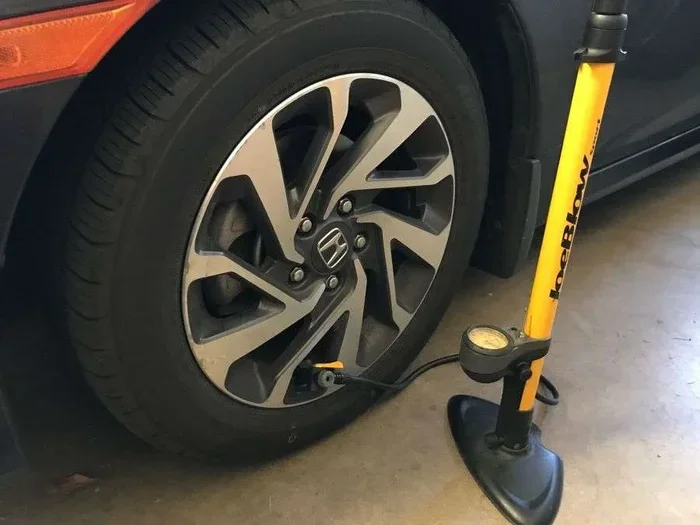
For example, if you are using a hand bike pump, it might take 200 to 400 strokes to add just a few PSI to a flat car tire. That is a lot of effort. Some people use a floor bike pump, which has a larger cylinder and requires fewer strokes. Even then, it is a slow process compared to using a standard air compressor at a gas station or a portable tire inflator.
How to Pump a Car Tire With a Bike Pump Step by Step
If you find yourself in a situation where a bike pump is your only option, here is exactly what to do. Follow these steps carefully to get your tire back to a safe pressure.
Step 1: Check the Current Tire Pressure
Before you start pumping, check the current pressure with a tire pressure gauge. If the tire is completely flat, you will still want to know the baseline. This helps you avoid overinflating, which can be just as dangerous as driving on a flat tire.
Step 2: Remove the Valve Cap
Unscrew the valve cap from the tire. Keep it somewhere safe so you do not lose it. The valve stem should be visible and clean. If there is any dirt or debris around the valve, wipe it off with a cloth. A clean connection ensures no air escapes while you pump.
Step 3: Attach the Bike Pump
Press the pump head firmly onto the valve stem. You should feel it lock into place. If your pump has a lever or clamp, make sure it is secured. Give it a gentle tug to confirm the connection is tight. Any air leaking around the pump head will waste your effort.
Step 4: Start Pumping
Begin pumping with steady, even strokes. Use your whole body weight if you are using a floor pump. Keep track of the pressure by checking the gauge every 20 or 30 strokes. You want to add air gradually and avoid going over the recommended PSI.
Step 5: Check the Pressure Frequently
Stop pumping every few minutes to check the pressure. This prevents overinflation. If you are close to the recommended PSI, switch to short, gentle pumps to fine-tune the pressure. Once you hit the target, remove the pump head and replace the valve cap.
Step 6: Inspect the Tire
After inflating, visually inspect the tire. Look for any punctures, cuts, or objects lodged in the tread. If the tire keeps losing air, you may have a leak that needs proper repair. In that case, you should visit a tire shop or seek a free diagnostic at an auto parts store that offers this service.
Pros and Cons of Using a Bike Pump for Car Tires
Like any solution, using a bike pump for a car tire has advantages and disadvantages. Let us break them down so you can decide if this approach makes sense for your situation.
The Pros
- It is readily available: Many people own a bike pump at home. If your car tire goes low, you already have a tool you can use.
- It costs nothing extra: You do not need to buy a new pump or pay for air at a station.
- It works in emergencies: When you are stranded and have no other option, a bike pump can get you back on the road.
- It is portable: A hand bike pump is lightweight and easy to carry in a bag or trunk.
The Cons
- It takes a long time: Pumping a car tire with a bike pump can take 10 to 20 minutes or more, depending on how flat the tire is.
- It requires physical effort: This is not a quick fix. You will be working hard, especially if the tire is very low.
- It is not ideal for frequent use: If you regularly need to add air to your tires, a bike pump is not a practical long-term solution.
- Risk of overinflation: Without a good gauge, it is easy to add too much air, which can compromise safety.
For regular tire maintenance, a small portable air compressor or a 12-volt tire inflator plugged into your car’s cigarette lighter is a much better choice. These tools are affordable and can inflate a car tire in just a few minutes.
When to Use a Bike Pump and When to Use Something Else
Not every situation calls for the same tool. Knowing when to use a bike pump and when to reach for something else can save you time and frustration.
Use a Bike Pump When
- You are in an emergency and have no other access to air.
- The tire is only slightly low and needs a small top-off.
- You are at a location where a bike pump is available, such as a park or bike station.
- You want a quick temporary fix to get to the nearest air compressor or tire shop.
Use an Air Compressor Instead When
- The tire is completely flat and needs a full inflation.
- You need to inflate multiple tires quickly.
- You are at a gas station or auto shop with a free or paid air pump.
- You want to avoid the physical effort of hand pumping.
If you are dealing with a flat tire that cannot hold air, a pump alone will not fix the problem. You may need a tire plug kit or a visit to a tire repair shop. Driving on a damaged tire can cause further harm to the wheel and even affect your ability to steer safely. In serious cases, a blown tire can lead to engine or suspension issues that go beyond simple tire inflation.
Common Mistakes People Make When Pumping Car Tires
Even with the right tool, people make mistakes that can cause problems. Here are the most common ones to avoid.
Skipping the Pressure Check
The biggest mistake is not checking the pressure while you pump. Without monitoring, it is very easy to overinflate. An overinflated tire feels firm but has less grip on the road. This is especially dangerous in wet conditions. Always stop and check the gauge frequently.
Ignoring the Recommended PSI
Every car is different. Do not assume the pressure listed on the tire sidewall is what your car needs. That number is the maximum pressure the tire can handle, not the recommended pressure for your vehicle. Always follow the PSI listed on the door jamb sticker or in the owner’s manual.
Forgetting the Valve Cap
It is a small thing, but the valve cap keeps dirt and moisture out of the valve stem. Without it, debris can work its way in and cause slow leaks over time. Always replace the cap after you finish inflating.
Using the Wrong Pump Head
Not all bike pumps fit all valve types. If your pump does not have a proper Schrader chuck, it may not seal correctly on the car tire valve. This leads to air leaking out as you pump, wasting your time and effort. Make sure your pump is compatible before you start.
Pumping a Damaged Tire
If the tire has a large puncture or a damaged sidewall, pumping it up will not help. The air will just escape again. In this situation, you need a proper repair or a replacement tire. Trying to drive on a severely damaged tire can be unsafe and may lead to a roadside breakdown or even require a tow truck.
Expert Tips for Better Tire Maintenance
Keeping your tires in good shape does not have to be complicated. A few simple habits can save you money, improve your fuel economy, and keep you safe on the road.
First, check your tire pressure at least once a month. Temperature changes affect air pressure, so your tires can lose PSI as the weather gets colder. A quick check with a tire pressure gauge takes only a couple of minutes.
Second, invest in a portable tire inflator. These small devices plug into your car’s 12-volt outlet and can fill a tire in just a few minutes. They are compact enough to keep in your trunk and are far more practical than a bike pump for car use. Many models even have a built-in gauge so you can monitor pressure as you pump.
Third, rotate your tires regularly. This helps them wear evenly and last longer. Most experts recommend rotating tires every 5,000 to 7,500 miles. If you are unsure about your car’s maintenance schedule, a free diagnostic at a local auto shop can help you stay on track.
Finally, if your car has a tire pressure monitoring system, pay attention to it when the warning light comes on. It is telling you that one or more tires are low. Addressing it quickly can prevent a small problem from becoming a dangerous one. Ignoring the light can lead to uneven wear, reduced fuel efficiency, and in the worst case, a blowout at highway speeds.
Key Takeaways
- Yes, you can use a bike pump: A standard bike pump works on car tires in an emergency, but it is slow and requires effort.
- Valve compatibility matters: Most cars use Schrader valves, which are compatible with standard bike pumps. Always check before you start.
- Time and effort are the trade-offs: Expect to spend 10 to 20 minutes pumping with a hand bike pump to inflate a single car tire.
- Check pressure frequently: Use a tire pressure gauge to avoid overinflation, which can be just as dangerous as underinflation.
- Invest in better tools for regular use: A portable 12-volt air compressor is faster, easier, and more practical for ongoing tire maintenance.
- Know when to seek professional help: If your tire is damaged or keeps losing air, a bike pump will only be a temporary fix. Visit a tire shop for proper repair.
Conclusion
So, can you pump a car tire with a bike pump? Yes, you absolutely can. It is a viable emergency solution that can get you back on the road when you have no other option. But it is not the most efficient or practical method for regular tire maintenance. A bike pump works best as a backup tool, not your go-to solution for keeping tires properly inflated.
If you find yourself using a bike pump frequently, it is worth investing in a better tool. A small portable air compressor or a 12-volt tire inflator makes the job faster and easier. These tools are affordable and can save you a lot of time and effort in the long run.
Remember, proper tire pressure is one of the simplest and most important aspects of car care. It affects your safety, your fuel economy, and the lifespan of your tires. Whether you use a bike pump, a portable compressor, or an air station at the gas station, the key is to stay on top of your tire pressure and address low tires quickly.
Next time you find yourself with a low tire and nothing but a bike pump, you will know exactly what to do. Stay calm, follow the steps, and get back on the road safely.