What Can Cause the VSC Light to Come On and How to Fix It
Your VSC light is a critical safety indicator that signals issues with your vehicle’s stability control system. This guide explains the most common VSC light causes, from simple sensor problems to serious mechanical failures, and provides clear, step-by-step fixes you can try at home.
You are driving down a rainy road when you notice a strange yellow or red warning light on your dashboard. It looks like a car with squiggly lines behind it. That is your VSC light. It stands for Vehicle Stability Control. This light is part of your car’s safety system designed to keep you from sliding or losing control. When it comes on, it means something in that safety system needs attention. In this article, we will walk you through every possible reason your VSC light might be glowing. We will also give you clear, practical steps to fix it yourself or know when to visit a mechanic.
The VSC light is not just a random dashboard annoyance. It is a direct message from your car’s computer. Your vehicle uses a stability control system that works together with the ABS (Anti-lock Braking System) and traction control. These systems rely on many sensors to monitor wheel speed, steering angle, and yaw rate. If any of these sensors or components fail, the VSC light turns on to warn you. Sometimes the fix is as simple as cleaning a sensor. Other times, it points to a deeper issue in the brake system or electrical wiring. Understanding the cause is the first step to a safe solution.
Key Takeaways
- Sensor issues are the #1 culprit: A dirty or failed wheel speed sensor often triggers the VSC light.
- Check your ABS and brake fluid: Low brake fluid or a faulty ABS module can activate the VSC light.
- Use an OBD-II scanner: This tool reads the specific fault code so you know exactly what to fix.
- Try a simple reset first: Disconnecting the battery or pressing the VSC off button may solve the problem.
- Don’t ignore the light: Driving with the VSC light on reduces your safety in slippery conditions.
- Know when to call a pro: If the light flashes or comes with other warnings, seek professional help immediately.
📑 Table of Contents
What Does the VSC Light Mean?
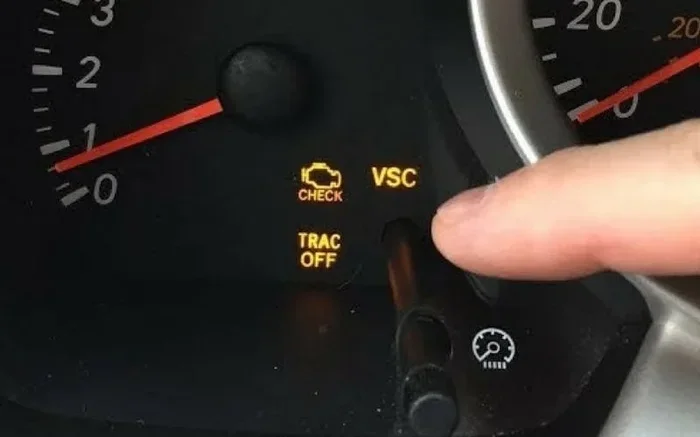
The VSC light looks different on every car, but the message is the same. Your stability control system has detected a problem. Most often, you will see a yellow triangle with a car icon and wavy lines. On some Toyota and Lexus models, it simply says VSC or TRAC OFF. The light may stay solid or flash. A steady light usually means a less urgent issue. A flashing light often signals a more serious problem that needs immediate attention. Either way, you should not ignore it. Your car’s ability to maintain traction on wet or icy roads depends on this system working correctly.
Many drivers confuse the VSC light with the check engine light. They can appear together because the same sensors feed data to both systems. When a wheel speed sensor fails, it might trigger both lights. This is common. The VSC light specifically tells you the stability and traction functions are compromised. It does not always mean your car will stop working. However, it does mean you are at a higher risk of skidding, especially on gravel, rain, or snow. Always treat this warning with respect.
Common Causes of the VSC Light
There are many reasons the VSC light can come on. Most are related to sensors, but some involve mechanical parts. Below are the most frequent causes you will encounter.
1. Faulty Wheel Speed Sensors
This is the number one cause of a VSC light. Each wheel has a wheel speed sensor that measures how fast it is spinning. The car’s computer uses this data to detect if a wheel is slipping. When a sensor gets dirty, damaged, or its wiring breaks, it sends wrong signals. The stability control system then shuts down and lights up the warning. You might also notice the ABS light coming on at the same time. A cracked sensor hub or a missing toothed ring can cause this too.
2. Low Brake Fluid
The VSC light is closely tied to your brake system. If your brake fluid level drops below the minimum line, the car’s computer will trigger the warning. Low brake fluid often means worn brake pads or a slow leak in the lines. Check the brake fluid reservoir under the hood. If it is low, top it up with the correct DOT fluid for your car. However, if the level keeps dropping, you have a leak that needs professional repair.
3. Steering Angle Sensor Problems
Your car has a steering angle sensor in the steering column. It tells the computer exactly how much you are turning the wheel. If this sensor is out of calibration or fails, the VSC light will come on. This often happens after a steering wheel realignment or a battery disconnect. The car’s electronic control unit (ECU) needs to relearn the center position. A simple recalibration with a diagnostic tool usually fixes this.
4. Yaw Rate Sensor Failure
The yaw rate sensor measures how fast your car is rotating around its vertical axis. It helps the system know if you are sliding. When this sensor goes bad, the VSC light illuminates. This sensor is usually located under the floorboard or near the center of the car. It can fail due to corrosion or age. Replacing it is more complex and often requires a mechanic.
5. Throttle Body or Mass Airflow Sensor Issues
The VSC system works with the engine to adjust power when traction is lost. If the throttle body is dirty or the mass airflow sensor (MAF) sends incorrect data, the car’s computer may flag a stability control malfunction. A dirty throttle body can cause rough idling and trigger the VSC light. Cleaning the throttle body with a proper spray cleaner often solves this. A faulty MAF sensor usually requires replacement.
6. Wiring and Ground Wire Issues
Your car relies on a network of wires and ground points. A corroded ground wire or a damaged harness can cause intermittent VSC light problems. This is common in older vehicles or those driven in snowy, salty climates. The ground wire connects the sensor to the car’s chassis. If the connection is weak, the signal gets interrupted. You can check ground wires visually for green or white corrosion and clean them with a wire brush.
7. VSC Off Button or Switch Malfunction
Many cars have a physical VSC off button on the dashboard or center console. If this button is stuck or the switch fails, the light will stay on even when the system is working fine. You might accidentally press it and forget. Try pressing the button again to see if the light turns off. If it does not, the switch itself may need replacement. This is a simple and cheap fix.
How to Diagnose the VSC Light Problem
Before you start replacing parts, you need to know exactly what is wrong. The best tool for this is an OBD-II scanner. This device plugs into the diagnostic port under your steering column. It reads the fault codes stored in your car’s computer. These codes tell you which sensor or system is failing. You can buy a basic scanner for under $30 at any auto parts store.
Here is a simple diagnostic process you can follow at home:
- Turn the ignition to the “On” position without starting the engine.
- Plug the OBD-II scanner into the port.
- Turn the scanner on and select “Read Codes.”
- Write down all the diagnostic trouble codes (DTCs) that appear.
- Search the codes online or in your car’s repair manual to understand what they mean.
Common codes related to the VSC light include C0200 (wheel speed sensor circuit), C0210 (left front sensor), or U0100 (lost communication with ECM). If you see a check engine light along with the VSC light, the engine sensor data might be affecting the stability system. Always address the root cause, not just the light.
Quick Tip: If you do not have an OBD-II scanner, many auto parts stores will read the codes for free. Bring your car to the store and they will hook it up in minutes.
Step-by-Step Fixes for VSC Light Issues
Once you know the cause, you can apply the right fix. Some repairs are easy DIY jobs. Others need a professional.
Fix 1: Clean the Wheel Speed Sensors
Dirt and metal debris can coat the wheel speed sensor tip. This causes erratic readings and triggers the VSC light. To clean it, locate the sensor near the brake rotor or hub. Use a soft brush and a gentle cleaner to remove the grime. Do not use high-pressure water directly on the sensor connector. After cleaning, drive the car for a few miles and see if the light turns off.
Fix 2: Reset the VSC System by Disconnecting the Battery
Sometimes the car’s ECU just needs a reboot. Disconnect the negative battery cable for 15 minutes. This clears all temporary fault codes and resets the stability control system. Reconnect the battery and start the car. If the issue was minor, the VSC light will stay off. This trick works well after a battery change or when sensors are replaced.
Fix 3: Replace a Failed Sensor
If the OBD-II scanner confirms a dead wheel speed sensor or yaw rate sensor, you will need to replace it. The wheel speed sensor is usually held by one bolt. Unplug the electrical connector, remove the old sensor, and bolt in the new one. Make sure to use an OEM-quality part or a trusted aftermarket sensor. After installation, use the scanner to clear the codes and test drive.
Fix 4: Top Up or Change Brake Fluid
If the brake fluid level is low, open the reservoir under the hood and add the correct DOT fluid (DOT 3, DOT 4, or DOT 5 as specified in your manual). Wipe the cap clean before opening to prevent dirt from entering the system. If the fluid is dark brown or black, a full brake fluid flush is recommended. This is a quick job that keeps the VSC light from coming back due to low fluid.
Fix 5: Recalibrate the Steering Angle Sensor
After a steering wheel alignment or battery disconnect, the steering angle sensor may need recalibration. You can do this with a diagnostic tool that has a “steering angle sensor reset” function. Some cars allow a manual procedure: turn the wheel lock to lock and back to center with the ignition on. Check your repair manual for the exact steps. A successful calibration will turn off the VSC light.
| VSC Light Cause | Severity | DIY Fix? | Estimated Cost |
|---|---|---|---|
| Dirty wheel speed sensor | Low | Yes | $0 (cleaning only) |
| Low brake fluid | Medium | Yes | $15-$30 for fluid |
| VSC off button stuck | Low | Yes | $0 |
| Failed wheel speed sensor | Medium | Yes (with tools) | $50-$120 per sensor |
| Steering angle sensor misalignment | Medium | Maybe (needs scanner) | $0-$50 for calibration |
| Yaw rate sensor failure | High | No | $200-$400 parts and labor |
| Wiring harness or ground wire damage | High | No (if complex) | $100-$300 |
| ABS module failure | Critical | No | $500-$1200 |
Preventing Future VSC Light Problems
Once you have fixed the VSC light, you want to keep it off. Regular maintenance is the best prevention. Here are simple habits that protect your stability control system.
- Check brake fluid monthly: A quick peek at the reservoir can catch a slow leak early.
- Keep sensors clean: When washing your car, avoid high-pressure sprays directly at the wheel hubs where sensors live.
- Inspect ground wires: Look under the hood for any corroded or loose ground connections. Clean them with a wire brush if needed.
- Use quality brake parts: Cheap aftermarket brake pads can wear unevenly and affect the ABS and VSC systems.
- Do not ignore the check engine light: Many engine problems indirectly affect the VSC light. Fixing the engine early prevents cascade failures.
Expert Insight: “I see the VSC light come on most often after a car battery dies or gets disconnected,” says a senior master technician with 20 years of experience. “The car’s computers lose their learned values. A simple battery reset and sensor recalibration solves 80% of these cases. Always try the reset before buying expensive parts.”
When to See a Professional Mechanic
You can handle many VSC light issues at home. But some situations demand a professional mechanic. If the VSC light is flashing and accompanied by a red brake warning light, stop driving safely and have the car towed. This combination often indicates a serious brake system or ABS module failure. Also, if you have checked the sensors, fluid, and wiring but the light returns, there may be an internal computer issue. A mechanic with advanced diagnostic equipment can test the ECU and control modules. Do not drive long distances with a persistent VSC light on, especially in bad weather.
Common Mistakes to Avoid
Many well-meaning car owners make mistakes that worsen the VSC light problem. Here are the most common ones.
- Ignoring the light and driving on: Some drivers cover the dashboard light with a piece of tape. This is dangerous. The stability control system is not working, and you are at risk of a spin-out.
- Replacing parts without reading the code: Buying a new wheel speed sensor because you assume it is the problem can waste money. The real issue could be a wiring fault. Always scan first.
- Using the wrong brake fluid: Mixing DOT 3 and DOT 5 fluids can damage the ABS and VSC systems. Always use the fluid type specified in your owner’s manual.
- Forgetting to reset the steering angle sensor: After any steering work, this sensor must be recalibrated. If you skip this step, the VSC light will stay on.
Key Takeaways
The VSC light is your car’s way of telling you that the stability and traction systems need attention. Most causes are sensor-related and can be fixed with basic tools and a little patience. Start with the simplest solutions: clean the sensors, check the brake fluid, and reset the system. Use an OBD-II scanner to get the exact fault code so you know what to fix. If the problem is beyond a simple sensor or fluid top-up, do not hesitate to visit a trusted mechanic. Your safety on the road depends on a working stability control system. Address the VSC light promptly, and you will keep your car running safely for miles to come.
Frequently Asked Questions
Can I drive with the VSC light on?
You can drive a short distance to a safe location if the light is solid and the car feels normal. However, you should avoid highways, rain, or icy roads because your stability control system is disabled. Get the car diagnosed and fixed as soon as possible to restore full safety.
What does it mean if the VSC light and check engine light are both on?
When both lights are on, it usually means a sensor or system affects both the engine and the stability control system. A common cause is a failing mass airflow sensor or a wheel speed sensor problem. Use an OBD-II scanner to read the codes and address the root issue.
How much does it cost to fix the VSC light?
The cost depends entirely on the cause. Cleaning a wheel speed sensor costs nothing. Replacing a sensor typically runs $50 to $120 for parts. A yaw rate sensor replacement can be $200 to $400. ABS module repairs can exceed $1000. Always get a diagnostic first to know the exact cost.
Will disconnecting the battery reset the VSC light?
Yes, disconnecting the negative battery cable for 15 minutes can reset the car’s computer and clear temporary fault codes. This often turns off the VSC light if the problem was minor. However, if the underlying issue is not fixed, the light will return after you drive the car again.
How do I know if my wheel speed sensor is bad?
A bad wheel speed sensor often triggers both the VSC light and the ABS light. You might also notice the traction control light coming on. The most reliable way to confirm is to use an OBD-II scanner to read the specific fault code for the sensor circuit. A visual inspection for damage or excessive dirt can also help.
Is the VSC light the same as the traction control light?
They are closely related but not always the same. The VSC light refers to the Vehicle Stability Control system, which includes both traction control and yaw control. Many cars use a single warning light for both. On some models, you may see separate lights for VSC and TRAC (traction control), but a failure in one often affects the other.