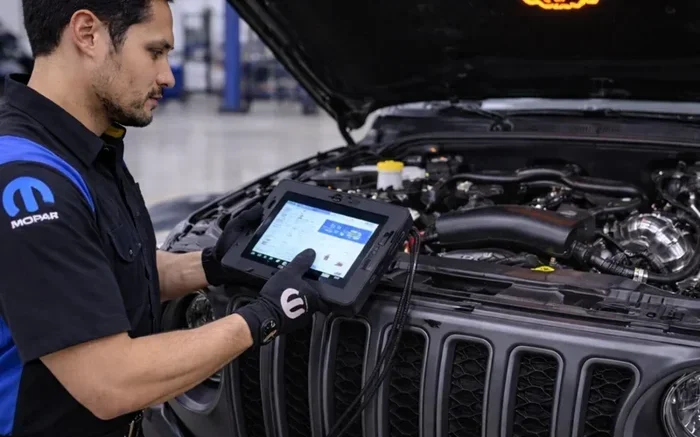
How to Check Codes on a 2016 Dodge Ram for Beginners
Checking codes on a 2016 Dodge Ram is easier than you think. This guide walks you through every step, from finding the OBD-II port to reading and clearing diagnostic trouble codes. You will learn what each code means and how to fix common problems quickly and affordably.
If you own a 2016 Dodge Ram, you have probably seen that little check engine light flicker on at some point. It can feel scary, especially if you do not know what it means. But here is the good news. Checking codes on your truck is something you can do right at home. You do not need to be a mechanic. You do not need to spend hundreds of dollars at a shop. All you need is a simple tool and a few minutes of your time.
In this guide, we will walk you through every single step. We will show you where to find the port, which tools to use, and how to understand what the codes mean. By the end, you will feel confident tackling those pesky warning lights yourself. How to Check Codes on a 2016 Dodge Ram will no longer feel like a mystery. It will feel like second nature.
Key Takeaways
- OBD-II Port Location: The diagnostic port on a 2016 Dodge Ram is under the dashboard on the driver side.
- Code Reader Tools: A basic OBD-II scanner or code reader is all you need to start reading fault codes.
- DTC Meanings: Diagnostic trouble codes fall into categories like powertrain, chassis, and body systems.
- Common Codes: P0300 (random misfire), P0420 (catalyst efficiency), and P0171 (system too lean) are frequent on the 2016 Dodge Ram.
- Freeze Frame Data: This feature captures engine conditions at the time a code was triggered, helping with diagnosis.
- Clearing Codes: Always fix the root cause before clearing codes to avoid recurring issues.
📑 Table of Contents
- Why Checking Codes on Your 2016 Dodge Ram Matters
- Understanding OBD-II and Diagnostic Trouble Codes
- Tools You Need to Check Codes on a 2016 Dodge Ram
- Step-by-Step Guide to Checking Codes
- Understanding Freeze Frame Data and Pending Codes
- Common Mistakes Beginners Make When Checking Codes
- When to See a Professional Mechanic
- Quick Tips for Maintaining Your 2016 Dodge Ram
- Conclusion
Why Checking Codes on Your 2016 Dodge Ram Matters
Your Dodge Ram is a powerful machine. It works hard every day. Whether you use it for hauling, towing, or just getting around town, the truck takes a beating. Over time, sensors and components wear out. When something goes wrong, your truck talks to you through warning lights and codes. Ignoring these signals can lead to bigger, more expensive problems down the road.
Reading diagnostic codes gives you a head start. You know exactly what is going on before a small issue turns into a big repair bill. Think of it like checking your temperature when you feel sick. The code tells you where to look. It does not always give you the full fix, but it points you in the right direction.
Also, checking codes can save you money. Many people rush to the dealership or mechanic the moment a light comes on. But some issues are simple. A loose gas cap, a worn sensor, or a minor electrical glitch can trigger the check engine light. With a basic code reader, you can find out in seconds. You might even fix it yourself in minutes.
Understanding OBD-II and Diagnostic Trouble Codes
Before you start scanning, it helps to understand the basics. Every modern vehicle, including the 2016 Dodge Ram, uses a system called OBD-II. This stands for On-Board Diagnostics II. It is a standard system that monitors your engine, transmission, and emissions components. When something goes wrong, the system stores a code. These codes are called Diagnostic Trouble Codes, or DTCs for short.
What Are Diagnostic Trouble Codes?
DTCs are five-character codes that start with a letter followed by four numbers. Each part of the code tells you something specific. The first letter tells you which system the code belongs to:
- P stands for Powertrain. This includes the engine and transmission. Most codes you will see start with P.
- C stands for Chassis. This covers the braking system and suspension.
- B stands for Body. This relates to things like airbags and climate control.
- U stands for Network. This covers communication between different control modules.
The second character tells you whether the code is generic or manufacturer-specific. A zero means it is a generic code that applies to all vehicles. A one means it is specific to the Dodge Ram. The last three digits give you the specific problem description.
Common Codes You May See on a 2016 Dodge Ram
Here are some fault codes that show up often on the 2016 Dodge Ram:
- P0300 – Random/Multiple Cylinder Misfire Detected
- P0420 – Catalyst System Efficiency Below Threshold
- P0171 – System Too Lean (Bank 1)
- P0455 – Evaporative Emission Control System Leak Detected
- P0442 – Evaporative Emission Control System Leak Detected (Small Leak)
- P0301-P0308 – Cylinder-Specific Misfire Codes
These codes are just the tip of the iceberg. There are hundreds of possible codes. But these are the ones you are most likely to encounter. When you see one of these, do not panic. It just means your truck is telling you something needs attention.
Tools You Need to Check Codes on a 2016 Dodge Ram
You do not need a fancy workshop or expensive equipment. The tools you need are simple and affordable. Let us go over what works best.
OBD-II Scanner
An OBD-II scanner is the most important tool. This is a small device that plugs into your truck’s diagnostic port. It reads the codes stored in your vehicle’s computer. There are two main types to consider:
- Basic Code Readers: These are affordable, usually under $30. They display the code and a short description. They are great for quick checks. However, they may not offer advanced features like freeze frame data.
- Advanced OBD-II Scanners: These cost more, often between $50 and $200. They provide detailed information. You can view freeze frame data, pending codes, and permanent codes. Some even offer live sensor data and graphing capabilities.
Bluetooth OBD-Adapters and Smartphone Apps
If you prefer using your phone, a Bluetooth OBD adapter is a great option. These small dongles plug into the port and connect to an app on your smartphone. Popular apps include Torque, Carly, and OBD Fusion. They turn your phone into a full diagnostic tool. Some adapters cost as little as $10 to $20. This is one of the cheapest ways to get started.
One thing to keep in mind. If you plan to use any power-hungry accessories while scanning, make sure your electrical setup is solid. For example, if you use a 12V to 230V car inverter to power additional tools, ensure it is compatible with your truck’s electrical system.
Other Helpful Tools
- Notebook or Phone Notes: Write down the codes you find. This helps you track issues over time.
- Internet Access: A quick search can tell you what a code means and how common the fix is.
- Basic Hand Tools: Sometimes the fix is as simple as tightening a loose connection or replacing a sensor.
Step-by-Step Guide to Checking Codes
Now let us get into the practical part. Here is exactly how to check codes on your 2016 Dodge Ram. Follow these steps carefully, and you will have your codes read in no time.
Step 1: Park the Truck and Turn Off the Engine
Find a flat, safe surface to park your truck. Turn the engine off. Make sure the key is out of the ignition. This is a safety precaution. You do not want the engine running while you are working under the dashboard.
Step 2: Locate the OBD-II Port
The OBD-II port on a 2016 Dodge Ram is located under the dashboard on the driver side. It is usually near the steering column, below the fuse box cover. You may need to look closely. The port has a trapezoidal shape with 16 pins. It is the same port used in nearly all vehicles made after 1996.
If you have trouble finding it, check your owner’s manual. The manual will show you the exact location. Some people also look for a small cover panel that pops off to reveal the port.
Step 3: Plug in Your Scanner or Adapter
Take your OBD-II scanner or Bluetooth adapter and plug it firmly into the port. You should feel it click into place. If you are using a Bluetooth adapter, make sure it is paired with your phone before plugging it in.
If you need to use an adapter for a different type of connection, check that your 12V car socket to 3-pin adapter is compatible with your scanning tool. Using the wrong adapter can sometimes cause reading errors.
Step 4: Turn the Ignition to the On Position
Do not start the engine. Just turn the key to the “On” position or press the start button without pressing the brake. This powers the truck’s computer system. Your scanner should light up or connect to your phone within a few seconds.
Step 5: Read the Codes
Follow the instructions on your scanner or app. Most devices will prompt you to “Read Codes” or “Scan.” Tap that option and wait. The device will communicate with your truck’s powertrain control module and pull up any stored codes. This usually takes about 10 to 30 seconds.
Write down every code that appears. Include the letter and all five characters. For example, write down “P0300” exactly as shown. Do not skip any codes, even if they seem minor.
Step 6: Look Up What Each Code Means
Now that you have your codes, it is time to understand them. Your scanner may provide a short description. But for a more detailed explanation, you can look up the code online. Many websites offer free code lookups. Just type in the code and your vehicle model, and you will get a detailed description.
Here is a quick example. If your scanner shows P0420, it means the catalyst converter is not working as efficiently as it should. This is a common code on many trucks, including the 2016 Dodge Ram. It does not always mean the converter is bad. Sometimes it is a sensor issue that triggers the same code.
Step 7: Address the Issue or Clear the Codes
Once you know what the codes mean, you can decide on your next step. Some codes are easy fixes you can do yourself. Others may require a mechanic. If you fix the problem, you can use your scanner to clear the codes. Simply plug the scanner back in, select “Clear Codes,” and confirm. The check engine light should turn off.
However, there is an important rule here. Never clear codes without fixing the underlying problem first. Clearing codes just hides the symptom. If the real issue is still there, the codes will come back. And now you have lost the freeze frame data that could have helped with diagnosis.
Understanding Freeze Frame Data and Pending Codes
When you use an advanced scanner, you may see something called freeze frame data. This is a snapshot of your truck’s engine conditions at the exact moment a code was triggered. It includes things like engine RPM, vehicle speed, coolant temperature, and fuel trim values. Freeze frame data is incredibly helpful because it tells you what the truck was doing when the problem occurred.
For example, if you see a misfire code and the freeze frame shows the truck was idling, you know the issue happens at low speeds. If it shows the truck was under load, you can focus on different causes. This kind of information saves a lot of guesswork.
You may also see something called pending codes. These are codes that have been detected once but have not yet met the criteria to trigger the check engine light. Pending codes are like early warnings. They tell you something is starting to go wrong. Catching these early can save you from a full-blown breakdown.
Common Mistakes Beginners Make When Checking Codes
Even with the best guide, beginners can make mistakes. Here are a few to watch out for:
- Clearing Codes Before Diagnosing: This is the biggest mistake. Always read and record the codes first. Then fix the problem. Only clear codes after the repair is complete.
- Ignoring Pending Codes: Pending codes are early warnings. Do not ignore them just because the check engine light is not on yet.
- Buying Cheap, Unreliable Scanners: A very cheap scanner may not read all codes correctly. Invest in a reputable brand. It will save you frustration in the long run.
- Not Checking the Gas Cap: A loose or faulty gas cap is one of the most common reasons for an EVAP leak code. Always check this first before digging deeper.
- Assuming One Code Means One Fix: A single code can have multiple causes. P0300, for example, could be caused by spark plugs, ignition coils, fuel injectors, or vacuum leaks. Always investigate thoroughly.
When to See a Professional Mechanic
Checking codes on your own is empowering. But there are times when you should leave it to the pros. If you see codes related to the transmission, brakes, or airbags, it is best to see a qualified mechanic. These systems are complex and safety-critical. Also, if you have checked the codes, tried the obvious fixes, and the light keeps coming back, a professional has deeper diagnostic tools that can get to the root cause faster.
And remember, if your 2016 Dodge Ram is carrying a heavy load or towing, the stress on the engine and transmission increases. The truck’s weight and payload capacity are significant, so always factor in the demands you place on it when diagnosing issues.
Quick Tips for Maintaining Your 2016 Dodge Ram
Prevention is always better than cure. Here are some quick tips to keep your Dodge Ram running smoothly and avoid unexpected codes:
- Check your gas cap regularly. Make sure it is tight and not cracked.
- Change your oil on schedule. Fresh oil keeps the engine healthy.
- Inspect spark plugs and ignition coils every 30,000 miles.
- Keep your fuel system clean. Use quality fuel and consider a fuel additive occasionally.
- Monitor your coolant levels. Overheating can trigger multiple codes at once.
- Do not ignore warning lights. The sooner you check, the cheaper the fix.
Conclusion
Checking codes on a 2016 Dodge Ram is one of the simplest and most valuable skills you can learn as a truck owner. It saves you money, gives you peace of mind, and helps you stay on top of maintenance. With a basic OBD-II scanner or a Bluetooth adapter and your smartphone, you can diagnose issues in minutes. You do not need to be a mechanic. You just need to know where to look and what the codes mean.
Start with the steps in this guide. Write down your codes. Look them up. And take action. Whether it is a simple gas cap replacement or something that needs a mechanic, you will be informed and ready. Your 2016 Dodge Ram talks to you through codes. Now you know how to listen.
Take charge of your truck’s health today. Check those codes, fix what needs fixing, and enjoy the confidence that comes with understanding your vehicle. Happy diagnosing!
Frequently Asked Questions
What is an OBD-II scanner and how does it work?
An OBD-II scanner is a small device that connects to your truck’s diagnostic port. It communicates with your vehicle’s computer to read stored diagnostic trouble codes. The scanner displays the codes and often provides a brief description of what each code means. It is a simple plug-and-play tool that anyone can use.
Where is the OBD-II port located on a 2016 Dodge Ram?
The OBD-II port on a 2016 Dodge Ram is found under the dashboard on the driver side. It is near the steering column, below the fuse box cover. The port has a trapezoidal shape with 16 pins. If you have trouble finding it, your owner’s manual will show the exact spot.
Can I clear codes on my 2016 Dodge Ram myself?
Yes, you can clear codes using your OBD-II scanner. Simply plug the scanner back in, select “Clear Codes,” and confirm. However, always fix the underlying problem first. Clearing codes without fixing the issue will just cause the codes to return.
What does the P0300 code mean on a 2016 Dodge Ram?
P0300 stands for Random/Multiple Cylinder Misfire Detected. It means the engine is misfiring on more than one cylinder. Common causes include worn spark plugs, faulty ignition coils, clogged fuel injectors, or vacuum leaks. This code is one of the most common on the 2016 Dodge Ram.
Do I need an expensive scanner to check codes?
No, you do not need an expensive scanner. A basic code reader under $30 can read and display most codes. If you want advanced features like freeze frame data and live sensor readings, a mid-range scanner between $50 and $200 is a good choice. Bluetooth adapters paired with smartphone apps are also affordable options.
How often should I check codes on my 2016 Dodge Ram?
You should check codes whenever the check engine light comes on. Beyond that, it is a good habit to scan your truck a few times a year during routine maintenance. Catching codes early can prevent small issues from turning into expensive repairs. Regular scanning keeps your truck running at its best.
=== INTERNAL LINKS USED ===
12V to 230V car inverter