How Much Can a Ford F-250 Tow – Full Capacity Details
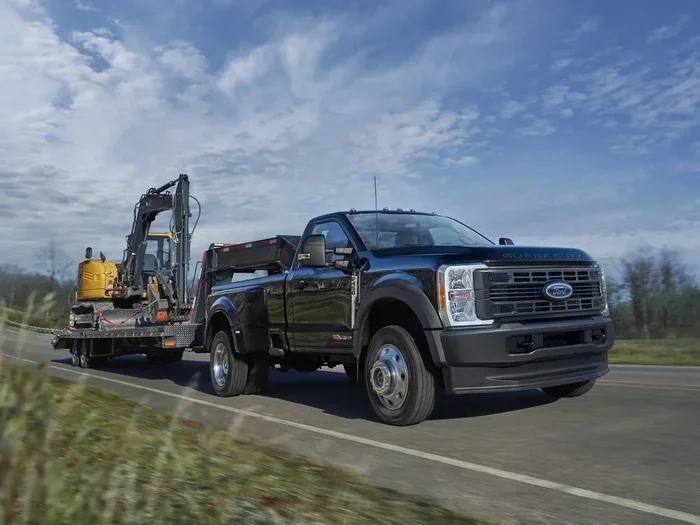
The Ford F-250 is a powerful heavy-duty truck with towing capacity ranging from up to 20,000 pounds when properly configured. Your exact towing ability depends on the engine, drivetrain, hitch type, and towing package you choose. This guide breaks down every towing spec, setup option, and safety tip you need to know.
So you want to know how much a Ford F-250 can actually tow. Maybe you are hauling a travel trailer for weekend adventures. Or perhaps you need to move heavy equipment for work. Either way, the Ford F-250 is one of the most capable towing trucks on the market today. In this guide, we will walk you through every towing spec, every engine option, and every setup that affects your maximum towing ability.
The Ford F-250 belongs to Ford’s Super Duty lineup. It is built for people who need real hauling power. Whether you are towing a boat, a horse trailer, or a large fifth wheel, the F-250 delivers serious towing capacity. But the exact number depends on several factors. Let us break it all down so you know exactly what your truck can handle.
Key Takeaways
- Maximum Towing Capacity: The Ford F-250 can tow up to 20,000 pounds with the right configuration.
- Engine Matters: Different engine options significantly impact your towing power and payload ratings.
- Hitch Type Is Critical: Gooseneck and fifth wheel setups unlock the highest towing limits compared to standard receiver hitches.
- Towing Packages Add Value: Factory towing packages include essential upgrades like cooling systems and wiring harnesses.
- Safety Comes First: Always stay below the maximum towing weight and follow proper setup procedures.
📑 Table of Contents
- Ford F-250 Towing Capacity Overview
- Engine Options and Their Towing Impact
- Towing Packages and Factory Upgrades
- Hitch Types and How They Affect Towing
- Common Towing Mistakes to Avoid
- Expert Tips for Safe and Effective Towing
- How to Choose the Right F-250 Configuration for Your Towing Needs
- Real-World Towing Scenarios
- Maintenance Tips to Keep Your F-250 Towing-Ready
- Final Thoughts on Ford F-250 Towing Capacity
Ford F-250 Towing Capacity Overview
When people ask about the Ford F-250 towing capacity, the short answer is impressive. The maximum towing capacity reaches up to 20,000 pounds. But that number only applies to specific configurations. A base model with a standard engine will tow less than a fully loaded Super Duty setup with the right hitch.
Here is what you need to understand. Towing capacity is not one single number for every F-250. It changes based on the engine, cab style, bed length, drivetrain, and towing package. Let us look at the key numbers so you can figure out where your truck fits.
Base Towing Numbers
A standard Ford F-250 with the base engine can typically tow around 13,500 to 15,000 pounds. This is already a strong number for most everyday towing needs. You can easily pull a large travel trailer, a cargo trailer, or even a small fifth wheel with this setup.
If you upgrade to the 6.7L Power Stroke V8 Turbo Diesel engine, the numbers jump significantly. The diesel option pushes towing capacity well beyond 18,000 pounds in many configurations. Some setups reach the full 20,000-pound maximum. This is why the F-250 remains a favorite among serious towers.
Payload vs. Towing Capacity
People often confuse payload with towing capacity. They are related but very different. Payload is the weight your truck can carry in its bed and cabin. Towing capacity is the weight your truck can pull behind it on a trailer.
Both numbers matter. If you overload your payload, it can affect your towing ability. The truck needs a balanced setup to perform safely. Always check both the payload rating and the towing rating before you hit the road.
Engine Options and Their Towing Impact
The engine you choose plays a huge role in your Ford F-250 towing ability. Ford offers different powertrain options, and each one comes with its own towing specs. Let us go through them one by one.
6.2L V8 Gasoline Engine
The 6.2L V8 gasoline engine is the base powerplant for many F-250 models. It produces around 400 horsepower and 475 pound-feet of torque. This engine handles towing jobs up to about 13,500 to 15,000 pounds depending on your configuration.
For most recreational towing, this engine is more than enough. It provides smooth power and reliable performance. If you are towing a boat or a mid-size travel trailer, you will not need anything more.
6.7L Power Stroke V8 Turbo Diesel
This is the heavy-hitting option. The 6.7L Power Stroke diesel engine delivers roughly 475 horsepower and over 1,000 pound-feet of torque. That massive torque is what gives the F-250 its incredible towing ability.
With the diesel engine, your maximum towing capacity climbs to around 20,000 pounds. The diesel also offers better fuel efficiency under heavy loads. It is the go-to choice for people who tow frequently or haul very heavy trailers.
Gas vs. Diesel for Towing
Choosing between gas and diesel is a big decision. Here is a quick comparison:
- Gasoline Engine: Lower upfront cost, simpler maintenance, good for moderate towing.
- Diesel Engine: Higher towing capacity, better fuel economy under load, higher upfront cost.
If you plan to tow heavy loads regularly, the diesel option is worth the investment. For occasional towing, the gasoline engine gets the job done just fine.
Towing Packages and Factory Upgrades
Ford offers several factory towing packages for the F-250. These packages include upgrades that directly boost your towing capacity and safety. Let us look at what comes with each option.
Base Towing Package
The base towing package includes a wiring harness, a trailer brake controller, and upgraded cooling systems. These are essential for safe towing. Even if you do not add extra options, the base package gives you a solid towing setup.
Heavy-Duty Towing Package
The heavy-duty towing package adds even more. You get a stronger frame, improved suspension, and larger radiators. These upgrades allow the F-250 to handle heavier loads without overheating or straining the drivetrain.
When you add the heavy-duty towing package, you also unlock the highest towing ratings. This is the package you want if you plan to push the F-250 to its limits.
Gooseneck and Fifth Wheel Prep Packages
If you plan to use a gooseneck hitch or a fifth wheel hitch, Ford offers specific prep packages. These include a reinforced bed, gooseneck mounting hardware, and wiring for trailer brakes.
The gooseneck and fifth wheel setups are the most stable options for heavy towing. They distribute weight more evenly across the truck and trailer. This is why many commercial and serious recreational towers prefer these configurations.
Hitch Types and How They Affect Towing
The type of hitch you use has a direct impact on how much weight your F-250 can safely tow. Not all hitches are created equal. Here is a breakdown of the most common options.
Receiver Hitch
A standard receiver hitch is the most common type. It mounts to the frame under the rear bumper. Receiver hitches come in different sizes, with Class IV being the largest and strongest for the F-250.
A Class IV receiver hitch can handle towing up to about 10,000 to 12,000 pounds with a weight distribution system. It works great for travel trailers, boat trailers, and utility trailers.
Gooseneck Hitch
A gooseneck hitch sits in the truck bed over the rear axle. This placement gives better weight distribution and more stability. Gooseneck setups are popular for horse trailers and large flatbed trailers.
The F-250 with a gooseneck hitch can tow significantly more than with a standard receiver. This is one reason the gooseneck configuration is so popular among heavy towers.
Fifth Wheel Hitch
The fifth wheel hitch is the king of heavy towing. It also sits in the truck bed, but it uses a different mounting system. Fifth wheel setups are the standard for large recreational trailers and mobile homes.
With a fifth wheel hitch, the Ford F-250 reaches its absolute maximum towing capacity. This setup provides the most stable and controlled towing experience for very heavy loads.
Common Towing Mistakes to Avoid
Towing a heavy trailer is not as simple as hitching up and driving away. There are common mistakes that many towers make. Avoiding these errors keeps you safe and protects your truck.
Overloading Beyond Towing Limits
One of the biggest mistakes is exceeding the maximum towing weight. Just because your trailer weighs 18,000 pounds does not mean your F-250 can safely pull it. Always check your specific towing rating and stay well within the limit.
Think of it this way. The towing capacity is the maximum, not the target. You should aim to stay at least 10 to 15 percent below the maximum for a safer and more comfortable towing experience.
Ignoring Payload Weight
Your truck’s payload includes everything inside the cab and bed. If your payload is too high, it can reduce your safe towing capacity. Many people forget to account for passengers, cargo, and gear when calculating their total weight.
Always add up your payload and your trailer weight together. Make sure the combined load stays within the truck’s limits. This simple step prevents dangerous situations on the road.
Skipping the Weight Distribution System
A weight distribution hitch helps spread the trailer weight evenly across all axles. Without it, your rear axle can sag, and your front axle may lose traction. This is especially important when towing near your maximum capacity.
Do not skip this upgrade. A weight distribution system is one of the most important towing safety features you can add to your F-250.
Expert Tips for Safe and Effective Towing
Towing safely requires more than just a strong truck. Here are expert tips that experienced towers swear by.
Check Your Mirrors and Blind Spots
A trailer creates large blind spots. Always use extended side mirrors and check them frequently. Before you change lanes or turn, make sure you can see the full length of your trailer.
Brake Early and Gently
A loaded trailer adds significant momentum. You need more distance to stop. Brake early and apply gentle pressure. Slamming the brakes can cause the trailer to sway or jackknife.
Use Trailer Brakes
Most trailers over 1,500 pounds require their own brake system. Make sure your trailer brakes are properly adjusted and connected to your truck’s brake controller. Trailer brakes do the heavy lifting and reduce wear on your F-250’s brakes.
Plan Your Route
Before you tow, plan your route carefully. Avoid steep mountain passes, tight city streets, and roads with low weight limits. A little planning goes a long way in making your towing trip smooth and stress-free.
Perform Regular Maintenance
Towing puts extra stress on your truck. Check your tire pressure, brake pads, and fluid levels more frequently when you tow regularly. A well-maintained F-250 will tow safely for years.
How to Choose the Right F-250 Configuration for Your Towing Needs
Not all F-250 setups are the same. Your ideal configuration depends on what you plan to tow. Here is a quick guide to help you choose.
For Light Towing (Up to 8,000 Pounds)
If you are towing small boats, utility trailers, or lightweight campers, the base F-250 with the 6.2L V8 engine is a great choice. You do not need any special packages for this level of towing. A Class IV receiver hitch and a weight distribution system will handle the job easily.
For Medium Towing (8,000 to 15,000 Pounds)
For larger travel trailers or equipment haulers, consider the heavy-duty towing package. A gooseneck hitch setup also works well in this range. Make sure your payload and tongue weight are within safe limits.
For Heavy Towing (15,000 to 20,000 Pounds)
For maximum towing capacity, you need the 6.7L Power Stroke diesel engine, the heavy-duty towing package, and a fifth wheel hitch setup. This is the full-power configuration that unlocks the F-250’s absolute maximum towing ability.
Remember that every pound you add to the truck reduces your available towing capacity. Keep your payload lean and your hitch properly rated for the weight you are pulling.
Real-World Towing Scenarios
Let us look at a few real-world examples to make these numbers more practical.
Scenario 1: Weekend Camping Trip. You are towing a 6,000-pound travel trailer with a 6.2L gas F-250. This is well within the base towing capacity. You will have plenty of power and stability for highway driving and mountain passes.
Scenario 2: Hauling a Horse Trailer. A loaded horse trailer weighs around 10,000 pounds. A gooseneck setup on an F-250 with the diesel engine handles this with ease. The weight distribution is superior with the gooseneck position in the bed.
Scenario 3: Moving a Large Fifth Wheel. A 17,000-pound fifth wheel requires the full diesel engine, heavy-duty package, and fifth wheel hitch. This is right at the top of the F-250’s towing range. Make sure you stay within all weight limits and use a weight distribution system.
For comparison, some people wonder about weight limits in other contexts, like whether 000 lbs is heavy for a car. The same principles of weight distribution and vehicle capacity apply across all towing and vehicle scenarios.
Maintenance Tips to Keep Your F-250 Towing-Ready
Regular maintenance keeps your Ford F-250 in top towing shape. Here are the essentials.
- Engine Oil: Change it every 5,000 to 7,500 miles, or more often if you tow frequently.
- Transmission Fluid: Check it regularly. Towing puts extra strain on the transmission.
- Brake System: Inspect pads and rotors often. A loaded trailer demands more stopping power.
- Tires: Keep them properly inflated. Check the sidewall for wear and damage before every trip.
- Suspension: Inspect shocks and bushings. A worn suspension affects towing stability.
Staying on top of maintenance is one of the best ways to ensure your F-250 can tow safely trip after trip. A well-maintained truck also holds its value better if you decide to sell.
Final Thoughts on Ford F-250 Towing Capacity
The Ford F-250 is a remarkable truck when it comes to towing. With a maximum capacity of up to 20,000 pounds, it handles everything from small boat trailers to massive fifth wheel rigs. The key is understanding your specific configuration and staying within the rated limits.
Choose the right engine, add the proper towing package, and use the correct hitch type. Follow safety best practices and maintain your truck regularly. When you do all of this, the F-250 delivers towing performance that is hard to beat in the heavy-duty truck segment.
Whether you are a first-time tower or a seasoned pro, the Ford F-250 gives you the power, stability, and reliability you need. Know your numbers, respect the limits, and enjoy the freedom of hauling anything you need.
For more information on vehicle weight and capacity, you might also find it helpful to read about when a hybrid switches to gas for related insights on how different powertrains handle load and efficiency.
Now you have everything you need to know about how much a Ford F-250 can tow. Go ahead, load up your trailer, and hit the road with confidence.
Frequently Asked Questions
What is the maximum towing capacity of a Ford F-250?
The Ford F-250 can tow up to 20,000 pounds when equipped with the 6.7L Power Stroke diesel engine, the heavy-duty towing package, and a fifth wheel hitch. Your exact capacity depends on your specific configuration, engine choice, and hitch type.
Can a Ford F-250 tow a fifth wheel trailer?
Yes, the F-250 is one of the best trucks for fifth wheel towing. With the proper fifth wheel prep package and a gooseneck or fifth wheel hitch, the F-250 reaches its highest towing capacity. This setup is ideal for large recreational trailers and heavy hauling needs.
What is the difference between towing capacity and payload capacity?
Towing capacity is the maximum weight your F-250 can pull behind it on a trailer. Payload capacity is the maximum weight the truck itself can carry in its bed and cabin. Both numbers are important and you should never exceed either limit for safe towing.
Does the Ford F-250 diesel tow more than the gas version?
Yes, the 6.7L Power Stroke diesel engine provides significantly more towing capacity than the 6.2L gasoline engine. The diesel delivers over 1,000 pound-feet of torque, which translates to stronger towing ability and better performance under heavy loads.
Do I need a weight distribution hitch for my F-250?
A weight distribution hitch is highly recommended when towing near your maximum capacity. It redistributes the trailer weight across all axles, improving stability and steering control. For heavy towing setups, it is an essential safety component.
How often should I maintain my F-250 if I tow regularly?
If you tow frequently, you should service your F-250 more often than the standard maintenance schedule. Change your engine oil every 5,000 miles, check transmission fluid regularly, and inspect your brakes before every trip. Regular maintenance keeps your truck safe and reliable for towing.
=== CONCLUSION ===
The Ford F-250 is a powerhouse when it comes to towing capacity. With up to 20,000 pounds of maximum towing ability, it stands among the best heavy-duty trucks available. Your exact towing capacity depends on your engine choice, towing package, hitch type, and overall configuration.
Remember to respect the rated limits, invest in the right setup, and maintain your truck properly. Whether you are towing a small trailer for a weekend getaway or hauling heavy equipment for work, the F-250 has you covered. Now that you know exactly how much a Ford F-250 can tow, you are ready to make confident, safe towing decisions every time you hit the road.