Does Tesla Have Two Charging Ports And Why It Matters
Does Tesla have two charging ports? The short answer is no — most Tesla models feature a single charging port on the left rear quarter panel. However, Tesla vehicles support dual charging methods through that one port using adapters. Understanding how Tesla charging ports work helps EV owners charge faster, smarter, and with fewer headaches.
If you have been asking yourself does Tesla have two charging ports, you are not alone. This question comes up often among new electric vehicle buyers and even seasoned Tesla owners. The answer might surprise you. Most Tesla models use just one charging port, but the way you can use it is more flexible than you might think.
Understanding your Tesla charging port setup is important. It affects how fast you charge, where you charge, and how convenient your daily routine becomes. Whether you drive a Tesla Model 3, Model S, Model X, or Model Y, this guide covers everything you need to know. Let us break it down in simple terms.
When you compare EV charging to how a hybrid vehicle manages its power, the differences are clear. For example, at what point does a hybrid switch to gas is a completely different question from how Tesla handles energy. Tesla relies fully on electricity, and all that power flows through one single port. That one port is designed to handle multiple charging scenarios.
Key Takeaways
- One Port, Multiple Options: Tesla vehicles use a single charging port that supports multiple charging methods, including Supercharging, destination charging, and home charging.
- No Dual Port Setup: Unlike some EVs, Tesla does not have two separate charging ports on any current model.
- Adapters Make the Difference: Using the right charging cable and adapter unlocks different charging speeds and locations.
- Charging Speed Varies: DC fast charging at Tesla Superchargers is much faster than Level 2 charging at home or public stations.
- Know Your Model: Each Tesla Model 3, Model S, Model X, and Model Y shares the same single-port design but differs in charging capabilities.
📑 Table of Contents
- What You Need to Know About Tesla Charging Ports
- Which Tesla Models Share This Single-Port Design?
- How Does Tesla Charging Actually Work?
- Can You Charge a Tesla at Two Ports Simultaneously?
- Common Misconceptions About Tesla Charging Ports
- Tips for Optimizing Your Tesla Charging Setup
- Why Does This Single-Port Design Matter?
- Final Thoughts
What You Need to Know About Tesla Charging Ports
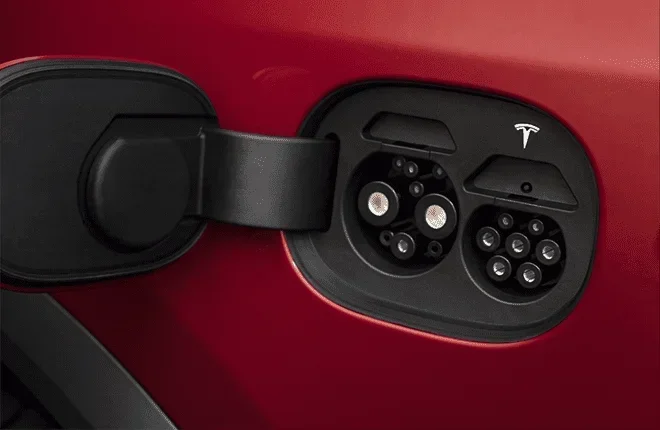
Every Tesla vehicle has one charging port located on the left side of the rear quarter panel. This is the only place where you plug in to charge. Unlike some other electric vehicles that have two ports or a combined charging system, Tesla keeps it simple. One port. Many possibilities.
The port on your Tesla is part of a universal design that works with different types of charging cables and adapters. This means you are not locked into one charging method. You can charge at home, at work, or on the road — all through the same single opening.
Where Is the Charging Port Located?
The Tesla charging port is on the left rear side of the vehicle. It is behind a small door that pops open with a tap on the touchscreen or by pressing the Tesla mobile connector button. The location is consistent across all current Tesla models, which makes it easy to remember no matter which car you drive.
Some people confuse the frunk (front trunk) with a charging port. The frunk is just extra storage space. The actual electrical connection point is always on the left rear side. Keeping this straight helps avoid confusion, especially if you are new to EV charging.
What Types of Charging Can You Use Through One Port?
Even though Tesla has one port, it supports several charging types:
- Tesla Supercharger: DC fast charging at dedicated Tesla stations. This is the fastest option for road trips.
- Destination Charger: Slower Level 2 charging at hotels, restaurants, and shopping centers.
- Home Charging: Using a Tesla wall connector or a standard NEMA plug for overnight charging.
- Mobile Connector: A portable charger that comes with every Tesla and works with standard household outlets.
- J1772 Adapter: Allows you to use non-Tesla Level 2 charger stations that use the J1772 standard.
All of these charging methods use the same single port. You simply swap out the charging cable or adapter depending on where you are. This design keeps things clean and straightforward.
Which Tesla Models Share This Single-Port Design?
Every Tesla model currently on the road uses the same single charging port design. Whether you are looking at a Tesla Model 3, Model S, Model X, or Model Y, the port setup is identical. This is part of Tesla’s strategy to keep things simple for owners.
Here is a quick look at how each model handles charging:
- Tesla Model 3: Compact sedan with one charging port. Supports up to 250 kW at Superchargers.
- Tesla Model S: Luxury sedan with one charging port. Supports up to 250 kW at Superchargers and offers long range.
- Tesla Model X: SUV with one charging port. Same fast-charging capabilities as the Model S.
- Tesla Model Y: Compact SUV with one charging port. Shares the same charging architecture as the Model 3.
No matter which model you choose, you will never need to worry about finding a second port. The single Tesla charging port is built to handle all your charging needs. This uniformity is one of the reasons Tesla charging network access is so seamless across the lineup.
How Does Tesla Charging Actually Work?
Now that you know Tesla has one port, let us talk about how EV charging actually works in practice. Understanding the basics helps you make smarter decisions about when and where to charge.
Level 1 Charging: The Slowest Option
Level 1 charging uses a standard household outlet. The Tesla mobile connector that comes with your car can plug into any regular wall outlet. This is the slowest method and adds about 2 to 5 miles of range per hour. It is fine for overnight charging if you have a long stretch of time, but it is not ideal for daily use.
Level 2 Charging: The Sweet Spot for Home
Level 2 charging is what most Tesla owners set up at home. A Tesla wall connector or a Level 2 charger installed by an electrician provides much faster speeds. You can add 30 to 44 miles of range per hour, depending on your model. This is perfect for overnight charging so your car is ready every morning.
You can also use a J1772 adapter to access non-Tesla Level 2 charger stations. This opens up more options when you are out and about. Many public parking lots and shopping centers now offer Level 2 charger stations that work with this adapter.
DC Fast Charging: The Road Trip Hero
DC fast charging at Tesla Superchargers is the fastest way to charge on the road. These stations can add up to 200 miles of range in just 15 to 30 minutes, depending on your model and battery size. The Tesla Supercharger network is one of the biggest advantages of owning a Tesla.
Charging speed depends on several factors, including battery temperature, state of charge, and the specific Supercharger station. Tesla vehicles automatically regulate charging speed to protect battery health. This means your car will slow down charging as the battery gets full.
Can You Charge a Tesla at Two Ports Simultaneously?
Some EV owners wonder if they can speed up charging by using two ports at once. The answer is no. Tesla vehicles have one charging port and one battery management system. There is no way to split charging between two inputs. All the power flows through that single port into the battery.
Trying to charge from two sources at the same time is not supported and could potentially cause issues with your vehicle’s electrical system. Tesla engineers designed the single-port system to be efficient and safe. Trust the process and let the Tesla wall connector or Supercharger do the work.
What About the Frunk? Does It Have a Charging Port?
No. The frunk is purely for storage. Some Tesla owners store their charging cable in the frunk, which is a great idea for organization. But the frunk has no electrical connection. All charging happens through the single rear port.
Common Misconceptions About Tesla Charging Ports
There are several myths floating around about Tesla charging ports. Let us clear up the most common ones so you have accurate information.
Myth 1: Teslas Have Two Charging Ports for Faster Charging
This is not true. Tesla vehicles have one port. The charging speed is determined by the charger you use, not by having multiple ports. Using a Tesla Supercharger will always be faster than a home Level 2 charger, regardless of how many ports the car has.
Myth 2: You Need a Special Port for Each Charger Type
Another misconception is that you need different ports for different chargers. Tesla uses one universal port and provides adapters for other charging standards. The J1772 adapter and NEMA plug options make this possible. One port handles everything.
Myth 3: Two Ports Would Make Charging More Reliable
Some owners think a dual-port design would reduce the risk of a single point of failure. In reality, Tesla’s single-port design is highly reliable. The Tesla charging network is built with redundancy, so if one station is busy, another is usually nearby. Reliability comes from the network, not from extra ports on the car.
When you compare this to how other vehicles manage power, like asking at what point does a hybrid switch to gas, the logic is different. Hybrids need two power sources because they use both gas and electric. Tesla is fully electric, so one well-designed port handles all charging scenarios.
Tips for Optimizing Your Tesla Charging Setup
Getting the most out of your Tesla charging port is easier than you think. Here are some practical tips to help you charge smarter and faster.
1. Install a Tesla Wall Connector at Home
The best way to ensure convenient daily charging is to install a Tesla wall connector in your garage or driveway. This gives you the fastest home charging speeds and eliminates the need to rely on public stations for your regular routine. A professional electrician can set this up in a few hours.
2. Use the Tesla App to Find Charging Stations
The Tesla app shows you nearby Superchargers, destination chargers, and third-party stations. You can check availability, pricing, and charging speed before you arrive. This saves time and reduces range anxiety on longer trips.
3. Precondition Your Battery Before Fast Charging
Tesla vehicles allow you to precondition the battery before arriving at a Supercharger. This means the battery is warmed to the optimal temperature for fast charging. You can set this up through the navigation system when you route to a Tesla Supercharger station.
4. Keep Your Charging Cable Organized
Store your charging cable in the frunk or in the trunk organizer. A well-organized cable lasts longer and is easier to access when you need it. Avoid leaving the cable exposed to extreme heat or cold for extended periods.
5. Understand Your Charging Schedule
Set a charging schedule through the touchscreen to take advantage of off-peak electricity rates. This saves money and ensures your car is fully charged when you need it. Most Tesla owners plug in every night and wake up to a full battery every morning.
6. Use the Right Adapter for Public Charging
Carry a J1772 adapter if you plan to use public Level 2 charger stations that are not Tesla-branded. This small accessory opens up many more charging options and gives you flexibility when traveling.
Why Does This Single-Port Design Matter?
You might wonder why Tesla stuck with one port instead of adding a second one. The answer comes down to design philosophy and practical engineering. A single port keeps the vehicle simpler, lighter, and more reliable. Fewer moving parts mean fewer things that can go wrong.
The Tesla charging network is also built around this single-port standard. Every Tesla Supercharger station, destination charger, and home charging station is designed to work with one port. This creates a seamless experience for owners across all models.
When you think about how a hybrid vehicle manages its dual power system — like figuring out at what point does a hybrid switch to gas — you realize that complexity has trade-offs. Tesla chose simplicity. One port, many adapters, unlimited flexibility. That design choice has proven to work well for millions of electric vehicle owners worldwide.
The single-port approach also means lower maintenance costs. There is no second port to repair, no additional wiring to maintain, and no extra components that could fail. For owners who care about long-term reliability, this is a significant advantage.
As EV charging technology continues to evolve, Tesla may update its port design in the future. But for now, the single-port system remains one of the most versatile and user-friendly solutions in the electric vehicle market. It works for daily commuting, road trips, and everything in between.
Final Thoughts
So, does Tesla have two charging ports? The answer is clear. Tesla vehicles use one charging port on the left rear quarter panel. But that one port supports a wide range of charging methods through adapters and different charging cables. From Tesla Superchargers to home Level 2 chargers, the single-port design covers every scenario.
Understanding how your Tesla charging port works empowers you to charge smarter, save time, and get the most out of your electric vehicle. Whether you drive a Model 3, Model S, Model X, or Model Y, the same simple and effective design applies. Embrace the simplicity, use the right adapter, and enjoy the freedom that comes with Tesla charging.
The next time someone asks you does Tesla have two charging ports, you can confidently explain the truth. One port. Many options. A seamless charging experience that just works.
Frequently Asked Questions
Do any Tesla models have two charging ports?
No. Every current Tesla model — including the Model 3, Model S, Model X, and Model Y — uses a single charging port on the left rear quarter panel. All charging methods work through this one port using different adapters and cables.
Can you charge a Tesla faster with two cables at once?
No. Tesla vehicles are designed to accept power from one source at a time through the single charging port. Attempting to charge from two sources simultaneously is not supported and could damage the vehicle’s electrical system.
What is the difference between a Tesla Supercharger and a destination charger?
A Tesla Supercharger uses DC fast charging and can add significant range in 15 to 30 minutes. A destination charger uses Level 2 charging and is slower, typically used overnight at hotels or while shopping. Both connect through the same single Tesla charging port using the appropriate cable or adapter.
Do I need a J1772 adapter if I only charge at home?
No. If you charge exclusively at home with a Tesla wall connector or a standard NEMA plug, you do not need a J1772 adapter. However, carrying one is a good idea for travel, as it allows you to use non-Tesla Level 2 charger stations at restaurants, hotels, and public parking areas.
Why does Tesla use only one charging port instead of two?
Tesla uses a single-port design to keep the vehicle simpler, lighter, and more reliable. One port means fewer components, lower maintenance costs, and a streamlined charging experience. The Tesla charging network and adapter system provide all the flexibility most owners need without adding complexity.
How long does it take to charge a Tesla at home?
Charging time depends on your setup. Using a Tesla wall connector (Level 2), most Teslas charge fully overnight, taking about 6 to 12 hours depending on the model and battery size. Using a standard household outlet with the Tesla mobile connector takes significantly longer and is best suited for plug-in overnight when you have plenty of time.
=== CONCLUSION ===
Does Tesla have two charging ports? Now you know the answer for sure. Tesla uses one charging port on every model, and that single port handles all your charging needs. From Tesla Superchargers to home Level 2 chargers, the system is designed to be simple, flexible, and reliable.
Embrace the single-port design. Use the right charging cable and adapter for your situation, and you will have a seamless EV charging experience every day. Share this knowledge with fellow Tesla owners and anyone considering making the switch to electric vehicles. Understanding your car is the first step to getting the most out of it.