How Long Does It Take to Fully Charge an Electric Car
How long does it take to fully charge an electric car? The answer depends on your charger type, battery size, and driving habits. A Level 1 charger can take 40 to 50 hours, while a Level 2 home station typically needs 4 to 10 hours. DC fast chargers can deliver 80% charge in just 20 to 40 minutes. Understanding these options helps you plan charging smarter and avoid range anxiety.
Key Takeaways
- Charging time varies widely: It can take anywhere from 20 minutes to 50 hours depending on the charger and battery.
- Level 2 home chargers are the most practical: They offer the best balance of speed and cost for daily use.
- DC fast charging is ideal for road trips: You can get 80% charge in under 40 minutes at most fast-charging networks.
- Battery size matters a lot: A larger battery pack takes longer to charge, but newer EVs are improving charging speed.
- Temperature affects charging speed: Cold weather can slow down your EV charging significantly.
- Overnight charging is the easiest habit: Plug in at home and wake up with a full battery every morning.
📑 Table of Contents
- Understanding Electric Vehicle Charging Basics
- The Three Charging Levels Explained
- How Long Does It Take to Fully Charge an Electric Car?
- Factors That Affect Charging Speed
- Tips to Charge Your EV Faster and Smarter
- The Future of EV Charging Technology
- How to Choose the Right Charging Setup for Your Home
- How Much Does It Cost to Charge an Electric Car?
- Conclusion
Understanding Electric Vehicle Charging Basics
If you are new to the world of electric vehicles, the charging process can feel confusing at first. There are different charger types, varying speeds, and lots of numbers thrown around. But the core concept is simple. Charging an EV works a lot like charging your phone. You plug it in, and electricity flows into the battery pack. The bigger the battery and the slower the charger, the longer the process takes.
So, how long does it take to fully charge an electric car? The short answer is it depends. Several factors come into play. These include the charger level, the battery capacity, the vehicle’s onboard charger, and even the outside temperature. Let us break all of this down so you feel confident about your charging options.
What Is an EV Battery and How Does It Store Energy?
Every electric vehicle has a rechargeable battery pack. These packs are made up of many individual lithium-ion cells. Think of them like a large container that holds electrical energy. The bigger the container, the more energy it can store. This is measured in kilowatt-hours, or kWh. Most modern EVs have battery packs ranging from 40 kWh to over 100 kWh.
The battery stores energy that powers the electric motor. When you drive, the battery slowly drains. When you plug in, it refills. The rate at which it refills depends on the charger you are using and the car’s internal limits. Not all cars can accept the same charging speed. This is an important detail to keep in mind.
How Does EV Charging Actually Work?
EV charging converts alternating current from the grid into direct current that the battery can use. Your car has an onboard charger that handles this conversion. The onboard charger determines the maximum power your vehicle can accept. Even if a charger can deliver more power, your car will only take what it can handle.
Charging happens in a few stages. First, the battery accepts power quickly when it is low. Then, as it nears full capacity, the speed slows down. This is a safety feature built into the battery management system. It protects the battery from damage and extends its lifespan. So the last 20% of a charge often takes longer than the first 80%.
The Three Charging Levels Explained
EV charging comes in three main levels. Each level offers a different speed and use case. Understanding these levels is the key to answering the question of how long it takes to fully charge an electric car. Let us look at each one in detail.
Level 1 Charging — The Slow but Simple Option
Level 1 charging uses a standard household outlet. You do not need any special equipment. Just plug your EV into a regular 120-volt outlet using the cord that came with the car. This is the most basic form of charging. It is also the slowest.
Level 1 charging adds about 3 to 5 miles of range per hour. That means a fully depleted 60 kWh battery might take 40 to 50 hours to charge completely. This method works best for plug-in hybrids or for topping off overnight. If you only drive a short distance each day, Level 1 might be enough for your needs.
However, most EV owners do not rely on Level 1 as their primary charging method. It is too slow for daily use with a full battery pack. Think of it as an emergency backup option. You would use it when no other charging source is available.
Level 2 Charging — The Sweet Spot for Home Use
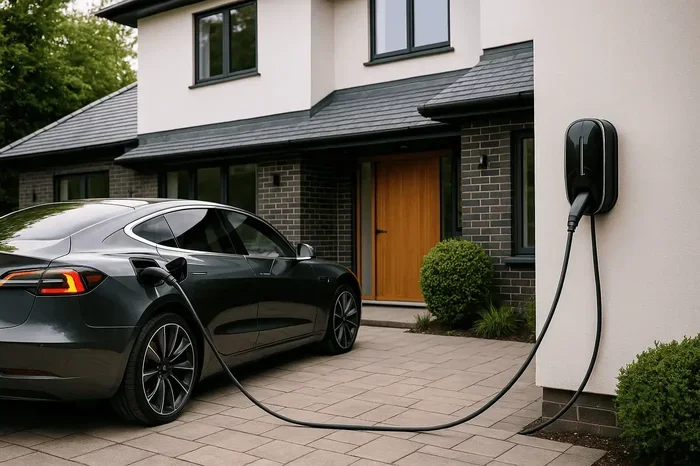
Level 2 charging is the most popular choice for home EV owners. It uses a 240-volt outlet, similar to what a clothes dryer uses. You will need a dedicated home charging station installed by a licensed electrician. The cost of a Level 2 charger ranges from 300 to 800 dollars for the equipment, plus installation fees.
Level 2 charging adds about 25 to 30 miles of range per hour. A typical EV with a 60 kWh battery can fully charge in about 4 to 8 hours. This makes it perfect for overnight charging. You plug in when you get home from work, and your car is ready to go in the morning.
Most public parking lots, shopping centers, and workplaces use Level 2 chargers. They are the most common type of public charging station. If you want the best balance of speed and affordability, a Level 2 home charger is the way to go. It transforms your daily routine and eliminates the stress of running low on charge.
DC Fast Charging — The Speed Champion
DC fast charging, also called Level 3 charging, uses high-powered equipment to deliver electricity directly to the battery. These chargers are found along highways, at dedicated charging stations, and in some urban areas. They bypass the onboard charger and deliver power much faster.
DC fast chargers can add 100 to 200 miles of range in just 20 to 30 minutes. Most EVs can reach 80% charge in about 30 to 45 minutes on a fast charger. The last 20% takes longer because the battery slows down the charging rate to protect itself.
Popular DC fast charging networks include Tesla Superchargers, Electrify America, and EVgo. These stations are essential for road trips and long-distance travel. However, frequent use of fast charging can slightly reduce battery health over time. It is best to use them when you need a quick top-up, not as your daily charging method.
How Long Does It Take to Fully Charge an Electric Car?
Now that you understand the three charging levels, let us look at specific charging times. The answer to how long does it take to fully charge an electric car depends on your vehicle and your charger. Below is a general breakdown.
Charging Times by Vehicle Type
Different EVs have different battery sizes and charging capabilities. A compact EV with a smaller battery will charge faster than a large SUV with a big pack. Here are some general estimates for a fully depleted battery:
- Compact EV (40 kWh battery) on Level 1: About 30 to 40 hours.
- Compact EV on Level 2: About 4 to 6 hours.
- Compact EV on DC Fast Charger: About 20 to 30 minutes for 80%.
- Mid-size EV (60 kWh battery) on Level 1: About 40 to 50 hours.
- Mid-size EV on Level 2: About 6 to 8 hours.
- Mid-size EV on DC Fast Charger: About 30 to 40 minutes for 80%.
- Large EV (100 kWh battery) on Level 1: About 60 to 70 hours.
- Large EV on Level 2: About 8 to 12 hours.
- Large EV on DC Fast Charger: About 40 to 60 minutes for 80%.
Real-World Charging Time Examples
Let us look at a few popular EVs and their real-world charging times. These numbers give you a practical sense of what to expect.
The Tesla Model 3 has a 60 kWh battery. On a Level 2 charger, it takes about 6 to 7 hours for a full charge. On a Tesla Supercharger, it reaches 80% in about 25 to 30 minutes.
The Nissan Leaf with a 40 kWh battery charges fully on Level 2 in about 4 to 5 hours. On a DC fast charger, it reaches 80% in roughly 30 minutes.
The Ford Mustang Mach-E with a 70 kWh battery takes about 8 to 10 hours on Level 2. On a fast charger, it hits 80% in about 35 to 45 minutes.
These examples show that charging time varies a lot. Your daily driving habits will help you decide which charging method works best for you.
Charging Time Comparison Table
| EV Model | Battery Size | Level 1 (120V) | Level 2 (240V) | DC Fast (80%) |
|---|---|---|---|---|
| Nissan Leaf | 40 kWh | 35-45 hrs | 4-6 hrs | 30 min |
| Tesla Model 3 | 60 kWh | 50-60 hrs | 6-7 hrs | 25-30 min |
| Ford Mustang Mach-E | 70 kWh | 55-65 hrs | 8-10 hrs | 35-45 min |
| Chevy Bolt EV | 65 kWh | 50-60 hrs | 7-8 hrs | 30-35 min |
| Hyundai Ioniq 5 | 77 kWh | 60-70 hrs | 9-11 hrs | 18-25 min |
Factors That Affect Charging Speed
You might wonder why charging times differ even when using the same charger. Several factors influence how fast your electric car charges. Understanding these can help you optimize your charging routine.
Battery Size and Capacity
The bigger the battery, the longer it takes to charge. A 40 kWh battery fills up much faster than a 100 kWh battery. This is basic math. More energy means more time to replenish. When shopping for an EV, consider your daily driving needs. If you only travel 30 miles a day, a smaller battery with faster charging might be a better fit than a massive pack.
Weather and Temperature
Cold weather has a real impact on charging speed. When temperatures drop below freezing, the battery chemistry slows down. The battery management system restricts power flow to protect the cells. In very cold conditions, you might notice a 20 to 30 percent drop in charging speed.
Hot weather can also affect charging, though usually less dramatically. Extreme heat causes the battery to thermal throttle, reducing the charge rate. Most modern EVs have thermal management systems that help. But still, temperature matters. If you live in a very hot or very cold climate, plan for slightly longer charging times.
Charger Power Output
Not all chargers deliver the same amount of power. A Level 1 outlet provides about 1.4 kW. A Level 2 charger delivers 7 to 19 kW. DC fast chargers range from 50 kW to 350 kW. The higher the power output, the faster the charge. But your car can only accept what its onboard charger supports. A car with a 7.2 kW onboard charger will not charge faster on a 19 kW Level 2 station.
Battery State of Charge
EVs charge fastest when the battery is between 10 and 50 percent. As the battery fills up, the charging rate drops significantly. This is why most EV owners say you rarely need to charge from 0 to 100 percent. Topping off from 20 to 80 percent is much faster and better for battery health. Only charge to 100 percent when you need the full range for a long trip.
Onboard Charger Limitations
Every EV has an onboard charger that limits the maximum charging speed. This is a hardware limitation. For example, a car with an 11 kW onboard charger will charge slower on a 22 kW Level 2 station. It will only draw 11 kW. Check your vehicle specifications to understand your car’s charging limits. This knowledge helps you choose the right charger and set realistic expectations.
Tips to Charge Your EV Faster and Smarter
Once you understand how charging works, you can take steps to make the process faster and more efficient. Here are some practical tips that every EV owner should know.
Quick Tips for Faster Charging
- Prepare your battery before fast charging. If your car has a pre-conditioning feature, use it. It warms up the battery before you arrive at a fast charger, which improves charging speed.
- Charge during off-peak hours. Electricity rates are often lower at night. Plus, the grid is less stressed, which can lead to more stable charging speeds.
- Keep your battery between 20 and 80 percent. This range charges fastest and keeps your battery healthy for the long term.
- Use a Level 2 charger at home. It is the most convenient way to ensure your car is always ready to go.
- Keep your charging port clean. Dirt and debris can interfere with the connection and slow down charging.
- Update your car’s software. Manufacturers often release updates that improve charging performance and battery management.
Common Mistakes to Avoid
Many new EV owners make charging mistakes that waste time or reduce battery life. Here are some common ones to avoid.
- Always charging to 100 percent. This is unnecessary for daily driving and puts extra stress on the battery. Only charge to full when you need the extra range.
- Letting the battery drop to 0 percent. Deep discharging damages lithium-ion cells over time. Try to plug in before the battery gets too low.
- Using fast charging every day. Frequent fast charging generates more heat and can degrade the battery faster. Save it for road trips and emergencies.
- Ignoring the onboard charger limits. Buying a more powerful charger than your car can accept is a waste of money. Check your vehicle specs first.
- Charging in extreme heat without preconditioning. High temperatures slow down charging. Use your car’s thermal management features when available.
Expert Insights on EV Charging
According to EV industry experts, the best charging strategy is a simple one. Charge at home every night using a Level 2 charger. This habit keeps your battery in the optimal range and eliminates range anxiety. For road trips, rely on DC fast chargers but try to limit each session to 20 to 30 minutes. Then take a break while the battery cools slightly before resuming the trip.
Battery experts also recommend avoiding frequent full charges. Keeping your battery between 20 and 80 percent most of the time helps preserve its capacity over the life of the vehicle. Think of it like keeping your phone between 20 and 80 percent. It is a small habit that makes a big difference over months and years.
The Future of EV Charging Technology
The electric vehicle industry is evolving rapidly. Charging technology is improving every year. What takes 40 minutes today might take 15 minutes in just a few years. Here is a look at what is coming next.
Ultra-Fast Charging Stations
Automakers and charging networks are investing heavily in ultra-fast charging technology. Some new stations can deliver 350 kW of power. These chargers can add hundreds of miles of range in just 15 to 20 minutes. Several EV models are now designed to accept 250 kW or more from fast chargers. As the infrastructure expands, road trips in electric vehicles will become even more convenient.
Wireless Charging on the Horizon
Wireless charging, also called inductive charging, is an exciting development. It lets you charge your EV without plugging in. You simply park over a charging pad on the ground, and energy transfers wirelessly to the car. The technology is still in its early stages. Current wireless chargers are slower than wired options. But researchers are working to improve power output. In the future, wireless charging could become standard in homes and parking lots.
Battery Technology Advances
New battery chemistries are also changing the charging landscape. Solid-state batteries, for example, promise faster charging times and higher energy density. Some manufacturers are testing batteries that can accept 350 kW or more without overheating. These advances could reduce average charging times to under 15 minutes for a full charge. The future of EV charging is looking very bright.
How to Choose the Right Charging Setup for Your Home
Setting up a home charging station is one of the best decisions you can make as an EV owner. It gives you the convenience of waking up to a full battery every morning. Here is how to choose the right setup.
First, check your electrical panel. Most homes need a 240-volt circuit for a Level 2 charger. Older homes may need an electrical panel upgrade, which costs 1,000 to 3,000 dollars. A licensed electrician can assess your home and recommend the right setup.
Next, choose a charger that matches your car’s onboard charger capacity. If your car supports 11 kW charging, there is no need to buy a 22 kW charger. Look for smart features like app connectivity, scheduling, and energy monitoring. These features help you optimize charging times and electricity costs.
Finally, consider where you will install the charger. A garage or carport is ideal. If you park on the street, you might need an extended cable. Talk to your electrician about the best placement for convenience and safety.
How Much Does It Cost to Charge an Electric Car?
Charging costs vary depending on your electricity rates and the charger you use. On average, electricity costs between 0.10 and 0.20 dollars per kWh in the United States. Charging a 60 kWh battery from empty to full costs about 6 to 12 dollars at home. Compare that to filling a gas tank, which can cost 40 to 70 dollars or more depending on your vehicle.
Public charging stations often charge more per kWh. DC fast charging can cost 0.30 to 0.60 dollars per kWh. Some networks charge a flat session fee on top of the per-kWh rate. However, many EV owners charge almost exclusively at home, keeping their costs very low. If you have solar panels, your charging costs can drop even further, potentially to near zero.
Conclusion
So, how long does it take to fully charge an electric car? The answer is not one-size-fits-all. It depends on your charger type, battery size, temperature, and driving habits. Level 1 charging takes the longest, often two full days. Level 2 home charging takes 4 to 10 hours, making it the best choice for daily use. DC fast charging can deliver 80 percent charge in 20 to 45 minutes for quick top-ups on the road.
The most important thing you can do is establish a charging routine. Plug in at home every night, keep your battery between 20 and 80 percent, and use fast chargers only when needed. With the right habits and the right equipment, charging your electric car becomes second nature. The time it takes to charge is a small price to pay for lower fuel costs, a quieter ride, and a cleaner planet.
Start by evaluating your daily driving distance and choosing the right charger for your home. Once you make the switch, you will wonder why you ever worried about charging time at all. The future of driving is electric, and it is charging up faster than ever.
Frequently Asked Questions
Can I charge my electric car using a regular household outlet?
Yes, you can use a standard 120-volt household outlet with Level 1 charging. However, it is very slow and adds only 3 to 5 miles of range per hour. This method works best for plug-in hybrids or as an emergency backup. For daily use, a Level 2 charger is much more practical and efficient.
Is it bad to charge my electric car every night?
No, charging every night is actually the recommended habit for most EV owners. It keeps your battery in the optimal range and ensures you start each day with a full charge. Modern EVs have battery management systems that prevent overcharging. You can set a charging timer to stop at 80 or 90 percent if you prefer.
How long do EV batteries last before they need replacing?
Most EV batteries are designed to last 10 to 20 years or 100,000 to 200,000 miles. Battery degradation happens slowly over time, usually at a rate of 1 to 2 percent per year. Many manufacturers offer battery warranties of 8 years or 100,000 miles. Proper charging habits can help extend battery life significantly.
Can I install a Level 2 charger in my apartment or condo?
This depends on your building’s rules and electrical setup. Many apartment complexes are adding shared EV charging stations. You can also talk to your property manager about installing a dedicated charger in your assigned parking spot. Some cities offer incentives for multifamily EV charging infrastructure. Check with your local government for available programs.
Does fast charging damage the EV battery?
Occasional fast charging does not cause significant damage. However, relying on DC fast chargers every day can generate extra heat and slightly accelerate battery degradation over time. Most experts recommend using fast chargers for road trips and saving Level 2 charging for your daily routine. This balance keeps your battery healthy and your charging times fast when you need them.
How can I find public charging stations near me?
Several apps and websites help you locate public charging stations. Popular options include PlugShare, ChargePoint, and the Tesla navigation system for Tesla owners. Most EV dashboards also have built-in charging station maps. These tools show real-time availability, charger types, and pricing. Planning your charging stops ahead of time makes EV travel easy and stress-free.