Car AC Gas Pressure Guide Everything You Need to Know
Car AC gas pressure is the key to a properly working cooling system. This guide covers normal pressure readings, common problems, and step-by-step troubleshooting for R-134a and R-1234yf systems. You will learn how to read AC pressure gauges, spot refrigerant leaks, and decide when to call a pro.
Your car AC gas pressure tells you a lot about how well your cooling system is working. Whether it is a scorching summer day or a mild spring morning, the AC system relies on proper gas pressure to keep you cool. When that pressure drops or spikes, your comfort takes a hit. This guide breaks down everything you need to know about car AC gas pressure in simple, easy-to-understand terms.
We will walk through normal pressure ranges, what causes low or high readings, and how to use an AC pressure gauge like a pro. You will also learn about refrigerant leaks, AC compressor health, and when it is time to seek professional car AC repair. By the end, you will feel confident tackling basic AC diagnostics on your own.
Key Takeaways
- Normal AC pressure varies by outside temperature and refrigerant type.
- Low AC gas pressure usually signals a refrigerant leak or undercharged system.
- High AC gas pressure can point to a clogged condenser, overcharge, or faulty compressor.
- Using the right refrigerant (R-134a or R-1234yf) is critical for your car AC system.
- Regular AC service keeps your car cooling system running efficiently and prevents costly repairs.
- AC pressure gauges are the best tool for diagnosing most AC problems at home.
- Never ignore AC pressure warnings, as they can lead to compressor failure and expensive repairs.
📑 Table of Contents
- What Is Car AC Gas Pressure and Why Does It Matter?
- Normal AC Gas Pressure Ranges
- What Causes Low AC Gas Pressure?
- What Causes High AC Gas Pressure?
- How to Check Your Car AC Gas Pressure
- Common AC Gas Pressure Problems and How to Fix Them
- When to Call a Professional for AC Gas Pressure Issues
- Preventing AC Gas Pressure Problems
- Conclusion
What Is Car AC Gas Pressure and Why Does It Matter?
Your car AC system uses a special gas called refrigerant to cool the air inside your cabin. This refrigerant moves through a closed loop of components. As it changes from gas to liquid and back again, it absorbs and releases heat. Car AC gas pressure is the measure of how much force this refrigerant exerts inside the system.
Think of it like water pressure in a garden hose. Too little pressure and nothing comes out. Too much and things start to leak or burst. Your AC system works the same way. The refrigerant pressure must stay within a specific range for everything to function correctly.
Most modern cars use either R-134a or the newer R-1234yf refrigerant. Older vehicles from before the mid-1990s may still use R-12, which has been phased out in most places. Each refrigerant type has its own pressure characteristics, so always check which one your car uses before doing any work.
How the AC System Uses Gas Pressure
The AC system has two main pressure sides: the low-pressure side and the high-pressure side. The AC compressor pumps refrigerant through these sides. On the low-pressure side, the refrigerant is a cool gas that absorbs heat from your car interior. On the high-pressure side, the refrigerant becomes a hot gas that releases that heat outside through the AC condenser.
This cycle repeats continuously while the AC is running. The AC pressure switch monitors these pressure levels and shuts the system off if things go dangerously out of range. This protects the AC compressor from damage.
Normal AC Gas Pressure Ranges
Understanding what normal AC pressure looks like is the first step in diagnosing problems. Pressure readings change based on outside temperature, so there is no single magic number. However, there are general guidelines that apply to most vehicles.
Low-Pressure Side Normal Readings
The low-pressure side, also called the suction side, typically reads between 25 and 45 PSI when the AC is on max cool. At idle on a hot day, you might see readings closer to 25 PSI. At higher RPMs or on cooler days, the number can climb to 40 or 45 PSI.
Here is a quick reference for R-134a systems:
- Outside temp 70-80 F: Low side 25-35 PSI
- Outside temp 80-90 F: Low side 30-40 PSI
- Outside temp 90+ F: Low side 35-45 PSI
High-Pressure Side Normal Readings
The high-pressure side, also called the discharge side, runs much hotter. Normal readings typically fall between 150 and 250 PSI. Again, this depends on outside temperature and whether the car is idling or driving.
- Outside temp 70-80 F: High side 150-175 PSI
- Outside temp 80-90 F: High side 200-225 PSI
- Outside temp 90+ F: High side 225-250 PSI
These numbers are for R-134a. If your car uses R-1234yf, the pressures will be slightly different. Always consult your vehicle service manual for exact specifications.
What Causes Low AC Gas Pressure?
Low AC gas pressure is one of the most common AC complaints. When your AC blows warm air, low refrigerant is usually the culprit. But what causes the pressure to drop in the first place?
Refrigerant Leaks
The most common reason for low pressure is a refrigerant leak. Over time, rubber seals, O-rings, and connections can degrade. Small leaks let refrigerant escape slowly. You might not notice the problem for weeks or even months until the system can no longer cool properly.
Common leak points include:
- AC compressor shaft seal
- Schrader valve cores on service ports
- AC condenser connections
- Evaporator core seals
- AC hose fittings and junctions
Undercharged System
Sometimes the system simply has too little refrigerant from the factory or from a previous service. An AC recharge may be all that is needed. However, if the system was undercharged for a long time, the AC compressor may have suffered damage from lack of lubrication.
Faulty AC Pressure Switch
The AC pressure switch monitors refrigerant levels. If it fails, it may send incorrect signals to the car computer. This can cause the AC compressor clutch to disengage even when pressure is normal. A simple electrical test with a multimeter can confirm whether the switch is working correctly.
Blocked Expansion Valve or Orifice Tube
The thermal expansion valve (or orifice tube in some vehicles) regulates refrigerant flow into the AC evaporator. If it becomes clogged, refrigerant cannot flow properly, and low-side pressure drops. This often causes the AC to blow warm air even though the system has enough refrigerant.
What Causes High AC Gas Pressure?
While low pressure is common, high AC gas pressure can be just as problematic. High pressure puts extra strain on the AC compressor and can lead to serious damage if not addressed.
Overcharged System
Adding too much refrigerant during an AC recharge is a common mistake. When the system has more refrigerant than it should, high-side pressure rises significantly. This reduces cooling efficiency and can cause the AC compressor to overheat.
Signs of an overcharged system include:
- AC blows warm or only slightly cool air
- High-pressure reading well above normal range
- AC compressor makes unusual noise or cycles rapidly
- Visible frost on the high-pressure hose
Clogged AC Condenser
The AC condenser sits in front of the radiator and releases heat from the refrigerant. Dirt, bugs, and debris can block airflow through the condenser fins. When the condenser cannot release heat properly, high AC gas pressure builds up on the high-pressure side.
A simple fix is to rinse the condenser with water from a garden hose. Do this gently to avoid bending the delicate fins. Cleaning the condenser once or twice a year, especially if you drive on dusty roads, can make a big difference.
Faulty Cooling Fan
The cooling fan pulls air through the condenser and radiator. If the fan motor or fan relay fails, airflow drops dramatically. This causes high AC gas pressure especially at idle or in stop-and-go traffic. The AC may work fine at highway speeds but blow warm air when you are stopped.
Non-Condensable Gases in the System
If air enters the AC system, it creates what are called non-condensable gases. These gases cannot be compressed into liquid form the way refrigerant can. They take up space in the AC condenser and raise pressure readings. This usually happens after an improper AC recharge or a system that was not fully evacuated before refilling.
How to Check Your Car AC Gas Pressure
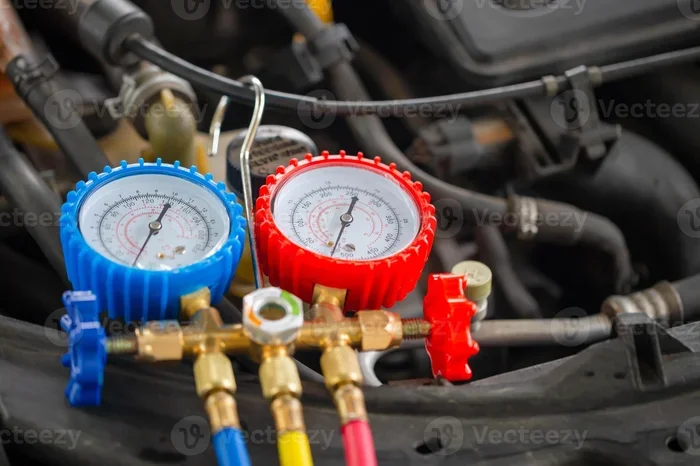
Checking your car AC gas pressure is easier than most people think. You just need a set of AC pressure gauges, which come as a manifold gauge set with two gauges. One connects to the low-pressure port, and the other connects to the high-pressure port.
Step-by-Step Pressure Check
- Start the car and turn the AC to maximum cool with the fan on high.
- Locate the service ports on the AC system. The low-pressure port is usually larger and marked with an “L.” The high-pressure port is smaller and marked with an “H.”
- Connect the gauges. Attach the blue hose to the low-pressure port and the red hose to the high-pressure port.
- Read the gauges. Note the pressure on both sides and compare them to the normal ranges listed above.
- Interpret the readings. Low readings on both sides suggest a refrigerant leak or undercharge. High readings on the high side and low readings on the low side may indicate a blockage or overcharge.
Choosing the Right AC Pressure Gauge Set
Not all AC pressure gauge sets are the same. Make sure you get a set rated for your refrigerant type. Most DIYers do well with a basic digital or analog manifold gauge set. Digital gauges often provide faster readings and can store data for later analysis.
When shopping for a gauge set, look for these features:
- Compatible with R-134a and R-1234yf
- Clear, easy-to-read dial or digital display
- Durable hoses with proper fittings
- Built-in valve stems for easy connection and disconnection
Common AC Gas Pressure Problems and How to Fix Them
Even with the best maintenance, car AC gas pressure problems can still happen. Here are the most frequent issues and what you can do about them.
AC Blows Warm Air
This is the number one AC system complaint. In most cases, it comes down to low refrigerant pressure. A refrigerant leak or a simple need for an AC recharge is usually the cause. Start by checking the pressure with your gauges. If it is low, add refrigerant slowly and monitor the readings.
AC Compressor Clutch Does Not Engage
If the AC compressor clutch does not engage at all, check the AC pressure switch first. Low pressure on the low side can prevent the clutch from engaging as a safety measure. Also check the fuse, relay, and wiring to the compressor. Sometimes the problem is as simple as a blown fuse.
AC Compressor Cycles On and Off Rapidly
Rapid cycling, also called short cycling, often points to an overcharged system or a failing AC pressure switch. Too much refrigerant causes pressure to spike quickly, triggering the switch to shut off the compressor. Once pressure drops slightly, the compressor kicks back on, and the cycle repeats.
Frost on AC Lines
Frost or ice forming on the AC evaporator or suction line usually means moisture in the system or a restricted orifice tube. Moisture mixes with the refrigerant and forms ice crystals that block flow. This requires a full AC service including evacuation and replacement of the receiver-drier or accumulator.
High Pressure with Poor Cooling
If your high-side pressure is high but your AC is not cooling well, suspect a clogged AC condenser, a failing cooling fan, or non-condensable gases. Start by cleaning the condenser and checking the fan operation. If those are fine, the system may need to be fully evacuated and recharged properly.
When to Call a Professional for AC Gas Pressure Issues
Many AC gas pressure problems can be handled at home with basic tools. But some situations call for a trained technician and professional AC diagnostic equipment.
You should call a pro if:
- The AC compressor makes grinding or squealing noises
- You see oil leaking around the compressor or hoses
- Pressure readings are wildly inconsistent
- The system needs to be evacuated and recharged with R-1234yf (which requires certified equipment)
- You have tried recharging but pressure drops again within a few days
- The AC evaporator or internal components need replacement
Professional car AC repair shops have AC recovery machines, vacuum pumps, and electronic leak detectors that can find even the tiniest leaks. They also have the certification required to handle certain refrigerants legally. When in doubt, it is always better to get a professional opinion than to risk damaging your AC system further.
Preventing AC Gas Pressure Problems
The best way to deal with car AC gas pressure issues is to prevent them from happening in the first place. A little regular maintenance goes a long way toward keeping your AC system running smoothly all year long.
Simple Prevention Tips
- Run your AC regularly, even in winter. This keeps the seals lubricated and prevents them from drying out.
- Check refrigerant levels once a year, especially before summer.
- Keep the condenser clean by rinsing it with water during regular car washes.
- Replace the cabin air filter on schedule. A clogged filter reduces airflow and puts extra strain on the AC evaporator.
- Address small leaks early before they become big, expensive problems.
- Use the correct refrigerant for your vehicle. Mixing R-134a and R-1234yf can cause damage.
Conclusion
Car AC gas pressure is the heartbeat of your cooling system. Understanding what normal readings look like, what causes pressure to drop or spike, and how to check your system puts you in control of your vehicle comfort. Whether you are dealing with low pressure from a refrigerant leak or high pressure from an overcharge, the steps in this guide give you the knowledge to diagnose and often fix the problem yourself.
Regular AC service and attention to early warning signs can save you from costly car AC repair bills. Keep your AC pressure gauges handy, stay on top of maintenance, and your AC system will keep you cool for miles to come. Remember, when the pressure is right, everything works better, and that includes your comfort on the road.
Frequently Asked Questions
What is the normal car AC gas pressure when the AC is on?
Normal car AC gas pressure depends on outside temperature and refrigerant type. For R-134a systems, the low side typically reads 25 to 45 PSI and the high side reads 150 to 250 PSI when the AC is on max cool. Always compare your readings to the normal ranges for your specific vehicle and the current outside temperature.
Can low AC gas pressure damage the compressor?
Yes, low AC gas pressure can damage the compressor. The refrigerant also acts as a lubricant for the compressor internals. When pressure drops too low, the compressor runs dry and can overheat or seize. This is why it is important to address low refrigerant levels quickly rather than just topping off the system repeatedly.
How often should I check my car AC gas pressure?
Checking your AC gas pressure once a year is a good practice. The best time is before summer when you need the AC most. If you notice warm air from the vents or hear unusual noises from the compressor, check the pressure right away. Regular checks help catch small leaks before they become big problems.
What refrigerant does my car use, R-134a or R-1234yf?
Cars made before 2015 typically use R-134a. Vehicles from 2015 and newer often use R-1234yf, which is more environmentally friendly. You can find the correct refrigerant type on the label under the hood or in your vehicle owner manual. Using the wrong refrigerant can damage your AC system and is illegal in many areas.
Is it safe to add refrigerant myself?
Adding refrigerant yourself can be safe if you follow proper procedures and use the correct refrigerant type. Always use a quality AC pressure gauge set and add refrigerant slowly. Never overcharge the system, as this causes high pressure and poor cooling. If you are unsure or uncomfortable, it is best to visit a professional for AC service.
What should I do if my AC pressure gauge reads zero?
A zero reading on the AC pressure gauge usually means the system is completely empty of refrigerant, likely due to a major refrigerant leak. Do not run the compressor in this condition, as it will cause damage without lubrication. Have the system inspected for leaks, repaired, and then properly evacuated and recharged by a qualified technician or with the right equipment.