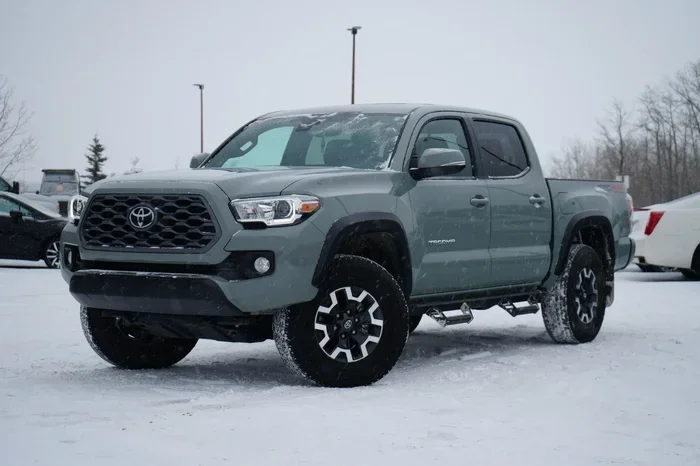
Does the Toyota Tacoma Have Full-Time 4WD – Explained
The Toyota Tacoma does not offer full-time 4WD on any trim level. Instead, it uses a part-time 4WD system that requires driver engagement. Depending on your trim, you can choose between two-wheel drive, part-time four-wheel drive, and automatic locking hubs. Understanding how the Tacoma’s 4WD system works helps you make the right choice for your driving needs.
The Toyota Tacoma has been America’s best-selling midsize truck for decades. People love it for its toughness, reliability, and off-road prowess. But one question keeps coming up: does the Toyota Tacoma have full-time 4WD?
The short answer is no. The Tacoma uses a part-time 4WD system across all its 4×4 trims. This design choice matters a lot if you plan to use the truck both on and off the road. In this article, we will break down everything you need to know about the Tacoma’s drivetrain. You will learn how the system works, which trims offer what, and why Toyota chose part-time 4WD for this truck.
Whether you are shopping for a new Tacoma or already own one, this guide covers it all. We will look at the different 4WD modes, how they compare, and what they mean for your daily driving and weekend adventures. Let us dive in.
Key Takeaways
- No Full-Time 4WD: The Toyota Tacoma only offers part-time 4WD, not full-time all-wheel drive.
- Multiple Drivetrain Options: You can choose between 2WD, part-time 4WD, and automatic locking hubs depending on the trim.
- TRD Off-Road and TRD Pro Lead: These trims offer the most advanced 4WD features, including locking differentials and crawl control.
- Part-Time Means Engaged: You must manually shift into 4WD when needed, which saves fuel during normal driving.
- Fuel Economy Benefits: Part-time 4WD improves gas mileage compared to full-time systems because the front axle disengages when not in use.
- Know Your System: Understanding how the Tacoma’s 4WD works helps you maximize capability and avoid drivetrain wear.
📑 Table of Contents
- Understanding the Toyota Tacoma Drivetrain Options
- How the Tacoma Part-Time 4WD System Works
- Tacoma Trim Levels and Their 4WD Features
- Part-Time 4WD vs Full-Time 4WD: What Is the Difference?
- Benefits of the Tacoma’s Part-Time 4WD System
- Common Mistakes Tacoma Owners Make with 4WD
- Expert Tips for Maximizing Your Tacoma 4WD System
- How the Tacoma 4WD System Compares to Competitors
- Does the Tacoma 4WD System Affect Fuel Economy?
- Final Thoughts on the Toyota Tacoma 4WD System
Understanding the Toyota Tacoma Drivetrain Options
The Tacoma offers three main drivetrain configurations. Each one serves a different type of driver. Here is what you need to know about each option.
Two-Wheel Drive (2WD)
The base Tacoma trims come with rear-wheel drive. This is the SR and SR5 2WD configurations. The 2WD Tacoma sends all engine power to the rear wheels only. It is the most fuel-efficient option and works great for daily driving in cities and on paved roads.
If you live in a flat area with mild winters, 2WD will serve you well. It also comes with the lowest starting price, making it an attractive option for budget-conscious buyers.
Part-Time Four-Wheel Drive (4WD)
Most Tacoma 4×4 models use a part-time 4WD system. This means the truck runs on two wheels (rear) during normal driving. When you need more traction, you can shift into 4WD using the transfer case.
Part-time 4WD is different from full-time 4WD in a key way. The front and rear axles are not always connected. This reduces drivetrain wear and improves fuel economy. You engage 4WD when the road gets rough, and you switch back to 2WD when conditions improve.
Most Tacoma trims offer part-time 4WD as an option or standard feature. This includes the SR5 4×4, TRD Sport, TRD Off-Road, and TRD Pro. Each trim adds different features to the 4WD system, which we will cover shortly.
Automatic Locking Hubs (Available on Some Models)
Some Tacoma 4×4 models come with automatic locking hubs. These hubs engage the front wheels automatically when you shift into 4WD. You do not need to get out of the truck to lock them manually.
This feature makes switching between 2WD and 4WD much more convenient. It is especially useful if you frequently transition between paved roads and dirt trails. However, not every Tacoma trim includes this feature, so check the spec sheet carefully.
How the Tacoma Part-Time 4WD System Works
Understanding how the part-time 4WD system works helps you use it properly. The system relies on a transfer case to distribute power between the front and rear axles.
When you are driving on dry pavement in 2WD, the front driveshaft is not spinning. This is important. If the front and rear axles were always connected on pavement, it would cause binding and damage to the drivetrain. This is why full-time 4WD systems use a center differential, while part-time systems do not.
When you need more traction, you shift the transfer case into 4WD. This connects the front driveshaft and sends power to all four wheels. The system provides equal torque distribution between front and rear axles in most Tacoma models.
Some newer Tacoma trims also offer a 4WD Lo mode. This engages a lower gear ratio for crawling over rocks or steep inclines. It multiplies torque at the wheels, giving you maximum control in tough situations.
Drive Modes and Settings
The Tacoma offers different drive modes depending on the trim. Let us look at what is available.
- 2WD: Rear wheels only. Best for highway driving and fuel economy.
- 4WD High: All four wheels receive power. Use on loose surfaces, dirt roads, and light off-roading.
- 4WD Low: Low-range gearing for extreme off-road conditions. Use at low speeds only.
- Neutral: Disconnects the drivetrain for towing or flat towing.
Some trims also feature electronic locking differentials. These lock the left and right wheels on an axle together, preventing one wheel from spinning while the other stays still. This is a huge advantage when navigating slippery or uneven terrain.
It is worth noting that the Tacoma does not have a full-time AWD or 4WD mode that runs all the time. You must manually select your drive mode. This is by design and offers real benefits for fuel economy and drivetrain longevity.
Tacoma Trim Levels and Their 4WD Features
Not all Tacoma trims are created equal when it comes to 4WD capability. Here is a breakdown of what each trim offers.
| Trim Level | 4WD Available? | Key 4WD Features |
|---|---|---|
| SR | No (2WD only) | Rear-wheel drive only |
| SR5 | Yes | Part-time 4WD, manual locking hubs on some models |
| TRD Sport | Yes | Part-time 4WD, Bilstein shocks, electronic locking rear differential |
| TRD Off-Road | Yes | Part-time 4WD, locking front and rear differentials, crawl control, multi-terrain select |
| TRD Pro | Yes | All TRD Off-Road features plus Fox shocks, skid plates, and more |
As you can see, the higher you go in the trim hierarchy, the more 4WD features you get. The base SR5 gives you basic part-time 4WD. But if you want serious off-road capability, the TRD Off-Road and TRD Pro trims are where it is at.
The TRD Off-Road trim stands out with its Multi-Terrain Select system. This lets you choose between Mud, Sand, and Rock modes. The system adjusts throttle response and traction control settings to match the terrain. It makes the Tacoma much more capable without requiring expert off-road driving skills.
The TRD Pro takes things even further. It adds Fox internal bypass shocks and a specially tuned suspension. This trim is built for serious trail running and rock crawling. If you push your Tacoma hard off-road, the TRD Pro is the way to go.
Part-Time 4WD vs Full-Time 4WD: What Is the Difference?
Many people confuse part-time and full-time 4WD. They are not the same thing, and understanding the difference matters for your Tacoma ownership experience.
Part-Time 4WD
Part-time 4WD, like what the Tacoma uses, only sends power to all four wheels when you engage it. When you are on paved roads, the system runs in 2WD mode. The front axle is disconnected, which saves fuel and reduces drivetrain wear.
The downside is that you must manually shift into 4WD. You need to be aware of road conditions and make the switch when needed. If you forget to engage 4WD before hitting a slippery surface, you may lose traction.
Full-Time 4WD
Full-time 4WD sends power to all four wheels at all times. These systems use a center differential or transfer case with a viscous coupling to allow the front and rear axles to spin at different speeds. This prevents drivetrain binding on pavement.
Full-time 4WD is common in SUVs like the Toyota 4Runner and the Jeep Grand Cherokee. It provides constant traction without any driver input. However, it typically weighs more and uses more fuel than part-time systems.
Which Is Better for the Tacoma?
Toyota chose part-time 4WD for the Tacoma for good reasons. The Tacoma is a truck, and trucks are often used for towing and hauling. A part-time system reduces mechanical complexity, saves weight, and improves fuel economy. For most Tacoma owners, part-time 4WD is the right choice.
That said, if you want true full-time capability, you would need to look at a different vehicle. The Tacoma’s design philosophy prioritizes simplicity, durability, and efficiency over constant all-wheel traction.
Some drivers wonder if they can modify their Tacoma for full-time 4WD. While aftermarket solutions exist, they can be expensive and may void your warranty. It is generally best to use the Tacoma as Toyota designed it.
Benefits of the Tacoma’s Part-Time 4WD System
The part-time 4WD system on the Tacoma offers several real-world benefits. Here are the main advantages you get as a Tacoma owner.
Better Fuel Economy
Because the front axle disengages in 2WD mode, the Tacoma gets excellent fuel economy for a truck. The 2WD V6 Tacoma can achieve up to 22 mpg in the city and 29 mpg on the highway. Compare that to trucks with full-time 4WD systems, which often see a 1 to 3 mpg penalty.
Over time, the fuel savings add up significantly. If you drive 15,000 miles per year, even a 1 mpg difference can save you several hundred dollars annually.
Reduced Drivetrain Wear
Running in 2WD mode on pavement reduces wear on the transfer case, front differential, and front axle components. This means fewer repairs and a longer-lasting drivetrain. Toyota engineered the part-time system specifically to handle the stresses of both on-road and off-road use.
Simplicity and Reliability
The Tacoma’s 4WD system is mechanically simple. There are fewer moving parts to fail compared to full-time systems with complex differentials and electronics. This simplicity contributes to the Tacoma’s legendary reliability. Many Tacomas with 300,000 miles still run strong, and the 4WD system is a big part of that durability.
Off-Road Capability
Do not let the part-time design fool you. The Tacoma is an incredibly capable off-road vehicle. With features like locking differentials, crawl control, and multi-terrain select, it can handle trails that would stop many full-time 4WD trucks. The key is knowing how to use the system properly.
When you are on the trail, remember to shift into 4WD before you need it. If you are already stuck and spinning wheels, it may be too late to engage the system. A good rule of thumb is to shift into 4WD when you see terrain that might require it.
Common Mistakes Tacoma Owners Make with 4WD
Even experienced Tacoma owners sometimes make mistakes with their 4WD system. Here are the most common ones to avoid.
Forgetting to Disengage 4WD on Pavement
This is the number one mistake. Driving in 4WD on dry pavement causes drivetrain binding. It can damage the transfer case, axles, and tires. Always switch back to 2WD when you return to paved roads.
Shifting Into 4WD While Moving Fast
You should only shift into 4WD at low speeds. Shifting at highway speeds can damage the transfer case. Come to a complete stop or slow down significantly before changing modes.
Neglecting Regular Maintenance
The 4WD system needs regular maintenance to stay reliable. This includes checking and changing the transfer case fluid, front differential fluid, and rear differential fluid. Skipping these services can lead to premature wear and expensive repairs.
Overloading the Front End
The Tacoma’s front axle is not as robust as the rear axle in 2WD mode. When you add heavy accessories like winches or bumpers, you increase the load on the front components. Be mindful of weight distribution and stay within the truck’s rated capacity.
Using 4WD Lo on Pavement
4WD Lo is designed for low-speed off-road crawling. Using it on pavement can cause tire wear, drivetrain stress, and loss of control. Only use 4WD Lo when you are on loose or uneven surfaces and moving at slow speeds.
Expert Tips for Maximizing Your Tacoma 4WD System
Want to get the most out of your Tacoma’s 4WD capability? Here are some expert tips that make a real difference.
- Know your trim’s features. Not all Tacomas come with the same 4WD equipment. Check your owner’s manual to understand what your specific model offers.
- Use 4WD High for loose surfaces. Snow, gravel, mud, and sand are perfect situations for 4WD High. It gives you extra traction without the low-range gearing.
- Save 4WD Low for serious obstacles. Rock crawling, steep inclines, and deep mud call for 4WD Low. It gives you maximum torque and control at low speeds.
- Check your fluid levels regularly. Transfer case fluid, front differential fluid, and rear differential fluid all need periodic changes. Keep up with the maintenance schedule in your owner’s manual.
- Consider aftermarket upgrades. If you use your Tacoma off-road frequently, consider upgrading to all-terrain tires, adding a front skid plate, or installing a performance catch can. These small investments pay off in durability and capability.
- Drive smoothly in 4WD. Avoid sudden throttle inputs and sharp steering when your Tacoma is in 4WD on loose surfaces. Smooth inputs keep all four tires gripping and prevent you from getting stuck.
Also, if you are someone who likes to explore remote areas, remember that you can always leave your Tacoma at the airport when heading out on a longer off-road trip, but make sure the drivetrain is in good shape before any long journey.
How the Tacoma 4WD System Compares to Competitors
Let us put the Tacoma’s 4WD system in context. How does it stack up against the competition?
Tacoma vs. Ford Ranger
The Ford Ranger offers a part-time 4WD system similar to the Tacoma. Both trucks provide strong off-road capability with the option to run in 2WD for better fuel economy. The Ranger does offer a terrain management system on higher trims, which is comparable to the Tacoma’s Multi-Terrain Select.
Tacoma vs. Chevrolet Colorado
The Colorado also uses a part-time 4WD system. It offers a 2-speed transfer case on most trims, similar to the Tacoma. The Colorado’s diesel engine gives it a torque advantage, but the Tacoma’s reliability and resale value give it the edge for most buyers.
Tacoma vs. Nissan Frontier
The Frontier offers part-time 4WD on most trims as well. It lacks some of the advanced off-road features found on the TRD Off-Road and TRD Pro Tacomas. The Tacoma remains the stronger choice for serious off-road enthusiasts.
Across the board, the Tacoma’s part-time 4WD system holds its own against competitors. It is proven, reliable, and effective. The real differentiator is the range of TRD trims that add genuine off-road technology.
Does the Tacoma 4WD System Affect Fuel Economy?
Yes, the drivetrain choice affects fuel economy. The 2WD Tacoma is more efficient than the 4×4 version. The added weight and mechanical drag of the 4WD system consume extra fuel.
However, the difference is not dramatic. A 2WD Tacoma gets around 22 mpg city and 29 mpg highway. The 4×4 version typically gets 1 to 2 mpg less. For most owners, this small trade-off is worth the added capability and versatility.
It is also worth noting that the Tacoma’s 4WD system is designed to minimize fuel economy impact. When you are not using 4WD, the front axle is completely disengaged. This is more efficient than full-time 4WD systems that always send some power to the front wheels.
Some owners worry that using 4WD will hurt their gas mileage. The truth is, if you only engage 4WD when you need it, the impact on fuel economy is minimal. The Tacoma is smart about how it manages power delivery, and the part-time design helps keep efficiency high.
For comparison, does traction control use more gas? The answer is yes, in some cases, because traction control can reduce engine power and apply brakes, which affects efficiency. The same principle applies to 4WD systems to some degree, but the Tacoma’s part-time design keeps this impact low.
Final Thoughts on the Toyota Tacoma 4WD System
The Toyota Tacoma does not have full-time 4WD, and that is perfectly fine for most buyers. The part-time 4WD system offers the perfect balance of capability and efficiency. It gives you the traction you need when you need it, while keeping the truck light and efficient during everyday driving.
The Tacoma’s 4WD system is one of the best in the midsize truck segment. With options like locking differentials, crawl control, and multi-terrain select, it handles everything from daily commutes to serious trail runs. The key is understanding how the system works and using it properly.
If you are considering a Tacoma, think about your driving habits. Do you need 4WD regularly, or only occasionally? The answer will help you decide which trim to choose. For most buyers, the SR5 4×4 or TRD Sport offers the right mix of capability and value.
The Tacoma’s part-time 4WD system is a proven design that has served truck owners well for decades. It is simple, reliable, and effective. Whether you are hauling gear to the job site or exploring remote trails, the Tacoma’s 4WD system has you covered.
Remember, the Tacoma is a tool first and a toy second. Its drivetrain is designed to work hard and last long. Take care of it, use it properly, and it will reward you with years of dependable service. That is the Toyota Tacoma way.
Frequently Asked Questions
Can the Toyota Tacoma be converted to full-time 4WD?
Toyota does not offer a factory full-time 4WD option for the Tacoma. Aftermarket conversions exist but are complex, expensive, and may void your warranty. It is best to use the Tacoma as designed with its part-time 4WD system.
What is the difference between 4WD High and 4WD Low on the Tacoma?
4WD High is for driving on loose surfaces like snow, gravel, and mud at normal speeds. 4WD Low provides a lower gear ratio for extreme off-road crawling at low speeds. You should only use 4WD Low when the terrain truly demands it.
Does the Tacoma have automatic 4WD like some other trucks?
Some Tacoma trims feature automatic locking hubs, which engage the front wheels when you shift into 4WD. However, the system is still part-time, meaning you must manually select 4WD. It does not automatically send power to all four wheels at all times.
Is part-time 4WD good for daily driving?
Yes, part-time 4WD is excellent for daily driving. You run in 2WD mode for normal commuting, which saves fuel and reduces drivetrain wear. You only engage 4WD when road conditions require extra traction.
Which Tacoma trim has the best 4WD system?
The TRD Pro trim offers the most advanced 4WD features, including Fox shocks, locking differentials, crawl control, and multi-terrain select. The TRD Off-Road trim is also excellent and offers many of the same features at a lower price point.
How often should I service the Tacoma 4WD system?
Follow the maintenance schedule in your owner’s manual. Typically, transfer case fluid and differential fluids should be changed every 30,000 to 60,000 miles. Regular maintenance keeps the 4WD system running smoothly and prevents premature wear.