Does Nissan Own Porsche Here Is What You Need To Know
No, Nissan does not directly own Porsche. Porsche is part of the Volkswagen Group, but there is an indirect link through the Renault-Nissan alliance and Porsche SE. The relationship between these two iconic car brands is more complex than most people realize, involving decades of mergers, investments, and automotive history.
Key Takeaways
- Nissan does not directly own Porsche: Porsche operates independently under the Volkswagen Group umbrella.
- There is an indirect connection: Through the Renault-Nissan alliance and Porsche SE, there is a web of cross-ownership in the automotive world.
- Porsche SE holds a major stake in VW: This holding company controls a large portion of Volkswagen Group, which includes Porsche AG.
- The Nissan-Renault alliance is key: Renault owns a significant stake in both Nissan and Porsche SE, creating a tangled ownership web.
- Understanding car ownership is important: Knowing who owns what helps buyers make informed decisions about luxury sports cars and automotive brands.
- Porsche remains a standalone brand: Despite the ownership connections, Porsche maintains its own identity, engineering, and design philosophy.
- The history is fascinating: The story involves Ferdinand Porsche, the founding of Porsche AG, and decades of corporate maneuvering in the automotive industry.
📑 Table of Contents
- Does Nissan Own Porsche? The Surprising Truth Behind the Connection
- The History of Porsche: From Ferdinand Porsche to Porsche AG
- Nissan’s Place in the Automotive World
- The Renault Connection: How Nissan and Porsche Are Linked
- Does Nissan Own Porsche? Breaking Down the Ownership Structure
- How Sport Mode and Performance Features Fit In
- Common Misconceptions About Nissan and Porsche Ownership
- What This Means for Car Buyers
- Key Takeaways for Understanding Nissan and Porsche
Does Nissan Own Porsche? The Surprising Truth Behind the Connection
Many car enthusiasts wonder about the relationship between Nissan and Porsche. These two brands sit at very different ends of the automotive spectrum. Nissan is known for reliable everyday cars and SUVs. Porsche is the gold standard of luxury sports cars. So do they share an owner? The short answer is no. But the full story is much more interesting.
The Nissan-Porsche relationship involves a complex web of corporate ownership, alliances, and investments. You cannot understand this connection without looking at the bigger picture of how the automotive industry has evolved over the past few decades. Companies merge, acquire stakes, and form alliances in ways that can be hard to follow. This article breaks it all down in plain language.
Whether you are a Nissan fan, a Porsche enthusiast, or just curious about car ownership, this guide has everything you need. We will explore the history, the current ownership structure, and what it all means for the future of these two legendary brands. Let us dive in.
The History of Porsche: From Ferdinand Porsche to Porsche AG
The story of Porsche starts with Ferdinand Porsche himself. He was a visionary automotive engineer who designed some of the most iconic cars of the 20th century. Before founding his own company, Ferdinand worked for several major manufacturers. He designed the Volkswagen Beetle, one of the most produced cars in history.
In 1931, Ferdinand Porsche founded the Porsche design studio. The company did not build cars at first. Instead, it offered engineering and design consulting services. The first car to carry the Porsche name was the 1948 Porsche 356. It was a small, lightweight sports car that immediately earned a reputation for performance and handling.
Over the decades, Porsche grew into one of the most respected luxury car brands in the world. The company went public in 1972, but the Porsche and Piëch families retained significant control. Today, Porsche AG designs, engineers, and manufactures some of the fastest and most desirable cars on the road.
The Porsche-Piëch Family and Porsche SE
The Porsche and Piëch families have deep ties to the Volkswagen world. They control Porsche SE, a holding company that owns a majority stake in Volkswagen AG. This is where things get really interesting. Porsche SE is not the same as Porsche AG. One is a holding company. The other is the car manufacturer.
Porsche SE holds about 53 percent of Volkswagen AG voting shares. This gives the Porsche-Piëch family enormous influence over the entire Volkswagen Group. And the Volkswagen Group includes Porsche AG. So while Nissan has no direct ownership of Porsche, there is a chain of connections that links these brands together through the automotive conglomerate structure.
Nissan’s Place in the Automotive World
Nissan Motor Company is one of the largest car manufacturers in the world. Founded in 1933, Nissan has built a reputation for producing reliable, affordable, and innovative vehicles. From the humble Nissan Sentra to the powerful Nissan GT-R, the brand covers a wide range of the automotive market.
Nissan is part of the Renault-Nissan-Mitsubishi Alliance. This is one of the largest car alliances in the world. The alliance was formed in 1999 when Nissan faced serious financial difficulties. Renault, the French automotive giant, stepped in with a significant investment. In return, Renault gained a 43.4 percent stake in Nissan.
Over time, the alliance expanded to include Mitsubishi Motors. Today, the Renault-Nissan-Mitsubishi Alliance is a major force in the global automotive industry. But what does this have to do with Porsche? That brings us to the next section.
The Renault Connection: How Nissan and Porsche Are Linked
Here is where the Nissan-Porsche relationship becomes clearer. The link between Nissan and Porsche runs through Renault. Renault owns a stake in both Nissan and Porsche SE. This creates an indirect connection between the two car brands.
Renault holds about 15 percent of Nissan. In return, Nissan owns about 15 percent of Renault. This cross-shareholding arrangement was designed to solidify the partnership. But it also means that Nissan has a small indirect connection to Porsche through Renault’s stake in Porsche SE.
Does this mean Nissan owns part of Porsche? Not really. The connection is indirect and relatively small. Nissan does not have any direct ownership or control over Porsche AG or Porsche SE. The real power behind Porsche lies with the Volkswagen Group and the Porsche-Piëch family.
Understanding Cross-Ownership in the Auto Industry
The automotive world is full of cross-ownership arrangements. Companies buy stakes in each other to form partnerships, share technology, and reduce costs. This is common in the automotive industry, where research and development costs are enormous.
For example, does leasing a car affect your credit? Yes, it can, and this is just one example of how the financial side of car ownership connects to corporate structures. Similarly, when you look at who owns which car brand, you find a tangled web of investments and alliances.
The key takeaway is this: car ownership at the corporate level is very different from car ownership at the personal level. When you buy a Nissan or a Porsche, you own that vehicle outright (or through a lease). But the companies behind these brands have their own ownership structures that involve multiple partners and investors.
Does Nissan Own Porsche? Breaking Down the Ownership Structure
Let us be very clear about the Nissan-Porsche ownership situation. Nissan does not own Porsche. Here is a breakdown of who owns what:
- Porsche AG: Owned by Volkswagen AG, which is part of the Volkswagen Group.
- Volkswagen AG: Controlled by Porsche SE, which is majority-owned by the Porsche-Piëch family.
- Porsche SE: A holding company controlled by the Porsche-Piëch family.
- Renault: Owns a stake in Porsche SE and has a cross-shareholding with Nissan.
- Nissan: Part of the Renault-Nissan-Mitsubishi Alliance. No direct ownership of Porsche.
As you can see, the path from Nissan to Porsche is long and indirect. Nissan’s connection to Porsche exists only through Renault’s stake in Porsche SE and Porsche SE’s control of Volkswagen Group. This is a corporate ownership structure, not a direct brand relationship.
What About Porsche’s Hybrid Technology?
Porsche has made significant moves into hybrid technology in recent years. Models like the Porsche Cayenne Hybrid and the Porsche Panamera Hybrid combine performance with efficiency. Does a hybrid burn gas when idling? In many cases, yes, but modern hybrid systems are designed to minimize fuel consumption during idle. Porsche’s hybrid technology is impressive and reflects the brand’s commitment to innovation.
Similarly, at what point does a hybrid switch to gas depends on the specific system and driving conditions. Porsche engineers have developed sophisticated hybrid powertrains that seamlessly switch between electric and gasoline power. This technology is part of what makes Porsche a leader in the luxury sports car segment.
How Sport Mode and Performance Features Fit In
Porsche is famous for its performance capabilities. The brand’s sport mode is one of the most sought-after features among driving enthusiasts. Does sport mode make a car faster? In many cases, yes. Sport mode adjusts throttle response, shifts gears more aggressively, and enhances the overall driving experience. Porsche vehicles are engineered to deliver thrilling performance in every mode.
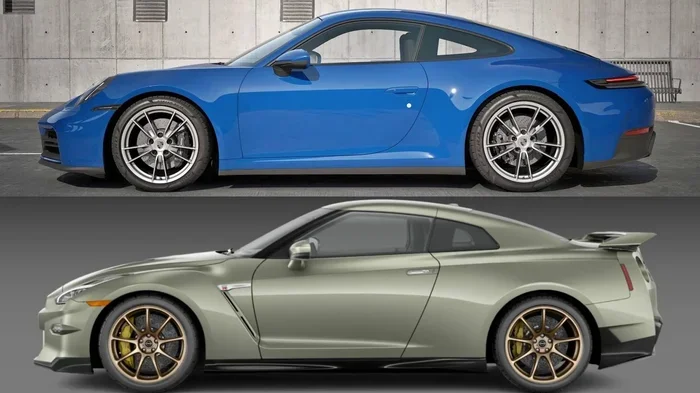
Nissan also offers performance-oriented vehicles. The Nissan GT-R is a prime example of what happens when a Japanese manufacturer goes all-in on sports car performance. While the GT-R and Porsche models like the 911 compete in the same price range, they represent very different approaches to performance engineering.
Both brands understand that driving enthusiasts want more than just transportation. They want an experience. Whether it is the precision engineering of a Porsche or the raw power of a Nissan GT-R, the goal is the same: deliver an unforgettable drive.
Common Misconceptions About Nissan and Porsche Ownership
There are several myths and misconceptions floating around about the Nissan-Porsche relationship. Let us clear some of them up.
Misconception 1: Nissan owns Porsche because of the Renault connection. This is not true. The Renault connection is indirect and small. Nissan has no meaningful ownership stake in Porsche.
Misconception 2: Porsche is a Japanese brand. Porsche is a German brand founded in Stuttgart. It has no Japanese origins, despite the indirect corporate link through Renault.
Misconception 3: The Volkswagen Group owns Nissan. This is also false. Volkswagen Group and Nissan are completely separate entities. The only connection is through the Renault alliance.
Misconception 4: Nissan and Porsche share technology. While both companies are leaders in their respective fields, they do not share core technology or platforms. Each brand develops its own vehicle technology independently.
Why Does This Confusion Happen?
The confusion stems from the complex nature of automotive conglomerates. When companies form alliances and cross-own each other, it becomes difficult for the average consumer to understand who owns what. Add to this the fact that Porsche SE, Volkswagen AG, and Porsche AG are all related but distinct entities, and you have a recipe for confusion.
The best way to understand it is to think of the automotive industry like a family tree. Different branches own different things, and the relationships can be distant. But each brand maintains its own identity, engineering philosophy, and brand values.
What This Means for Car Buyers
If you are in the market for a new car, does the ownership structure matter? In most cases, no. What matters is the quality of the vehicle, the brand reputation, and how well the car fits your needs and budget.
Here are some practical tips for car buyers navigating this complex landscape:
- Focus on the vehicle itself: Does the car meet your needs? Is it reliable? Does it fit your budget?
- Research the brand reputation: Both Nissan and Porsche have strong track records, but in different segments.
- Consider total cost of ownership: Luxury sports cars like Porsche come with higher maintenance and insurance costs.
- Think about your driving habits: A daily commuter has different needs than a weekend warrior.
- Test drive before buying: Nothing replaces the experience of actually driving the car.
Understanding who owns which brand can be interesting and educational. But at the end of the day, the most important factor is whether the car brings you joy and meets your practical needs.
The Future of Nissan and Porsche
Both Nissan and Porsche are investing heavily in electric vehicle technology. Nissan’s Leaf has been a pioneer in the affordable EV market. Porsche’s Taycan represents the brand’s commitment to high-performance electric driving. The automotive industry is undergoing a massive transformation, and both brands are positioned to play key roles.
Will the ownership structures change in the future? It is possible. Alliances shift, investments change, and corporate strategies evolve. But for now, Nissan and Porsche remain separate entities with their own identities and directions.
The luxury car market is becoming increasingly competitive. New players are entering the space, and established brands are innovating at a rapid pace. Whether you prefer the accessibility of Nissan or the prestige of Porsche, there has never been a better time to be a car enthusiast.
Key Takeaways for Understanding Nissan and Porsche
The relationship between Nissan and Porsche is a fascinating study in automotive corporate structures. While the two brands are not directly connected, the web of alliances and investments in the car industry creates indirect links that are worth understanding.
Nissan does not own Porsche. Porsche is part of the Volkswagen Group. The only connection between Nissan and Porsche runs through the Renault alliance and Porsche SE. This is a corporate ownership structure, not a brand partnership.
For car buyers, this information is interesting background knowledge. It does not change the buying decision. What matters is the quality of the vehicle, the driving experience, and how well the car fits your life. Both Nissan and Porsche offer excellent products in their respective segments.
So the next time someone asks you does Nissan own Porsche, you can give them a clear and confident answer. The truth is more nuanced than a simple yes or no, but the bottom line is straightforward: these two iconic brands remain independent in their own right.
Frequently Asked Questions
Does Nissan own any part of Porsche?
No, Nissan does not own any part of Porsche directly. The only indirect connection is through the Renault-Nissan alliance, where Renault holds a small stake in Porsche SE. This does not give Nissan any meaningful ownership or control over Porsche AG or Porsche SE.
Who actually owns Porsche?
Porsche AG is owned by Volkswagen AG, which is part of the Volkswagen Group. The Volkswagen Group is controlled by Porsche SE, a holding company majority-owned by the Porsche-Piëch family. So the Porsche-Piëch family has the ultimate control over the Porsche brand.
What is the Renault-Nissan-Mitsubishi Alliance?
The Renault-Nissan-Mitsubishi Alliance is one of the largest car alliances in the world. Formed in 1999, it brings together Renault, Nissan, and Mitsubishi Motors under a partnership agreement. Renault holds a significant stake in Nissan, and the three companies share technology, platforms, and resources.
Are Nissan and Porsche in the same company?
No, Nissan and Porsche are not in the same company. Nissan is part of the Renault-Nissan-Mitsubishi Alliance, while Porsche is part of the Volkswagen Group. The only indirect connection is through Renault’s stake in Porsche SE and the cross-shareholding between Renault and Nissan.
Does Porsche share any technology with Nissan?
Porsche and Nissan do not share core technology or vehicle platforms. Each brand develops its own vehicle technology independently. While both companies invest in hybrid and electric vehicle technology, their engineering approaches and product strategies are completely separate.
Why do people think Nissan owns Porsche?
The confusion likely comes from the complex web of automotive ownership structures. The Renault-Nissan alliance and the Porsche-Piëch family’s control of Porsche SE create indirect links between the brands. When people see these connections, they may assume a direct ownership relationship that does not actually exist.
=== CONCLUSION ===
The question does Nissan own Porsche opens up a fascinating window into how the automotive industry really works. The answer is a clear no, but the journey to get there reveals a world of corporate alliances, cross-ownership, and strategic partnerships that shape the cars we drive every day.
Nissan and Porsche remain two of the most respected names in the car industry, each with its own identity, engineering philosophy, and loyal fan base. Understanding their relationship helps car buyers make more informed decisions and appreciate the complexity of the modern automotive landscape.
Whether you are drawn to Nissan’s practical innovation or Porsche’s legendary performance, both brands represent the best of what the automotive world has to offer. The next time you see a Nissan or a Porsche on the road, you will know the full story behind these iconic brands and their place in the world of car manufacturing.