What Vehicles Come with HomeLink Garage Door Opener
HomeLink garage door opener is a convenient feature built into many popular vehicles, allowing drivers to open their garage doors without a separate remote. Many manufacturers from brands like Ford, Toyota, BMW, and Jeep offer HomeLink as standard or optional equipment across their lineup. This guide explores which vehicles come with HomeLink, how to install and program it, and whether your car supports this handy technology.
This is a comprehensive guide about What Vehicles Come with HomeLink?.
Key Takeaways
- Wide Vehicle Compatibility: HomeLink is available in hundreds of vehicle models from dozens of automakers, including sedans, SUVs, and trucks.
- Factory-Installed Option: Many new vehicles come with HomeLink already integrated into the rearview mirror or overhead console.
- Aftermarket Installation Is Possible: Vehicles without built-in HomeLink can get an aftermarket universal HomeLink transmitter installed easily.
- Simple Programming Process: Training HomeLink to work with your garage door opener takes just a few minutes.
- Safety Features Built In: HomeLink uses rolling code technology for secure garage door access.
- Replaces Multiple Remotes: One HomeLink system can control your garage door, gate, and even your carport opener.
- Widely Available Across Trim Levels: HomeLink is often available on both base and luxury trims of popular models.
[FEATURED_IMAGE_PLACEHOLDER]
What Is HomeLink and Why Does It Matter?
HomeLink is a wireless control system that lets you operate your garage door, gate, or carport opener directly from your vehicle. Instead of fumbling for a separate remote, you simply press a button inside your car. The system sends a signal to your garage door opener, and the door responds. It is one of the most popular convenience features in modern vehicles today.
The technology has been around for decades and has become a standard expectation for many car buyers. When shopping for a new vehicle, HomeLink compatibility often appears on feature lists and trim comparison charts. Understanding what vehicles come with HomeLink garage door opener built in can save you time and money during your next car purchase.
HomeLink works with most garage door opener brands, including Chamberlain, LiftMaster, Genie, Craftsman, and many others. The system uses radio frequency signals to communicate with your garage door motor. Modern HomeLink systems also support rolling code security, which means the signal changes every time you use it, keeping your garage safe from unauthorized access.
Vehicles That Come with HomeLink From the Factory
Many automakers offer HomeLink as either standard equipment or an available option across their vehicle lineup. The feature is especially common in SUVs, trucks, and family-oriented vehicles. Let us explore which brands and models typically include HomeLink built right in.
Ford and Lincoln Models
Ford has been a strong supporter of HomeLink technology for years. Many Ford models come with HomeLink garage door opener as standard or optional equipment. Popular Ford vehicles that include HomeLink include the F-150, Explorer, Expedition, Escape, Bronco, and Mustang. Lincoln models like the Navigator, Aviator, and Corsair also feature HomeLink integration.
In most Ford vehicles, the HomeLink buttons are located on the overhead console or integrated into the rearview mirror. The system is easy to access and use, making it a favorite among Ford truck owners who need quick garage access.
Toyota and Lexus Models
Toyota and its luxury division Lexus offer HomeLink on a wide range of models. Toyota vehicles like the Camry, RAV4, Highlander, Tacoma, and Tundra often include HomeLink. Lexus models such as the RX, GX, LX, and ES also come with this convenient feature.
Toyota’s implementation is straightforward and reliable. The HomeLink system in Toyota vehicles typically sits on the overhead console near the rearview mirror. It integrates seamlessly with the vehicle’s interior design and requires no additional hardware.
Chevrolet and GMC Models
General Motors vehicles frequently include HomeLink as well. Chevrolet models like the Silverado, Tahoe, Suburban, Equinox, and Traverse offer HomeLink on many trim levels. GMC models such as the Sierra, Yukon, and Acadia also feature this technology.
Chevrolet and GMC trucks are particularly known for including HomeLink as a standard feature on higher trim levels. If you are looking at a full-size truck or SUV from GM, chances are good that HomeLink comes with the vehicle.
Jeep and Ram Models
Stellantis brands also embrace HomeLink technology. Jeep models like the Grand Cherokee, Wrangler, and Gladiator often include HomeLink. Ram trucks such as the Ram 1500, 2500, and 3500 frequently offer HomeLink on various trim levels.
Jeep owners especially appreciate HomeLink because it adds to the off-road and adventure-ready lifestyle. Having a HomeLink garage door opener means you can pull into your driveway and open the garage without ever leaving the driver’s seat.
BMW, Mercedes-Benz, and Luxury Brands
Luxury vehicle manufacturers understand that convenience is a key selling point. BMW, Mercedes-Benz, Audi, and Volvo all offer HomeLink or similar integrated garage door control systems on many of their models. BMW vehicles like the 3 Series, 5 Series, X3, and X5 include HomeLink. Mercedes-Benz offers a similar system on the C-Class, E-Class, GLC, and GLE.
These luxury brands often integrate HomeLink into the vehicle’s infotainment system or mirror-mounted control module. The result is a seamless, premium experience that matches the overall quality of the vehicle.
How to Check if Your Vehicle Has HomeLink
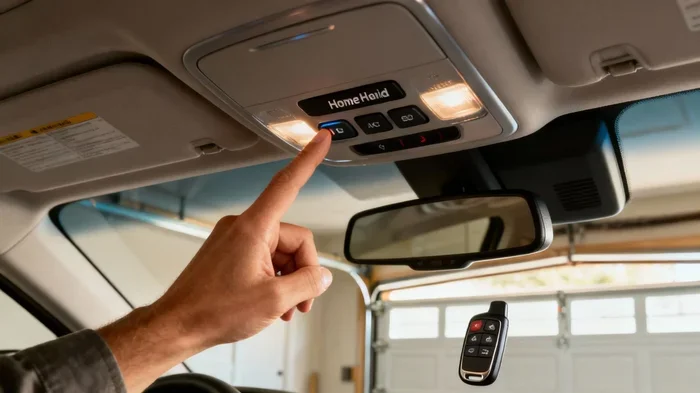
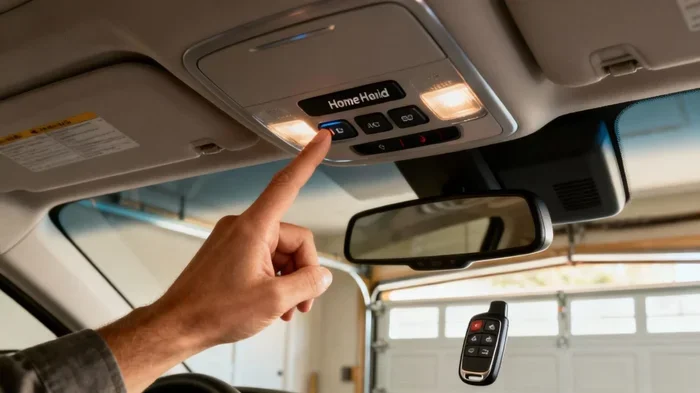
If you are not sure whether your current vehicle has HomeLink, checking is quick and easy. Most vehicles that include HomeLink have three small buttons located on the overhead console or on the interior side of the rearview mirror. These buttons are usually labeled HomeLink or have a small HomeLink logo.
Another way to check is by looking at your vehicle’s owner manual. The manual will list HomeLink as a feature if your vehicle includes it. You can also check the trim level specifications on the manufacturer’s website. Simply search for your vehicle’s year, make, and model, and look for HomeLink in the feature list.
If you have a used vehicle and cannot find the HomeLink buttons, it is possible that a previous owner removed the system or that the vehicle never had it. In that case, you can install an aftermarket HomeLink transmitter, which we will cover in detail later in this guide.
Installing HomeLink in Vehicles Without Built-In Support
Not every vehicle comes with HomeLink from the factory. However, that does not mean you are out of luck. Installing an aftermarket HomeLink universal transmitter is a straightforward process that most car owners can complete themselves or have done at a dealership or auto shop.
Aftermarket HomeLink Options
Several aftermarket HomeLink products are available on the market. The most popular option is the HomeLink universal transmitter, which plugs into your vehicle’s cigarette lighter or OBD-II port. Some models require a simple wiring installation, while others are completely plug-and-play.
Popular aftermarket HomeLink brands include:
- HomeLink Universal Transmitter – The original and most widely recognized option
- Overhead Console Mount Kits – For vehicles that need a mounting solution
- Integrated Mirror Modules – Replace your existing mirror with one that includes HomeLink
Step-by-Step Installation Tips
Installing an aftermarket HomeLink system is simpler than most people think. Here are the basic steps:
- Choose your location: Pick a spot on your dashboard or overhead console where the HomeLink buttons will be easily accessible.
- Mount the transmitter: Secure the HomeLink module using the included adhesive or mounting bracket.
- Connect the power source: Plug the module into your vehicle’s power outlet or follow the wiring instructions for hardwired installations.
- Program the HomeLink: Follow the programming instructions to train the HomeLink system to communicate with your garage door opener.
- Test the system: Press the HomeLink button to confirm that your garage door opens and closes properly.
Most aftermarket installations take less than 30 minutes. If you are not comfortable with the process, a local auto electrician or dealership can handle the installation for you quickly and affordably.
Programming Your HomeLink System
Once you have HomeLink installed, whether factory or aftermarket, you need to program it to work with your specific garage door opener. The programming process is similar across most vehicles and HomeLink models.
Programming Steps
Follow these steps to program your HomeLink garage door opener:
- Press and hold two of the HomeLink buttons on your vehicle for about 20 seconds until the indicator light flashes.
- Release the buttons and immediately go to your garage door opener motor unit.
- Press and release the “Learn” button on your garage door opener. The indicator light on the motor unit will glow.
- Return to your vehicle and press and hold the programmed HomeLink button for two seconds, then release.
- Repeat this step if needed until the garage door opener motor light blinks or the door responds.
- Test the system by pressing the HomeLink button to open and close the garage door.
The entire process usually takes about five minutes. If your garage door opener uses a rolling code system, the programming is even more secure because the code changes with every use.
Common Programming Issues and Solutions
Sometimes HomeLink programming does not work on the first try. Here are a few common issues and how to fix them:
- Indicator light does not flash: Make sure your vehicle is in park and the ignition is on. Try holding the buttons longer.
- Garage door does not respond: Check that you are within range of the garage door opener motor. Repeat the training steps.
- Interference from other remotes: Clear the HomeLink memory and start the programming process again from scratch.
Benefits of Having HomeLink in Your Vehicle
HomeLink is more than just a luxury feature. It provides real, everyday convenience that makes your life easier. Here are some of the top benefits of having a HomeLink garage door opener in your vehicle.
Hands-Free Garage Access
The biggest advantage of HomeLink is hands-free access to your garage. You do not need to dig through your pockets or bag for a remote control. Simply press a button on your dashboard or mirror, and your garage door opens. This is especially helpful when you are carrying groceries, luggage, or other items.
Increased Security
Modern HomeLink systems use rolling code technology, which means the access code changes every time you use it. This prevents hackers from intercepting and replicating your garage door signal. Compared to older fixed-code remotes, HomeLink offers significantly better security for your home.
One System for Multiple Devices
HomeLink can control more than just your garage door. Many HomeLink systems can be programmed to operate up to three different devices. This includes gates, carport openers, and even some home automation systems. Having one integrated system reduces clutter and simplifies your daily routine.
Improved Resale Value
Vehicles with HomeLink often hold their value better on the used car market. Buyers appreciate the convenience and modern features that HomeLink provides. If you plan to sell or trade in your vehicle someday, having HomeLink garage door opener built in can be a selling point.
HomeLink vs Aftermarket Garage Door Remotes
Some car owners wonder whether they should use the factory HomeLink system or stick with their existing aftermarket garage door remote. Here is a quick comparison:
HomeLink vs Traditional Remote
The main difference between HomeLink and a traditional garage door remote is integration. HomeLink is built into your vehicle, while a traditional remote is a separate device that you carry in your pocket or on your keychain. HomeLink eliminates the need for a separate remote, which means fewer things to lose or replace.
Traditional remotes are also universal and work with most garage door openers out of the box. HomeLink may require a brief programming step, but once set up, it works just as reliably. In terms of range and signal strength, both systems perform similarly under normal conditions.
Cost Comparison
Factory-installed HomeLink comes at no extra cost if your vehicle includes it as standard equipment. If it is an optional feature, it may add a small cost to the vehicle’s price tag. Aftermarket HomeLink transmitters typically cost between $30 and $100, depending on the brand and model. Traditional garage door remotes cost between $15 and $50 each.
When you factor in the convenience and the fact that HomeLink replaces the need for multiple remotes, the value proposition is strong. Investing in a HomeLink system pays for itself in convenience and peace of mind.
Common Mistakes to Avoid with HomeLink
While HomeLink is a reliable system, there are a few common mistakes that car owners make. Avoiding these pitfalls will ensure your HomeLink system works smoothly for years to come.
Skipping the Programming Step
One of the biggest mistakes is assuming HomeLink will work right out of the box. Even factory-installed HomeLink needs to be programmed to your specific garage door opener. Take the time to complete the training process properly.
Ignoring Battery Replacement
If your HomeLink system stops working, the first thing to check is the vehicle’s battery. A weak battery can interfere with the HomeLink signal. Replace your vehicle battery if it is more than three to five years old and see if that resolves the issue.
Not Clearing Old Codes
When reprogramming HomeLink, always clear the old codes first. This prevents interference and ensures a clean connection between your vehicle and garage door opener. Simply hold down all three HomeLink buttons for 10 seconds to erase the memory.
Final Thoughts on HomeLink-Compatible Vehicles
HomeLink garage door opener technology has become a standard feature in many vehicles across all major brands. Whether you are shopping for a new Ford F-150, Toyota RAV4, Chevrolet Silverado, or luxury BMW X5, there is a good chance that HomeLink comes with the vehicle. For those who already own a car without built-in HomeLink, aftermarket installation is affordable and straightforward.
The convenience, security, and peace of mind that HomeLink provides make it one of the most valuable features you can have in your vehicle. Once you experience the ease of opening your garage door with a simple button press, you will wonder how you ever managed without it.
If you are in the market for a new vehicle, make HomeLink compatibility a priority on your checklist. If you already own a vehicle without it, consider an aftermarket HomeLink universal transmitter to upgrade your driving experience. Either way, HomeLink is a small investment that delivers big rewards in everyday convenience.
Frequently Asked Questions
Do all new vehicles come with HomeLink?
No, not all new vehicles come with HomeLink. Many popular models from Ford, Toyota, Chevrolet, and other brands include it as standard or optional equipment, but it depends on the trim level and model. Always check the feature list before purchasing if HomeLink is important to you.
Can I install HomeLink myself?
Yes, aftermarket HomeLink transmitters are designed for easy DIY installation. Most kits come with clear instructions and can be installed in under 30 minutes. If you are not comfortable with the process, a dealership or auto shop can handle the installation for a reasonable fee.
Does HomeLink work with all garage door opener brands?
HomeLink is compatible with most major garage door opener brands, including Chamberlain, LiftMaster, Genie, Craftsman, and Overhead Door. Some older or specialty openers may require a HomeLink-compatible bridge or adapter module to work properly.
Is HomeLink secure?
Yes, modern HomeLink systems use rolling code technology, which changes the access code every time you use it. This makes it much more secure than older fixed-code garage door remotes. Your garage door signal cannot be easily intercepted or replicated by unauthorized users.
How many devices can HomeLink control?
Most HomeLink systems can be programmed to control up to three different devices. This could include your garage door, a backyard gate, a carport opener, or even some smart home automation systems. Each device requires a separate programming session.
What should I do if my HomeLink stops working?
If your HomeLink garage door opener stops responding, start by checking your vehicle battery and ensuring the garage door opener motor is functioning. Try clearing the HomeLink memory and reprogramming the system. If the issue persists, consult your vehicle owner manual or contact a HomeLink support representative for troubleshooting guidance.
Frequently Asked Questions
What is What Vehicles Come with HomeLink??
What Vehicles Come with HomeLink? is an important topic with many practical applications.