What Car Brand Depreciates the Most and Why It Matters
Not all car brands lose value at the same rate. Some manufacturers see their vehicles shed over 60% of their original value within five years, making them some of the fastest depreciating cars on the market. In this article, you will learn which car brand depreciates the most, why certain vehicles lose value so quickly, and what you can do to protect your investment.
Have you ever wondered why some cars lose value faster than others? The answer might surprise you. Some car brands depreciate the most, and the reasons are not always obvious. If you are thinking about buying or selling a vehicle, understanding car depreciation can save you thousands of dollars.
Depreciation is the silent killer of your car’s worth. The moment you drive a new vehicle off the dealer lot, it starts losing value. Some brands see their vehicles shed more than 60% of their original price within five years. That is a massive vehicle value loss that many buyers do not expect.
In this article, we will explore which car brand depreciates the most and why it happens. You will learn about car depreciation by brand, the factors that drive rapid value loss, and simple steps you can take to protect your investment. Whether you are a first-time buyer or a seasoned car shopper, this guide will help you make smarter decisions.
Key Takeaways
- Luxury brands depreciate the fastest: Brands like BMW, Mercedes-Benz, and Audi lose value significantly faster than mainstream manufacturers.
- Electric vehicles face steep depreciation: Early EVs and luxury electric SUVs can lose over 60% of their value in five years.
- Brand reputation matters: How a brand is perceived in the market directly affects how well its vehicles hold value.
- Market saturation plays a role: When too many of the same model flood the used market, prices drop fast.
- You can reduce depreciation loss: Choosing the right brand, maintaining your car, and timing your purchase all help protect your investment.
- Used car buyers benefit: Purchasing a car that has already taken the biggest depreciation hit saves you thousands of dollars.
📑 Table of Contents
Understanding How Car Depreciation Works
Before we dive into which brands lose value the fastest, let us talk about what car depreciation actually means. Car depreciation is the decline in your vehicle’s worth over time. It is one of the biggest car ownership cost factors that most people overlook.
What Is Car Depreciation?
Every car loses value from the day you buy it. A new car typically drops about 20% in value the moment you drive it off the dealer lot. By the end of the first year, most vehicles have lost around 30% of their original price. Over five years, the average car depreciation rate sits between 50% and 65%.
But not all cars follow this pattern. Some vehicles hold their value remarkably well. Others become money pit cars that drain your wallet from day one. Understanding the car depreciation chart for different brands helps you make a smarter purchase.
Think of it like a phone. The moment a new model launches, the older version drops in price. Cars work the same way. The newer the model, the faster it falls in value. This is especially true for brands that release new versions every year or two.
How Depreciation Actually Happens
Several factors drive vehicle value loss. Wear and tear is the most obvious one. Miles add up, parts wear out, and the car simply ages. But there is more to it than just mileage.
Market demand plays a huge role. When a particular model becomes unpopular, its used car prices fall fast. Supply and demand work the same way for cars as they do for anything else. If too many of the same model are available, the price drops.
Technology also matters. New safety features, infotainment systems, and fuel efficiency standards make older models feel outdated. A car that was cutting-edge three years ago can feel behind the times today. This new car value drop happens faster in brands that release new models frequently.
Fuel costs play a role too. When gas prices spike, gas-guzzling SUVs lose value quickly. Efficient hybrids and electric cars may hold value better during fuel price swings. The car depreciation rate shifts with the economy, consumer preferences, and even government regulations.
Car Brands That Depreciate the Most
So which car brand depreciates the most? The answer depends on the type of vehicle, but luxury and electric brands tend to lead the car depreciation chart. Let us break it down.
Luxury Brands Leading the Depreciation Chart
Luxury car brands often suffer from the steepest luxury car depreciation. Brands like BMW, Mercedes-Benz, and Audi are known for their rapid vehicle value loss. Here is a quick look at how these brands compare.
| Car Brand | Avg. Depreciation (5 Years) | Resale Value Retention |
|---|---|---|
| BMW | 60-65% | 35-40% |
| Mercedes-Benz | 55-60% | 40-45% |
| Audi | 55-60% | 40-45% |
| Jaguar | 60-65% | 35-40% |
| Land Rover | 60-70% | 30-40% |
| Volvo | 50-55% | 45-50% |
As you can see from the car depreciation chart, luxury brands consistently lose value faster than mainstream manufacturers. The BMW depreciation rate is particularly steep, with many models losing over 60% of their original value within five years. This is one of the main reasons why luxury car depreciation is such a hot topic among car buyers.
Land Rover takes the crown for some of its SUV models. The luxury SUV depreciation trend is real and significant. These vehicles are expensive to buy and expensive to maintain. When you combine a high purchase price with steep repair costs, the result is a vehicle that sheds value rapidly.
Electric Vehicles and Rapid Value Loss
Electric vehicle depreciation has become a major talking point in recent years. Early EV models from brands like Tesla, Nissan, and Chevrolet experienced significant new car value drop in their first few years on the market.
However, things are changing. Tesla has improved its vehicle retention rate significantly in recent years. Newer electric models from established brands are holding value better than their predecessors. Still, electric vehicle depreciation remains a concern for many buyers, especially as battery technology evolves rapidly.
The luxury SUV depreciation trend is also worth noting. Luxury SUVs tend to depreciate faster than luxury sedans. The big price tags and high maintenance costs make them risky investments. If you are looking at best cars for resale value, you might want to steer clear of expensive SUVs from brands known for rapid depreciation.
One interesting twist is that affordable EVs like the Nissan Leaf have seen some of the steepest electric vehicle depreciation on record. Their low purchase price makes them attractive on paper, but battery degradation fears and rapid technology changes hurt their long-term value.
Why Certain Car Brands Depreciate Faster
Now that we know which brands lose value the fastest, let us explore why. The reasons go deeper than just brand name. Several factors contribute to rapid car depreciation by brand.
Brand Reputation and Perceived Value
Your brand reputation shapes how the market views your car. Brands that are seen as status symbols often face harsher depreciation. When a car is all about the badge, buyers are less willing to pay premium prices for used models.
Think about it this way. If you buy a luxury car for $80,000 and it is five years old, why would the next buyer pay $50,000 for it? They can buy a brand-new model with more features for a similar price. This perception drives luxury car depreciation and makes these vehicles risky purchases for value-conscious buyers.
On the flip side, brands known for reliability and practicality tend to hold their value better. Toyota, Honda, and Jeep have strong brand reputation scores that translate directly into better resale value. Buyers trust these names, and trust equals higher used car prices.
Model Overproduction and Market Saturation
When a brand produces too many of the same model, the used market gets flooded. Market saturation is a real problem. Dealers have too many units to sell, so they drop prices. This creates a domino effect that pushes used car prices down across the board.
Some brands oversell their vehicles through aggressive leasing programs. Lease returns flood the used market every few years. This surplus of available inventory accelerates vehicle value loss and hurts the vehicle retention rate for those models.
For example, certain luxury sedans have become overly common on the used market. When you see the same model everywhere, it loses its exclusivity. Exclusivity is a key driver of value for luxury brands. Once that exclusivity fades, so does the price tag.
Maintenance Costs and Repair Expenses
High maintenance costs also drive car depreciation by brand. When a car is expensive to repair, buyers hesitate. They factor in potential repair bills when shopping for used vehicles. This makes high-maintenance brands less attractive on the used car market.
Luxury parts are often pricey. Specialized labor costs add up quickly. A vehicle that is cheap to buy but expensive to maintain can become a money pit car faster than you expect. Always check the total cost of ownership before making a purchase decision.
Here is a quick tip. Before you buy any used luxury car, get a full inspection from a trusted mechanic. Hidden repair costs can wipe out any savings you think you are getting from a lower purchase price. A depreciation calculator can also help you estimate the true cost of owning that vehicle over time.
How Depreciation Affects Your Wallet
Car depreciation is not just a number on a spreadsheet. It has real-world consequences for your finances. Understanding the total cost of ownership helps you make better decisions.
The True Cost of Ownership
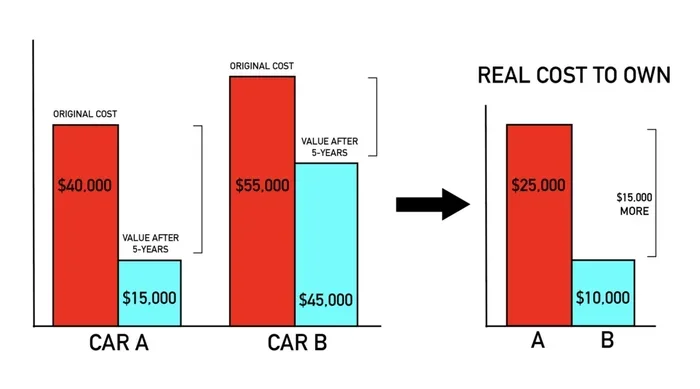
Let us look at a real example. You buy a new luxury SUV for $70,000. Five years later, it is worth $25,000. You have lost $45,000 in value. That is more than half your money gone. Now add insurance, maintenance, and fuel costs. The total cost of ownership can be staggering.
On the other hand, a Toyota Camry bought new for $30,000 might be worth $16,000 after five years. You lost $14,000 in value. The difference is huge. This is why car depreciation by brand matters so much when you are shopping for a vehicle.
Here is another way to think about it. Imagine two buyers. Buyer A purchases a luxury sedan that drops $40,000 in value over five years. Buyer B purchases a reliable sedan that drops $14,000 in value over the same period. Buyer B saved $26,000 in vehicle value loss alone. That is money that could have gone toward a vacation, savings, or a down payment on a home.
When to Buy to Minimize Loss
Timing your purchase can help you reduce vehicle value loss. Buying a car that has already taken its biggest depreciation hit is one of the smartest moves you can make. A three-year-old vehicle often sells for 40-50% less than its original price. The previous owner absorbed that loss.
You can also use a depreciation calculator to estimate how much a car will lose over time. These tools help you compare models and brands before you commit. They give you a clearer picture of the car value after 5 years for any vehicle you are considering.
If you must buy new, choose a brand known for strong vehicle retention rate. Brands like Toyota, Honda, and Jeep consistently rank as the best cars for resale value. Their vehicles hold value much better than luxury alternatives.
Quick tip: Look for models that have been on the market for at least a year before you buy. The first-year depreciation hit is already absorbed. You get a newer car at a lower price without paying the steepest part of the car depreciation rate.
Best Practices to Reduce Depreciation Loss
You cannot stop car depreciation entirely. But you can take steps to slow it down. Small choices make a big difference in how much value your vehicle retains over time.
Tips to Keep Your Car’s Value Higher
Regular maintenance is your best friend. Follow the manufacturer’s service schedule to the letter. Keep all your records organized. A well-documented service history boosts buyer confidence and supports higher used car prices.
Avoid modifications. Custom wheels, loud exhausts, and aftermarket body kits can turn off potential buyers. Stick with factory specifications if you want to maximize your resale value. Clean, stock vehicles sell faster and for more money.
Keep your mileage reasonable. High-mileage vehicles depreciate faster. If you can, aim to stay under 10,000 miles per year. Low-mileage cars command better prices on the used car market and show less vehicle value loss over time.
Keep your car clean inside and out. A well-maintained exterior and interior make a huge difference in perceived value. First impressions matter when you are selling or trading in a vehicle. A detail job costing $150 can add hundreds to your final sale price.
Smart Buying Strategies
Buy vehicles that are in demand. Popular models with strong brand reputation hold their value better. Research fastest depreciating cars before you shop so you know what to avoid.
Consider certified pre-owned vehicles. They offer a sweet spot between new and used. You get a relatively modern car at a lower price point, and the new car value drop has already been absorbed by the first owner.
Negotiate the purchase price aggressively. The lower your starting price, the less absolute value you lose. A $5,000 discount on a $30,000 car means you start with a lower baseline for car depreciation. Use a depreciation calculator to model different purchase scenarios.
Also consider your local market. In some areas, trucks and SUVs hold value better. In others, sedans and compacts are more popular. Understanding your local car depreciation by brand trends can give you an edge when buying and selling.
Final Thoughts on Which Car Brand Depreciates the Most
So, which car brand depreciates the most? The data points to luxury brands and certain electric vehicles as the biggest losers. BMW depreciation, luxury SUV depreciation, and electric vehicle depreciation all contribute to steep vehicle value loss over time.
But car depreciation is not just about brand names. Your choices matter too. How you maintain your vehicle, when you buy, and which model you select all influence your car depreciation rate. The smartest buyers understand this and plan accordingly.
If you want to minimize car ownership cost, focus on brands with strong vehicle retention rate and proven resale value. Use a depreciation calculator before you buy. And remember, the best car depreciation chart is the one that shows you saving money, not losing it.
Take control of your total cost of ownership today. Research your options, compare used car prices, and make a decision that works for your budget. The more you know about car depreciation by brand, the better equipped you are to avoid costly mistakes. Smart buying starts with understanding depreciation.
Frequently Asked Questions
Which car brand depreciates the fastest?
Luxury brands like BMW, Land Rover, and Jaguar tend to experience the steepest car depreciation. These brands can lose 60% or more of their original value within five years. The BMW depreciation rate is especially notable, with many models falling sharply in used car prices after the first few years.
Does electric vehicle depreciation affect resale value?
Yes, electric vehicle depreciation can be significant, especially for early EV models. However, newer electric vehicles from major manufacturers are improving their vehicle retention rate. Battery health, technology updates, and market demand all influence how well an EV holds its value over time.
How can I reduce car depreciation loss?
You can reduce vehicle value loss by keeping up with regular maintenance, avoiding modifications, and keeping mileage low. Buying a certified pre-owned vehicle or choosing a brand known for strong resale value also helps. Using a depreciation calculator can help you plan your purchase wisely.
What is the average car depreciation rate over five years?
The average car depreciation rate ranges from 50% to 65% over five years. However, this varies widely by brand and model. Some vehicles lose less than 40%, while others lose over 70%. Checking a car depreciation chart for your specific model gives you a more accurate picture of expected vehicle value loss.
Are there cars that hold their value well?
Yes, brands like Toyota, Honda, Jeep, and Subaru are known for strong vehicle retention rate and best cars for resale value rankings. These brands consistently outperform luxury names when it comes to holding value. Their car ownership cost is also typically lower, making them smart long-term choices.
Is buying used the best way to avoid depreciation?
Buying used is one of the most effective ways to avoid the steepest part of car depreciation. A three-year-old vehicle has already absorbed its biggest new car value drop. You get a relatively modern car at a significantly lower price, which reduces your overall total cost of ownership and car ownership cost over time.
=== CONCLUSION ===
Conclusion
Car brand depreciates the most is a question with a clear answer: luxury brands and certain electric vehicles lead the car depreciation chart in terms of vehicle value loss. Understanding car depreciation by brand empowers you to make smarter buying decisions and avoid costly mistakes. By focusing on brands with strong resale value, maintaining your vehicle properly, and timing your purchase strategically, you can significantly reduce the financial impact of car depreciation. Use a depreciation calculator to model your options and always consider the total cost of ownership before you sign on the dotted line.